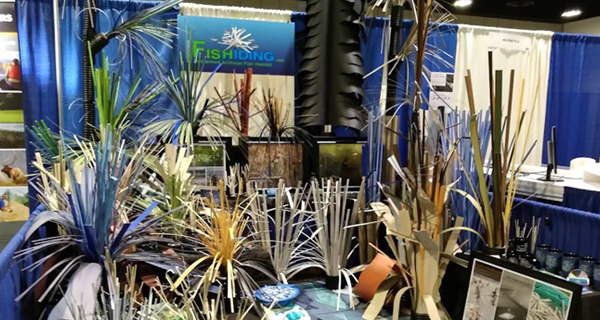



Best Fish Attractors for Winter Fish Holding Spots
30th Oct 2026
Winter fish do not scatter at random. They stack up on dense, deep or edge-adjacent cover where the water is stable and forage is close, and the best fish attractors for winter fish holding spots are the ones that give them that cover at the right depth. That means dense, varied structure placed near deeper water, not a single sparse pole stuck in the shallows.
- The best fish attractors for winter holding spots are dense, varied structures placed at or beside deeper water.
- Sparse single-stem cover gives winter fish little to hold on; density and variety do the work.
- Place winter structure along the drop-off between shallow flats and the deepest basin of your pond or lake.
- Reclaimed PVC habitat in 2026 stays in place year-round, so one install serves every season.
Fishiding builds reclaimed PVC habitat for freshwater ponds, lakes and reservoirs, so we look at winter from the fish's side of the water. This page gives you the answer, the placement logic and the tradeoffs.
What are the best fish attractors for winter fish holding spots?
The best winter fish attractors are dense, intricate habitat set near deeper water. In cold water, fish slow down and stop chasing. They look for a spot where food and shelter sit within a short move. A tight, layered structure gives them both, and a thin one gives them neither.
Here is how the main options compare for winter use in 2026:
| Option | Best for | Pros | Cons |
|---|---|---|---|
| Dense preassembled attractors and cribs | Mid and deep water holding spots | Tight cover, built-in weight, installs in one drop | Needs correct depth placement |
| Habitat mats | Wide flats beside a drop-off | Covers a lot of bottom, lots of surface for forage | Less vertical profile than a crib |
| DIY PVC builds | Owners who want to size and shape their own | Custom layout, reclaimed materials | You supply the labor and the design thinking |
| Brush piles and Christmas trees | Short-term, low-budget cover | Cheap and familiar | Break down and thin out over time |
Our view: for winter, a dense crib or attractor wins on its own, and a mat beside it adds forage surface. Our own artificial fish habitat variety article explains why mixing designs beats repeating one.
Where do fish hold in winter?
Fish in a frozen or near-frozen pond or lake settle where the temperature is steadiest and the food is closest. In most freshwater bodies that means the deeper, more stable water, plus structure that touches or sits beside it. Our guide on where fish hold in winter goes through pond and lake differences in detail.
Think of it like people in a cold house. Everyone ends up in the one warm room with the couch. Fish do the same with the deeper pocket that has cover in it.
That is why your winter attractor belongs on the edge of that pocket, not in the middle of a bare flat and not up in water that cools and swings fastest.
Why dense structure beats sparse structure in winter
A rabbit does not hide in a single stick. It hides in briars. Fish think the same way, and cold water makes them more cautious, not less.
Density matters in winter for these reasons:
- Shelter for small fish. Fry and forage fish crowd into tight openings, and the predators follow the forage.
- Surface area. More pipe and more intersections mean more surface for periphyton, the attached growth we call the mother's milk of the aquatic food chain, and the copepods and other small life that live on it.
- Variety of openings. Different sizes let different fish find a fit.
- Staying power. Reclaimed PVC does not rot or thin out the way brush does, so the cover you set in fall is still there in the next winter.
Our underwater footage across more than 15 years in freshwater lakes is where we learned how fish use this kind of cover. Our article on how long periphyton takes to grow on fish habitat covers the timeline for that food layer.
Best fish attractors for winter, by water depth
Deep water: dense cribs and attractors
If your pond or lake has a deeper basin, this is the first place to put structure. Dense cribs set at the base of the drop-off give fish a place to sit out the coldest weeks. Read our ranking of fish attractors by water depth placement to match a model to your depth. Verdict: buy for any pond with a clear deep zone.
Mid depth: attractors on the break
The slope between shallow and deep is the travel lane. Structure here catches fish moving up and down with the weather. Verdict: buy as your second placement.
Shallow water: mats and low cover
Shallow flats lose heat fast, so fish use them less in deep winter. Mats still earn their place there for the spring and fall run of forage and fry. Verdict: hold for winter, use for the other seasons.
Why the right winter spot varies
No two waters hold fish the same way. These factors change where your attractor should go:
- Maximum depth and how steeply the bottom drops
- Pond size, from a small backyard pond to a reservoir
- Which species you are managing, such as bass, crappie or bluegill
- Aeration, which can change where fish sit
- Weeds and existing cover already in the water
- Ice cover and how long it lasts
If you manage bass, see where largemouth and smallmouth can use the same habitat. Species use and placement vary by life stage, season and water body, so treat any layout as a starting point you adjust.
Can you install attractors in winter?
Yes if the water is open, and many owners drop structure in late fall so it is working before the hard cold. Our preassembled units are self-weighted with cement built into the patented design, so there is no separate weighting step. You set them where you want them.
For the full sequence from planning to placement, our install workflow for ponds is the place to start.
How many attractors do you need?
That depends on acreage and how much deep water you have. For sizing by pond area, read how many structures a 1-acre pond needs. Cover a deep pocket well before you spread thin across the whole shoreline.
Is PVC a good winter attractor material?
We use reclaimed PVC that was headed to a landfill, and we consider it safe for freshwater use with koi, other fish, copepods and other aquatic life. It does not rot, so it holds its shape and density winter after winter, unlike a brush pile that collapses and thins.
Find your winter holding structure
Dense reclaimed PVC habitat for freshwater ponds and lakes.
FAQ
What is the best fish attractor for winter?
A dense, varied attractor or crib placed beside deeper water is the best winter choice. It gives cold, slow fish shelter and forage in one spot.
Where should I place fish attractors for winter?
Place them along the edge of the deepest part of your pond or lake, at the break between shallow and deep water. That puts cover where winter fish settle.
Do fish use artificial habitat in winter?
Yes, fish use dense structure year-round, and winter is when the right cover near deep water matters most. Use varies by species, life stage and water body.
Are habitat mats good for winter?
Mats work best on flats beside a drop-off, adding forage surface. For the coldest weeks, pair them with a dense crib in deeper water.
Do I need to add weight to Fishiding structures?
No. Every Fishiding preassembled unit is self-weighted with cement built into the patented design, so you place it and it sinks.
Is PVC better than brush piles for winter cover?
PVC holds its density season after season, while brush rots and thins. Our reclaimed PVC also grows periphyton, which feeds the small life fish depend on.
One more thing
Most people shop for winter structure in January, when the pond is already locked up. Put it in during fall and the fish, and the periphyton on it, are ready before the cold arrives. Pair this with our look at mats versus individual attractors to plan a full layout in 2026.