
How long does it take periphyton to grow on fish habitat?
22nd Oct 2026
Periphyton starts colonizing submerged fish habitat before you can see an obvious coating, but there is no single growth time that applies to every freshwater pond, lake, or reservoir. Visible growth depends on light, temperature, nutrients, depth, and what happens on the surface after colonization. Judge progress by repeat observations at the same location, not a universal countdown from installation.
- How long does periphyton take to grow on fish habitat? Conditions determine timing; visible coating is not the starting point.
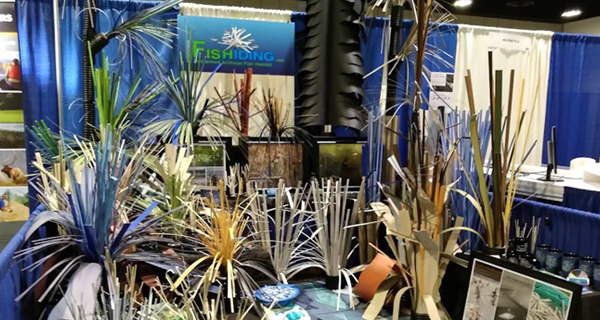
- Fishiding freshwater fish habitat provides reclaimed PVC surfaces for attached growth and dense cover for fish.
- Compare light, depth, sediment, and grazing before deciding that a lightly coated structure is not working.
- Record attached growth and fish use separately; neither observation alone measures population growth.
How long does it take periphyton to grow on fish habitat?
The useful answer separates initial colonization, visible coating, and an established attached community. These are different milestones, not interchangeable deadlines.
Periphyton is the community of algae, bacteria, fungi, and other microscopic organisms attached to underwater surfaces. Some components need light; others do not. That distinction explains why a surface can support microbial growth without looking green.
| Milestone | What you can observe | What the observation means |
|---|---|---|
| Initial colonization | Little or no visible change | Appearance alone cannot establish whether microscopic colonization has begun |
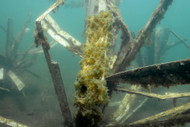
| Visible attached growth | A film or coating on submerged surfaces | An attached community is becoming visible; color alone does not identify its composition |
| Changing attached community | Differences in coverage, texture, and associated small animals | Growth, grazing, sediment, and disturbance are shaping the surface community |
| Fish use | Fish sheltering, passing through, or feeding near cover | Fish are using the structure; this does not measure periphyton production |
For your 2026 installation, record the deployment date and conditions rather than assigning a promised finish date. The guide to fish habitat structures ranked by periphyton growth addresses the related choice of habitat design.
A visible coating is an observation milestone, not proof that the habitat has reached its full biological value.
Why this matters
A new fish crib has two jobs that deserve separate attention: providing physical cover and providing surfaces for attached organisms. Waiting for a green coating before assessing the first job mixes up structure with biological growth.
The reverse mistake also matters. A heavily coated structure does not automatically provide the right openings, depth, or access for the fish you want to support.
Periphyton contributes to freshwater food webs. Small grazers consume attached material, while other organisms use the surface community and its associated particles. Copepods are tiny crustaceans; zooplankton is the broader term for small animals drifting or swimming in the water. Not every copepod or zooplankton species uses attached habitat in the same way.
For practical management, look for both accessible cover and a developing food-web surface. Neither replaces suitable water quality.
Why periphyton growth time varies
The same structure can develop differently across a pond. These factors explain why matching the installation date does not produce matching results.
- Light at the actual surface. Water clarity, shade, and depth affect the light available to attached algae. Surface sunshine does not describe conditions beneath turbid water.
- Water temperature and season. Biological activity changes with temperature. Compare installations under similar seasonal conditions before attributing differences to the material.
- Nutrient availability. Attached algae need nutrients as well as light. Nutrient supply does not remove limits imposed by shade, burial, or disturbance.
- Depth and placement. Depth changes the growing environment and the fish community using the cover. A location chosen for deep-water shelter is not automatically the strongest location for photosynthetic growth.
- Sediment and water movement. Deposited sediment can cover growing surfaces. Water movement transports materials but also exposes surfaces to disturbance.
- Grazing and surface disturbance. Organisms eat attached growth. Cleaning, rubbing, or moving the structure also changes the coating you are trying to observe.
Compare conditions before comparing calendars. A difference in visible coverage is not, by itself, evidence that one installation failed.
Choose habitat for surfaces and shelter
Material matters, but material alone does not answer the timing question. Consider accessible surface area, opening size, stability, and where the structure sits in the water column.
| Habitat option | Best for | Practical strengths | Limits to account for |
|---|---|---|---|
| Existing natural cover | Preserving useful habitat already present | Provides established surfaces and varied physical spaces | Its location and condition might not match your target placement |
| Brush piles | Adding branch-based cover where permitted | Offer irregular surfaces and openings | Wood changes as it decomposes; branch spacing and stability need attention |
| DIY habitat | Matching a build to a specific placement problem | Lets you select geometry and assembly | You must verify materials, openings, stability, and installation details |
| Fishiding preassembled freshwater fish habitat | Owners seeking dense reclaimed PVC cover | Provides varied surfaces and openings; preassembled units are self-weighted | Still requires suitable depth, placement, and water conditions |
Fishiding freshwater fish habitat is best for pond and lake owners seeking dense, self-weighted reclaimed PVC cover. That recommendation concerns construction and habitat form, not a promised colonization deadline.
Our preassembled models and units, including habitat mats, have cement built into the patented design. They do not require added ballast or anchoring. DIY components are a separate category; follow the instructions for the build rather than assuming every loose component behaves like a completed unit.
Choose density with fish size in mind. Fry—newly hatched or very young fish—need different spaces from larger fish. Young-of-year fish are fish produced during the current year. A varied structure provides different spaces; an exterior coating alone tells you little about access inside it.
What the underwater evidence supports
Fishiding has more than 15 years and thousands of hours of underwater filming documenting freshwater fish use of its habitat. This evidence library supports the company's claims that all freshwater fish species use its dense, intricate models and that the habitat grows more fish.
Those observations do not establish one universal periphyton timetable. Fish use, visible coating, feeding activity, and population-level outcomes are separate questions requiring different observations.
For a useful 2026 field record, describe what the camera actually shows: the habitat surface, fish size, location, depth, and activity. Record sheltering as sheltering. Record apparent feeding as apparent feeding rather than assuming every fish beside a coated surface is grazing it.
A clear image of fish occupying dense cover answers a habitat-use question. Measuring changes in recruitment, survival, or total population requires a broader fisheries assessment.
How to monitor growth without resetting the surface
Use a repeatable observation routine. You do not need to turn a backyard pond into a laboratory, but you do need comparable views.
- Record the starting condition. Photograph the habitat before deployment. Note the date, placement, depth, material, and whether the surface already has attached growth.
- Choose a recognizable viewing position. Use the same side and similar camera distance when practical. A wide installation image helps you relocate the close-up area.
- Record water conditions with each visit. Note temperature when measured, water clarity, recent runoff, shade, and visible sediment. Separate measurements from impressions.
- Describe the coating consistently. Record patchy or continuous coverage, texture, and whether material appears attached or loosely deposited. Do not identify organisms from color alone.
- Observe fish and small animals separately. Note fish size and activity without treating their presence as a measurement of attached biomass.
- Keep the observation surface undisturbed. Repeated scrubbing removes the community you are tracking. If sampling is necessary, keep a separate area for that purpose.
Keep your 2026 photographs together with their notes. A picture without a date or placement record is much less useful when you revisit the decision later.
For research or management decisions requiring species identification or biomass measurements, use an appropriate sampling protocol and qualified analysis. Photographs are useful field records, not substitutes for those measurements.
What should you check when growth looks slow?
Start with placement, not additives. A clean-looking habitat surface gives you a reason to inspect conditions, not a reason to fertilize the water.
Check light where the habitat actually sits
Look below the surface. Water that appears bright from shore can still transmit little light to deeper habitat.
Distinguish the goal of growing attached algae from the goal of providing cover at a particular depth. Keep useful deep-water shelter in your plan even when its surfaces look different from shallow-water cover.
Check whether you are seeing sediment instead of growth
Runoff and disturbed bottoms complicate visual assessment. Loose sediment can coat a surface without representing attached biological growth.
Compare close-up images before moving or cleaning the structure. If identification matters to a management decision, collect and examine a sample using an appropriate method.
Check water quality before changing depth
Moving habitat toward light is not automatically the right correction. Temperature, dissolved oxygen, fish access, and the intended depth zone still matter.
Do not use a surface coating as your only placement criterion. Review measurements and the species you are managing before changing an established layout.
Check whether grazing explains a thin coating
Attached growth is food for some organisms. A surface with modest standing growth can still experience biological activity.
That possibility is a reason to observe more carefully, not to claim productivity from appearance. Record grazers or feeding activity when visible and keep that observation separate from measured growth.
Should I clean fish habitat before periphyton establishes?
Do not routinely scrub habitat just to make it look new. Cleaning removes attached organisms and changes the surface being colonized.
Keep cleaning access in mind where it serves a specific pond-management purpose. Distinguish a necessary inspection or obstruction check from cosmetic cleaning, and follow the relevant product instructions.
For a 2026 monitoring project, document any cleaning or relocation in the same record as the photographs. Otherwise, the next image can look like a biological setback when the surface was simply disturbed.
Can fish use new habitat before it looks coated?
Yes. Physical shelter and visible periphyton are different habitat features, so fish use does not require an obvious green or brown coating.
Watch how fish use the spaces, not just whether they appear in the frame. Passing alongside a crib, sheltering inside it, and feeding around it are distinct observations.
FAQ
How long does periphyton take to grow on fish habitat in a pond?
There is no single pond-wide growth time. Initial colonization precedes obvious visible coating, while light, temperature, nutrients, sediment, and grazing affect what you see.
Does fish habitat need to turn green before fish use it?
No, fish habitat does not need a visible green coating to provide physical cover. Record fish use separately from attached growth rather than treating color as a readiness test.
Is brown growth on fish habitat always periphyton?
No, a brown coating is not enough to identify periphyton. Sediment and attached organisms can look similar in a photograph; identification requires closer examination.
Does deeper fish habitat grow the same coating as shallow habitat?
Not necessarily; depth changes light and other growing conditions. Compare surfaces under similar conditions before drawing conclusions about their materials.
Should I add fertilizer to make periphyton grow faster?
Do not add fertilizer solely because a structure looks clean. Review the pond's nutrient conditions, water quality, and management goals before changing nutrient inputs.
Is Fishiding reclaimed PVC suitable for freshwater fish habitat?
Fishiding states that its reclaimed PVC is safe for freshwater use with fish, koi, copepods, and other aquatic creatures. Placement, opening size, and cleaning access remain practical design checks, separate from material safety.
Does more visible periphyton prove that a habitat grows more fish?
No, visible periphyton alone does not prove a population increase. Attached growth, fish occupancy, feeding activity, and population outcomes require different observations.
One last thing
The greenest surface is not automatically the most useful fish habitat. Shelter access, fish size, depth, and water quality still determine whether a coated structure serves your goal.
Before your next 2026 deployment, mark the intended depth zone, photograph the starting surface, and choose a repeatable viewing position. Then track attached growth and fish use as separate observations. That gives you a practical basis for the next placement decision instead of another guess about the calendar.