
How Much Fish Habitat for a 1-Acre Pond? | Fishiding
23rd Sep 2026
For a 1-acre pond, plan a variety of cover across at least a quarter acre of pond surface area, or 25% or more. There is no useful fixed number of fish habitat structures: a small, sparse unit and a large, densely branched unit do not provide the same amount or quality of cover. Start with the area and diversity of habitat the pond needs, then decide how many structures it takes to build it.
- A 1-acre pond needs varied cover across 25% or more of its surface area to begin supporting a self-sustaining fish community.
- That is at least a quarter acre of cover per acre of pond, not a prescribed number of structures.
- Choose dense nursery refuge, broader fish cover and multiple depth zones; add more where cover is still sparse.
- Fishiding habitat structures vary widely in size and surface area, so count alone does not describe the habitat created.
How much fish habitat does a 1-acre pond need?
Use 25% or more of the pond's surface area as a starting cover goal. For a 1-acre pond, that is at least one-quarter acre; for a 2-acre pond, it is at least one-half acre. This is Fishiding's habitat-planning guidance for building the varied cover a pond needs to begin to self-sustain, not a claim that a particular number of purchased structures will do the job.
| Pond surface area | Starting cover goal at 25% | What to count |
|---|---|---|
| 1/2 acre | 1/8 acre or more | Existing and added cover |
| 1 acre | 1/4 acre or more | Existing and added cover |
| 2 acres | 1/2 acre or more | Existing and added cover |
Cover area is not the same measurement as a product's material surface area. The quarter-acre goal describes the pond area that contains usable, varied habitat. A product's square feet of branch or panel surface describes potential growing area for periphyton and other organisms; it does not mean that the product covers that many square feet of pond when viewed from above. Look at both measures without adding them together as if they were interchangeable.
Why counting structures gives the wrong answer
Two pond owners can each install the same number of units and create very different habitats. One may use compact, open structures in a single depth band. The other may combine broad, densely branched structures with shallow nursery cover and existing vegetation. The counts match; the area, complexity and refuge do not.
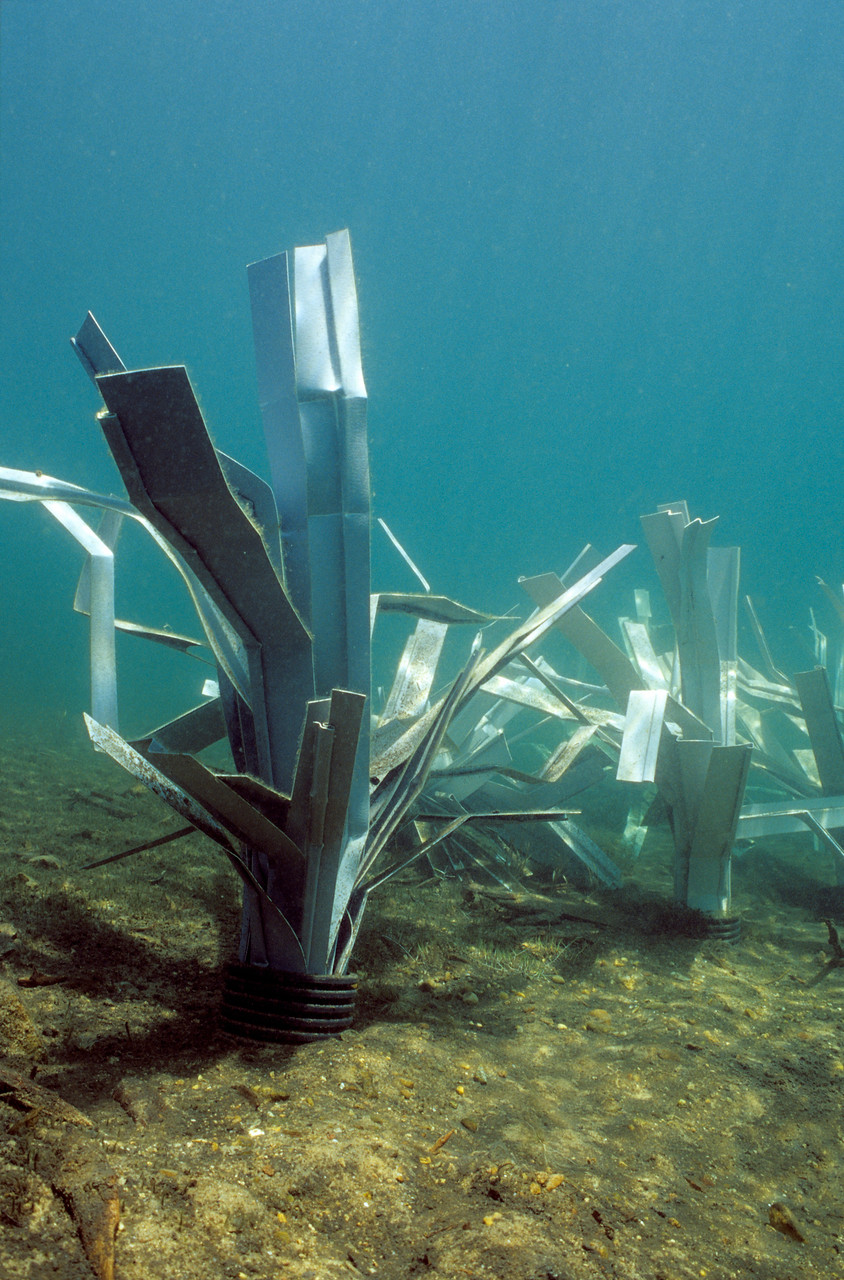
Fishiding's own products show why. The Safehouse opens more than 7 feet wide and has about 50 square feet of material surface. The Keeper opens more than 11 feet wide and has more than 125 square feet of material surface. Neither figure should be treated as a direct measurement of the pond area covered, but both tell you more than simply calling each product one structure.
The right question is: How much of the pond offers useful cover, and what kind of cover is missing? Count existing brush, aquatic plants, submerged timber and other usable habitat before adding artificial fish habitat. Then inspect the gaps: places where fry have no tight refuge, where forage fish have little protection, or where larger fish lack nearby holding cover.
What makes a quarter acre of cover useful?
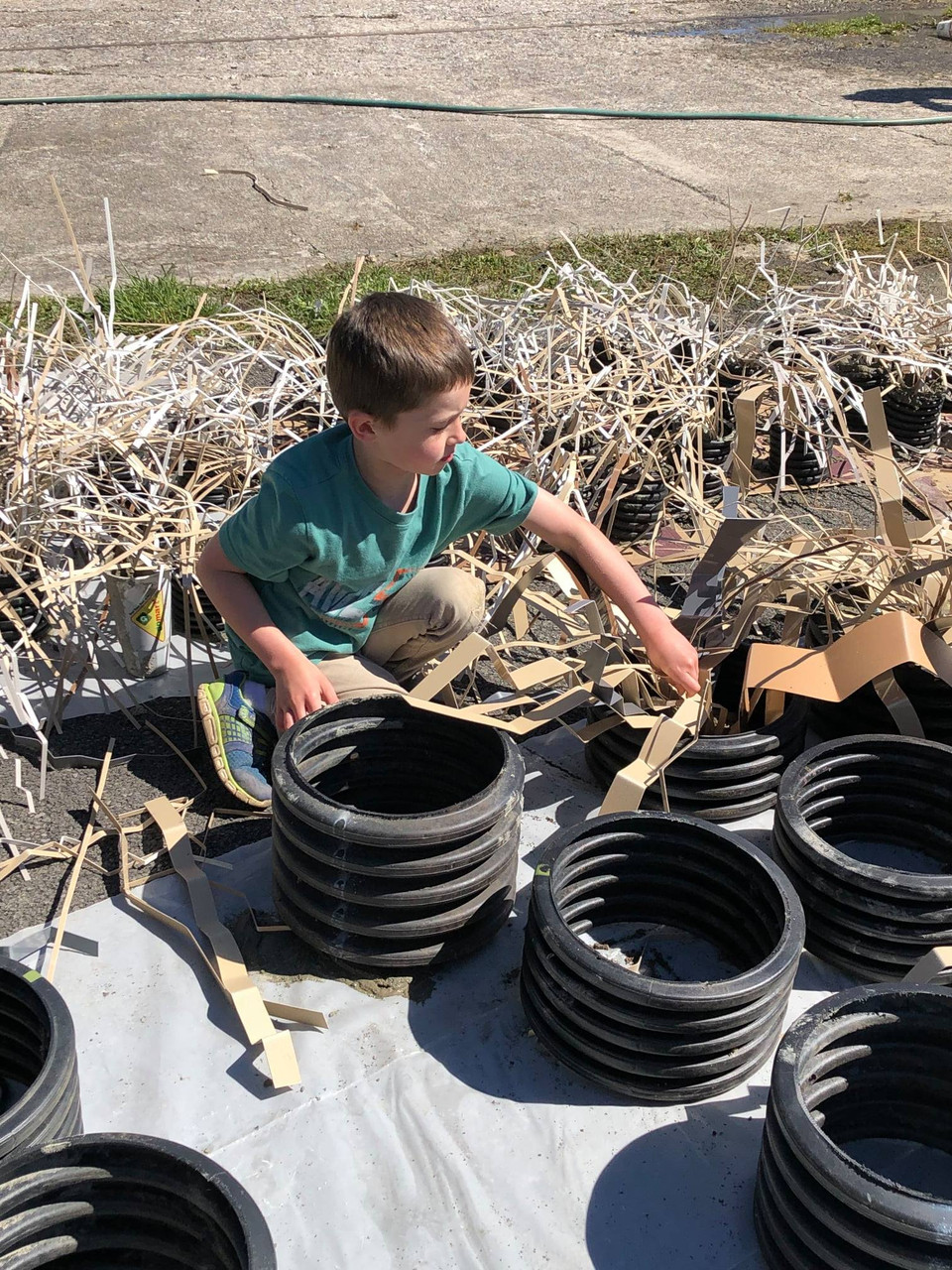
A quarter acre of one uniform material in one location is not the same as a quarter acre of varied habitat. A pond beginning to self-sustain needs connected opportunities for small organisms, fry, forage fish and larger fish to find food and protection. Fishiding builds its artificial fish habitat from reclaimed PVC with dense, varied openings because the detail of the cover matters as much as its extent.
- Fine, dense refuge: Tight strands and intricate openings give fry and small forage fish places larger fish cannot easily enter. These surfaces also support periphyton and small aquatic organisms, including copepods.
- Wider openings and shade: Larger fish need places to move alongside, under and through cover. Broad limbs can provide shade while leaving travel space around the dense center.
- Several depth zones: Place cover where the pond has usable shallow, middle and deeper water. A shallow nursery area cannot replace a deeper holding area, or vice versa.
- Existing natural habitat: Keep useful plants, timber and brush in the assessment. The aim is to build on what is already there, not to ignore it because it was not purchased.
- Continuity: Habitat spread across suitable parts of the pond gives fish access to cover as they move. Isolated structures in otherwise bare water leave large gaps.
More varied, usable cover is better than stopping at an arbitrary unit count. The 25% goal is a beginning, not a ceiling: if a pond still has wide areas without protection for young fish, keep building habitat where it is needed.
How to assess your pond before adding habitat
- Map the pond surface. Mark shorelines, points, coves, docks and the portions of the pond that already contain usable cover. For a 1-acre pond, compare that map against a quarter-acre starting goal.
- Look beneath the surface. Note whether existing cover has fine nursery spaces, broader openings and surfaces for periphyton growth. A large bare rock or a single open limb does not serve the same role as dense, intricate refuge.
- Check depth and water levels. Identify shallow nursery water, transition water and deeper usable areas. Account for the pond's normal water-level changes so added cover remains submerged.
- Fill the missing habitat types. Add fine, dense materials where fry lack shelter and broader, more open forms where larger fish need cover. Do not rely on only one shape throughout the pond.
- Reassess the whole area. After placement, look at how much of the pond has useful cover. If it remains short of the quarter-acre starting goal, keep adding a variety of cover rather than declaring the project finished after a set number of products.
This method leaves room for local differences. A pond with established vegetation and submerged timber may already have meaningful coverage. A pond with a bare bottom needs more added habitat to reach the same starting point. Fishiding's underwater freshwater observations, recorded while diving with scuba gear, show freshwater fish using dense, intricate habitat; the purpose of the plan is to make that kind of cover available across more of the pond.
Choosing different structures for different jobs
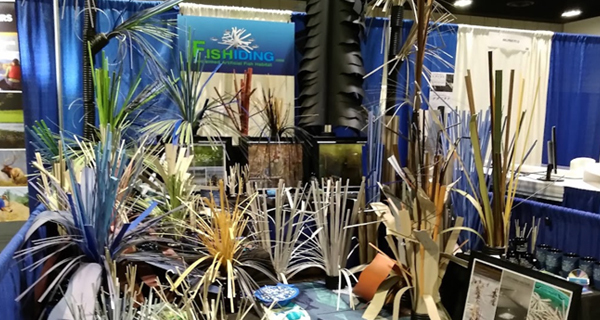
Fishiding's Cradle uses fine, flexible reclaimed PVC strands for shallow fry and forage protection. The Safehouse pairs a dense center with wider outer openings for mid-depth water. The Keeper adds a tall, broad form for deeper water, with a dense center and openings that allow larger fish to move around it. These are different tools, not interchangeable units in a per-acre formula.
| Cover type | Best for | Limitation when used alone |
|---|---|---|
| Fine, dense strands | Fry, forage fish and intricate refuge | Does not replace broader holding cover |
| Mixed dense center and open outer limbs | Varied fish sizes in transition water | Does not fill every shallow nursery gap |
| Tall, broad deep-water structure | Deeper holding cover and added material surface | Does not replace shallow cover |
| Existing plants, brush and timber | Extending habitat across the pond | Type, density and seasonal persistence vary |
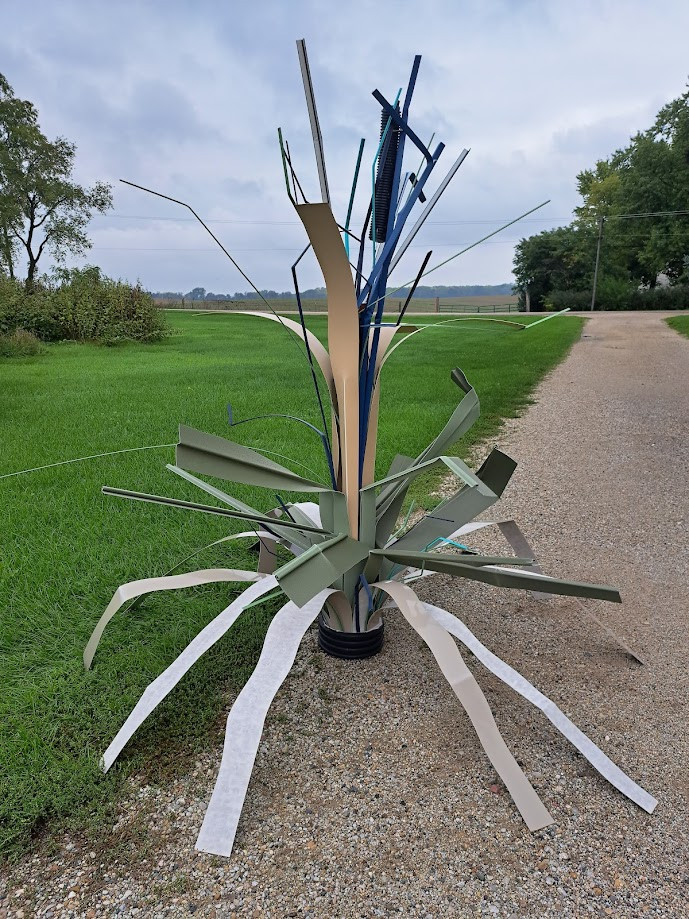
All Fishiding preassembled habitat units are self-weighted with cement built into their design; they do not need a separate anchor or ballast. That makes it easier to add varied forms in the places where the pond needs them. It does not change the central planning measure: how much useful, diverse habitat the pond actually has.
Why the number changes from pond to pond
Existing habitat changes the starting point. A pond with established natural cover needs a different addition than a new pond with little cover. Assess what fish can actually use beneath the water rather than estimating from the shoreline alone.
Structure size and density change what each addition contributes. A wide product does not automatically supply dense refuge throughout its footprint. Likewise, a compact but intricate unit can provide valuable fine-scale habitat without covering a broad area of pond.
Depth changes where cover works. Choose forms that fit the available water, and do not assume that a structure placed in one depth zone will serve fish throughout the whole pond.
Habitat diversity matters. If every addition has the same opening size and height, the pond still lacks other types of cover. Mix fine nursery material, broader branches and existing natural forms.
There is no one-unit conversion from product surface area to pond coverage. Count the pond area occupied by usable cover separately from the square feet of PVC surfaces available for growth. Both matter, but they answer different questions.
Related questions
Does more cover make a pond more self-sustaining?
Fishiding's starting plan is varied cover across at least 25% of pond surface area, with more added wherever important habitat types remain scarce. Cover supports protection and food-web surfaces; do not treat it as the only ingredient in pond health or as a guarantee of a particular fish population.
Should I count brush and aquatic plants toward the quarter acre?
Yes. Count usable existing cover as part of the area assessment, then add artificial fish habitat where that cover lacks density, variety, depth or seasonal persistence. Do not count every square foot of open water between isolated branches as protected habitat.
Can I calculate pond coverage from a product's square feet of surface area?
- A product's material surface area and the portion of the pond that offers usable habitat are different measurements. Use product surface area to compare growing surfaces and density, then map the area of pond that actually contains cover.
FAQ
How many fish habitat structures does a 1-acre pond need?
There is no fixed number. Aim for varied, usable cover across at least one-quarter acre, or 25% of a 1-acre pond's surface area; the number of structures depends on their size, density and existing cover.
How much cover does a 2-acre pond need?
At least one-half acre is the 25% starting goal for a 2-acre pond. Count usable natural and added cover together, and include several types of refuge.
Does 25% coverage mean PVC surface area?
No. The 25% figure describes the portion of pond area with usable cover. The square feet of material surface on an individual unit are a separate measurement.
Is 25% of a pond a maximum amount of habitat?
No. Fishiding treats 25% or more as a starting point. Add more varied cover where fry, forage fish or larger fish still lack suitable habitat.
Do existing aquatic plants count as fish habitat?
Yes, when they offer usable cover. Assess what fish can use underwater and fill missing depth and cover types rather than overlooking natural habitat.
Do Fishiding habitat structures need separate anchors?
No. Fishiding preassembled habitat units have cement built into their patented design and do not require separate ballast or anchors.
One last thing
A quarter acre of pond cover and a product's square feet of PVC surface do not measure the same thing. Plan the quarter acre as pond area with varied, usable cover; choose structures for the dense detail and additional surface they bring inside that area. That is why the answer to a question about how many structures belongs on a habitat map, not on a fixed per-acre shopping list.