Why We Don't Build Fish Habitat Like a Picket Fence
25th Oct 2026
We don't want our artificial fish habitat to look like a picket fence. We want overlapping limbs, fine strands, and spaces of different sizes—because a newly hatched fish needs something different from the bass swimming around the outside.
A neat row of branches might please the person buying it. We're building for the residents.
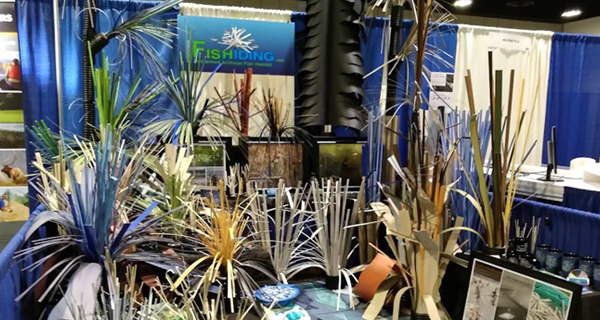
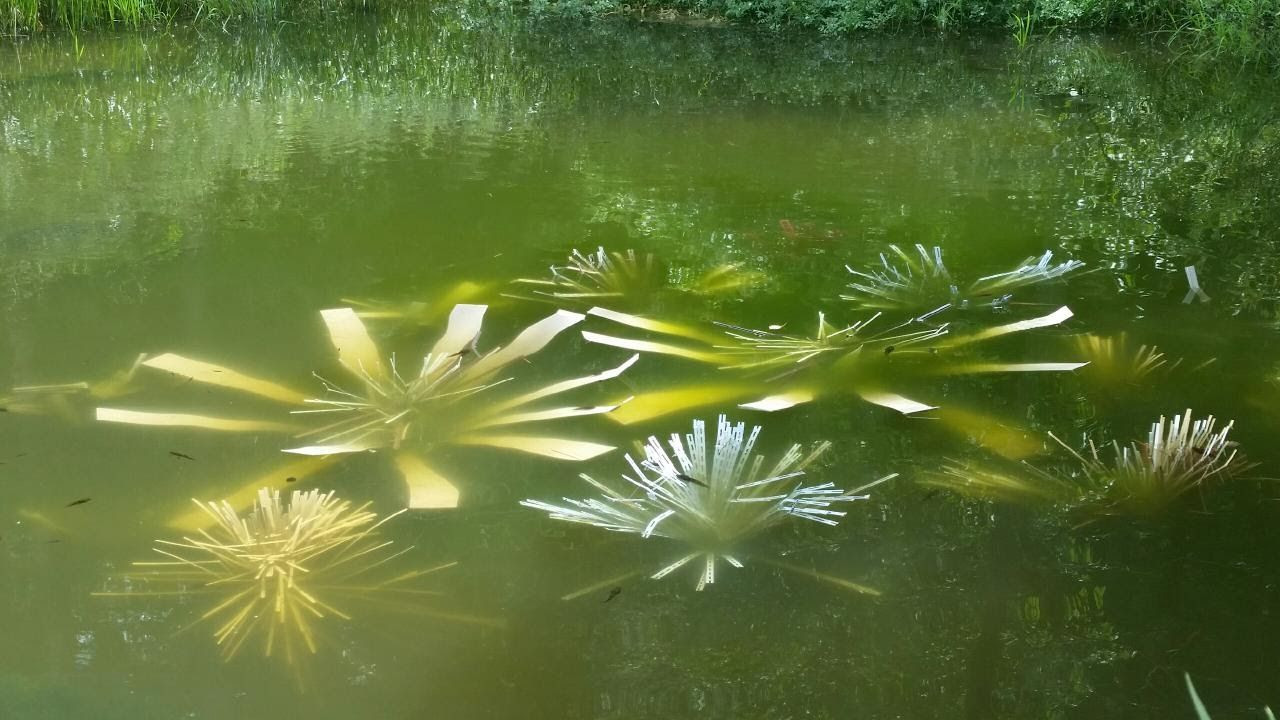
Look at our Cradle artificial shallow fry habitat. Its grass-like strands are not there to make a miniature tree. They put fine cover where small fish need it. That distinction—between making a recognizable shape and making useful living space—is what this article is about.
The space between the pieces is the point
When we talk about variety, we don't mean throwing a few different-looking structures into a pond and calling the job finished. We mean the detail within the cover: a narrow passage beside a broader limb, strands overlapping at different angles, and sheltered interiors opening into larger spaces.
The material matters. So does what we do with it.
Our Keeper is a good example. Its reclaimed PVC limbs range from 1/2 inch to 5 inches wide. Those are not interchangeable pieces doing exactly the same job. Narrower profiles add detail; broader ones add surfaces and shade. Bending them into an abstract arrangement changes the spaces between them again.
We want variety within the structure, not just variety on the order form.
A big outside measurement doesn't tell you much about those internal spaces. Picture an umbrella without the fabric. It has height, spread, and plenty of room underneath—but that doesn't make it a nursery for small fish.
Our fine cover is there for a reason. Fry need places to move into, not merely something large to swim beside. Growing forage fish need room too. That is why density and opening size belong in the same conversation.
There is a practical balance here: dense does not mean sealed shut. We want fish to enter and use the cover. A solid wall would miss the point just as surely as an empty frame.
Reclaimed PVC gives us something useful to work with
We use reclaimed PVC that was destined for landfills. The different profiles let us work with fine, flexible material as well as broader pieces. That variety is part of the design, not something we need to disguise.
We don't need every piece to resemble a perfectly matched branch. A submerged root tangle doesn't come with matching branches either.
What we do need is a useful finished arrangement. Fine strands belong where we want intricate refuge. Wider limbs contribute larger surfaces and shaded spaces. Upright pieces and bent pieces change how the cover fills the water around them.
That's also why we offer components for people who want to build their own. Our Artificial Fish Habitat Reeds can be left upright or bent by hand and mixed with wider material. They let a builder add the fine detail a sparse frame lacks.
Those reeds are loose DIY material, so the finished build needs its own stable base and assembly plan. Our preassembled units are different: cement is already built into the design. There is no separate ballast or anchor to add.
One gives you control over the build. The other arrives with that construction work already done. Neither choice excuses an open, empty interior when the goal is nursery cover.
A little apparent chaos is deliberate
Look straight through a structure. Now change the angle and look again.
Are you seeing the same clear corridor each time, or do overlapping pieces interrupt the view? Can a small fish move farther into the cover, or does the shelter end at the first row of limbs?
That is what we mean by apparent chaos. Not careless construction. An irregular arrangement with a purpose.
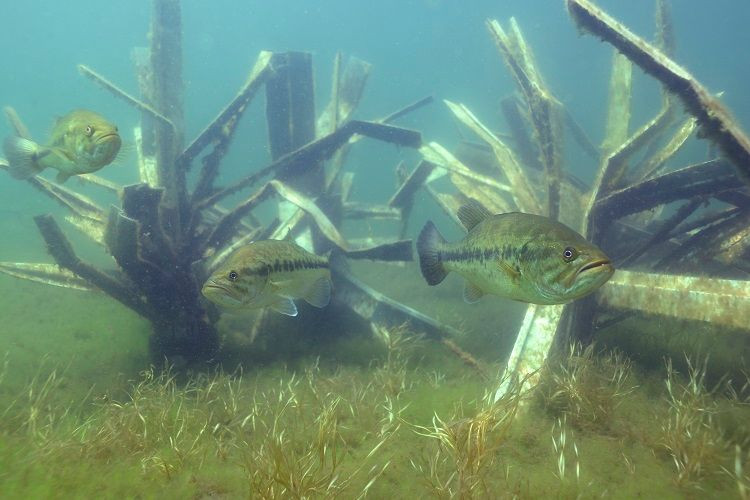
Overlapping cover interrupts sightlines and makes direct pursuit more difficult. It does not turn every prey fish invisible; bass can also use the outside edges as ambush cover. The interior and the perimeter do different jobs.
We don't want to design only for the fish holding on the outside. The little fish inside deserve some consideration too.
For a pond owner, this changes what is worth inspecting before installation:
- Look into the middle. A detailed outline around an empty center leaves a different kind of shelter.
- Look from low down. The view at fry height is more useful than the view from above.
- Change your angle. An overlap that blocks one sightline may leave another completely open.
You don't need to make every opening identical. That would bring us right back to the fence.
The brown coating belongs in the story
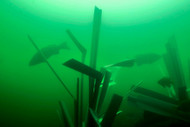
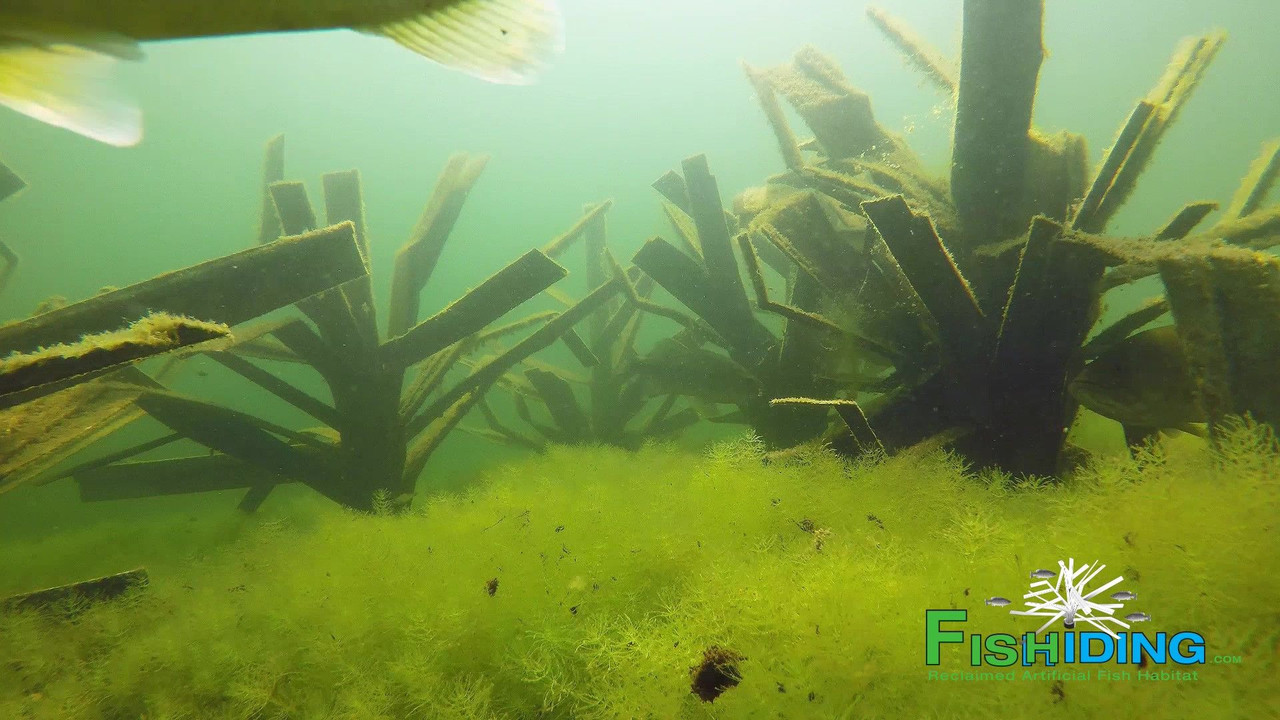
The Safehouse photograph below shows overlapping PVC limbs with visible attached growth. It isn't a clean product photograph, and that's useful. It shows the habitat after submerged surfaces have started becoming part of the underwater environment.
Periphyton is the community of algae, microbes, and other organisms attached to those surfaces. Copepods are tiny crustaceans; they are part of the small aquatic life we consider alongside fry and larger forage fish.
We don't think the story should stop at a photograph of a bass. The coating on a limb, the small animals among the strands, and the young fish using the interior are worth attention in their own right.
One customer put the reeds' role plainly. Don wrote in his February 2024 review:
The reeds hold tons of bugs.
That is a customer's description, not a species inventory. But it draws attention to a part of habitat people can overlook when they shop only for a place to catch larger fish.
Different orientations expose surfaces to different light and water movement. Fine cover and broad limbs provide different physical spaces. Those are useful design features without pretending that every material profile creates its own separate food web.
For a closer look at that side of the habitat, our guide to periphyton-growing surfaces explains what to consider beyond the structure's footprint.
Three forms, three different jobs
We wouldn't stretch the Cradle into a tall tree and expect it to remain the same kind of nursery. Nor would we choose a Keeper simply because it is larger. The form has to suit the place and the fish.
Here is the useful distinction between three of our finished models:
| Model | Best for | Design detail | Where it doesn't fit |
|---|---|---|---|
| Cradle artificial shallow fry habitat | Fine shallow-water refuge | Grass-like strands; approximately 28–32 inches tall | Not a substitute for tall cover farther down a slope |
| Safehouse Artificial Fish Habitat | Broader mid-depth cover | 48 inches tall, with flexible limbs 3–6 inches wide | Needs room to open and suitable water at its placement depth |
| Keeper Artificial Fish Habitat Tree | Taller cover above the bottom | More than 72 inches tall, opening more than 11 feet wide | Not intended for a shallow nursery location |
Cradle is recommended for 2–6 feet of water, Safehouse for 5–8 feet, and Keeper for water over 8 feet. Local oxygen conditions and changing water levels still belong in the placement decision.
Our models don't all need to look alike, because they aren't all doing the same job.
What a parent noticed
Mary Landers described Cradle as her children's “fish grass” in an October 2026 review. She wrote that the children wanted to fish around those habitats and saw little fish around them with bigger fish nearby.
I like the simplicity of that description. Fine cover close in, larger fish nearby, and children paying attention to what lives around their dock. No complicated terminology required.
It is also a better way to talk about variety than promising that one shape will handle every fish, at every size, everywhere.
- Fishiding artificial fish habitat uses different profiles to create different spaces—not just a larger outline.
- Fine strands and broad limbs do different jobs within freshwater fish cover.
- Choose the missing habitat function before choosing the biggest structure.
FAQ
Can I bend the habitat into different shapes?
Yes. Shape the flexible PVC by hand as shown—there is no wrong arrangement. Pinch-bend each piece with your fingers to crease the PVC; the angle stays intact permanently. Mix upright and bent pieces to create your own habitat profile.
Should all my pond habitat be equally dense?
No. Fine nursery cover and larger passages serve different fish sizes and uses. Match the density and form to the job rather than repeating one arrangement throughout the pond.
Does reclaimed PVC variety mean mixing different chemicals?
No. This article is about physical profiles: strand widths, broader limbs, orientations, and the spaces between them. Chemical mixtures are not the habitat-design objective.
If you're adding habitat to an existing pond, tell us what is missing. Perhaps you already have a large brush pile but very little fine cover. Perhaps there is shelter along the bank and nothing useful above the bottom farther out.
Those are different starting points. They deserve different builds.
That's the conversation we want to have—not how to make another underwater picket fence.
Talk habitat with David at Fishiding
Call 815-693-0894 or email admin@fishiding.com. Location, depth, fish species, and goals are just a few of the questions that help create a fully custom, hand-drawn habitat plan for your lake or pond.