

Best fish attractors ranked by water depth placement in 2026
8th Oct 2026
Choosing fish attractors by water depth starts with usable water, not the deepest spot on your map. For your 2026 placement plan, Fishiding preassembled reclaimed PVC cribs are the best overall starting point for mid-depth cover; habitat mats suit shallow bottom cover, while deep-water structures belong only where oxygen supports fish.
- Choose fish attractors by water depth, oxygen conditions, structure height, and the fish sizes you want to shelter.
- Fishiding preassembled reclaimed PVC cribs are the default choice for planned mid-depth freshwater fish habitat.
- Habitat mats fit shallow bottom cover; deep-water attractors require an oxygen check before placement.
- DIY builds suit custom layouts; brush piles suit projects that specifically need natural woody cover.
Why this matters
An attractor in the wrong depth zone solves the wrong problem. Dense cover near shore serves a different purpose from a taller fish crib beside a drop-off. Your choice should reflect the fish using that area, not simply how much structure fits there.
Water depth alone also leaves out oxygen, seasonal water-level changes, and the height of the finished structure. A bottom-mounted attractor occupies a vertical space. Its top matters as much as its base.
The best placement puts usable cover in water fish can occupy. That is the organizing rule for this 2026 ranking, rather than a universal depth chart that treats every pond alike.
What makes the best fish attractors by water depth
- Usable depth: Check the location at seasonal low water, not just at installation. Confirm that fish can use the surrounding water.
- Density and openings: Match spaces within the habitat to fry, forage fish, and larger fish. One opening size does not serve every life stage equally.
- Vertical variety: Match the structure's height to the available water column. Combine bottom cover with taller habitat where the site supports it.
- Placement: Consider nearby natural cover, slopes, access routes, and fishing pressure. Avoid blocking swimming areas, docks, or maintenance access.
- Stability: Confirm the finished structure's installation method. Preassembled Fishiding units and habitat mats have cement built into their self-weighted design.
- Evidence and inspection: Favor documented underwater use and a layout you can revisit. An installation photograph shows placement, not fish use.
Fish attractors at a glance
These are habitat types, not individual model specifications. Choose a type first, then check the actual unit's dimensions and instructions against your placement map.
| Rank and option | Best for | Standout feature | Key limitation |
|---|---|---|---|
| 1. Preassembled reclaimed PVC cribs | Mid-depth cover with a defined installation plan | Dense, varied cover in a self-weighted unit | Requires a confirmed footprint and height before placement |
| 2. Reclaimed PVC habitat mats | Shallow bottom-oriented shelter | Cover spread across the pond or lake bottom | Low-profile cover does not replace taller structure |
| 3. Deep-water preassembled habitat | Verified oxygenated offshore sites | Cover suited to a selected deep-water zone | Deep water is not automatically usable fish habitat |
| 4. DIY habitat components and kits | Custom layouts along irregular margins | Control over the finished arrangement | Assembly and installation decisions remain part of the project |
| 5. Natural brush piles | Projects seeking additional woody cover | Branches provide varied natural spaces | Wood decomposes, and the finished footprint changes |
1. Preassembled reclaimed PVC cribs: best for mid-depth cover
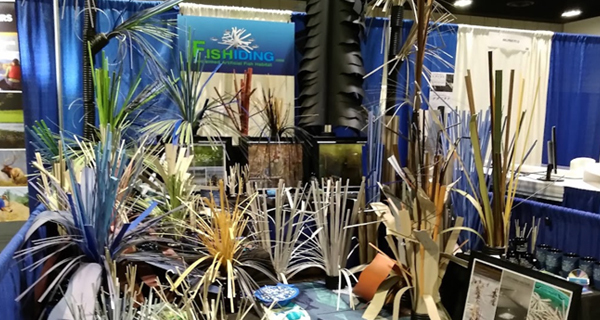
Preassembled fish cribs provide a defined structure without requiring you to design every connection. Fishiding freshwater fish habitat uses reclaimed PVC destined for landfills, with dense, intricate spaces for shelter and forage activity. Its preassembled models are self-weighted with cement built into the design.
Best for: Pond and lake owners adding mid-depth cover near a surveyed slope, existing habitat edge, or other planned location.
Mid-depth is a site-relative description, not a fixed number of feet. Start with the actual water depth and finished crib height. Then check whether the top remains submerged during expected low-water conditions.
Preassembled reclaimed PVC crib pros:
- Dense, varied spaces support different habitat uses.
- Factory assembly removes the need to design a complete DIY structure.
- Built-in cement provides self-weighting without added ballast or anchoring.
Preassembled reclaimed PVC crib cons:
- The finished footprint must fit your selected site.
- A crib does not replace shallow bottom cover or existing natural habitat.
- Underwater placement still requires a site-specific plan.
The manufacturer's freshwater observations span more than 15 years and thousands of hours of underwater filming. That evidence supports its approved claims that all freshwater fish species use the dense habitat and that the habitat grows more fish. Species, life stages, and seasonal use still differ.
Verdict: Buy preassembled reclaimed PVC cribs for a mapped mid-depth placement, not an unmeasured drop site.
2. Reclaimed PVC habitat mats: best for shallow bottom cover
Habitat mats spread cover along the bottom instead of relying on a tall central structure. That makes them a useful option when your placement problem is a shallow area needing dense shelter without a large vertical profile. All Fishiding habitat mats, including modular and legacy mats, are self-weighted with built-in cement.
Best for: Shallow freshwater areas where bottom-oriented cover matches the habitat goal and leaves necessary access clear.
Check the lowest expected water level before choosing the location. Also identify sediment conditions and existing vegetation. A mat placed where accumulating sediment buries its useful spaces will not retain the layout you intended.
Reclaimed PVC habitat mat pros:
- Bottom-oriented cover fits a different depth slot from tall cribs.
- Dense spaces provide shelter opportunities for small aquatic life.
- Built-in weighting avoids separate ballast or anchoring.
Reclaimed PVC habitat mat cons:
- Low-profile habitat does not provide the same vertical reach as a taller unit.
- Shallow placement needs attention to drawdowns and exposed shorelines.
- Sediment accumulation can reduce accessible spaces.
Periphyton is the attached community of algae and microorganisms growing on submerged surfaces. It contributes to freshwater food webs. Think of habitat surfaces and protective openings together: surface growth and shelter serve different functions.
Verdict: Buy habitat mats when shallow bottom cover is the missing habitat type.
3. Deep-water preassembled habitat: best for verified offshore sites
Deep-water attractors add structure away from shore where the surrounding water remains suitable for fish. The critical word is suitable. A deep basin with inadequate dissolved oxygen is not improved simply by adding a fish crib.
Best for: Fisheries managers and lake owners with depth and oxygen information supporting a specific offshore placement.
Dissolved oxygen is oxygen present in the water that fish use for respiration. In seasonally stratified lakes, deeper water can lose oxygen while remaining cooler. Check conditions at the proposed structure's base and top during the season you expect fish to use it.
Deep-water preassembled habitat pros:
- Adds cover where an offshore location otherwise lacks structure.
- Allows placement around a deliberately selected depth zone.
- Complements shallower habitat rather than forcing every unit into one band.
Deep-water preassembled habitat cons:
- Oxygen conditions can make the deepest bottom unsuitable.
- Offshore installation requires suitable access and handling arrangements.
- Direct inspection is more involved than at a shallow site.
For a 2026 deep-water project, use current site measurements rather than borrowing a depth recommendation from another lake. A reservoir with changing water levels and a small managed pond do not share one placement rule.
Verdict: Hold deep-water habitat purchases until you confirm usable water at the intended location.
4. DIY habitat components and kits: best for custom shoreline layouts
DIY habitat lets you plan a finished arrangement around a specific margin, access constraint, or habitat gap. Reclaimed PVC components and kits suit readers who want involvement in the build rather than a fully assembled unit.
Best for: Pond owners shaping a custom layout along irregular shorelines or combining different habitat profiles.
Start with the site drawing, not a pile of components. Specify the finished footprint, height, openings, and handling method before assembly. Follow the instructions for the selected kit; do not assume separate DIY materials share every feature of a preassembled model.
DIY habitat component and kit pros:
- Supports deliberate choices about the finished layout.
- Lets you address a specific habitat gap rather than copy a generic shape.
- Uses reclaimed PVC when you select the manufacturer's supplied materials.
DIY habitat component and kit cons:
- Assembly takes planning and hands-on work.
- Finished stability depends on the actual build and its instructions.
- A custom arrangement needs a practical way to handle and deploy it.
DIY does not mean placing miscellaneous materials into public water. Check ownership, permission, and applicable placement rules first. Keep swimming areas, boat routes, and pond-maintenance access out of the habitat footprint.
Verdict: Buy DIY components or kits when customization is the goal and you will follow the build instructions.
5. Natural brush piles: best for additional woody cover
Brush piles place branches and woody material into freshwater to create fish cover. They offer a natural alternative to manufactured structures, particularly where a management plan calls for woody habitat. Existing healthy natural cover should also be assessed before you add anything.
Best for: Permitted pond and lake projects specifically seeking additional natural woody cover.
Choose a location that fits the finished pile, not just the trunk or largest branch. Consider where the branches extend and how the pile will change as wood decomposes. Installation planning must account for movement and buoyancy.
Natural brush pile pros:
- Branches create varied openings and edges.
- Woody surfaces support attached aquatic growth.
- Natural cover can complement manufactured habitat.
Natural brush pile cons:
- Decomposition changes the original structure.
- Branches can snag fishing tackle.
- Placement and stability depend on the material and installation method.
Do not treat natural and artificial cover as an either-or decision. A habitat plan can retain existing vegetation and wood while adding a different density or height nearby. Avoid damaging established cover merely to make room for a new attractor.
Verdict: Buy into the brush-pile approach when woody cover fits the management plan; skip it where access or snagging is the main constraint.
How the ranking works
This ranking prioritizes usable depth, density, vertical variety, stability, and placement control. Preassembled cribs lead because they address a common mid-depth cover decision without requiring a custom build. Mats, offshore habitat, DIY layouts, and brush piles each serve a different use case.
The ranking is not a controlled trial comparing catch rates or fish production among these options. Fishiding's freshwater fish habitat evidence comes from its long-term underwater observations; the alternative comparisons describe established material and placement tradeoffs.
For your 2026 project, rank the options again against your own habitat gap. Shallow cover should win a shallow-cover decision, even though preassembled cribs are the overall default here.
Which fish attractors should you choose?
Choose preassembled reclaimed PVC cribs if you have a confirmed mid-depth site and want a defined habitat unit. Choose mats when the missing cover lies along a shallow bottom. Use deep-water habitat only after checking the water fish would occupy.
Before selecting the actual unit, complete this placement sequence:
- Map existing cover. Mark vegetation, wood, bare areas, slopes, and access routes.
- Record water levels. Note current depth and the expected seasonal low-water condition.
- Check usable water. Include dissolved oxygen information for deep or seasonally stratified sites.
- Match the finished structure. Compare its footprint, height, density, and openings with the habitat goal.
- Plan observation. Record the placement location and inspect fish use when conditions allow.
Separate attraction from population evidence. Fish gathering around a new structure demonstrates use; it does not, by itself, measure recruitment or total population growth. Recruitment means young fish surviving into a later life stage.
FAQ
What's the best way to choose fish attractors by water depth?
Choose fish attractors by water depth, usable oxygen conditions, and the finished structure's height. Match the habitat type to the fish sizes and depth zone you want to support.
Are shallow fish attractors better than deep fish attractors?
Shallow and deep fish attractors serve different placement needs. Shallow mats provide bottom-oriented cover, while deep-water habitat belongs only where the surrounding water supports fish.
How deep should I put a fish crib in my pond?
Place a fish crib where its full height fits within usable water at expected seasonal low levels. There is no single correct depth for every pond, fish population, and structure.
Do Fishiding preassembled fish attractors need extra weight?
Fishiding preassembled fish attractors do not need added weight, ballast, or anchoring. Cement is built into the self-weighted design, including all modular and legacy habitat mats.
Can I put fish attractors in the deepest part of a lake?
Use the deepest part of a lake only if oxygen and other site conditions support fish there. Depth alone does not establish that a placement is suitable.
Are PVC fish attractors better than brush piles?
Reclaimed PVC attractors and brush piles offer different material and placement tradeoffs. Preassembled habitat provides a defined layout, while woody cover decomposes and changes shape over time.
Do fish attractors grow more fish or just attract them?
Fishiding supports its grows-more-fish claim with more than 15 years and thousands of hours of freshwater underwater filming. For your own project, distinguish observed fish use from measured changes in recruitment or population size.
Should I put all my fish habitat at the same depth?
Do not place every structure at one depth without assessing the habitat gaps. A plan combining suitable shallow, mid-depth, and deep-water cover addresses different locations and life stages.
One last thing
Measure from the surface to the top of the habitat, not only to the bottom. A tall crib and a low-profile mat placed on the same bottom contour occupy different parts of the water column.
Before your first 2026 installation, draw the finished structure on a simple depth profile. Add the expected low-water line and any oxygen-limited water. That sketch turns an attractive-looking spot into a placement decision you can explain and revisit.