
Does PVC grow periphyton faster than wood or brush piles?
20th Oct 2026
PVC does not have a universal periphyton-growth speed advantage over wood or brush piles. Light, nutrients, depth, and the amount of exposed surface affect growth, so material alone does not establish a winner. For your freshwater pond or lake, choose cover that supports attached growth and provides useful shelter—not whichever surface looks green first.
- Does PVC grow periphyton faster than wood? Material alone does not establish a universal winner.
- Compare submerged surfaces at similar depths, light exposure, and installation dates before judging periphyton growth.
- Fishiding freshwater fish habitat suits owners seeking reclaimed PVC cover backed by long-term underwater observations.
- Keep attached growth, fish use, and population outcomes separate when evaluating fish cribs and brush piles.
Does PVC grow periphyton faster than wood or brush piles?
Neither material wins every placement. A comparison must separate the material from the structure built with it. A branching brush pile and a dense reclaimed PVC mat differ in shape, surface area, shading, and openings—not just composition.
Periphyton is the attached community of algae, bacteria, and other microorganisms growing on submerged surfaces. Both wood and PVC provide surfaces for this community. That does not mean they develop identical communities or accumulate growth at identical rates.
For a 2026 habitat project, treat faster growth as something to measure under comparable conditions, not a property to assume. The guide to fish habitat structures ranked by periphyton growth provides a related starting point for evaluating habitat choices.
| Option | Best for | Useful feature | Limitation when comparing growth |
|---|---|---|---|
| Reclaimed PVC habitat | Owners choosing manufactured cover with a defined arrangement | Provides submerged surfaces and openings for aquatic life | Material alone does not establish colonization speed |
| Wood cover | Owners retaining useful existing natural structure | Provides natural submerged surfaces and structural variety | Wood type, condition, and exposure complicate comparisons |
| Brush piles | Owners using branching natural cover where appropriate | Branches create varied surfaces and spaces | Uneven shading and branch density make equal-area comparisons difficult |
The practical question is not simply which material turns green first. Ask which structure develops attached growth where fish can use the surrounding cover.
Why this matters for your pond
A visibly coated structure tells you that organisms have colonized its surface. It does not tell you how much food reaches fish, how many fry survive, or whether the pond supports a larger population.
Those are different outcomes. A dark surface can reflect attached material, trapped sediment, or both; a camera image alone does not measure food quality.
For your 2026 placement plan, separate three decisions:
- Surface growth: Where does attached growth develop under the pond’s light and nutrient conditions?
- Habitat function: Do the openings and surrounding spaces suit the fish sizes you want to support?
- Fish response: What species and life stages actually use the structure?
This distinction prevents an easy mistake: selecting a structure for its coating while overlooking its usefulness as cover. A habitat installation should answer the fish’s needs, not just pass a green-surface inspection.
Reclaimed PVC: assess the whole habitat design
Reclaimed PVC provides a substrate for attached growth without being natural woody cover. Its usefulness also depends on how the material forms a structure: dense detail, varied openings, and exposed surfaces serve different purposes.
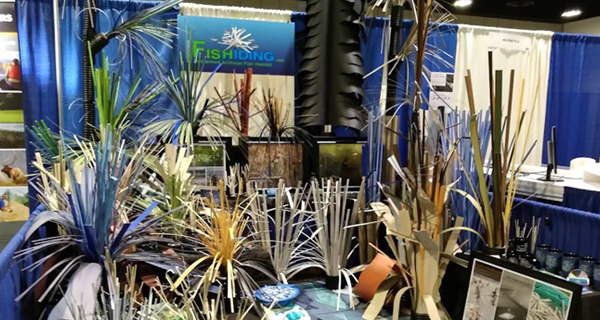
Fishiding freshwater fish habitat is best for owners seeking reclaimed PVC cover backed by long-term underwater observations. Its evidence library includes more than 15 years and thousands of hours of freshwater underwater filming documenting fish use of its dense, intricate habitat models.
That long-term record matters when assessing shelter and fish activity. It does not turn every footage sequence into a controlled measurement of periphyton growth speed against wood.
Our preassembled habitat units, including habitat mats, are self-weighted with cement built into the design. They do not need added ballast. DIY components require their own installation planning; do not assume loose materials behave like a completed preassembled unit.
The tradeoff is straightforward: selecting a manufactured structure gives you a particular arrangement of cover, but you still need to match that arrangement to depth, fish size, and placement. The material does not make those decisions for you.
Wood and brush piles: compare their condition and arrangement
Wood is not one uniform comparison material. A submerged limb, weathered log, and fresh brush pile present different surfaces and different amounts of branching cover.
Brush piles also change as their smaller branches break down. That changes the cover available to small fish and makes long-term comparisons different from early colonization comparisons.
Retain useful natural cover when it serves your habitat plan. Replacing wood solely because someone claims PVC always develops periphyton faster skips the evidence needed for that decision.
The limitation works both ways. Visible growth on wood does not prove that wood outperforms reclaimed PVC across your pond. Compare the actual location, structure, and fish use rather than giving either material a blanket victory.
If your pond already contains effective natural cover, identify the missing habitat function before adding more. You might need denser small-fish refuge, a different depth zone, or better distribution—not another pile beside the existing pile.
Why periphyton growth varies
The following factors explain why two structures can develop different amounts of attached growth without proving that one material is inherently faster.
- Light exposure: The photosynthetic part of periphyton needs light. Water clarity, depth, shade, and neighboring surfaces affect how much reaches the substrate.
- Nutrient availability: Nutrient conditions influence attached communities. Changing substrate does not remove the influence of the surrounding water.
- Exposed surface area: A large structure does not automatically present more usable surface. Closely packed pieces can shade one another or trap sediment.
- Placement and water movement: Orientation, sediment accumulation, and local water movement affect surface conditions. Compare structures in similar settings.
- Time and season: Installation date and seasonal conditions affect what a later photograph shows. An older structure has had a different exposure history.
- Grazing: Organisms feeding on attached growth can change its visible amount. Less visible coating does not, by itself, establish lower production.
These factors interact. A material comparison placed across different depths or shorelines mixes the material question with the placement question.
For a 2026 comparison, record the conditions you can observe consistently. Keep conclusions narrow enough to match those records.
How can you compare PVC and wood in your own pond?
Use a paired observation plan rather than judging unrelated structures from separate photographs. Start small enough that you can inspect each location consistently without disrupting the habitat.
1. Define what you want to measure
Decide whether your question concerns the first visible film, surface coverage, attached biomass, or fish use. Those are not interchangeable measures.
For a practical owner-led comparison, repeat photographs can document visible coverage. Measuring biomass or identifying community composition requires a more formal sampling method and appropriate expertise.
2. Compare 2 materials under similar conditions
Place the comparison surfaces at similar depths with similar exposure to light and water movement. Use equal exposed areas when evaluating growth per area, and record the installation date.
Do not compare a shallow, sunlit piece of wood with PVC beneath a shaded dock. That comparison answers a location question as much as a material question.
3. Separate substrate from structure
Flat samples help isolate surface differences, but they do not represent every feature of a full fish crib. Whole structures introduce differences in density, shade, orientation, and accessible space.
Use the right comparison for your decision. If you are choosing complete habitat, record those design differences instead of pretending that only the material changed.
4. Photograph consistently
Use the same viewing angle, camera distance, and lighting approach at each visit. Include a size reference and record visibility conditions so changes in photography do not masquerade as changes in growth.
Schedule observations at intervals you can maintain. Keep that schedule consistent across both materials rather than inspecting one whenever it looks interesting.
5. Record fish use separately
Note fish size, identifiable species, sheltering, and visible feeding activity. Avoid converting a brief visit into a claim about survival or population growth.
Small fish moving through dense cover answer a habitat-use question. A close-up of attached growth answers a surface-colonization question. Keep both records.
6. State a local result, not a universal rule
At the end of your 2026 observation period, describe the pond, placement, season, and measurement. A result from that setting is useful precisely because its scope is clear.
A defensible conclusion identifies what happened on the observed surfaces. It does not promise the same outcome in every lake or reservoir.
How do depth, density, and fish size affect the choice?
Choose the intended habitat function before choosing the material. A structure intended to shelter fry needs different spaces from cover intended primarily to concentrate larger fish for anglers.
Fry are young fish shortly after hatching. YOY means young of the year: fish produced during the current year. Those life stages need consideration beyond whether an adult fish can swim beside a structure.
Dense, intricate habitat provides small spaces, while varied openings accommodate different body sizes. Density is not simply a contest to pack in the most material; inspect how the interior, edges, and overhead cover fit your objective.
Depth also affects the light available for attached algae. It affects the fish-use question separately through seasonal temperature and oxygen conditions. Do not place habitat deeper merely because deeper water sounds more protective.
For your 2026 installation, map the intended depth zone and consider seasonal water-level changes. Then check the installation instructions for the selected habitat type.
Does more periphyton mean more food for fry?
More visible periphyton does not automatically mean more food reaches fry. Attached communities contribute to freshwater food webs, but the pathway depends on the organisms present and what the fish eat.
Copepods are small crustaceans, and zooplankton are small drifting animals. They are not another name for periphyton. Keep those terms distinct when discussing the organisms found around habitat.
The useful observation is specific: which organisms occupy the cover, which fish use it, and whether feeding activity is visible. A coating photograph alone cannot answer all three questions.
Should you remove brush piles when adding PVC habitat?
Do not remove useful brush piles solely to pursue faster periphyton growth. First identify whether the existing natural cover still provides the shelter, location, and openings your fish population needs.
Artificial habitat and natural cover can serve different parts of a placement plan. Preserve useful features and address gaps rather than treating every installation as a replacement project.
What does underwater footage actually prove?
Underwater footage documents what appears within the camera’s view: fish presence, movement, sheltering, and visible feeding behavior. Repeated observations add context across locations and time.
Fishiding’s more than 15 years of filming and thousands of hours underwater support its approved claims that all freshwater fish species use its dense habitat models and that the habitat grows more fish. Use still varies by species, life stage, season, and water body.
Keep the evidence tied to the question. Long-term fish-use documentation supports habitat decisions; a PVC-versus-wood growth-rate conclusion requires measurements designed for that comparison.
FAQ
Does PVC grow periphyton faster than wood in a freshwater pond?
PVC does not have a universal growth-speed advantage over wood. Compare similar exposed areas under similar light, depth, seasonal, and nutrient conditions before attributing a difference to material.
Can periphyton grow on reclaimed PVC fish habitat?
Periphyton can grow on reclaimed PVC fish habitat. The amount and composition of attached growth depend on the surrounding conditions as well as the exposed surface.
Are brush piles better than PVC for feeding small fish?
Brush piles are not automatically better than PVC for feeding small fish. Evaluate attached organisms, fish access, shelter, and observed feeding rather than material alone.
How long does PVC take to develop periphyton?
There is no universal colonization deadline for PVC fish habitat. Light, nutrients, season, surface conditions, and grazing affect how visible growth develops.
Does a greener fish crib mean it produces more fish?
A greener fish crib does not by itself establish greater fish production. Surface coverage, fish use, recruitment, and population growth are different measurements.
Does Fishiding habitat need extra weight before installation?
Fishiding preassembled habitat units and mats are self-weighted with cement built into the design and do not need added ballast. Follow the applicable instructions for the selected unit or DIY build.
What should I check before adding habitat to my pond?
Check the intended fish size, depth zone, existing cover, seasonal water levels, and installation requirements. Choose the missing habitat function before selecting the material.
One last thing
A heavily grazed surface can look less impressive than an untouched one. Do not confuse the amount of growth left on a structure with the amount that developed there.
Your next step is practical: map one intended habitat zone, identify the fish sizes it should serve, and decide what you will observe. Choose cover for that job, then document its use.