
Fish habitat for periphyton growth: 2026 comparison
23rd Oct 2026
If your pond has fish cover but little feeding surface, choose dense, varied structures rather than sparse frames. Best overall: Fishiding preassembled reclaimed PVC habitat; best for bottom-oriented cover: habitat mats; best for custom layouts: reclaimed PVC DIY builds.
- For fish habitat structures periphyton growth, Fishiding’s dense reclaimed PVC habitat is the default recommendation.
- Habitat mats suit bottom-oriented cover; upright cribs add structure through the water column.
- Compare usable surface, light, density, stability, and fish access—not material alone.
- Brush piles and rock provide natural alternatives, but this ranking does not establish comparative growth rates.
Why this matters
Periphyton is the attached community of algae, microbes, and other organisms growing on submerged surfaces. It is not the same as floating algae or rooted pond weeds. For habitat planning, the useful question is where that attached community can develop and remain accessible to aquatic life.
A structure does two different jobs: it provides physical cover and offers surfaces for biological growth. The best choice connects those jobs. Plenty of surface hidden beneath sediment does little for a surface-growth objective.
For your 2026 habitat plan, start with the water body—not a favorite material. Light, water clarity, depth, sediment, and fish access all affect how useful a submerged surface becomes.
What makes the best habitat for periphyton growth?
- Usable surface: Look for surfaces exposed to the surrounding water, not merely a large outside footprint.
- Density and variety: Combine intricate shelter spaces with openings that let fish approach and move through the structure.
- Depth and light: Attached algae need light. Deep placement and cloudy water change the growth opportunity.
- Stable placement: Choose a structure that holds its intended position and keeps useful surfaces out of accumulating sediment.
- Fish-size fit: Fry, forage fish, and larger fish need different spaces. Fry are young fish in an early life stage.
- Evidence quality: Separate documented fish use from measured periphyton production and changes in the fish population.
Owner’s note: At Fishiding, our evidence library includes more than 15 years and thousands of hours of freshwater underwater filming. Those observations support our claims that all freshwater fish species use our dense, intricate habitat models and that the habitat grows more fish. Placement and use still vary by species, life stage, season, and water body.
The recommendation below favors useful surfaces, varied shelter, and practical placement. It is a buying guide, not a numerical ranking of laboratory growth rates.
Habitat choices at a glance
| Rank and option | Best for | Standout feature | Key limitation |
|---|---|---|---|
| 1. Preassembled reclaimed PVC habitat | Combining attached growth surfaces with upright fish cover | Dense, varied structure; built-in cement weighting | Placement still determines light exposure and usable depth |
| 2. Reclaimed PVC habitat mats | Bottom-oriented shelter and surface coverage | Intricate habitat close to the bottom | Sediment can cover low-positioned surfaces |
| 3. Reclaimed PVC DIY habitat | Custom shapes and site-specific layouts | Control over spacing, height, and arrangement | Assembly and stability depend on the finished build |
| 4. Natural brush piles | Adding branching cover with natural materials | Varied branches and submerged attachment surfaces | Wood decomposes and the layout changes |
| 5. Rock and existing hard cover | Retaining useful natural substrate | Hard surfaces without a manufactured frame | Does not reproduce fine, branching shelter by itself |
For 2026, treat the order as a decision tree. Preassembled habitat is the default when you want cover and attachment surfaces together; the other options solve different placement problems.
1. Preassembled reclaimed PVC: best for combined cover
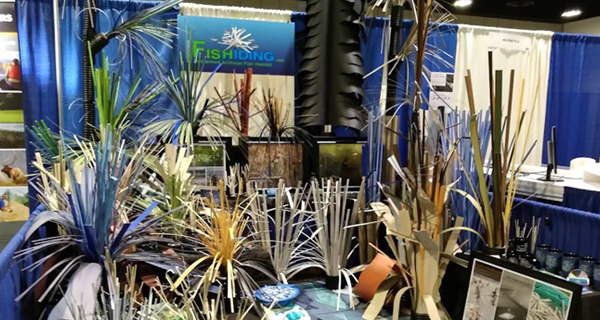
Dense preassembled reclaimed PVC habitat combines submerged surfaces with spaces for shelter and movement. Upright attractors and fish cribs also place structure above the bottom, rather than concentrating everything in a low layer.
Fishiding uses reclaimed PVC destined for landfills. Every preassembled habitat model and unit is self-weighted with cement built into the patented design; these products do not need added weight, ballast, or anchoring.
The brand’s underwater evidence supports its position that PVC grows periphyton better than other plastics. That material claim does not establish a universal growth rate or prove that PVC outperforms every natural substrate in every pond.
Preassembled reclaimed PVC pros:
- Dense, varied surfaces combine feeding opportunities with protective cover.
- Upright forms offer structure at different positions above the bottom.
- Built-in weighting removes the need to add ballast to preassembled units.
- Documented underwater fish use supports the habitat choice.
Preassembled reclaimed PVC cons:
- A fixed model offers less layout freedom than a custom build.
- Poor light exposure still limits the photosynthetic part of periphyton.
- A dense structure needs placement that preserves useful access around it.
Best for: Pond owners and lake managers seeking a ready-made combination of fish cover and attached-growth surfaces.
Verdict: Buy when you have identified the depth zone and placement footprint.
2. Reclaimed PVC mats: best for bottom-oriented habitat
Habitat mats place intricate cover close to the bottom. They suit projects where the missing feature is a protective layer rather than a tall, isolated attractor.
Fishiding’s modular and legacy habitat mats are self-weighted with built-in cement. Select the footprint around the intended fish use and bottom conditions, not around an assumed need for extra anchoring.
Low placement creates a specific tradeoff. A mat exposes habitat surfaces near the bottom, but settling sediment can cover those same surfaces. Inspect the installation area before choosing this format.
Reclaimed PVC habitat mats pros:
- Add intricate shelter in a bottom-oriented layout.
- Provide submerged surfaces without relying on tall branches.
- Complement upright cribs where you want different habitat forms.
Reclaimed PVC habitat mats cons:
- Sediment accumulation can reduce exposed surface.
- Low-profile habitat does not replace upright cover throughout the water column.
- Bottom placement requires attention to existing vegetation and access.
Best for: Projects focused on bottom-oriented shelter and varied cover near the substrate.
Verdict: Buy for a suitable bottom zone; skip this format where sediment would bury the useful surfaces.
3. Reclaimed PVC DIY builds: best for custom layouts
DIY habitat lets you choose the arrangement instead of accepting a finished shape. You can plan dense shelter patches, more open approaches, and the height of the finished structure around a specific site.
Use that freedom deliberately. A few widely separated pieces provide a different habitat function from an intricate build with sheltered interior spaces. More material alone does not make the layout better.
Unlike the brand’s self-weighted preassembled units, DIY components require a complete installation plan for the finished build. Follow the instructions supplied for the materials or kit you choose; do not assume loose components share a preassembled model’s installation design.
Reclaimed PVC DIY pros:
- Gives you control over spacing and shape.
- Supports a layout designed around a known placement area.
- Lets you combine open access with dense interior cover.
Reclaimed PVC DIY cons:
- Requires assembly and inspection of the finished structure.
- Inconsistent spacing can leave little useful shelter.
- Stability must be addressed through the actual build instructions.
Best for: Hands-on pond owners who know the intended location and need a custom arrangement.
Verdict: Buy if you want to build and check the structure; skip DIY if assembly is the problem you want to avoid.
4. Natural brush piles: best for branching natural cover
Brush piles provide submerged branches, attachment surfaces, and spaces between limbs. They remain a useful alternative when natural branching cover fits the management plan.
Compare the actual pile—not the label. An open bundle of large limbs and a dense arrangement of finer branches offer different spaces. Wood also decomposes, so the structure changes after installation.
For a 2026 project, confirm that the material and placement are permitted before deploying brush in a shared lake or reservoir. Keep habitat out of routes used for boating, swimming, and maintenance.
Natural brush pile pros:
- Provides natural attachment surfaces.
- Offers varied spaces when branch sizes differ.
- Fits projects intended to retain or supplement woody cover.
Natural brush pile cons:
- Decomposition changes the shape and density.
- Branching arrangements are less standardized than finished units.
- Installation requires a plan that keeps the pile in its intended location.
Best for: Managers adding natural woody cover as part of a broader habitat plan.
Verdict: Hold until you confirm placement permission and stability; retain useful existing brush where it fits the plan.
5. Rock and existing hard cover: best for retaining substrate
Rock offers submerged hard surfaces on which attached communities can develop. Existing hard cover deserves inspection before you assume the pond needs manufactured structure everywhere.
Rock and intricate cribs are not interchangeable. Rock provides substrate and spaces determined by its arrangement; branching habitat provides a different shelter geometry. Choose according to the missing habitat function.
Rock and existing hard cover pros:
- Provides natural hard attachment surfaces.
- Preserves useful habitat already present.
- Can complement woody cover and manufactured structures.
Rock and existing hard cover cons:
- Does not reproduce fine branching cover by itself.
- Sediment can cover exposed surfaces and fill spaces.
- Moving or adding rock requires suitable access and handling.
Best for: Water bodies with useful existing hard substrate or a specific substrate-restoration objective.
Verdict: Hold on new additions until you map what already exists; keep useful existing cover.
How these options rank
Preassembled reclaimed PVC ranks first for combining dense shelter, exposed surfaces, stability, and documented fish use. Mats and DIY builds follow because they address narrower layout needs. Brush and rock remain useful alternatives, not failed versions of manufactured habitat.
This 2026 ranking does not assign percentages to periphyton growth. A valid material-growth comparison needs comparable light, depth, exposure time, water conditions, and sampling methods. A photograph of fish beside a structure answers a different question from a measurement of attached biomass.
Which habitat should you choose?
Choose dense preassembled reclaimed PVC habitat as the default when you need both fish cover and attachment surfaces. Choose mats for bottom-oriented cover and DIY components when a custom arrangement solves a specific placement problem.
Before installation, work through this sequence:
- Map existing cover. Mark vegetation, wood, rock, open bottom, and places that must remain clear.
- Select the depth zone. Compare shallow, mid-depth, and deep-water locations against light, oxygen, and the fish you intend to support.
- Match the shelter spaces. Include intricate protection without closing off every approach for larger fish.
- Check the bottom. Identify soft sediment, slopes, and areas where useful surfaces would become buried.
- Review installation instructions. Keep preassembled self-weighted units distinct from unfinished DIY builds.
- Record the placement. Save the location, depth, date, and photographs so later observations have context.
For Fishiding freshwater fish habitat, the next step is selecting the product type for that mapped zone—not ordering a collection of unrelated shapes.
FAQ
What are the best fish habitat structures for periphyton growth?
Dense reclaimed PVC habitat is the default recommendation when you want attached-growth surfaces and intricate fish cover together. Fishiding supports its habitat claims with more than 15 years and thousands of hours of freshwater underwater filming. Choose mats or upright cribs according to the placement zone.
Is periphyton the same thing as pond algae?
Periphyton is an attached community that includes algae, microbes, and other organisms on submerged surfaces. It differs from floating algae and rooted pond vegetation. Habitat planning focuses on useful submerged surfaces, not simply making the pond greener.
Does more surface area always mean more periphyton?
More surface area alone does not establish more periphyton growth. Light, water conditions, exposure, and sediment also matter. Compare surfaces that remain accessible in the actual installation zone.
Are PVC cribs better than brush piles?
PVC cribs and brush piles serve overlapping but different habitat needs. Dense preassembled reclaimed PVC provides a defined layout, while brush offers natural branching cover that changes as wood decomposes. This guide does not establish a measured growth advantage over brush.
Should I put periphyton-focused habitat in deep water?
Choose depth according to local light, oxygen, and fish use rather than assuming deeper is better. The algae within periphyton need light. Deep-water cover can serve a shelter objective without being the best location for photosynthetic growth.
Do preassembled habitat units need extra weight?
The brand’s preassembled models and units, including modular and legacy mats, are self-weighted with cement built into the patented design. They do not need added weight, ballast, or anchoring. Follow the installation instructions for the specific unit.
How can I compare habitat performance in my pond?
Record attached growth and fish use separately under comparable observation conditions. Note depth, water clarity, season, sediment, and the time since installation. Observed fish use is valuable evidence, but it is not itself a measurement of population growth.
One last thing
A fish on camera and a productive feeding surface are related observations—not the same measurement. Photograph the structure surfaces as well as the fish around them. That simple distinction makes your 2026 habitat records more useful when you decide where the next installation belongs.
Choose the depth zone, mark the location, and review the installation instructions before selecting a structure.