
Fish habitat kit pack size benchmarks by product 2026
22nd Oct 2026
Choosing a fish habitat kit comes down to one question: how much habitat does one pack put in the water, and at what depth? This 2026 comparison of fish habitat kit pack sizes sorts the Fishiding range by product type and depth zone, and shows what to check before you size an order.
- Fishiding sells four pack types in 2026: preassembled attractors and cribs, habitat mats, DIY components, and kits.
- Match the pack to depth first: shallow, mid, or deep water. Pack count comes second.
- No industry-wide average pack size exists, so compare units per acre and per depth zone, not pack counts.
- Preassembled units and mats are self-weighted with built-in cement. You do not add ballast.
- Every Fishiding price includes shipping, so compare pack-for-pack on one fixed cost.
Why pack size is the wrong first question
A pack is a shipping unit, not a coverage unit. Two packs with the same piece count can place very different amounts of habitat in the water, depending on whether the pieces are open cribs, dense mats, or loose DIY components you assemble yourself.
So the useful comparison is habitat per placement, per depth zone. Pack count only tells you how many boxes arrive.
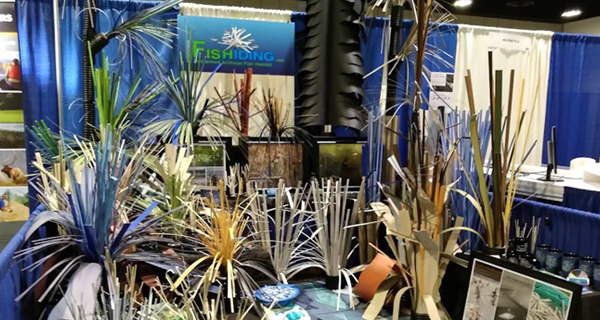
I build this range from reclaimed PVC that was headed to landfills. After more than 15 years and thousands of hours of underwater filming in freshwater lakes, the pattern is consistent: fish use dense, intricate, varied habitat. That is why density and depth fit matter more than a headline piece count.
The short answer
No benchmark average pack size exists for fish habitat kits. Manufacturers define a pack differently, and no neutral body publishes a shared standard. Any page quoting an industry average is guessing.
What you can benchmark is the structure of the choice. Four pack types, three depth zones, and one fixed delivered cost per product. The table below is built on that.
Fish habitat pack types compared by depth zone
| Pack type | What arrives | Depth zone fit | Best for | Main tradeoff |
|---|---|---|---|---|
| Preassembled attractors and cribs | Finished units, ready to place | Shallow, mid, and deep | Owners who want habitat in the water fast | Less custom shaping than DIY |
| Habitat mats | Dense flat or low-profile habitat | Shallow and mid-depth | Fry cover, periphyton growth, spawning-area edges | Covers a footprint, not height |
| DIY components | Loose reclaimed PVC parts | Your choice | Builders who want custom shapes and sizes | Your labor and your design decisions |
| Kits | Grouped components for a defined build | Shallow, mid, or deep by kit | First-time builders and repeat placements | Fixed build, less flexibility |
The range is built around three depth zones: shallow, mid, and deep water. Each product page states the zone it is made for. Confirm the zone before you compare anything else.
Which pack type leads and which trails
Preassembled units lead on speed. You unpack, place, and you are done. DIY components trail on speed but lead on flexibility, because you decide the footprint, height, and density of each structure.
Mats lead on density per square foot of bottom. Cribs and attractors lead on vertical profile. Kits sit in the middle: more guidance than loose parts, more shaping than a finished unit.
None of these wins everywhere. The right pack is the one that fits your water.
How the numbers on a product page should be read
Open any product page and pull four figures before you compare:
- Units per pack. How many separate structures or pieces ship.
- Footprint per unit. The bottom area one placed structure covers.
- Height per unit. How far it rises into the water column.
- Depth zone. Shallow, mid, or deep.
Multiply units by footprint and you have coverage. Compare coverage across packs, not unit count. A smaller pack of dense mats can out-cover a bigger pack of open pieces.
I am deliberately not quoting dimensions here. The current figures live on each product page, and a table of numbers copied into a blog post goes stale the day a model changes.
Method and limits of this comparison
This comparison rests on Fishiding's product categories, the three depth zones the range is built for, and underwater footage collected over more than 15 years. It does not rest on a third-party survey of competitor packs.
The limit is plain. No shared industry pack standard exists, so cross-brand pack counts cannot be ranked fairly. If you want a head-to-head, compare coverage and depth fit, then read the reclaimed PVC fish habitat brand comparison for the tradeoffs.
Shallow, mid, and deep: what changes in the pack
Shallow water
Shallow packs are about cover and forage. Fry, small forage fish, and periphyton (the algae and microbe film that grows on submerged surfaces) all concentrate here. Dense mats and low, tight structures fit this zone best.
PVC is a strong surface for periphyton growth, and that film feeds zooplankton and copepods, the tiny animals fry eat. That food chain is the reason density matters in the shallows.
Mid-depth water
Mid-depth packs need vertical profile as well as density. Attractors and cribs work well here because fish can hold at several heights. This is where preassembled units earn their keep.
Deep water
Deep-water packs are built to hold up and stay put. Fishiding preassembled units and mats are self-weighted with cement built into the patented design, so there is nothing extra to buy and no ballast to add. Deep placement then comes down to mapping, not rigging.
How many packs a pond needs
Pack count follows your acreage, depth profile, and how much natural cover you already have. A bare, uniform basin needs more placements than a pond with timber and weed edges.
For a worked example, the guide on how many fish habitat structures a 1-acre pond needs walks through placement logic by depth and shoreline.
A workable sequence:
- Sketch the pond and mark the shallow, mid, and deep zones.
- Note existing cover: stumps, weed beds, brush piles, docks.
- Place habitat where cover is missing, not where it already exists.
- Start with one pack type per zone, then add after you see how fish use it.
That last step is the cheap one. Fish tell you where more habitat belongs.
DIY components versus a finished pack
DIY is the right call when you want custom height, odd-shaped coves, or a build that matches a specific dock or shoreline. It costs you time and design decisions.
A finished pack is the right call when you want fish using the habitat this season and you do not want to engineer it. Both use reclaimed PVC.
If you are weighing the build route, the guide on how much PVC you need to build a DIY fish attractor covers quantities, and the roundup of DIY fish habitat kits for pond owners compares the kit options.
Pros and cons by pack type
Preassembled attractors and cribs
- Pro: ready to place, self-weighted, available for each depth zone.
- Con: fixed shape. You cannot reshape one on the boat.
- Verdict: Buy for first placements and deep water.
Habitat mats
- Pro: dense cover that supports periphyton and fry.
- Con: covers footprint, adds little height by itself.
- Verdict: Buy for shallow and spawning-area edges. See the habitat mats ranked by density for how mats differ.
DIY components
- Pro: full control over size, height, and density.
- Con: assembly time and your own design risk.
- Verdict: Buy if you build; Skip if you want fish using it this weekend.
Kits
- Pro: guided build, repeatable across several placements.
- Con: less flexibility than loose parts.
- Verdict: Buy for repeat builds with a consistent design.
Fish use: what has been observed
Underwater footage across more than 15 years and thousands of hours in freshwater lakes shows fish of all freshwater species using dense, intricate habitat models. That supports Fishiding's claim that the habitat grows more fish.
Use varies by species, life stage, season, and water body. A crappie holding at mid-depth in winter behaves differently from a bluegill fry sheltering in a shallow mat in June. Choose your pack for the fish and life stage you want to support.
One verdict to take with you
For most pond and lake owners in 2026, start with the pack type that matches your weakest depth zone, then add by what the fish show you. Fishiding preassembled units and mats are the lowest-effort route; DIY components and kits suit builders.
FAQ
What is the average fish habitat kit pack size?
No industry average exists. Brands define a pack differently, so compare coverage and depth zone instead of piece count. Check footprint and height on each product page.
Do Fishiding habitat packs need extra weight to sink?
No. Every Fishiding preassembled habitat model and unit, including habitat mats, is self-weighted with cement built into the patented design. You do not add ballast or anchoring.
Is shipping extra on habitat kits?
No. Free shipping has been standard on every Fishiding product since the start, and each displayed price is the complete fixed cost.
Which pack type is best for fry and small forage fish?
Dense habitat mats and tight shallow structures fit best. PVC surfaces grow periphyton, which feeds the zooplankton and copepods fry eat.
Should I buy preassembled units or DIY components in 2026?
Buy preassembled units for speed and deep water. Buy DIY components when you want custom height, footprint, or shape and have time to build.
How do I know how many packs my pond needs?
Map your shallow, mid, and deep zones, note existing cover, and place habitat where cover is missing. Start small, then add where fish concentrate.
Are Fishiding habitat products for saltwater or aquariums?
No. The range is made for freshwater ponds, lakes, and reservoirs, using reclaimed PVC.
One last thing
The best sizing data is your own. After the first placements, check where fish hold across seasons and put the next pack there. Habitat that fish already use tells you more than any spec sheet. For the broader picture of how long that takes, read how long fish take to start using new habitat structures.