
Best DIY fish habitat kits for pond owners in 2026
Posted by dwe on 23rd Oct 2026
Choose a DIY fish habitat kit for the cover your pond needs, not a universal depth chart. For transition cover, the Mid Depth DIY Fish Habitat Fish Attractor Kit has a recommended freshwater depth of 3.5–8 feet. Choose a shallow mix for fine nursery cover, a varied component pack for custom builds, or handmade preassembled habitat when you want the structure built for you.
- Choose the best DIY fish habitat kits by usable depth, fish size, density, and installation plan.
- The Mid Depth DIY kit's recommended freshwater depth is 3.5–8 feet, not 6–15 feet.
- Loose DIY materials need builder-supplied bases and cement where the product instructions specify them.
- Fishiding preassembled habitat, including modular and legacy mats, is self-weighted and needs no added ballast.
- Handmade preassembled models can be customized; habitat mats are not limited to shoreline placement.
Why this matters
A box of habitat material is not a placement plan. You need to know where the finished cover will sit, how tall it will stand, and which fish sizes can use its interior.
At Fishiding, we use reclaimed PVC destined for landfills to create dense, varied freshwater fish habitat. Our more than 15 years and thousands of hours of underwater filming, recorded while diving with scuba gear, document fish use of these intricate models. That record supports our claims that all freshwater fish species use the habitat and that the habitat grows more fish.
That does not turn one kit into the best answer for every pond. A shallow nursery patch, a dock-side transition zone, and a deeper reservoir shelf need different arrangements. Your 2026 plan should start with those locations, not an assumption that every pond needs the same three purchases.
What makes the best DIY fish habitat kit
- Usable depth: Match the specific product's recommended depth and the finished structure's height to your site.
- Density and openings: Mix fine refuge with wider shelter spaces appropriate to the fish you want to support.
- Material variety: Different widths, lengths, and rigid or flexible profiles create different habitat shapes.
- Build requirements: Check whether you are buying loose material, a kit with containers, or completed habitat.
- Installation access: Plan how you will move and lower the finished units without relying on a particular boat or shoreline access.
- Evidence of use: Look for underwater observations of the habitat, while keeping fish sightings separate from population measurements.
Best DIY fish habitat kits at a glance
| Habitat option | Best for | Verified feature or design role | Work to plan |
|---|---|---|---|
| Shallow Multi Mix Kit DIY Fish Cover | Fine nursery refuge | Mix of fine strands, wider limbs, and rigid and flexible reclaimed PVC | Builder supplies stable bases and cement; allow curing before placement |
| Mid Depth DIY Fish Habitat Fish Attractor Kit | Transition cover | 65 pounds of material; recommended freshwater depth 3.5–8 feet | Builder supplies bases and cement; finished size depends on the build |
| Deeper-water DIY layout | A measured deeper-water site | Profile chosen for the actual usable depth | Confirm the specific material, height, base design, and handling method |
| Habitat mats | Low-profile cover on suitable bottoms or slopes | Dense shelter that complements taller structures | Match the model and deployment method to the site, not just bank access |
| Project Pack DIY Fish Habitat Kit | Varied custom builds | 50 pounds of cleaned, pre-cut reclaimed PVC | Allocate material by intended density; build and cure the bases |
| Preassembled attractors and cribs | Habitat without a DIY construction project | Handmade, customizable, and self-weighted | Confirm requested dimensions before production and plan safe placement |
Natural brush piles and existing vegetation also belong in the decision. Keep useful natural habitat where it serves the pond; choosing reclaimed PVC does not require stripping out existing cover.
1. Shallow water DIY material: best for fine nursery cover
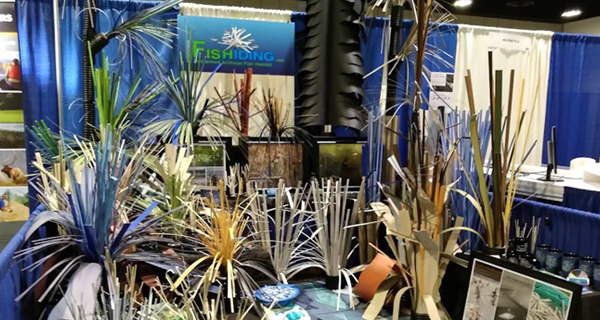
The Shallow Multi Mix Kit DIY Fish Cover combines fine strands with wider limbs and both rigid and flexible profiles. That variety lets you build intricate spaces for fry—young fish—and forage fish, rather than repeating one open frame.
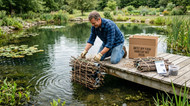
This is loose DIY material, not finished habitat. Divide the material among suitable buckets, blocks, or other stable bases, secure it in wet cement, and let the bases cure before installation.
Shallow mix pros:
- Fine and wider pieces let you vary openings within each unit.
- You control the layout and the amount of material assigned to each base.
- The finished cover can complement existing plants or taller habitat nearby.
Shallow mix planning limits:
- You supply the bases, cement, workspace, and construction effort.
- Finished height and density depend on how you build it.
- Check low-water clearance and local ice conditions before placing any structure near the surface.
Do not assign every shallow kit a universal 0–6-foot range or promise fish will arrive within days. Use the chosen product's instructions and your actual installation measurements.
Best for: owners building varied nursery and forage-fish refuge. Verdict: Buy when that is the identified habitat gap.
2. Mid-depth DIY kit: best for measured transition cover
The Mid Depth DIY Fish Habitat Fish Attractor Kit is recommended for 3.5–8 feet of freshwater, not 6–15 feet. The kit contains 65 pounds of reclaimed PVC, with pieces averaging 24–48 inches tall and 2–4 inches wide.
Leave selected limbs straight for vertical cover or bend others outward for a wider profile. The product page describes about 12–15 example units, using roughly 5 pounds of PVC each. Treat that as a build example, not a guaranteed number of identical finished cribs.
Mid-depth kit pros:
- Intermediate-size limbs provide shade and varied openings.
- Rigid and flexible profiles let you change the arrangement.
- A measured transition zone gives you a specific placement target.
Mid-depth kit planning limits:
- Bases and cement are supplied by the builder.
- Finished weight and footprint depend on the containers and cement used.
- You need a handling route suitable for the completed units, whether from shore, dock, or a suitable workboat.
Best for: pond and lake owners adding transition cover within the stated depth range. Verdict: Buy when the site measurements match; do not make it the default for every pond in 2026.
3. Deeper-water DIY layouts: best for a confirmed deeper habitat gap
Deeper water does not automatically mean better fish habitat. Choose a specific structure and placement plan rather than treating everything past 15 feet as one product category.
Map the bottom, check usable water conditions, and choose the intended profile before ordering material. If temperature and dissolved oxygen affect access to the site, include those measurements in the decision. Do not assume fish can use the deepest bottom simply because it remains submerged.
Deeper-layout pros:
- You can design cover for a mapped shelf, slope, or other suitable location.
- A custom build lets you vary the profile and internal spaces.
- Deeper placements can complement cover elsewhere when the site supports them.
Deeper-layout planning limits:
- Handling and lowering completed units need advance planning.
- Inspection and retrieval can be more difficult than at an accessible shallow site.
- The base requirements come from the specific DIY design, not water depth alone.
Fishiding preassembled habitat needs no added weight, ballast, or anchoring. Cement is built into the patented design, including modular and legacy habitat mats. Do not confuse building a cement base for loose DIY material with adding ballast to a completed unit.
Best for: owners with a verified deeper-water habitat need. Verdict: Wait until the site and specific design are confirmed.
4. Habitat mats: best for low-profile shelter
Habitat mats are not restricted to shoreline or bank-accessible water. Choose mat placement by the model, usable depth, bottom conditions, and installation plan. Suitable locations include more than the patch you can reach while standing on shore.
A low profile can add dense shelter without occupying the same vertical space as a taller crib. Compare both profiles against the habitat job rather than assuming the mat is only a shallow-water accessory.
Habitat mat pros:
- Dense, low-profile cover complements taller structures.
- Placement can follow an appropriate bottom or slope.
- Preassembled modular and legacy mats are self-weighted.
Habitat mat planning limits:
- A low-profile mat does not provide the same vertical outline as a tall crib.
- Bottom fit and deployment access still need checking.
- Use the instructions for the actual model rather than treating all mats as interchangeable.
Best for: owners needing low-profile cover at a suitable mapped site. Verdict: Buy for that role, including appropriate placements away from shore.
5. DIY component packs: best for custom layouts
The Project Pack DIY Fish Habitat Kit contains 50 pounds of cleaned, pre-cut reclaimed PVC. Its mix supports fine refuge, wider cover, and varied openings in custom pond, lake, and reservoir builds.
The product page describes about 12–16 units, depending on size and density. Customer examples range from fewer large structures to more smaller units. Divide the material to create useful cover, not simply the largest possible unit count.
Component pack pros:
- You decide how material is distributed among structures.
- Fine and wider pieces support different internal spaces.
- Pre-cut reclaimed material avoids sourcing every piece separately.
Component pack planning limits:
- Construction, base preparation, and curing remain your responsibility.
- Any trimming needs suitable tools and attention to finished edges.
- Repeated builds need a clear layout if consistent dimensions matter.
Best for: owners and work crews who want to build their own arrangement. Verdict: Buy when you have the workspace and a defined installation plan.
6. Preassembled attractors and cribs: best for avoiding the construction stage
Preassembled does not mean uncustomizable. Our models are handmade and can be customized in density, shape, and dimensions to the requested design. Discuss those requirements before production rather than assuming a completed unit must be rebuilt after delivery.
These units arrive with cement built into the design. They require no added weight, ballast, or anchoring, but you still need to select the placement site and plan safe handling.
Preassembled habitat pros:
- No DIY base construction or cement-curing stage.
- Handmade designs can address a requested profile and density.
- Self-weighted construction keeps installation instructions distinct from loose-material kits.
Preassembled habitat planning limits:
- Confirm custom details before the structure is built.
- Check the completed dimensions against your transport and lowering route.
- Choosing a ready-built model does not replace a placement map.
Best for: owners wanting dense freshwater habitat without a build project. Verdict: Buy when that saves the construction work you do not want to do.
How to choose for your 2026 project
This is a practical comparison, not a scored trial establishing a universal winner. Match the product to depth, density, variety, fish size, construction effort, and access. The Fishiding habitat design guide helps connect those choices to a placement layout.
Use our underwater record to understand documented fish use. More than 15 years and thousands of hours of filming do not establish that every new DIY arrangement has been tested at every depth. Record observations of your own installation separately from claims about whole-pond population change.
Map your habitat gaps before choosing a kit
Compare usable depths, fish sizes, cover density, and your installation route.
For a 2026 build, start with the cover missing from your pond. Choose the mid-depth kit when 3.5–8-foot placement fits, a shallow mix when fine nursery refuge is the goal, or a component pack when you want to construct the layout yourself. Choose customizable preassembled habitat when you prefer the completed structure.
“Choose the habitat job first; the kit and installation method follow from it.”
FAQ
What's the best DIY fish habitat kit for a small farm pond?
Choose the kit that fills a mapped habitat gap. The Mid Depth DIY kit is recommended for 3.5–8 feet of freshwater; shallow mixes serve fine nursery cover, while component packs let you build a custom layout.
How deep should the Mid Depth DIY kit be placed?
The Mid Depth DIY Fish Habitat Fish Attractor Kit has a recommended freshwater depth of 3.5–8 feet. Check finished structure height, low-water clearance, and usable water conditions before placement.
Do deeper-water fish habitat structures need added ballast?
Fishiding preassembled habitat needs no added weight, ballast, or anchoring, including modular and legacy mats. Loose DIY materials require the builder to construct the base specified for that kit; deeper water alone does not set a universal ballast requirement.
Are habitat mats limited to the shoreline?
No. Choose habitat mat placement by the model, usable depth, bottom conditions, and deployment plan. Appropriate locations can include sites away from shore.
Can preassembled Fishiding habitat be customized?
Yes. Fishiding models are handmade and can be customized in density, shape, and dimensions to the requested design. Confirm the requirements before production.
Is Fishiding reclaimed PVC safe for freshwater fish habitat?
Fishiding states its reclaimed PVC is safe for freshwater fish, koi, copepods, and other aquatic creatures. The material is reclaimed from supplies destined for landfills; construction and placement checks are separate from material safety.
How many structures can I build from a DIY pack?
The Mid Depth DIY product describes about 12–15 example units, and the Project Pack describes about 12–16, depending on the build. Finished size, material allocation, and density determine your actual count; these are not fixed recommendations per acre.
Can I combine DIY habitat with natural brush piles?
Yes. Compare the shelter, openings, placement, and condition of each option, and retain useful natural cover. A DIY build and a brush pile offer different arrangements; neither removes the need for a site plan.
One last thing
Two structures built from the same amount of material can provide different shelter. Opening size, interior density, finished profile, and location matter more than counting boxes.
Before your 2026 build, map the intended footprints, select usable depths, and confirm the construction and handling instructions. Inspect the finished structures before deployment, then record where and how fish use them.
Related guides