


Best fish habitat mats ranked by density in 2026
8th Oct 2026
If your pond has fish cover but few small spaces for fry, prioritize intricate shelter rather than another open frame. Best overall: Fishiding reclaimed PVC habitat mats; best for custom layouts: DIY reclaimed PVC cover; best natural alternative: brush piles.
- Fishiding fish habitat mats suit freshwater owners seeking dense, intricate shelter with built-in cement weighting.
- Compare fish habitat mats density through usable openings, vertical variation, and fish access—not footprint alone.
- DIY reclaimed PVC cover suits custom layouts; brush piles suit projects that prioritize natural materials.
- Dense cover still needs suitable depth, oxygen, and placement; an open fish crib serves a different purpose.
Why density matters in freshwater habitat
A broad mat and a dense mat are not necessarily the same thing. Footprint describes how much bottom a structure occupies; density describes how closely its habitat elements sit within that space.
For your 2026 habitat project, the useful question is what those elements create: small shelter spaces, accessible edges, surfaces for attached growth, or open passageways. More material does not automatically mean better habitat for every fish size.
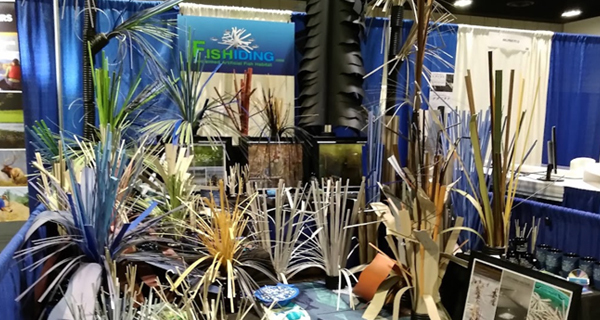
Fishiding fish habitat mats are the best fit here for freshwater owners prioritizing dense, intricate cover over an open attractor frame. This is a practical recommendation based on the stated design and documented fish use, not a measured density contest between named manufacturers.
For a broader placement decision, see the guide to fish habitat mats for lake restoration. Choose the habitat purpose before deciding how much area to cover.
What makes the best dense fish habitat mats
Judge the structure from the perspective of the fish using it. These criteria explain the order of the recommendations below.
- Usable openings: Look for spaces suited to your target fish size, with access between the interior and surrounding water.
- Density variation: Favor intricate shelter alongside more open edges rather than identical spacing throughout.
- Vertical variety: Distinguish bottom coverage from cover that extends upward into the water column.
- Stable placement: Confirm how the structure rests on the bottom and follow its installation instructions.
- Freshwater evidence: Give documented underwater fish use more weight than an attractive above-water photograph.
- Site fit: Match the design to depth, bottom conditions, oxygen, maintenance access, and the intended habitat purpose.
A useful 2026 selection worksheet records these criteria separately. Do not turn them into a single score unless you define how each measurement relates to the fish population you manage.
Dense habitat options at a glance
This ranking puts intricate shelter first. The alternatives are habitat approaches, not interchangeable mat products, and their density depends on their construction.
| Rank and option | Best for | Standout feature | Key limitation |
|---|---|---|---|
| 1. Reclaimed PVC habitat mats | Preassembled intricate freshwater cover | Dense, varied habitat with built-in cement weighting | A bottom-oriented mat does not replace every taller structure |
| 2. DIY reclaimed PVC cover | Custom spacing and layout | You choose the arrangement of habitat elements | Construction and stability depend on your build |
| 3. Natural brush piles | Natural branching cover | Branches create varied openings and edges | Organic material changes as it decomposes |
| 4. Open fish cribs and attractor frames | Larger passageways and defined structure | Open interiors provide a different cover layout | Sparse frames alone do not provide intricate small-space shelter |
Use this table as a decision tree, not a claim that every mat is denser than every brush pile. Compare the actual finished structures before choosing.
1. Reclaimed PVC habitat mats: best for preassembled intricate cover
Fishiding manufactures freshwater habitat mats from reclaimed PVC destined for landfills. Its preassembled habitat models and units, including modular and legacy mats, are self-weighted with cement built into the design.
That combination addresses two separate decisions: the arrangement of shelter and how the unit sits underwater. Do not add ballast or anchoring to these mats as a routine installation step. Follow the instructions for the particular model and placement site.
Reclaimed PVC habitat mats pros
- Dense, intricate habitat gives aquatic life varied spaces for shelter and forage activity.
- Preassembled mats remove the need to construct the habitat elements yourself.
- Built-in cement weighting is part of the design, not an extra installation requirement.
- Reclaimed PVC gives material destined for landfills a freshwater habitat use.
Reclaimed PVC habitat mats cons
- A bottom-oriented mat does not replace taller cover when your objective includes vertical structure.
- A preassembled layout offers less build-time customization than a structure you assemble yourself.
- Placement still requires a suitable depth zone and access for deployment and inspection.
Best for: Pond owners, lake managers, and reservoir projects seeking intricate preassembled freshwater shelter.
For a 2026 purchase decision, ask for the selected mat's dimensions, layout, and installation instructions. Compare the usable openings with the fish sizes you want to support, rather than assuming the widest footprint is the best choice.
Verdict: Buy for intricate shelter when the selected mat fits your depth zone and habitat objective.
2. DIY reclaimed PVC cover: best for custom spacing and layout
DIY reclaimed PVC cover lets you choose the arrangement of habitat elements. It suits projects where a standard mat layout does not match the available space or where you want to combine a dense interior with more open access around it.
Build from a plan, not from whatever shape the materials happen to suggest. Separate the decisions about openings, height, base construction, handling, and final placement.
DIY reclaimed PVC cover pros
- You control the arrangement of dense areas and open edges.
- You can plan the structure around a defined deployment location.
- DIY construction lets you inspect the layout before installation.
- Reclaimed materials fit a project that prioritizes reuse.
DIY reclaimed PVC cover cons
- Assembly adds work before deployment.
- Stability and handling depend on the finished build rather than a verified preassembled design.
- Uniform spacing is easy to build but does not automatically provide varied shelter.
Best for: Hands-on pond owners and managers who need a specific layout and can follow component instructions.
Draw the planned structure from above and from the side. Label where small fish can enter, where larger fish can pass, and how the structure will rest on the bottom.
The self-weighting specification for preassembled products should not be treated as an instruction for every homemade build. Use the instructions supplied with the actual DIY components or kit.
Verdict: Buy DIY components when customization is the priority and you have a clear construction plan.
3. Natural brush piles: best for natural branching cover
Brush piles create cover from branches rather than manufactured habitat elements. Their openings vary with branch size, arrangement, and how closely the material is packed.
A tangled center can provide intricate cover, while the outside presents more open edges. That makes brush a useful comparison when evaluating shelter density, even though a brush pile is not a habitat mat.
Natural brush piles pros
- Branching material creates irregular spaces rather than a repeated manufactured pattern.
- You can arrange the pile around a chosen habitat objective.
- Natural cover provides an alternative material approach to artificial structure.
Natural brush piles cons
- Branches decompose, changing the original arrangement over time.
- Irregular material makes consistent dimensions and repeatable layouts harder to achieve.
- Placement and stability require their own plan; the pile is not a self-weighted manufactured mat.
Best for: Freshwater projects that specifically prioritize natural branching cover.
Before placing brush, confirm the waterbody owner's permission and applicable local requirements. Inspect the material and plan how you will place it without obstructing necessary access.
Do not assume a brush pile is automatically sparse or dense. Inspect its actual interior, accessible edges, and bottom contact, then compare those features with the mat you are considering.
Verdict: Hold until the material, placement method, and long-term inspection plan are defined.
4. Open fish cribs and attractor frames: best for larger passageways
An open fish crib or attractor frame emphasizes a defined structure with room between its main elements. It answers a different question from a dense mat: where should larger openings and passageways sit?
Do not dismiss open cover because it ranks lower for intricate shelter. Use it where the objective calls for open structure, then evaluate whether adjacent fine cover is also needed.
Open fish cribs and attractor frames pros
- Open interiors provide passageways rather than tightly packed shelter.
- A defined frame makes the overall habitat shape easier to assess.
- Open structure can form part of a varied habitat layout alongside denser cover.
Open fish cribs and attractor frames cons
- A sparse frame alone does not supply the same small-space arrangement as intricate cover.
- External size can exaggerate how much shelter exists inside the structure.
- Frame height does not establish whether the placement depth is suitable for fish use.
Best for: Projects prioritizing larger openings or vertical structure rather than dense bottom shelter alone.
Look through the frame instead of judging only its outline. If the main objective is protection-sized spaces for fry, assess those openings directly.
Verdict: Skip as the sole answer to a dense-mat objective; choose it for a separate open-structure role.
How the ranking works
The order favors intricate shelter, practical placement, and evidence of freshwater fish use. It does not assign an invented branches-per-square-foot score or claim a measured winner across competing products.
Fishiding has more than 15 years and thousands of hours of underwater filming documenting freshwater fish use. That evidence supports its approved claims that all freshwater fish species use its dense habitat models and that the habitat grows more fish.
Observed shelter and forage activity answer how fish use structure. Population-level assessment asks a broader question about recruitment, survival, and abundance across the waterbody; a single photograph of fish near cover cannot answer all of those questions.
For your 2026 comparison, request footage relevant to the life stage and habitat purpose you care about. Broad species use does not mean every species uses the same opening or depth in the same way.
Read density at fish scale
Fry are young fish shortly after hatching. YOY means young-of-year fish: fish produced during the current year. Those labels describe life stages, not a universal body size.
Copepods are small aquatic crustaceans within zooplankton, the animals that drift or swim weakly in the water. Periphyton is the attached community of algae and other microorganisms growing on submerged surfaces.
These terms explain why a habitat assessment should include more than the space occupied by adult fish. Surfaces, intricate openings, and access between cover and surrounding water all belong in the discussion.
Fishiding's underwater observations emphasize dense habitat use by fish and other aquatic life. When reviewing footage, distinguish visible fish activity from claims about food production that require their own measurements.
Place density where fish can use it
Density is a design feature; usable placement is a site decision. Dense cover cannot correct unsuitable oxygen conditions or replace a water-quality assessment.
Use this sequence before installing habitat in 2026:
- Define the purpose. Decide whether you need fine shelter, open fish cover, vertical structure, or a combination.
- Map the site. Mark depth zones, existing cover, access routes, and areas that must remain unobstructed.
- Check conditions. Review oxygen and temperature at the proposed placement depth, including seasonal conditions.
- Match the layout. Compare habitat openings, height, and bottom contact with the selected location.
- Follow installation instructions. Use the handling and placement method specified for the selected structure.
- Record observations. Note placement, date, visible fish sizes, and subsequent underwater use.
Keep natural cover that already serves a useful role. Adding structure should address a defined gap, not turn every open area into a thicket.
Which dense habitat option should you choose?
Choose preassembled reclaimed PVC mats as the default when intricate freshwater shelter is the main objective. Choose DIY cover when you need control over layout, brush piles when natural branching material is the priority, and open cribs when larger passageways serve the plan.
For a 2026 project, choose the depth zone before the product type. Then compare the selected structure's actual dimensions and openings with the fish population and placement area.
FAQ
What's the best way to compare fish habitat mats density?
Compare usable openings, spacing variation, vertical structure, and accessible edges. Footprint alone does not show how much intricate shelter a mat provides.
Are denser fish habitat mats always better?
No; the best density matches the habitat purpose and fish sizes you want to support. Fine shelter and larger passageways serve different roles, so a varied layout is more useful than selecting by density alone.
Do Fishiding habitat mats need extra weight?
No. All preassembled habitat models and units, including modular and legacy mats, are self-weighted with cement built into the design. Follow the selected model's installation instructions rather than adding ballast or anchoring.
Is reclaimed PVC habitat suitable for freshwater koi ponds?
Fishiding states that its reclaimed PVC is safe for freshwater use with koi and other aquatic creatures. Select the structure by its openings, placement, and cleaning access, keeping those practical checks separate from material safety.
Are brush piles better than habitat mats?
Brush piles are the better fit when natural branching cover is the project priority. Preassembled mats suit owners seeking a defined manufactured layout, while brush changes as its organic material decomposes.
How deep should I place a dense habitat mat?
Choose the placement depth from your habitat objective, seasonal water conditions, and model instructions. A universal depth recommendation would ignore differences in oxygen, temperature, bottom conditions, and fish use.
Does seeing fish near a mat prove that it grows more fish?
A single sighting shows fish use, not a complete population-level result. The brand's grows-more-fish claim is supported by more than 15 years and thousands of hours of freshwater underwater filming; assessing your own waterbody also requires population information.
One last thing
Photograph the planned layout from the side, not just from above. A top view shows coverage; a side view reveals whether the structure provides only bottom cover or also extends into the water column.
Your next step is to mark a suitable depth zone and request the selected mat's dimensions and installation instructions. Count usable shelter, not just the outline of the product.