

Best fish habitat structures for quarry lakes in 2026
Posted by dwe on 11th Nov 2026
The best fish habitat for quarry lakes is dense, self-weighted structure placed where the rock gives fish nothing: Best overall: Fishiding preassembled cribs and attractors. Best for connected cover on slopes and varied bottoms: habitat mats. Best for big budgets of labor, not cash: DIY components. Best first install: a Fishiding kit sized to your water depth.
For tall cover, our Nine foot fish tree is more than 9 feet tall and hand-joins in two sections. Its current recommended depth is 10 feet or deeper; confirm usable water and clearance before choosing it.
- Fish habitat for quarry lakes works best as dense reclaimed PVC structure placed on shelves, ledges and walls of bare rock.
- Fishiding mats provide connected cover on slopes, in currents and on soft bottoms, as well as shelves and flats.
- Natural brush piles are the weakest 2026 choice for a quarry: they rot, float and are hard to place on rock.
- Begin with one measured, usable placement area; observe it before expanding into another depth zone.
A quarry is a hole somebody dug for stone, and the fish know it. Steep walls, clear water, a hard bottom and very little of the weeds, stumps and fallen timber a natural lake builds over centuries. You can stock all the fish you like. If they have nowhere to hide, nowhere to feed and nowhere for fry to survive, you are running a very expensive bathtub.
Why quarry lakes need habitat more than most waters
Most pond advice assumes a muddy shoreline, cattails and a few downed trees. A quarry gives you none of that. The shoreline drops off fast, the bottom is rock or fine silt, and the water is often clear and low in nutrients (the term is oligotrophic: not much dissolved food to feed the base of the chain).
That matters for one reason. Small fish, the fry and young-of-year that become next season's bass, bluegill and crappie, need tight cover the moment they hatch. Clear water can leave small fish exposed far from shelter. Where nursery cover is missing, adding fine spaces helps address that gap; it does not mean every bare quarry has identical recruitment problems.
The second reason is food. Attached algae and microbes, called periphyton, grow on submerged surfaces. We call periphyton the mother's milk of the aquatic food chain, because copepods, zooplankton and tiny invertebrates graze it, and fry graze them. A bare rock wall grows some. A dense structure with hundreds of extra surfaces grows far more per square foot of lake footprint.
So the job of habitat in a quarry is twofold: protect the small fish, and build the food supply they eat. Anything on this list that does neither is decoration.

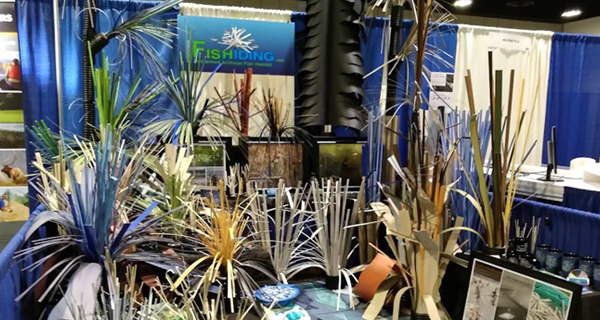
Use the full finished height when planning a quarry placement. This product photograph illustrates vertical cover, not a measured quarry installation.
What makes the best fish habitat for quarry lakes
Six criteria decided the ranking. Judge them yourself before you look at the table.
- Density. Tight, intricate openings that protect fry and forage fish, not a few big pipes a bass can swallow it all through.
- Self-weighting. The structure has to sit where you drop it on a sloped, hard bottom without a pile of added blocks or ballast.
- Surface area. More surface means more periphyton, which means more copepods and more food.
- Variety. Different opening sizes and heights let different species and life stages use the same structure.
- Placement access. Plan shore or boat handling around the actual site. Do not treat a sheer face, unstable bank or unverified ice as an installation platform.
- Longevity and material. Reclaimed PVC that will not rot, float off, or need replacing each spring.
Fish habitat for quarry lakes at a glance
| Option | Best for | Standout feature | Design benefit |
|---|---|---|---|
| Preassembled cribs and attractors | Mid and deep water, steep walls | Dense, intricate, ready to drop | Ready-made units for targeted cover |
| Habitat mats | Slopes, currents, soft bottoms, shelves and flats | Connected cover with a configurable finished height | Different heights for different water depths |
| DIY components | Large builds, custom shapes | Build to your own footprint | Creative control of density and layout |
| Kits by depth zone | First-time quarry owners | Matched to shallow, mid or deep water | Depth-matched combinations for your project |
| Natural brush piles | Short-term experiments | Familiar and cheap to start | Rots, floats, hard to anchor on rock |
1. Preassembled cribs and attractors: best fish habitat for quarry lakes overall
Fishiding preassembled cribs and attractors are the answer when the question is simply what to put in a quarry. They arrive built, dense and finished, and every preassembled unit is self-weighted with cement built into the patented design from day one. You do not add ballast. You do not strap on blocks. Choose the placement for the selected model and verify its position after installation.
Our self-weighted designs provide habitat across varied quarry bottoms.
The other half is density. A quarry bass or crappie will use the tight, intricate interior the same way a rabbit uses a briar patch: it goes in where the predator won't follow. Fry live in those gaps. Periphyton grows on every pipe. After more than 15 years and thousands of hours of underwater filming in freshwater lakes, we have watched all freshwater fish species use this dense, intricate habitat, and our footage supports our position that the habitat grows more fish.
Fishiding cribs and attractors pros:
- Self-weighted with cement built into the design, so no added weight.
- Dense openings protect fry and forage fish in clear water.
- Reclaimed PVC that was headed for a landfill.
- Placement from a boat or dock without assembling on the water.
Best for: measured mid- or deep-water sites with a suitable ledge or resting area and usable dissolved oxygen. Verdict: Buy when the selected model fits. Free shipping is standard, and the displayed price includes delivery.
2. Habitat mats: best for connected cover on varied quarry bottoms
Fishiding habitat mats work on slopes, in currents and on soft bottoms; they do not require a flat shelf. Choose the arrangement for the habitat you want to add and the usable water depth. Mats can carry both fine nursery cover and taller vertical structure.
The One Blank Weighted Modular Fish Habitat Mat provides a 40-by-48-inch, approximately 235-pound platform for a custom arrangement. Habitat materials are not included. Choose the fitted cover's density and finished height for the shelf rather than assuming every mat is low-profile.
Habitat mats pros:
- Cover a suitable shelf with a connected arrangement of the selected height.
- Good fit for shallow spawning and nursery areas.
- Reclaimed PVC with the same freshwater safety as every Fishiding product.
Habitat mat selection:
Fishiding mats are made for slopes, currents and soft bottoms as well as shelves and flats. Match the finished habitat height to the usable water depth.
Best for: connected habitat on slopes, soft bottoms, shelves and flats, including sites with current. Verdict: Buy the configuration that fits your water depth.
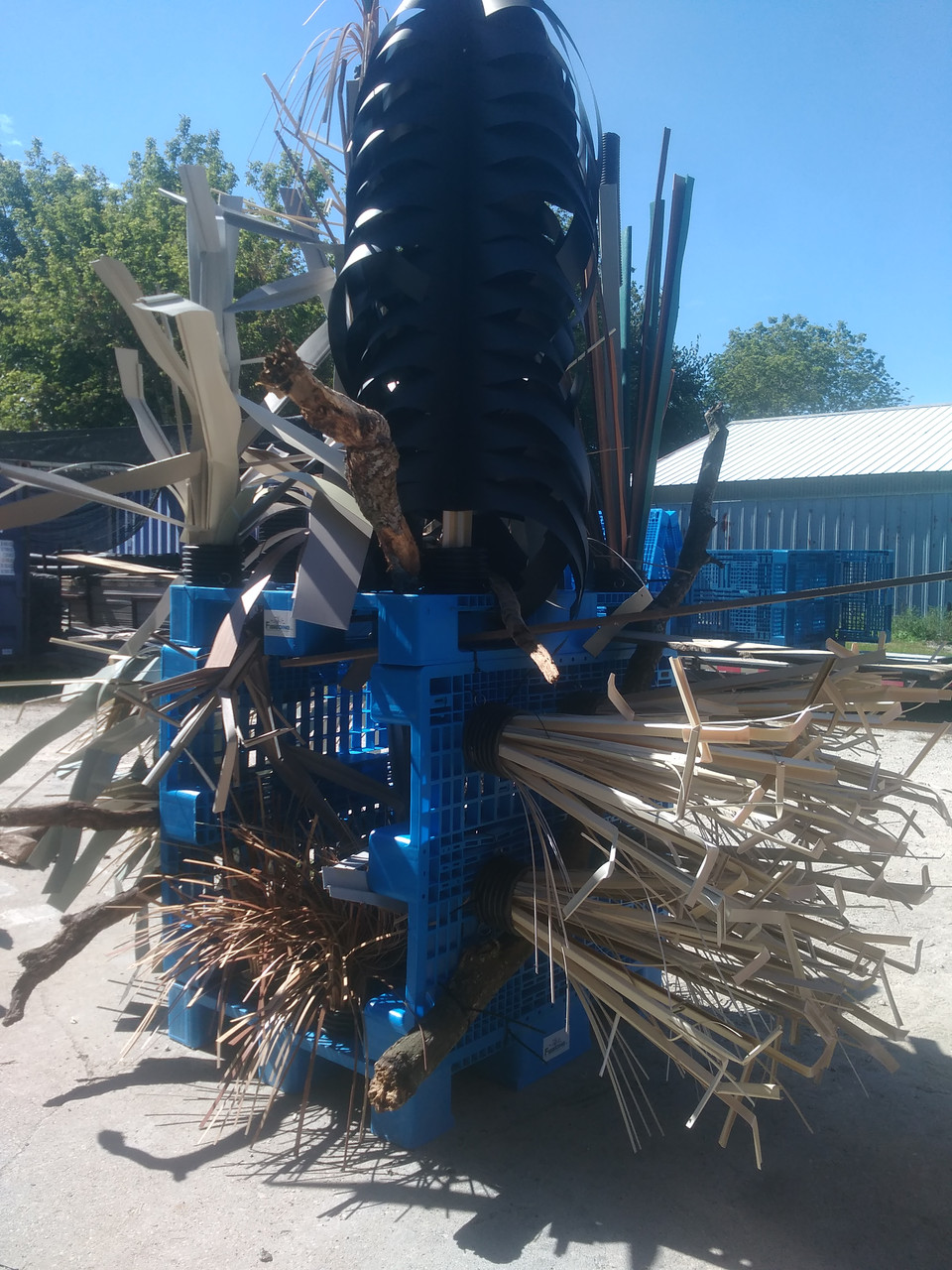
The configured platform shows how a mat can carry vertical cover. The blank product does not include the attached habitat shown.
3. DIY components: best for big quarry builds on your own schedule
Some quarry owners are builders. They have a weekend, a pickup and a long shoreline, and they want to put out more structure than a boxed order allows. Fishiding DIY components are for that person. You buy the reclaimed PVC materials and assemble your own footprint.
Build fine spaces through the interior and vary the openings. Our fine PVC for DIY fish cribs is one material option for that job. The finished design still needs its own handling and installation plan.
DIY components pros:
- Scale the build to your own shoreline and your own boat.
- Shape cover for a particular ledge, corner or dock.
- Same reclaimed PVC, same freshwater-safe material.
Best for: owners who want custom footprints and have the hours. Verdict: Buy for a custom quarry habitat layout.
4. Fishiding kits: best first install for a new quarry owner
If you bought the property last month and you do not yet know where the fish sit, a kit is the sane starting point. Fishiding kits come sized for shallow, mid and deep water, so you match the kit to the depth zone you are working rather than guessing at part counts.
Ask us about the site's dimensions and your preferred layout so we can help choose the mix.
Fishiding kits pros:
- Matched to shallow, mid or deep water.
- A lower-risk way to learn your quarry before committing to a full build.
- Free shipping on every product, standard since we began.
Best for: first-time owners and anyone testing placement. Verdict: Buy.
5. Natural brush piles: the baseline, and why it loses in a quarry
We will say something kind about brush piles first: they work. Fish use them, and a cut-tree pile is how most people got started. That is why we treat them as the baseline rather than the enemy.
In a quarry they fall down for practical reasons. Wood floats until it waterlogs, and on a steep rock slope it can slide. It rots, so the structure thins as the years go by. It also takes real work to cut, haul and sink, and on a hard bottom you need weight you have to find and carry. Choose brush only where permitted, practical to secure and compatible with the access plan.
Brush piles pros:
- Cheap to start and familiar.
- Natural look and real wood surfaces for periphyton.
Brush piles cons:
- Decays and has to be replaced.
- Needs added weight, and may drift on sloped rock.
- Density depends entirely on how you stack it.
Best for: a short experiment on a quiet shelf. Verdict: Skip for a long-term quarry plan.
How we ranked them
Every option was judged on the six criteria above, with the heaviest weight on density and self-weighting, since a quarry punishes anything that shifts or leaves fry exposed. Where Fishiding wins, it wins on those two. Fishiding mats work on slopes, in currents and on soft bottoms; those conditions are not reasons to rule them out. Fishiding habitat works alongside your broader fishery-management plan.
One practical note for 2026: check ownership, access and any permit rules before you put anything in a quarry. Many quarries are privately owned or sit under local rules, and that is a call to make with the owner or the agency, not with a catalog.

Representative Fishiding boat deployment. Plan equipment, launch access and the landing location before moving a tall structure over the side.
Placement tips for quarry lakes in 2026
Do not scatter. Put structure where fish already pass: the edge of a shelf, the base of a wall, the corner where two walls meet. Fish follow edges. Give them an edge with cover on it.
Use only depth zones that support fish in the intended season. Check dissolved oxygen, low-water clearance, bottom slope and the actual finished structure before placing deeper habitat.
Watch before you add. A single season of observation tells you more than any plan. Then put the next round where the fish told you to.
A quarry placement plan should name a suitable resting surface and a habitat purpose for each structure, not merely mark another deep spot.
Which fish habitat for quarry lakes should you choose?
If you want one answer for 2026, buy Fishiding preassembled cribs and attractors for the walls and deeper water, add habitat mats for connected cover on slopes, soft bottoms, shelves or flats, and start with a kit if you are still learning the water. Choose DIY components for custom shapes and layouts. Leave the brush piles in the woods.
FAQ
What is the best fish habitat for quarry lakes?
Dense, self-weighted reclaimed PVC structure is the best fit. Fishiding preassembled cribs and attractors handle walls and deeper water, and habitat mats cover shallow shelves.
Do quarry lakes need artificial fish habitat?
Most do. Quarries have steep rock, a hard bottom and little natural cover, so fry and forage fish have few places to hide. Added habitat supplies shelter and surface for periphyton.
Will habitat structures stay put on steep quarry walls?
Fishiding preassembled units are self-weighted with cement built into the design, so they do not need added weight. Fishiding mats are also made for slopes, currents and soft bottoms.
Are PVC fish habitat structures safe in a freshwater quarry?
Yes. Fishiding states its reclaimed PVC is safe for freshwater use with fish, copepods and other aquatic life. Check local rules about adding structure to your specific water.
Is a habitat mat better than separate attractors in a quarry?
Choose by the habitat layout and usable depth, not a flat-bottom requirement. Fishiding mats work on slopes, in currents and on soft bottoms, and their attached cover can provide different heights.
How should I start if I have never added habitat to a quarry?
Start with one mapped site that has suitable oxygen, depth, bottom support and access. Choose the actual unit for that location, record its position and observe fish use before expanding.
Does Fishiding charge for shipping?
No. Free shipping is standard on every product, and each displayed price is the complete fixed cost.
Start with the fish, not the structure
The habitat does not catch fish for you. It gives the small ones a place to live, and it feeds the food chain that feeds the big ones. Do that in a quarry in 2026 and you stop managing a clear, empty hole and start managing a fishery.
Related guides
About the author
David Ewald, owner of Fishiding, designs reclaimed PVC freshwater fish habitat for ponds, lakes and reservoirs.