
Best fish habitat structures for aquaculture ponds in 2026
Posted by dwe on 11th Nov 2026
Best overall for fish habitat for aquaculture ponds in 2026: Fishiding preassembled cribs and attractors. Best for fry and forage cover: Fishiding habitat mats. Best for hands-on pond owners: Fishiding DIY components. Best for starting a whole pond: Fishiding kits. All four are built from reclaimed PVC, made for freshwater, and shipped free.
For a compact, dense nursery unit, start with our Briar Bush Artificial Fish Habitat, which uses flexible reclaimed PVC cutoffs around a cement-filled base.
- Fishiding preassembled cribs and attractors are the default pick for aquaculture ponds in 2026.
- Habitat mats win where fry, copepods and periphyton need dense cover.
- DIY components and kits suit owners who want to build and place habitat themselves.
- Every Fishiding product ships free, and every displayed price is the full cost.
Why aquaculture ponds need habitat, not just open water
A production pond's open water has a job, but it does not provide intricate nursery shelter by itself. Where fry refuge is missing, dense cover adds spaces small fish can enter when something larger swims by. Keep that shelter outside the space needed for feeding, seining and harvest.
The food web does not begin and end with habitat, but bare water leaves out the shelter and growing surfaces we can deliberately add. Our job is to build those missing places around your production system, not through its working lanes. We aren't trying to attract fish for an afternoon. We are trying to give them a place to live: shelter for fry, surface area for periphyton (the slime layer of algae and microbes that coats submerged surfaces, which we call the mother's milk of the aquatic food chain), and ground for copepods and other zooplankton to live in.
We have more than 15 years and thousands of hours of underwater filming in freshwater lakes showing how fish use dense, intricate habitat. That footage is why we say all freshwater fish species use it and why we say it grows more fish. Placement and use still vary by species, life stage, season and water body, so a hatchery pond and a backyard pond won't behave the same way.
The safety question comes up with aquaculture buyers, so here is the short version: our reclaimed PVC is safe for freshwater use with koi, other fish, copepods and other aquatic creatures. Keep practical access separate from material safety: map seine lanes, drains, aeration and cleaning routes before placing cover.
What makes the best fish habitat for an aquaculture pond
These are the six criteria we ranked against. Check them before you look at the table.
- Density and intricacy. Fry fit into gaps that larger fish can't enter. Tight, varied openings protect them and the forage they eat.
- Surface area for periphyton. More submerged surface means more attached growth, and more food at the bottom of the chain.
- Water-column coverage. Shallow, mid and deep water each need habitat built for that zone.
- Material. Reclaimed PVC that was headed for a landfill, safe for freshwater, and stable underwater.
- Ease of placement. Some owners want a finished unit to set in the water. Others want to build.
- Cleaning and access. In a managed pond, you need to reach and check what you installed.
Fishiding habitat options at a glance
| Option | Best for | Standout feature | Design benefit |
|---|---|---|---|
| Preassembled cribs and attractors | Ready-to-place cover in managed ponds | Self-weighted with cement built into the patented design | Defined units for grouped or distributed cover |
| Finished habitat mats | Connected nursery or forage areas | Several habitat units in a defined complex | Connected habitat with varied heights and openings |
| DIY components | Owners who build their own habitat | Reclaimed PVC parts you assemble to your design | Creative control of shape, size and density |
| Kits | Stocking or outfitting a whole pond | Matched parts for shallow, mid or deep water | Arrange the habitat around your production goals |
1. Preassembled cribs and attractors: best fish habitat for managed production ponds
A preassembled crib or attractor is the simplest answer. It arrives built, you place it, and it works. Every Fishiding preassembled habitat model is self-weighted with cement built into the patented design from day one, so there is no ballast to add and no anchoring job to plan.
Fishiding cribs and attractors pros:
- No construction from loose parts; handling still depends on the chosen unit's weight and the pond's access.
- Dense, intricate PVC that gives fry and forage fish tight spaces.
- Self-weighted design, so placement is about location, not hardware.
- Provides vertical and structural cover that open pond water lacks.
Fishiding cribs and attractors pricing: free shipping on every product, with each displayed price covering the full cost.
Best for: hatchery operators, farm pond managers and anyone who wants proven habitat in the water this week. Verdict: Buy.

Managed hatchery placement makes access part of the design. Keep fish-handling and maintenance routes outside the habitat footprint.
2. Habitat mats: best for fry protection and periphyton
Think of finished mats as connected nursery complexes. Our Legacy Lifetime Shallow Fish Habitat Structures Mat Twin Pack includes two mats carrying nine habitat units each. Current specifications list 3–5-foot habitat heights, a recommended 4–10-foot freshwater range and approximately 6-by-7-foot opened dimensions per mat.
A mat is a platform format, not a promise of low height. Match the completed nursery to your fish-handling routes. Periphyton, the attached community of algae and microbes, and small invertebrates using that growth give fish feeding opportunities alongside shelter.
Periphyton can colonize smooth submerged surfaces, PVC included, so you don't have to roughen anything. And in our underwater footage, PVC grows periphyton better than other plastics. We have the only substantial proof of that.
Fishiding habitat mats pros:
- Dense cover across a broad footprint.
- Large surface area for periphyton, copepods and forage.
- Suited to shallow water where fry concentrate.
- Reclaimed PVC, freshwater-safe.
Fishiding habitat mats pricing: free shipping, with the displayed price as the complete cost.
Best for: nursery areas, shallow margins, and ponds where fry survival is the bottleneck. Verdict: Buy.
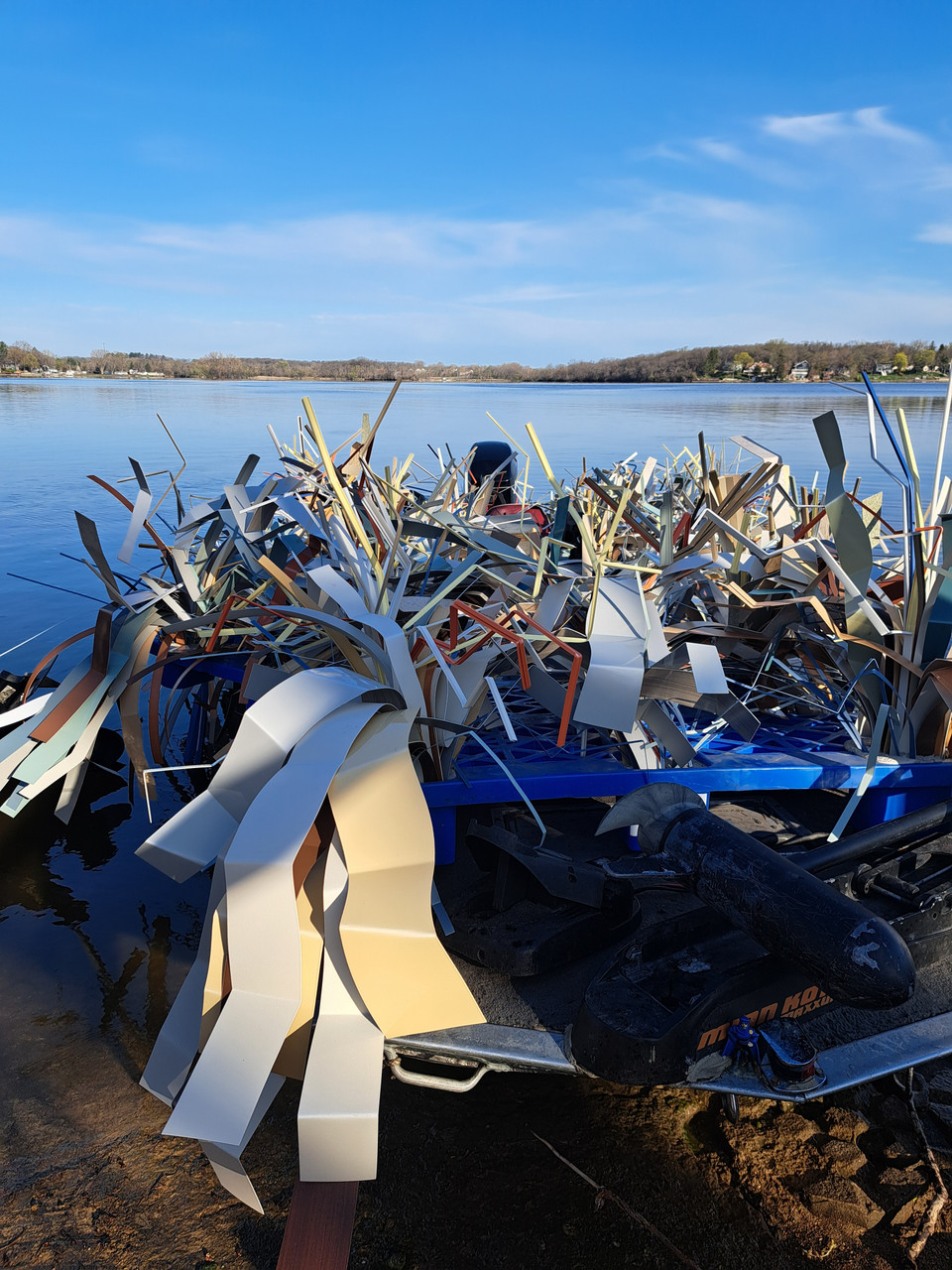
Completed mats need a planned handling route. Match the nursery footprint to the work your production pond still has to do.
3. DIY components: best for owners who build
Some pond owners would rather build than buy a finished unit. Fine by us. Our DIY components are the same reclaimed PVC, sold as parts, so you control the shape, size and layout. If you have a pond with an odd bottom or a specific spot you want to fill, building is how you match it.
Build dense, varied openings through the entire structure. Fish choose function over fashion: fine spaces give the smallest fish places to shelter.
Fishiding DIY components pros:
- Total control of shape, height and density.
- Reclaimed PVC at the parts level.
- Good for custom sizes and awkward spots.
- Satisfying if you like building.
Fishiding DIY components pricing: free shipping on every order, displayed price complete.
Best for: hands-on owners and anyone who needs a custom fit. Verdict: Buy for custom-built habitat.
Our fine PVC for DIY fish cribs is for adding fine shelter to your own build. Design the finished arrangement around cleaning, fish collection and the space you actually have.

An open outline is not the same as intricate interior cover. Inspect the spaces throughout the build, not just its tallest branch.
4. Kits: best for outfitting a whole pond
A kit gives you matched parts for shallow, mid or deep water, so you aren't guessing at the mix. It is the middle path between a finished unit and loose components. For a new aquaculture pond, or one you are converting, a kit gets you from empty water to layered habitat without designing every piece.
Fishiding kits pros:
- Sized for shallow, mid or deep water.
- Covers more of the water column in one order.
- Reclaimed PVC with the same freshwater safety as the rest of the range.
- Less planning than a pure DIY build.
Fishiding kits pricing: free shipping, with the displayed price as the full cost.
Best for: new ponds, conversions and owners who want a start-to-finish package. Verdict: Buy.
Plan habitat for your pond
Tell us your pond, depth and fish, and we will point you to the right habitat.
How we ranked these fish habitat options
The order follows the six criteria above, weighted for aquaculture. Finished cribs and attractors lead because they give an operator a defined unit to place. Mats follow where a connected nursery footprint fits the production plan. DIY components and kits give the operator creative control over assembly and layout. The fish don't care who assembled it.
For a fair comparison, we also name what doesn't win here. Brush piles and wood cover are familiar, and they have a place. They also break down, and they don't offer the same dense, repeatable surface for periphyton. That is a judgment from our own habitat work, not a lab result, and we state it as ours.
Which fish habitat for aquaculture ponds should you choose?
- Unsure where to start: preassembled cribs and attractors. They're the default.
- Fry survival is the problem: add habitat mats in shallow water.
- Building something custom: DIY components.
- New or converted pond: a kit sized for your water depth.
- Best combination: cribs for vertical cover plus mats for nursery areas.
Ask what the pond is short of. Hiding places? Start with cribs. Food at the bottom of the chain? Start with mats. Both? Use both.
FAQ
What is the best fish habitat for aquaculture ponds?
For most managed ponds in 2026, preassembled Fishiding cribs and attractors are the best starting point. They arrive built and self-weighted, so placement is simple. Add habitat mats where fry need dense cover.
Is PVC fish habitat safe for aquaculture ponds?
Yes. Fishiding states its reclaimed PVC is safe for freshwater use with koi, other fish, copepods and other aquatic creatures. Still check openings, placement and cleaning access for your pond.
Do I need to add weight to Fishiding habitat?
No. Every Fishiding preassembled habitat model and unit, including mats, is self-weighted with cement built into the patented design from day one.
Does artificial fish habitat help fry survive?
Dense, intricate habitat gives fry places to shelter and forage. Our underwater observations show fish using it, though results vary by species, season and water body.
Can periphyton grow on smooth PVC?
Yes. Periphyton can colonize smooth submerged surfaces, including PVC. Our footage shows PVC growing periphyton better than other plastics.
Does Fishiding charge for shipping?
No. Free shipping has been standard on every product since Fishiding began, and every displayed price is the complete cost.
Should I build my own habitat or buy it preassembled?
Build if you want custom shapes and have the time. Buy preassembled if you want proven habitat in the water quickly. Kits sit between the two.
One last thing
Most pond owners picture habitat as a spot where fish gather. Flip it. Picture it as the place your smallest fish live, and size everything for them first. The big fish will find it.
Related guides
About the author
David Ewald, owner of Fishiding, designs reclaimed PVC freshwater fish habitat for ponds, lakes and reservoirs.