
Brush piles or PVC fish habitat: better for bass?
Posted by dwe on 3rd Nov 2026
For bass pond habitat, we favor dense, varied PVC fish habitat structures when you want deliberate shelter for forage fish as well as cover for larger bass. Brush piles still provide useful cover, but neither a pile of branches nor a sparse PVC frame becomes good habitat simply because you sink it. The better choice is the structure that gives fish usable protection—not just something for you to cast toward.
- Brush piles vs PVC fish habitat structures for bass: choose density and usable shelter before material.
- Fishiding freshwater fish habitat suits owners seeking dense, varied cover made from reclaimed PVC.
- Brush piles provide branching cover, but wood decomposes and the structure changes.
- PVC supports periphyton, but a sparse PVC frame does not replace intricate protective cover.
Are brush piles or PVC fish habitat structures better for bass?
Dense PVC habitat is our choice for deliberately building protective cover; brush piles remain useful where their branching structure serves the fish. That distinction matters. “PVC” describes a material, not the quality of the finished habitat.
Our Fishiding freshwater fish habitat uses reclaimed PVC formed into dense, varied structures. Take our Safehouse Artificial Fish Habitat: a tight center gives fry refuge while wider limbs create shaded lanes for bass and panfish. It stands 48 inches tall and is designed for freshwater placement in 5–8 feet of water. We build for the spaces within the cover, not just its outside silhouette.
Here is the practical comparison:
| Consideration | Brush piles | Dense PVC fish habitat |
|---|---|---|
| Best for | Adding branching woody cover where suitable material and placement are practical | Building deliberate, varied shelter with a manufactured structure |
| Protective detail | Depends on branch density, arrangement, and condition | Depends on the actual design; PVC alone does not establish density |
| Change underwater | Wood decomposes, changing the pile’s structure | PVC does not undergo the same biological decay as wood; inspect the installation rather than calling it permanent |
| Food-growing surfaces | Submerged wood supports attached aquatic growth | Submerged PVC also supports attached aquatic growth |
| Installation | Requires a plan suited to the material and site | Our preassembled units have cement built into their self-weighted design |
| Main limitation | Useful fine cover changes as the wood breaks down | A sparse design or unsuitable location still leaves habitat needs unmet |
We are not telling you to pull every branch out of your pond. We are telling you to judge what those branches—and any artificial replacement—actually provide.
Start with the fish you are trying to protect
An adult bass and a newly hatched fish do not need the same doorway. That is the simplest way to understand this comparison.
An opening that lets a large fish move freely through a structure is not automatically a refuge for a smaller fish. When we talk about cover density, we mean the closely arranged details that create protective spaces for fry and juvenile fish within the habitat. We also want habitat complexity: different spaces, different edges, and room for fish to use different parts of the structure.
Think of a fence around a garden. Widely spaced posts mark the boundary, but they do not keep much out. Fill the spaces appropriately, and the fence begins doing a job. Underwater, the relationship between openings and fish size deserves the same attention.
That does not mean every inch should be packed identically. Protective interiors and accessible outer edges serve different purposes. A useful habitat arrangement gives small fish somewhere to retreat while leaving other areas available for movement and feeding.
For a bass pond, the question is bigger than “Where will I catch a bass?” Ask where the forage fish and young fish will find cover, too. Our explanation of protecting fry and young-of-year fish follows that fish-first approach. Young-of-year means fish produced during the current year.

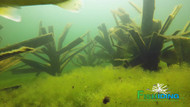
Safehouse habitat underwater: different limb widths and angles create different spaces within the cover. Photograph: Fishiding.
Where brush piles earn their place
A well-arranged brush pile brings branching complexity into open water. This submerged woody cover combines fine branches, larger limbs, and the spaces between them to create different kinds of shelter. That is a useful starting point, not something to dismiss because it grew on land.
Best for: adding woody cover where you can select suitable material and place it responsibly. Judge the finished pile by its usable spaces, not the size of the load you hauled to the shoreline.
The limitation is change. Wood decomposes, and the arrangement you install does not remain identical indefinitely. A pile that begins with intricate branching loses some of that detail as it breaks down. We would rather you plan for that than assume the original shape remains underwater forever.
Brush piles also require practical judgment before deployment. Confirm that the material is suitable for the water body, that placement is permitted, and that the pile will not create a boating or swimming hazard. Public water is not a disposal site for whatever happens to be behind the garage.
If existing woody cover is doing useful work, keep that function in mind before replacing it. Adding artificial habitat should address a real gap, not erase useful variety just to make everything match.
Where dense PVC habitat earns its place
PVC lets us arrange habitat deliberately rather than accept whatever branch pattern a tree supplied. Our artificial fish cover and PVC fish cribs combine dense interiors and varied spaces for freshwater ponds, lakes, and reservoirs. A fish attractor gives an angler a place to look; we build habitat with protective shelter inside that outline.
Fishiding freshwater fish habitat is best for pond and lake owners who want dense, varied shelter made from reclaimed PVC. Our material was destined for landfills; we put it to work underwater instead.
Want finished habitat you can shape and place? Fishiding's Safehouse arrives self-weighted; bend its flexible limbs into the profile you want without tools or separate ballast. Best for: pond owners adding ready-to-place bass and forage cover in suitable mid-depth water.
Prefer building your own fish cribs instead of hauling brush? Our Easy Dozen build your own Fish Crib kit combines fine strands, flexible reeds and wide flat limbs with twelve base containers. You supply the cement and assemble the cribs. Best for: hands-on pond owners who want to arrange varied reclaimed PVC cover across several locations. Choose the finished dimensions and placement to suit your pond rather than assuming every homemade crib belongs at the same depth.
Our preassembled habitat units, including habitat mats, are self-weighted with cement built into the design. They do not require added ballast or anchoring. DIY components are a separate category; follow the instructions for the actual build rather than transferring assumptions from a finished unit.
The honest limitation? Manufacturing a structure does not make the location suitable. Nor does a PVC label tell you how much protective detail the structure contains. Look inside the design before you judge the outside dimensions.
We favor our approach because density and variety are intentional parts of it. We do not need to pretend that every object made from PVC offers the same habitat.

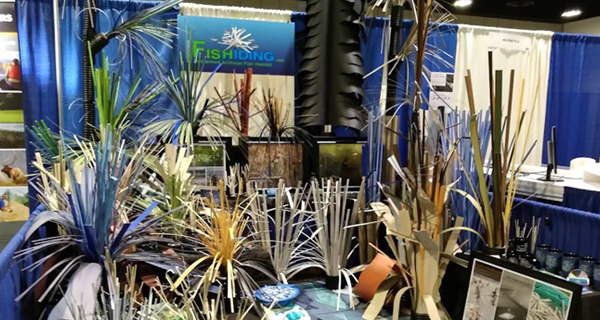
Fishiding's Easy Dozen builds shown above water, where you can inspect the fine cover and wider limbs before placement. Photograph: Fishiding.
Both materials can grow food, but food is not just green water
Periphyton is the attached aquatic community of algae, microbes, and other organisms growing on submerged surfaces—a living biofilm rather than simply a green stain. We call it “the mother’s milk of the aquatic food chain.” It belongs in this discussion because submerged habitat offers surfaces for attached growth as well as physical shelter.
Do not confuse periphyton with phytoplankton, which remains suspended in the water column. A green pond and a food-bearing surface are not the same thing.
Both submerged wood and PVC can support periphyton. Smooth PVC can be colonized; sanding or scuffing is not a prerequisite for attachment. You do not need to turn a habitat project into a sandpaper project.
That does not establish identical growth rates on every surface, or prove that PVC outgrows wood in every pond. Light, water conditions, and the position of the surface matter. Excessive sediment burial can cover growing surfaces and reduce the light reaching them; a coating of mud is not automatically a stocked pantry.
For this comparison, the useful point is straightforward: you do not have to choose wood merely because you want attached aquatic growth. But food-growing surface area should accompany shelter, not substitute for it.
Why the better choice varies between ponds
The material comparison becomes useful only when you connect it to your water. Before choosing brush piles or PVC fish habitat, consider:
- The existing cover. Identify missing shelter instead of duplicating what your pond already provides.
- Fish size and life stage. Fine protective spaces and larger accessible spaces do different jobs.
- The structure’s actual density. Evaluate the interior, not just height or spread.
- Seasonal water conditions. Depth alone does not tell you whether fish can use a location throughout the year.
- Your ability to inspect the installation. Keep a placement record so you can assess changes rather than guessing later.
We would not prescribe a universal depth from a photograph of a structure. Check the bottom, seasonal water levels, and dissolved oxygen—the oxygen available to fish in the water. In stratified water, where layers of different temperatures form, deeper does not automatically mean better: a structure cannot make oxygen-poor water suitable for bass.
Put the same thought into access. Keep habitat clear of swimming areas and navigation routes, and confirm the relevant permission before installing it. Fish cover should improve the water, not introduce an avoidable hazard.
What does our underwater evidence actually tell you?
Our freshwater habitat work includes more than 15 years and thousands of hours of underwater filming documenting fish use. That observation is central to how we judge habitat: what fish do around it matters more than how impressive it looks on shore.
Fish use and population change answer different questions, however. Seeing bass beside a structure documents use. Assessing a pond’s population requires a broader look at recruitment, forage, growth, harvest, and water conditions.
You can apply that distinction without turning a pond project into a research program. Record where you put the habitat. When visibility and access allow, look for small fish using the interior, larger fish using the edges, and attached growth on the surfaces. Keep observations in context rather than treating a single fishing trip as the entire report card.
A bass caught beside new cover tells you something useful. It does not, by itself, tell you everything the habitat is doing.

Fish among Safehouse limbs with visible attached growth. This Fishiding product photograph shows fish use and colonized surfaces—not just a clean structure on shore.
Should you use brush piles and PVC together?
Use both when they provide complementary cover and each installation is suitable for the site. You do not need to remove useful wood simply because you are adding artificial habitat.
We would start by identifying the missing function. Does the pond have large cover but little intricate shelter? Are you replacing deteriorated fine branches? Are you adding cover to an otherwise open area? Answer that before choosing another object to sink.
Variety is purposeful when it gives fish different usable spaces. It is not purposeful merely because the bottom contains a miscellaneous collection of things.
FAQ
Are brush piles or PVC fish habitat structures better for bass?
Dense PVC habitat is our choice for deliberately creating varied protective cover, while brush piles remain useful woody habitat. Compare the spaces fish can use, not just the construction material.
Will bass use both wood and artificial fish habitat?
Bass use both woody cover and artificial habitat. How they use a particular installation depends on its design, location, water conditions, and the fish’s life stage.
Does PVC fish habitat grow periphyton?
PVC fish habitat supports periphyton, the attached community of algae, microbes, and other organisms on submerged surfaces. Smooth PVC does not require sanding before colonization.
Do Fishiding preassembled structures need extra weight?
Fishiding preassembled habitat units are self-weighted with cement built into the design, including habitat mats. They do not require added ballast or anchoring.
Should I remove existing brush piles before adding artificial habitat?
Keep useful existing brush cover when it remains suitable for the site. Add artificial habitat to address missing shelter or other habitat needs rather than replacing functioning cover automatically.
How deep should I put bass habitat?
Choose bass habitat depth from your water body’s conditions rather than a universal number. Check seasonal water levels, bottom conditions, oxygen availability, and safe access before placement.
Does seeing bass around a structure prove the pond has more fish?
Seeing bass around a structure documents habitat use, not a population increase by itself. Population assessment also considers young fish, forage, growth, harvest, and water conditions.
Before you sink anything
Look at the smallest spaces in the structure. Not the tallest branch. Not the broadest outline. Ask what can get inside, what can follow it, and what protection remains when a small fish reaches the middle.
That is where this comparison becomes practical. Build somewhere fish can live, not merely somewhere you hope to find them.
Ready to put that idea in your bass pond? Shop the Fishiding Safehouse for finished, self-weighted cover, or choose the Easy Dozen kit if you want to build and arrange your own cribs. Both product pages above show the materials and setup so you can choose the right fit. Free shipping is included on every Fishiding product.
Related guides
By David Ewald, Fishiding.