

Bass Fish Attractor Depth: Where to Place (2026)
23rd Sep 2026
Bass fish attractors earn their keep in 3 to 8 feet of water. Three depth bands do different jobs: 2-4 feet for spawning and fry cover, 5-8 feet for the holding structure bass live on most of the year, and 8 feet or deeper for summer refuge and winter safety where the lake allows. Depth alone is the wrong target, though — bass use attractors where shallow feeding ground meets quick escape to deep water, so a unit spanning a drop-off beats two units parked on flat, featureless bottom at the same depth.
- Place bass attractors in 3-8 feet for all-season use; 2-4 feet for spawning and fry cover.
- Match unit height to depth: a 72-inch Keeper tree serves deep water, a 48-inch Safehouse fits 5-8 feet.
- Set sites on points and drop-offs, 4-8 feet apart, instead of flat featureless bottoms.
- Fishiding reclaimed PVC habitat is self-weighted with cement, so deep placement needs no anchors.
- Below the thermocline, summer bass ignore structure because oxygen runs out.
How deep should fish attractors be placed for bass?
Two to four feet for spawning-season cover, five to eight feet for the structure bass hold on through the season, and eight feet or more for cold-water and mid-summer refuge. The table below is the working plan for a 2026 planting in a pond or small lake.
| Depth band | What it does for bass | When bass use it most | Unit that fits |
|---|---|---|---|
| 2-4 ft | Spawning beds, fry and forage nursery | Spring; all warm months | Cradle, Briar Bush |
| 3-8 ft | All-season holding and ambush cover | Year-round | Safehouse, Fortress, Palace |
| 8 ft and deeper | Cold-season and deep summer refuge | Summer peaks; winter | Keeper |
The three bands are connected: fry raised in shallow cover graduate to mid-depth holding structure, and deep units give the whole population a safe winter address. The ranked guide to fish structure for stocked bass ponds covers the buying decision; this page covers only the water depth question.
Spawning and fry cover: 2-4 feet
Bass spawn shallow — typically in 2-6 feet of water over firm bottom, with the male guarding the bed until fry swim up. Bluegill spawn even shallower. Dense, fine-cover units placed in this band protect the fry and forage fish that carry the whole food chain: the Cradle stands 28-32 inches tall, opens past 50 inches and suits 2-6 foot depths, while the Briar Bush stands about 30 inches tall for 2-4 foot depths and is deliberately snaggy for spots lures never reach — under docks, behind boat lifts, near spawning flats.
Placing this band close to shore also matters for another reason. The units sit where you can reach them for inspection, and where the food web they host — algae, periphyton, copepods — starts first in the warmest water.
Holding structure: 5-8 feet
In a pond with suitable water conditions, mid-depth habitat gives bass a place to hold near shallow feeding areas and deeper water. Match the structure to the site's usable depth and look for points or drop-offs rather than treating one depth as a universal rule.
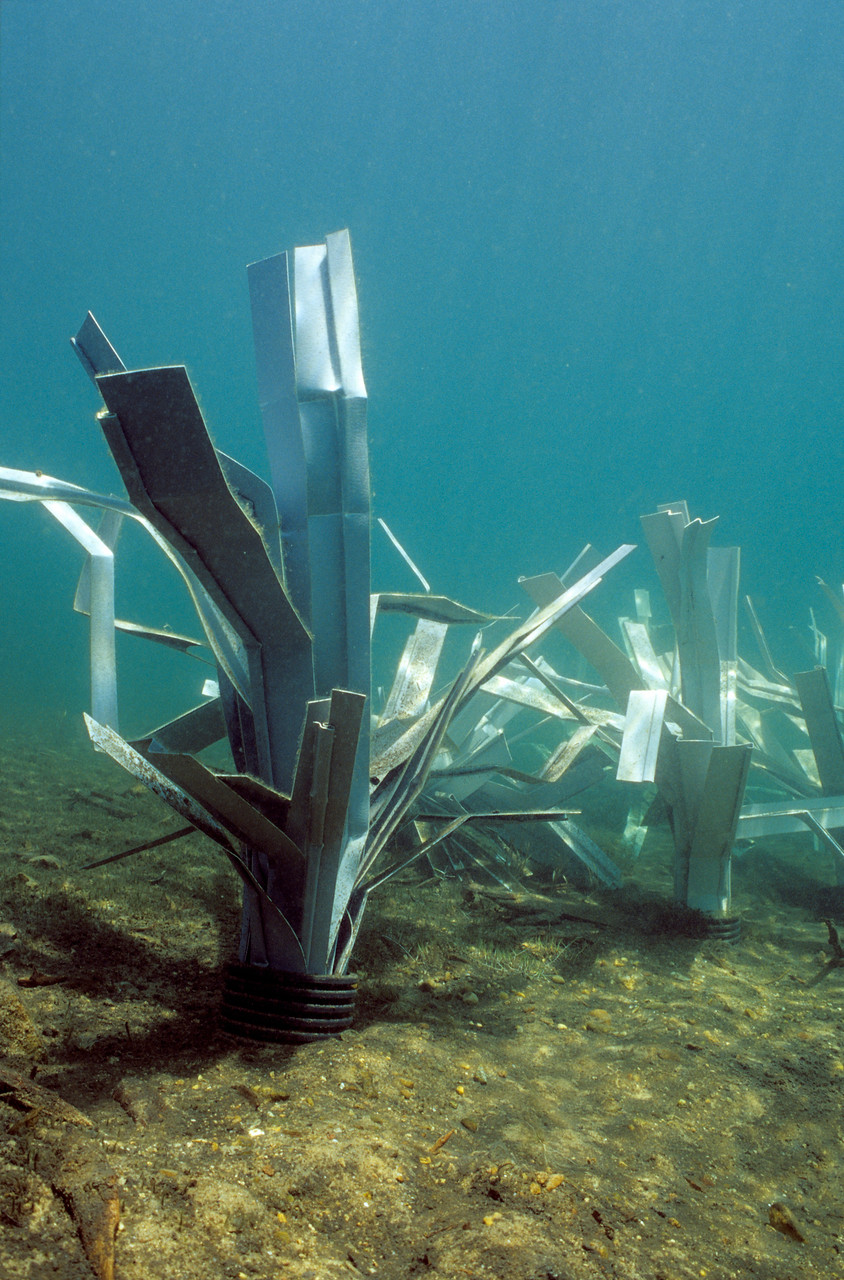
The Safehouse, 48 inches tall with roughly 50 square feet of surface, was built for exactly this band at a recommended depth of 5-8 feet. The Fortress stands 45 inches tall for 3-8 foot depths, and the Palace, standing over 60 inches tall and opening nearly 10 feet wide, bridges the transition between holding water and deeper refuge. Set these on points, along drop-off edges and on the first break from a spawning flat.
Deep water: 8 feet and deeper
Where the pond has usable deep water, tall structures can add cover below the shallow nursery zone. How much habitat to place there depends on the pond area and the size and density of each structure; there is no sound structures-per-acre target. Fishiding's starting goal is varied usable cover across at least 25% of the pond's surface area, with more where important cover types are missing.
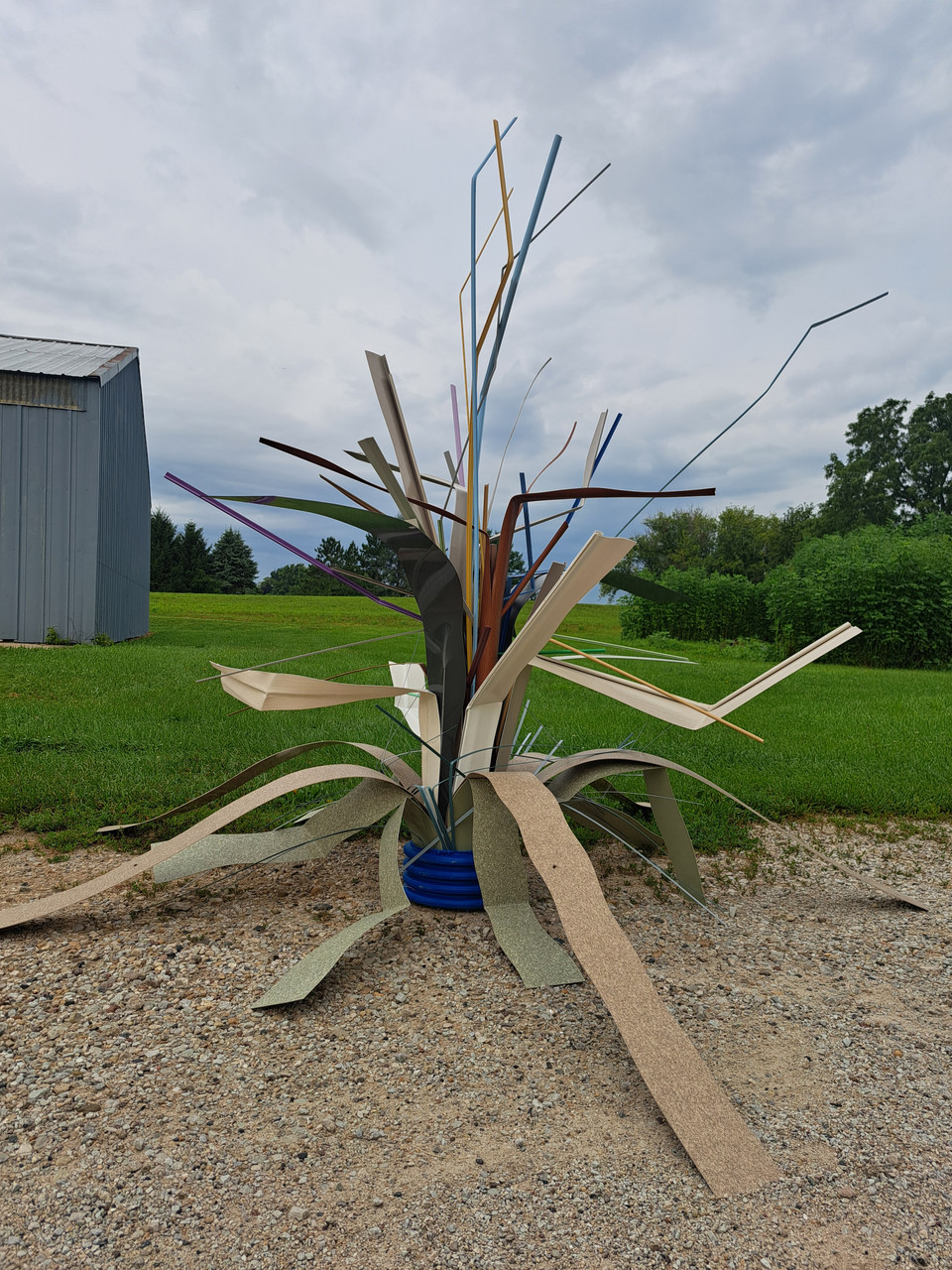
The Keeper is the deep-water tool here: more than 72 inches tall, opening more than 11 feet wide, over 125 square feet of surface and recommended for depths beyond 8 feet. Height is the reason depth works — a six-foot tree standing on the bottom in 10 feet of water still reaches into the zone bass cruise, while a 30-inch unit the same distance down serves mostly bottom dwellers. For the full deep-water buying picture, see the ranked comparison of fish structures for deep water lakes.
Why the right depth changes with clarity and season
- Water clarity. In stained water bass hold shallower and tighter to cover; in clear water they slide deeper, and the same unit catches more fish a few feet deeper than in a muddy pond.
- The thermocline. In summer, water below the thermocline loses oxygen and bass stop using structure there, no matter how good it looks. Place mid-summer additions above it — in small ponds that usually means shallower than you expect.
- Bottom slope. A unit straddling a drop-off serves two depths at once; the same unit in the middle of a flat serves one.
- Season. Bass slide shallow in spring, deep in summer peaks and deep again through winter. Three bands of structure let them move without leaving cover.
- Existing cover. New attractors placed 20 feet from a healthy brush pile compete with it. Fill the empty depth bands instead.
Placement rules that matter more than depth
- Proximity beats depth. A unit 10 feet from a drop-off edge outperforms the same unit in the middle of the flat. Bass travel routes — points, creek channels, the dam face — are where structure converts into catches.
- Varied openings hold more fish. Units that mix tight fine cover with broad open limbs serve fry and adult bass from the same footprint. Fishiding builds this mix into models like the Palace, which pairs fine center strands with panels more than 6 inches wide.
- Cluster, do not scatter. Groups of 4-8 feet apart read as one larger feature to fish. Single units on featureless bottom get light use.
- Leave lanes open. Bass move between shallow and deep along predictable routes. Structure stacked wall-to-wall forces nothing; a corridor between sites funnels movement past your casting positions.
Related questions
How deep do bass spawn?
Bass typically spawn in 2-6 feet of water over firm bottom, with the male guarding the nest. Dense cover placed at 2-4 feet shields fry in the days right after they leave the bed, which is where shallow habitat pays its way.
Do bass actually use artificial habitat?
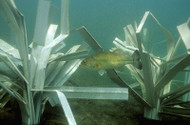
Yes — Fishiding's underwater freshwater observations, recorded while diving with scuba gear across more than 15 years and thousands of hours of filming, document all freshwater fish species using dense reclaimed PVC habitat, including largemouth bass holding inside and along the edges of these structures.
How deep is too deep for a bass attractor?
Deeper than the thermocline in summer, or deeper than light and oxygen support in your pond, is wasted structure. In a typical small pond, placements beyond about 12 feet see little use; in a deeper lake, tall units like the 72-inch Keeper reach the usable band from greater depths.
FAQ
How deep should bass fish attractors be?
For all-season use, place them in 3-8 feet of water. Add spawning cover at 2-4 feet and deep-water trees at 8 feet or more where the lake allows.
How deep do bass spawn?
Bass typically spawn in 2-6 feet of water over firm bottom. Shallow cover placed at 2-4 feet protects the fry right after they leave the nest.
Will bass use PVC fish habitat?
Yes. More than 15 years of Fishiding underwater observations document largemouth bass and other freshwater species holding on and inside dense reclaimed PVC habitat.
Do I need to anchor attractors in deep water?
Not Fishiding units. Cement is built into the patented base of every model, so each unit stands on its own at any depth — no concrete blocks or anchors required.
Should attractors be in shallow or deep water for winter?
Deep. Bass move down as water cools, so winter habitat belongs on deep structure near the deepest usable water — the same drop-off sites that hold summer fish.
How many feet from shore should I place a bass attractor?
Place it where the bottom does the work: on or next to a drop-off, point or channel edge. Distance from shore matters less than whether the site sits on a travel route between shallow and deep water.
One last thing
Fishiding's underwater footage shows bass using the shade of wide PVC limbs as much as the dense cover between them — one store photo caption records bass stacked in the shade cast by a Safehouse's broad limbs. When you shape a unit by hand before placing it, bend some limbs broad and horizontal rather than vertical. The shade attracts cruising fish; the dense center keeps the food web alive underneath.