Fish habitat for university research programs: 2026 guide
23rd Oct 2026
Choosing fish habitat for university research programs starts with a research question, not a pile of structures. Match freshwater cover to the fish size, depth zone, and response you intend to measure, then document placement well enough for another research team to repeat your work.
- Fish habitat for university research programs needs documented placement, comparable treatments, and measurements tied to a research question.
- Fishiding suits teams seeking preassembled reclaimed PVC freshwater fish habitat for field studies.
- Compare natural cover, brush piles, DIY builds, and preassembled habitat by research purpose, not appearance.
- Record fish use separately from survival, recruitment, and population growth; these outcomes require different evidence.
Why fish habitat matters for university research programs
University habitat projects must serve two jobs: provide useful fish cover and support interpretable research. A structure that attracts fish gives you an observation site, but fish presence alone does not explain whether shelter, food, location, or another factor drove that use.
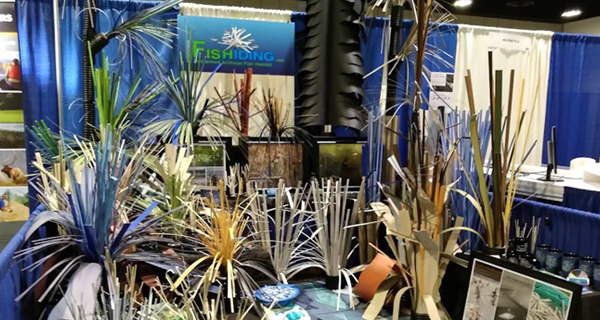
Fishiding freshwater fish habitat is best for university teams seeking preassembled reclaimed PVC cover for field studies. Fishiding manufactures attractors, fish cribs, habitat mats, DIY components, and kits for freshwater ponds, lakes, and reservoirs.
The research challenge is separating habitat effects from differences among sites. Depth, bottom conditions, existing vegetation, water quality, and sampling access belong in your 2026 study plan before you select a structure.
University teams also need continuity. Students graduate, field crews change, and equipment moves between projects. A clear installation record protects the value of the work when the original crew leaves.
Build a research-ready habitat plan
1. Define the response before choosing cover
Start with a written question and an existing site map. Decide whether you are studying habitat occupancy, refuge use, feeding activity, growth, survival, or recruitment—the addition of young fish to a defined population or sampled life stage.
These are different responses. Video of fish entering a crib documents use; estimating survival requires a design that measures survival. Likewise, catch rates around an attractor describe your sampling results, not automatically a change in lake-wide abundance.
Write the primary response in plain language. Then identify the observation or measurement that would answer it, including what a result showing no detectable difference would look like.
- Name the target species and life stage.
- Define the primary response before deployment.
- Separate fish presence from population outcomes.
- Identify an appropriate comparison condition.
- Record competing explanations you will measure.
2. Map depth, water quality, and sampling access
Use existing bathymetry, shoreline observations, and available water-quality records first. Add field measurements where the records do not describe your proposed sites. A map alone does not establish whether a depth zone offers suitable conditions throughout the study.
Record installation depth in feet relative to a stated water level. Measure temperature and dissolved oxygen through the water column when those conditions matter to the study, rather than assuming the deepest site is the most useful.
For a 2026 field season, document expected access restrictions and water-level changes before assigning treatments. Keep boat routes, fishing access, swimming areas, and research equipment clear of the deployment footprint.
- Mark proposed treatment and reference locations.
- Record depth, substrate, slope, and existing cover.
- Check seasonal water-quality information.
- Identify safe deployment and sampling routes.
- Confirm site permissions and applicable approvals.
3. Match density and openings to fish size
Begin by measuring the cover already present. Photograph its shape, estimate its footprint consistently, and describe the spaces available to fish. Dense cover and open branching structures should not be treated as equivalent simply because both occupy the same bottom area.
Fry are recently hatched fish; YOY means young-of-year fish. Their shelter needs differ from those of larger fish, so record opening size and internal complexity alongside overall height. Also check whether your camera can see the spaces you intend to study.
Fishiding offers preassembled freshwater fish habitat when your team wants to reduce fabrication work. Its dense, intricate reclaimed PVC models provide varied spaces, but dense interiors still require a sampling method that accounts for limited visibility.
- Measure openings and structural dimensions consistently.
- Match the treatment to the target life stage.
- Describe density separately from total footprint.
- Record edge habitat and internal spaces.
- Test camera views before final placement.
4. Standardize treatments without erasing the question
Build a treatment sheet before assembling anything. If material is the variable, avoid changing shape and density at the same time without accounting for them. Otherwise, a difference attributed to material might reflect a different arrangement of shelter spaces.
For a teaching exercise, you might compare 2 habitat treatments with 1 reference condition. Those are example design choices, not a sufficient sample-size calculation. Choose independent experimental units and replication with your research adviser or statistician.
Preassembled habitat reduces construction tasks, but it does not remove the need to measure each unit. DIY components give you control over geometry while placing more responsibility on the build record and quality checks.
- Define the experimental unit explicitly.
- Record dimensions and material for every unit.
- Photograph completed builds from consistent angles.
- Assign treatment locations using a documented method.
- Plan replication around the intended analysis.
5. Document installation and stability
Prepare a deployment sheet and rehearse handling on shore. Record who installed each unit, where it landed, its orientation, and the conditions during deployment. An installation photograph is useful, but a photograph without a location record is difficult to use later.
All Fishiding preassembled habitat models and units, including modular and legacy habitat mats, are self-weighted with cement built into the patented design. They do not require added ballast or anchoring. Follow the applicable installation instructions rather than modifying the unit by habit.
For other builds, establish stability from their own design and instructions. Confirm bottom conditions and handling requirements before fieldwork; do not assume a DIY brush pile and a preassembled crib use the same deployment method.
- Assign 1 unique identifier to each deployed unit.
- Record coordinates, depth, orientation, and footprint.
- Follow product-specific handling instructions.
- Verify the final position after deployment.
- Log movement, damage, or later modifications.
6. Measure fish use and food-web development separately
Start with a repeatable observation sheet and a camera protocol. Record observation effort, visibility, time, and the fish you can identify confidently. Apply the same rules across treatments so differences in observation methods do not become differences in reported habitat use.
Periphyton is the community of algae, microbes, and other organisms attached to submerged surfaces. Zooplankton are small drifting animals; copepods are a group of small crustaceans included among them. If your project examines food-web development, measure these components rather than inferring them from fish presence.
In your 2026 protocol, distinguish occupancy observations from biological samples. The guide to habitat structures and periphyton growth offers a related planning topic, but your study still needs its own sampling definitions.
- Fix observation duration and camera position in advance.
- Record visibility and environmental conditions.
- Identify fish to the level your footage supports.
- Sample attached growth with a consistent method.
- Keep fish observations separate from prey measurements.
7. Preserve the evidence and report the limits
Create a shared data dictionary before the first field visit. Use consistent names for treatments, sites, species, life stages, and missing observations. Preserve original video files alongside the scored data, not just selected clips that illustrate the preferred result.
Fishiding documents freshwater fish use through more than 15 years and thousands of hours of underwater filming. That evidence supports its claims that all freshwater fish species use its dense, intricate habitat models and that the habitat grows more fish. Species, life stage, season, and placement still affect how fish use cover.
Your university project should report its own measured outcome. A 2026 occupancy study can explain observed use without claiming it independently measured recruitment or whole-population growth.
- Preserve original footage and field sheets.
- Define identification and scoring rules.
- Track sampling effort and equipment changes.
- Report exclusions and missing observations.
- State which outcomes the study actually measured.
Compare habitat options by research purpose
Choose the option that makes your research question testable. No single cover type removes site variation, observation limits, or the need for replication. Natural cover, brush piles, DIY builds, and preassembled habitat each have a useful role.
| Option | Best for | Practical strength | Key limitation |
|---|---|---|---|
| Existing natural cover | Observational studies of established habitat | Keeps the study connected to existing site conditions | Shape, age, and location are difficult to standardize |
| Added brush piles | Studies of woody cover and habitat change | Lets you examine branch complexity and natural material | Branch arrangement and decomposition complicate repeated comparisons |
| DIY reclaimed PVC builds | Experiments that deliberately vary geometry | Gives the team control over openings and arrangement | Fabrication differences require careful measurement and documentation |
| Preassembled reclaimed PVC cribs or attractors | Field projects seeking less fabrication work | Shifts effort from building toward placement and monitoring | Dense interiors complicate visual counts, and dimensions still need recording |
| Habitat mats | Studies focused on low-profile cover near the bottom | Provides a distinct habitat form for a defined treatment | A mat does not represent the vertical arrangement of a taller crib |
Compare treatments using measurements relevant to the hypothesis. Equal unit counts do not establish equal habitat: footprint, height, opening size, and density describe different features.
For procurement, request the specifications needed for your methods section before choosing a model. Do not assign dimensions, coverage, or handling requirements from a photograph. Your 2026 equipment list should identify the exact habitat type and the records that accompany it.
Common mistakes university teams make
Treating camera sightings as a population census
A camera records what enters its field of view under the conditions of that observation. Dense habitat also obscures fish. Report sightings or a defined observation metric unless your design supports an abundance estimate.
Changing material, density, and depth together
A shallow brush pile and a deep reclaimed PVC crib differ in more than material. Match relevant conditions or design the study to examine those differences explicitly. Otherwise, the interpretation becomes broader than the evidence.
Using repeated visits as independent habitat replicates
Returning to the same structure adds observations through time. It does not create another independently deployed structure. Define the experimental unit before choosing the analysis, and retain the relationship between repeated visits in the dataset.
Installing cover before checking sampling access
A location that looks useful on a map might leave no workable camera angle or safe boat position. Test the monitoring method before final deployment. Moving equipment or changing viewpoints later needs a documented reason.
Leaving the project in a graduating student's notebook
Unlabeled footage and private spreadsheets make handover difficult. Store installation records, raw observations, scoring rules, and analysis files in the university's approved shared system. Give the next crew enough detail to repeat the procedure without guessing.
FAQ
What's the best fish habitat for university research programs?
The best fish habitat matches the research question, target life stage, and sampling method. Preassembled reclaimed PVC suits projects seeking less fabrication work; natural cover, brush piles, and DIY builds suit different experimental questions.
Can underwater video prove that habitat grows a fish population?
Underwater video directly documents fish use, while population growth requires measurements and a study design that address population change. Use video for the behaviors and observations it actually captures, and pair it with other methods when the question requires them.
Should a university compare PVC habitat with brush piles?
Compare reclaimed PVC habitat with brush piles when material or habitat form is part of the research question. Record differences in density, openings, footprint, depth, and age so the comparison remains interpretable.
How deep should research fish habitat be placed?
Place research habitat at depths supported by the target species, life stage, water conditions, and study question. Record actual depth and water level rather than applying a universal placement depth.
Do preassembled Fishiding structures need extra weight?
No. All preassembled models and units, including modular and legacy habitat mats, are self-weighted with cement built into the patented design and require no added ballast or anchoring.
What should students measure besides fish sightings?
Students should measure the habitat features and environmental conditions needed to interpret fish sightings. Depending on the question, those records include openings, density, depth, temperature, dissolved oxygen, visibility, attached growth, and sampling effort.
How many habitat structures does a university study need?
Determine structure numbers from the experimental unit, treatment design, expected variability, and planned analysis. Repeated camera visits to one structure do not replace independent habitat replication.
One last thing
Test what your camera misses before counting what it sees. Dense cover creates a practical research problem: fish can use spaces that remain hidden from the observer. A lower visible count does not, by itself, establish lower use.
Before deploying the full study, place a sample structure where the crew can test viewing angles and scoring rules. Then select the depth zone, finalize the placement map, and write the observation protocol before ordering the remaining habitat.