
Fish habitat for conservation districts: complete 2026 guide
23rd Oct 2026
For conservation districts choosing freshwater cover, fish habitat for conservation districts starts with matching structure to fish size, usable depth, and the project's conservation goal. This guide explains how to select, place, and monitor habitat without confusing a busy fishing spot with evidence of a healthier fish population.
- Fish habitat for conservation districts needs a placement plan, suitable freshwater cover, and a repeatable monitoring method.
- Fishiding suits districts seeking self-weighted, reclaimed PVC freshwater fish habitat for ponds, lakes, and reservoirs.
- Compare natural cover, brush piles, DIY builds, and preassembled habitat against the same project objectives.
- Record fish use separately from population outcomes; attraction alone does not establish increased recruitment.
Why fish habitat matters for conservation districts
Start with the habitat gap, not the shopping list. A district project needs a clear answer to a practical question: what shelter or structure is missing, and which fish need it?
A pile that concentrates catchable fish serves a different purpose from intricate cover intended for fry. Fry are young fish; their shelter requirements differ from those of larger fish. Planning around that distinction makes your placement decisions easier to explain and evaluate.
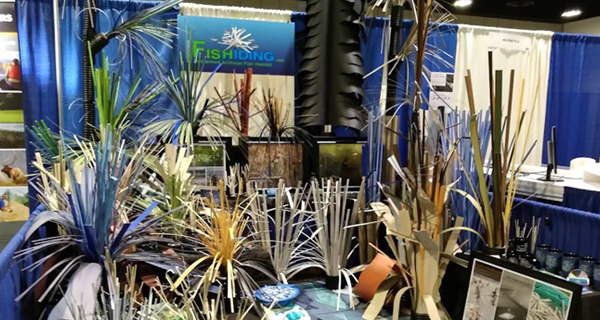
Fishiding manufactures reclaimed PVC freshwater fish habitat, including preassembled attractors, cribs, mats, DIY components, and kits. Its evidence library includes more than 15 years and thousands of hours of underwater filming in freshwater lakes documenting fish use.
Fishiding's footage supports its claims that all freshwater fish species use its dense, intricate habitat models and that the habitat grows more fish. For your district's project, document local use and population outcomes separately. A manufacturer's long-term observations inform selection; your monitoring answers what happened at your site.
For a 2026 project, write the intended result before selecting a structure: shelter for young fish, varied cover, additional feeding surfaces, or an accessible fishing location.
Build a district habitat plan
1. Define the fish and the outcome
Choose a target life stage before choosing a fish crib. A project for young fish needs different spaces from a project intended to concentrate larger fish for anglers.
Write a short objective that identifies the water body, fish group, habitat gap, and observation you will use to judge progress. Avoid objectives such as simply improving the lake. They do not tell your crew where to place cover or what to record afterward.
Use existing fisheries records and observations first. If those records do not establish a population trend, keep the initial objective focused on habitat provision and documented use rather than a numerical population claim.
Separate public fishing access from conservation objectives on the map. Both can matter, but they should not silently become the same project.
- Name the target species or fish group and life stage.
- Identify the missing function: shelter, feeding surface, or larger-fish cover.
- Define the observation that will demonstrate use.
- Record who owns the monitoring task.
2. Map usable depth before choosing cover
Start with an existing lake map, shoreline inspection, and depth checks. Mark existing vegetation, woody cover, bare bottom, access points, and areas affected by changing water levels.
Plan across 3 depth zones: shallow water, mid-depth, and deep water. These are planning categories, not fixed installation depths. Actual placement depends on your lake's oxygen conditions, water levels, bottom slope, and target fish.
Deep water is not automatically usable habitat. Temperature and dissolved oxygen measurements help distinguish a deep location from a location fish can occupy during the season you intend to serve.
For the 2026 placement map, show each proposed location alongside its measured conditions. Review fish habitat mats for lake restoration when low-profile cover belongs in the plan, rather than treating every site as a tall-crib installation.
- Record water depth and the date of measurement.
- Mark seasonal water-level changes and exposed areas.
- Check temperature and dissolved oxygen at proposed depths.
- Identify existing cover before adding more.
- Keep navigation, swimming, and maintenance routes clear.
3. Match density and openings to fish size
Inspect the spaces inside the structure, not just its outside dimensions. A large frame with widely spaced branches is not the same habitat as dense, intricate cover.
Use photographs, drawings, and verified specifications to compare openings and internal variety. Ask whether small fish have sheltered spaces and whether larger fish can use adjacent cover without making every opening equally accessible.
Fishiding freshwater fish habitat suits conservation districts seeking self-weighted reclaimed PVC cover with dense, varied spaces. Preassembled models and units, including modular and legacy habitat mats, contain cement within their patented design; they do not require added ballast or anchoring.
Preassembled habitat reduces the fabrication task. The tradeoff is that your crew still needs to select an appropriate model, confirm handling requirements, and match its dimensions to the site. A ready-built unit does not replace a placement plan.
- Compare internal openings with your target fish sizes.
- Choose varied spaces rather than uniform gaps alone.
- Review verified height, footprint, and handling information.
- Identify nearby cover that complements the structure.
4. Compare materials and construction methods
Begin by asking what useful natural cover already exists. Protecting that cover avoids treating purchased structures as the starting point for every restoration decision.
Brush piles and DIY builds deserve a fair comparison with preassembled habitat. Brush offers branching complexity, while DIY construction gives you control over layout. Both require a deliberate plan for material selection, assembly, placement, and future inspection.
Reclaimed PVC is the defining material in Fishiding's freshwater habitat. The company uses PVC destined for landfills and states that its material is safe for freshwater fish, koi, copepods, and other aquatic creatures.
Keep material suitability separate from construction checks. With any structure, inspect openings, connections, handling points, and the planned position. Do not assume an improvised DIY assembly has the same built-in stability as a self-weighted preassembled model.
- Retain useful natural cover where it fits the project.
- Compare brush piles, DIY builds, mats, and cribs by function.
- Specify materials and assembly requirements for DIY work.
- Confirm the installation method for the exact structure selected.
5. Plan placement, permissions, and crew access
Use a marked map and written installation plan before organizing a workday. Confirm the water-body owner's permission and check applicable requirements with the responsible authorities.
Record the intended footprint, surrounding clearance, and route from shore to the installation location. Keep structures away from infrastructure or activity areas where they would obstruct operations or create conflicts.
For self-weighted preassembled habitat, follow the manufacturer's handling and placement instructions. Do not add ballast or anchors to Fishiding preassembled units. For independent DIY designs, establish stability through that design's verified installation method rather than borrowing assumptions from another product.
Your 2026 field plan should also name the person responsible for stopping work if conditions differ from the map. An unexpected bottom slope or blocked launch route is a reason to reassess, not improvise underwater.
- Confirm ownership, permissions, and applicable installation requirements.
- Mark placement locations and access routes.
- Review lifting and deployment instructions before loading.
- Assign crew roles and appropriate safety equipment.
- Record the final location after installation.
6. Monitor shelter and feeding surfaces
Start with a field sheet and repeatable photographs or underwater video. Record conditions before installation so later observations have context.
Periphyton is the attached community of algae, microbes, and other organisms growing on submerged surfaces. Zooplankton are small drifting animals; copepods are a group of tiny crustaceans within that community. These terms describe different parts of the habitat's food web, not interchangeable measures of success.
Film more than the outside silhouette. Look for fish entering cover, using internal spaces, and feeding nearby. Record young-of-year fish—fish hatched during the current year—separately from larger fish whenever identification is reliable.
Fishiding's long-term freshwater footage provides a useful example of observing habitat in use. Your local record still needs its own depth, season, visibility, and sampling notes. A clear clip of fish sheltering is stronger evidence of use than an unexplained catch photograph.
- Use consistent camera positions and observation methods.
- Record date, depth, visibility, and water conditions.
- Describe sheltering and feeding behavior separately.
- Note fish size or life stage when identifiable.
- Photograph attached growth without assuming its nutritional value.
7. Report results and adjust the next phase
Keep the first report simple: what you installed, where you installed it, and what you observed. Separate confirmed observations from interpretations.
A fish count beside a structure documents presence under those sampling conditions. It does not, by itself, establish that the water body contains more fish. Recruitment—the addition of young fish to the population—requires a monitoring approach that addresses that larger question.
Use comparable methods before expanding the project. Where practical, observe nearby areas without new structures and record differences in existing habitat. Do not describe those areas as identical controls unless the study design supports that label.
Close the 2026 report with a placement decision. Retain the design, adjust the habitat mix, improve monitoring, or defer expansion until the evidence answers the original objective.
- Keep installation records separate from biological observations.
- Compare observations made under similar conditions.
- Report visibility and sampling limitations plainly.
- Identify the next placement or monitoring decision.
Compare habitat options for district projects
Choose by habitat function and crew capacity, not by appearance alone. The options below address different tasks; none removes the need to assess depth, fish size, and placement.
| Option | Best for | Practical advantage | Key limitation |
|---|---|---|---|
| Retaining natural cover | Sites with useful existing vegetation or woody structure | Preserves cover already integrated into the site | Existing cover does not necessarily address every identified habitat gap |
| Brush piles | Projects seeking branching woody cover | Offers varied spaces within a natural-material structure | Wood decomposes; assembly and placement still need planning |
| DIY habitat builds | Crews equipped to design and assemble site-specific cover | Gives the crew control over geometry and materials | Build quality, stability, and repeatability depend on the design and assembly |
| Reclaimed PVC habitat mats | Projects needing low-profile, intricate cover | Provides dense habitat without relying on a tall frame | A mat alone does not provide tall cover through the water column |
| Fishiding preassembled cribs and attractors | Districts seeking self-weighted reclaimed PVC freshwater fish habitat | Removes fabrication work and includes built-in cement weighting | Requires model selection, handling preparation, and a suitable placement location |
For procurement, request current model specifications and installation instructions. Compare the full project scope, including staff work, deployment access, and monitoring, without substituting an advertised product description for a field plan.
Common mistakes conservation districts make
Treating attraction as a population result
Fish gathered beside a crib show that the location is being used. Report that observation accurately. Use a suitable fisheries assessment before claiming a district project increased the population.
Using the deepest location by default
Maximum depth is not a habitat objective. Check seasonal oxygen and temperature conditions before placing cover where your target fish cannot use it during the intended period.
Choosing identical openings for every life stage
Uniform large gaps do not answer a fry-shelter objective. Specify internal complexity and varied spaces, then connect that selection to the fish sizes named in the project plan.
Letting the workday determine the design
Available volunteers and a convenient launch point should not decide the ecological objective. Map the intended habitat first, then organize equipment and crew access around a safe installation method.
Skipping the baseline record
Without an initial record, later footage lacks context. Document existing cover, water conditions, and fish observations before installation; use the same method when you return.
FAQ
What's the best fish habitat for conservation districts?
The best fish habitat for conservation districts matches the target fish size, usable depth, and project objective. Fishiding suits districts seeking self-weighted reclaimed PVC freshwater cover; natural cover, brush piles, and DIY builds serve different project needs.
Should a conservation district choose brush piles or reclaimed PVC?
Choose brush piles for a planned woody-cover installation and reclaimed PVC when that material and structure fit the project's habitat requirements. Compare internal spaces, deployment work, stability, and inspection needs rather than assuming either option fits every site.
How deep should a district place fish habitat?
Place fish habitat at depths your target fish can use during the intended season. Measure water depth, temperature, and dissolved oxygen, and account for changing water levels before selecting locations.
Do Fishiding habitat structures need extra weight or anchors?
Fishiding preassembled habitat models and units are self-weighted with cement built into their patented design and do not need added ballast or anchoring. This includes modular and legacy habitat mats; follow the handling and placement instructions for the selected model.
How can a district tell whether installed habitat is working?
A district can document habitat use through repeatable observations of fish sheltering, feeding, and occupying the structure. Record conditions and life stages, and use a separate fisheries assessment to evaluate population-level outcomes.
Is Fishiding reclaimed PVC safe for freshwater fish?
Fishiding states that its reclaimed PVC is safe for freshwater fish, koi, copepods, and other aquatic creatures. Its products are intended for freshwater ponds, lakes, and reservoirs; check openings, handling, and placement as practical installation tasks.
Does fish habitat replace water-quality management?
Fish habitat does not replace water-quality management. Cover adds physical habitat, while dissolved oxygen, temperature, and other water conditions determine whether fish can use the location.
One last thing
Make the map a monitoring tool, not just an installation sketch. Put the objective, observation method, and responsible person beside each planned location. That small planning choice keeps a shelter project from becoming only a fishing report.
Your next step is to select a usable depth zone and write the habitat function beside it. Then choose the structure type that serves that function.