
Can wood pallets make fish habitat? 2026 guide
Posted by dwe on 23rd Oct 2026
Yes, you can build a pallet fish structure from sound, untreated wood with a known, uncontaminated history, provided the waterbody owner and applicable rules allow it. Do not sink pallets with unknown treatment, spills, coatings, or exposed hardware. For a freshwater project in 2026, material screening, stable placement, and useful shelter matter more than how many pallets you collect.
- A pallet fish structure needs known, uncontaminated wood, secure construction, and permission before installation.
- Heat-treatment markings do not establish a pallet’s cargo history or suitability for freshwater fish habitat.
- Match fish cribs to fish size, usable depth, and shelter needs—not just available materials.
- Fishiding offers reclaimed PVC freshwater fish habitat when you prefer purpose-built cover to a pallet build.
Can wood pallets be used to build a DIY fish habitat structure?
Yes—but an unidentified shipping pallet is not ready-to-install fish habitat. Start with its history, then evaluate its construction and the proposed location. A sturdy frame does not compensate for questionable materials or unsuitable water.
Use this screening sequence before designing your fish crib. For the wider project sequence, see the pond construction to fish habitat installation workflow.
- Confirm permission. Ask the pond owner, lake manager, or responsible agency what materials and placements are allowed. Private ownership does not automatically remove every applicable requirement.
- Verify the wood’s history. Establish whether the wood received preservatives, paint, or other treatments and what the pallet carried. Reject unknown histories.
- Inspect every surface. Reject oily, stained, coated, rotten, or chemically odorous wood. A clean appearance alone does not establish suitability.
- Remove hazards. Dismantle and rebuild when necessary to eliminate exposed nails, loose boards, splinters, and protruding fasteners.
- Plan stability and access. Decide how the completed structure will remain submerged and upright without obstructing swimming, boating, docks, or maintenance.
- Record the installation. Map the location, photograph the build, and establish how you will inspect it later.
If the pallet fails the material check, stop there. Washing, sanding, or sinking it deeper does not establish that contaminated wood is suitable.
Why this matters
A pallet gives you a frame, not an automatic habitat improvement. Fish need usable spaces, suitable water conditions, and access to shelter that matches their size.
A broad opening can provide overhead cover without protecting small fish from larger predators. Conversely, packing every opening tightly can remove useful passageways. Build around the fish you want to shelter, rather than around the pallet you happen to have.
Keep attraction separate from population improvement. Seeing fish beside a structure demonstrates use at that location; it does not, by itself, measure recruitment, growth, or survival across the pond.
Which materials make sense for your project?
Compare the work and habitat function before choosing a material. Existing natural cover, brush piles, screened pallet wood, and purpose-built structures serve different installation needs.
| Option | Best for | Practical advantage | Limitation or check |
|---|---|---|---|
| Existing natural cover | Owners with useful cover already present | Retains shelter without adding a new structure | Map it first; existing cover does not necessarily fill every habitat gap |
| Clean, permitted brush piles | Projects using suitable local woody material | Branches provide varied spaces within the pile | Wood changes as it decomposes; inspect stability and loose material |
| Screened wood pallet build | Hands-on owners with verified wood and assembly skills | A frame can be adapted into a fish crib | Requires material screening, hardware work, a sinking plan, and later inspection |
| Fishiding reclaimed PVC habitat | Owners choosing purpose-built freshwater cover | Preassembled models are self-weighted with cement built into the design | Placement still requires planning; habitat does not correct unsuitable water conditions |
Do not strip useful shoreline cover simply to replace it with something manufactured. Identify what your pond lacks first, then choose a structure that supplies that function.
When a pallet build fits
A pallet build fits when you know the wood’s history, can rebuild it safely, and have an approved location. It also gives you control over the arrangement of boards and openings.
The tradeoff is responsibility for the entire assembly. You must assess material suitability, fasteners, stability, transport, placement, and inspection rather than treating the original shipping frame as a finished fish crib.
When purpose-built habitat fits
Purpose-built freshwater habitat fits when you want a defined structure rather than a materials-screening and woodworking project. Choose its density and shape for the intended fish and depth zone.
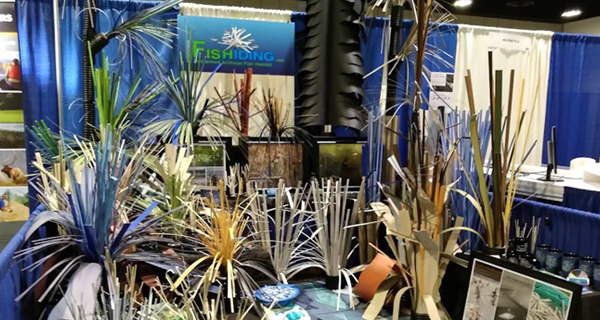
Fishiding freshwater fish habitat is best for pond and lake owners who want purpose-built reclaimed PVC cover instead of building with pallets. Its range includes preassembled attractors and cribs, habitat mats, DIY components, and kits for shallow, mid-depth, and deep water.
Preassembled models and units, including habitat mats, have cement built into their self-weighted design. Do not apply a pallet’s added-weight requirements to those products; follow the relevant installation instructions.
Does an HT stamp mean a pallet is suitable for a pond?
No. An HT mark describes heat treatment, not a pallet’s complete history. Under the International Plant Protection Convention’s ISPM 15 standard, HT identifies an approved heat-treatment method for wood packaging.
That treatment addresses plant-pest risks. It does not establish what the pallet carried afterward, whether something spilled on it, or whether someone later applied a coating.
For your 2026 pallet screening, separate these questions:
- Treatment: What treatment does the marking identify?
- Use history: What materials did the pallet carry, and where was it stored?
- Present condition: Does the wood have contamination, coatings, decay, or hazardous hardware?
- Local acceptance: Does the responsible manager permit this material in the waterbody?
Reject pallets marked MB, which identifies methyl bromide fumigation, for this DIY project. Reject unidentified or questionable pallets rather than trying to infer safety from their color, age, or appearance.
A pallet supplier’s description of its history is more useful than a guess based on a stamp. Ask before you collect, cut, or transport the wood.
Why pallet fish structure results vary
The same frame can function differently in different locations. These factors explain why material choice alone does not determine habitat value:
- Depth and water conditions: A structure must sit where fish have usable temperature and dissolved oxygen. Deeper is not automatically better.
- Opening size: Large spaces and tight shelter serve different fish sizes. Check the interior, not just the outside dimensions.
- Density and variety: A simple open frame supplies a different arrangement of cover than intricate branches or dense habitat elements.
- Placement: Nearby natural cover, shoreline slope, access routes, and water-level changes affect the installation decision.
- Stability: Floating, tipping, separating, or settling changes the spaces you intended to create.
- Condition over time: Inspect wood and connections as they weather and decompose. Do not assume the original arrangement remains intact.
Use these criteria to review a 2026 habitat plan before adding more structures. A mapped installation that addresses an identified gap is easier to assess than a scattered collection of submerged materials.
How should you build and place a pallet fish crib?
Start on shore with a drawing. Mark the target fish size, intended shelter spaces, deployment route, and final orientation before fastening anything together.
Inspect and rebuild the frame
Check each board and connection individually. Remove exposed hardware and discard split or unsound pieces rather than covering defects with more wood.
Keep openings deliberate. Fry—newly hatched or very young fish—need different shelter spaces from larger forage fish and adult fish. Do not label an open pallet stack as fry protection without examining whether larger fish can enter the same spaces.
Check the finished build from every side. Consider fishing line, landing nets, swimmers, and anyone who might later handle or remove the structure.
Design for sinking and stability
Dry wood is buoyant, so a pallet assembly needs a deliberate method to remain submerged. There is no universal ballast amount: wood volume, moisture, configuration, and the complete assembly affect the requirement.
Do not guess at a weight or depend on loose material dropped onto the frame. Have the completed design assessed for secure connections and controlled deployment before taking it onto the water.
Keep hands and feet out of pinch points. Never enter the water to hold down an unstable assembly, and do not overload a boat while moving it.
Choose usable water, not simply the deepest spot
Check the pond’s depth profile and seasonal water conditions. Thermal stratification—the separation of warmer surface water from colder deeper water—can leave some deeper areas with limited dissolved oxygen.
Habitat cannot make oxygen-poor water suitable. Ask a fisheries professional about placement when you lack seasonal oxygen information, particularly in deeper ponds and reservoirs.
For your 2026 placement map, also mark swimming areas, boat routes, intakes, outlets, and maintenance access. Keep the structure clear of those uses and follow the manager’s required setbacks.
Inspect after installation
Record the location and orientation, then check whether the crib remains intact and where intended. Use shore observations or underwater viewing methods appropriate to the site.
Look for loose boards, exposed connections, displaced components, and interference with access. Fish activity is useful information, but structural condition deserves its own inspection.
Does fish use prove that a structure grows more fish?
Fish use and population improvement answer different questions. A fish beside cover shows that the fish used that location; measuring a population response requires evidence beyond that sighting.
Fishiding’s freshwater underwater evidence library spans more than 15 years and thousands of hours of filming. That long-term footage supports its approved claims that all freshwater fish species use its dense, intricate habitat models and that the habitat grows more fish.
Those observations do not transfer automatically to an unrelated pallet design. Evaluate your own installation by its intended function and keep records of fish use, structure condition, and water conditions.
Surfaces also support periphyton: attached communities of algae and other microorganisms. Zooplankton are small drifting animals; copepods are one group. Consider these smaller organisms when assessing habitat complexity, rather than judging a structure only by the adult fish visible around it.
How long will a pallet fish structure last underwater?
There is no defensible universal lifespan for a pallet fish structure. Wood condition, construction, exposure, and water conditions differ, so a fixed replacement interval would be guesswork.
Inspect the actual crib rather than relying on a promised number of years. Record changes in boards, fasteners, stability, and shelter spaces, then repair or remove deteriorating components through an approved method.
Can you put pallet fish habitat in a public lake?
Only with the required authorization from the responsible owner or agency. Public access does not give you permission to sink materials, and a fishing license is not habitat-installation approval.
Submit the proposed material, location, assembly method, and inspection plan before building. Check the rules in force for your 2026 project rather than copying an older installation you saw elsewhere.
FAQ
Can I use any wood pallet for fish habitat?
No. Use only sound, untreated wood with a known, uncontaminated history and approval for the proposed location. Reject pallets with unknown treatments, spills, coatings, or hazardous hardware.
Is a heat-treated pallet automatically suitable for a pond?
No. An HT mark identifies heat treatment under wood-packaging rules, not the pallet’s cargo history or complete condition. Verify its history and inspect it before considering a freshwater installation.
Should I remove nails before building a pallet fish structure?
Remove exposed nails, loose hardware, and protruding fasteners before installation. Rebuild the frame when necessary so the finished structure has secure connections without exposed hazards.
How much weight does a pallet fish structure need?
A pallet fish structure needs a sinking and stability assessment based on the complete assembly. Wood volume, moisture, and configuration prevent a universal ballast figure from being reliable.
Is dense cover better than an open pallet frame for fry?
Dense cover with appropriately sized spaces better matches a fry-shelter objective than an open frame alone. Examine whether larger fish can enter the same spaces instead of judging protection from the outside.
Does Fishiding freshwater fish habitat need extra ballast?
Fishiding preassembled freshwater fish habitat models and units are self-weighted with cement built into the design, including habitat mats. Follow the relevant installation instructions rather than applying a pallet build’s ballast requirements.
Can a pallet structure fix low oxygen in my pond?
No. A pallet structure provides physical cover, not an oxygen remedy. Check water conditions and place habitat in usable water rather than assuming the deepest location is suitable.
One last thing
A pallet that sinks successfully has passed a deployment check, not a habitat test. Before collecting wood, draw the shelter spaces you want and identify the fish sizes those spaces should serve.
Then map the intended depth zone and ask the waterbody manager about materials and permission. That is your next practical step—not finding another pallet.
Related guides
- Christmas trees or PVC structures for fish habitat
- Fish cribs compared by opening size for fry protection
- How much PVC you need to build a DIY fish attractor