Pond King alternatives for aquaculture operations
Posted by dwe on 17th Nov 2026
Pond King covers part of what an aquaculture operation needs. Whatever it supplies for your ponds, fry still need somewhere to hide. The best Pond King alternative for aquaculture in 2026 is Fishiding Briar Bush reclaimed PVC habitat if your ponds need dense cover for fry, copepods and periphyton. Stay with Pond King if your problem is one habitat structure cannot solve.
- The best pond king alternatives for aquaculture are habitat structures, not more of the same product category.
- Fishiding is best for hatchery and grow-out ponds that need dense fry cover and periphyton surface.
- Fishiding sells preassembled cribs, habitat mats and DIY kits for shallow, mid and deep water.
- Finished Fishiding units are self-weighted; DIY kits need assembly. All products ship free.
- Keep Pond King for what it already does well; add habitat for the gap.
By David Ewald, Fishiding.
Bare ponds lose fish you already paid for
Picture a rabbit in an open field versus a rabbit in a briar patch. Same rabbit, very different odds. Fry in a bare aquaculture pond are the open-field rabbit. A pond can have clean water, good feed and sound management and still hand its smallest fish to every predator that swims by.
That is the gap a habitat structure fills. Dense, intricate cover gives fry, young-of-year fish and forage fish a place to shelter. It also gives them a place to feed, because every surface of the structure becomes real estate for periphyton, the attached film of algae and microorganisms that coats submerged surfaces. We call periphyton the mother's milk of the aquatic food chain. Copepods and other tiny zooplankton live in and around it, and fry live on them.
We have more than 15 years and thousands of hours of underwater footage of freshwater fish using this kind of habitat. Hatcheries, aquaculture ponds and backyard ponds all use it, and virtually every fish species we have filmed uses it. That footage is why we say the habitat grows more fish.
This is also why the question is not really Pond King versus a lookalike. It is whether your pond has structure at all.
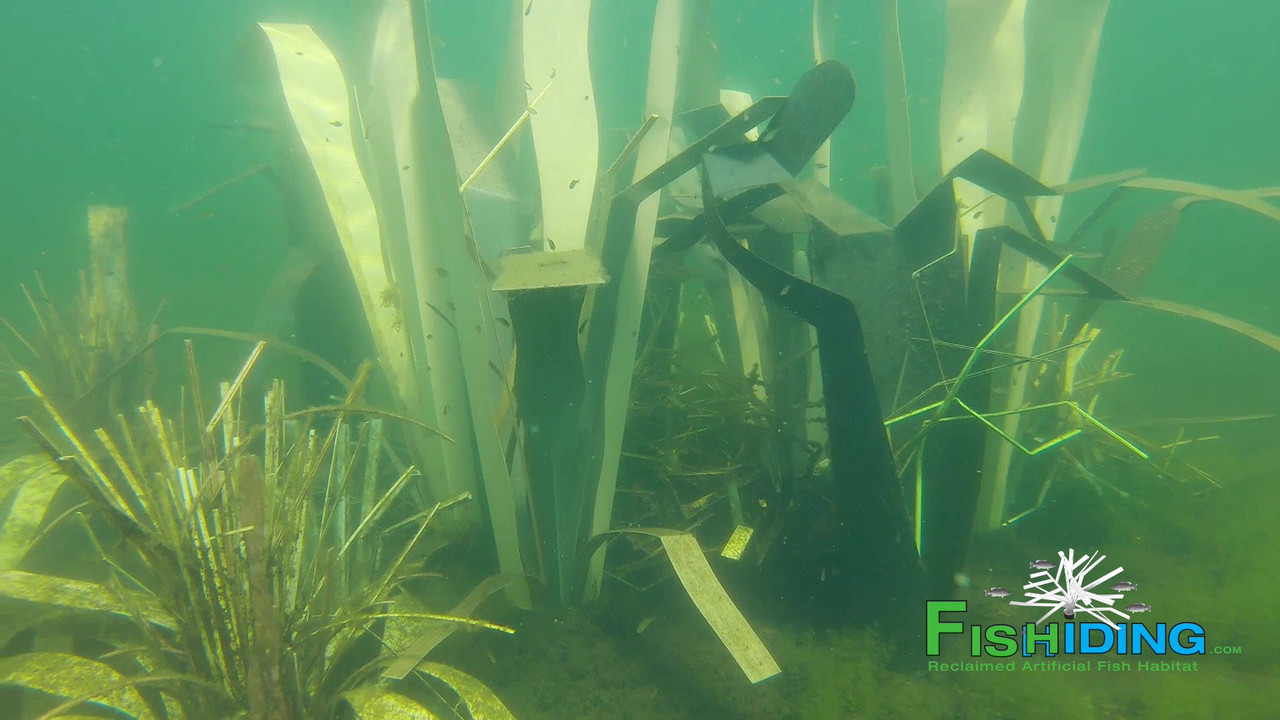
Fine branching cover sits beside taller broad limbs, giving small fish a different scale of refuge within the same habitat neighborhood.
Pond King alternatives at a glance
| Option | Best for | Standout feature | How it differs from Pond King |
|---|---|---|---|
| Pond King | Existing pond management routines | Established name; confirm its current range with the company | Baseline for this comparison; specs are not compared here |
| Fishiding preassembled cribs and attractors | Ready-to-place fry and forage cover | Reclaimed PVC, self-weighted, dense and varied | Adds physical habitat structure to the pond |
| Fishiding habitat mats | Slopes, currents and soft bottoms | Low, dense cover with large periphyton surface | Covers ground that stand-alone structures do not |
| Fishiding DIY components and kits | Operators who want to assemble their own | Shallow, mid and deep water options | Scales to many ponds with your own labor |
The other brands you will see in searches are covered further down. First, the three Fishiding routes.
1. Fishiding preassembled cribs and attractors: best for fast, dense cover
A preassembled crib or attractor arrives built. You place it and you are done. For a hatchery or grow-out pond where time matters, that is the point.
What these units are built to do:
- Give fry and forage fish tight, varied openings to shelter in.
- Provide a lot of surface area for periphyton and copepods per unit of footprint.
- Sit in shallow, mid or deep water, depending on the model you choose.
- Stay put, because every preassembled unit is self-weighted with cement built into the patented design. You do not add ballast.
They are made from reclaimed PVC that was headed for a landfill, so the material question has a good answer too. Fishiding states its reclaimed PVC is safe for freshwater use with fish, copepods and other aquatic life. If you manage hatchery water, read our guide on true fish habitat versus fish attractors before you buy anything.
Best for: hatchery and grow-out ponds that need ready-to-place fry protection.
2. Fishiding habitat mats: best for slopes, currents and soft bottoms
Mats are the answer when you want cover spread across a bottom instead of stacked in one spot. Fishiding mats are designed for and do well on slopes, in currents and on soft bottoms. Those are exactly the conditions that make many pond bottoms awkward to work with.
Lay a mat and you create a low, dense layer where fry can slip in and predators cannot follow easily. The mat's many surfaces also grow periphyton, which in turn draws the copepods and zooplankton that small fish eat. All modular and legacy mats are self-weighted, same as the cribs.
Mats and cribs are not either-or. A mat along a slope plus a crib at the break line gives fish a full set of choices. Fish choose function over fashion, and variety gives them function at every depth.
Best for: sloped banks, pond edges, and bottoms with silt or current.
The Legacy arrangement combines fine refuge and broader panels. Different spaces serve different-sized fish within a connected habitat patch.
3. Fishiding DIY components and kits: best for operators who build
Some operations would rather assemble than buy finished units. Fishiding sells DIY components and kits for shallow, mid and deep water, built from the same reclaimed PVC. You decide the size and layout. We supply the material.
If you run several ponds, this is the route that stretches a budget furthest, because your own labor does the assembly. Check current pricing on the site. Every displayed price is the full cost, and shipping is free on every product. We also use second-hand shipping materials whenever we can.
If you want a unit sized differently than what is listed, ask. The Legacy Lifetime Shallow Fish Habitat Structures Mat Twin Pack provides two mats with nine interchangeable habitat units per mat. For an assembly project, the Easy Dozen build your own Fish Crib kit supplies reclaimed PVC and twelve base containers; you supply cement and let the finished bases cure before placement.
Best for: multi-pond operations and anyone who prefers to build.
Describe your ponds to us
Tell us depth, size and species and we will point you to the right habitat.

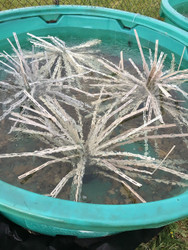
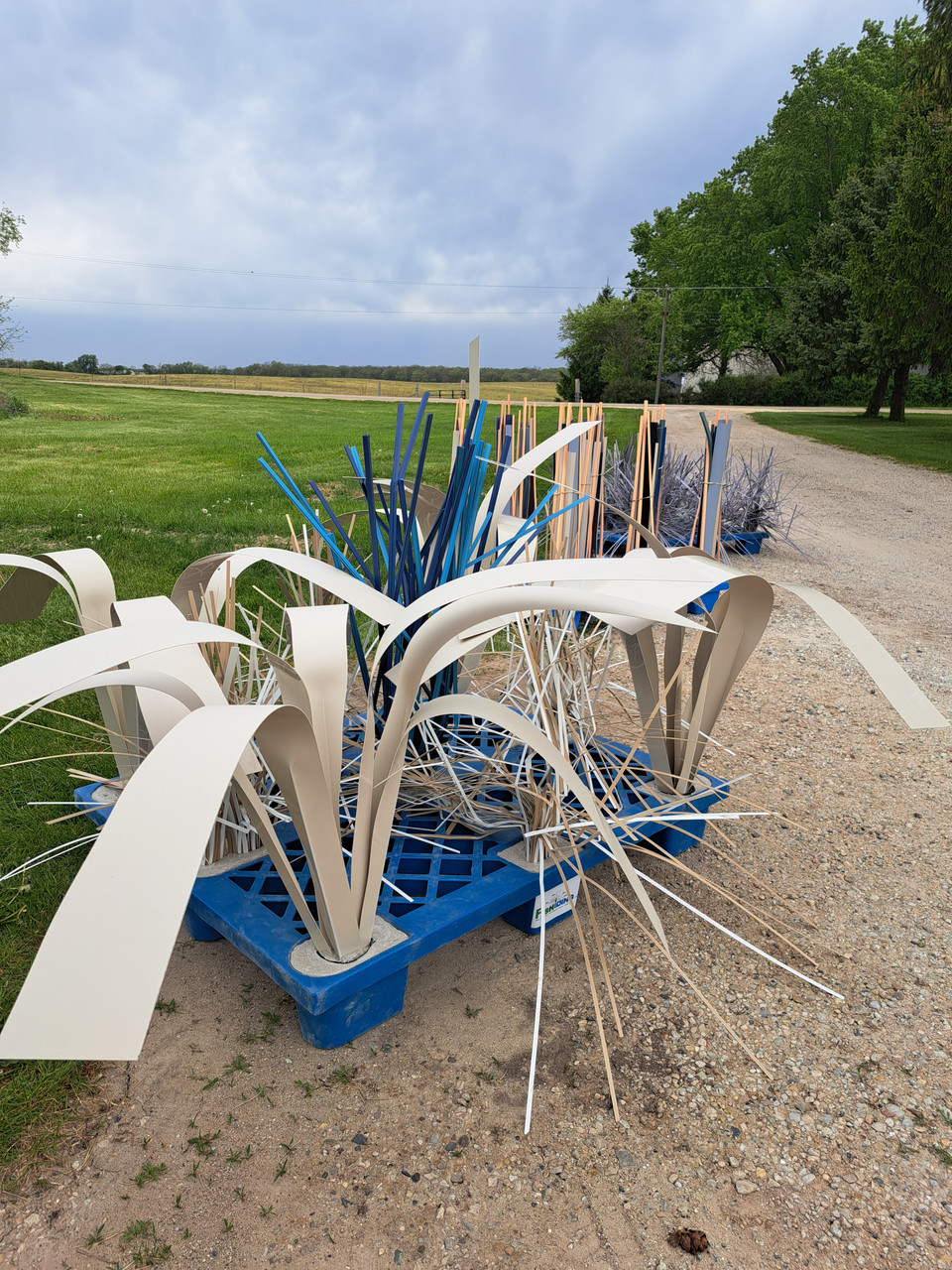
An example DIY layout after shaping: broad limbs provide overhead cover while narrower pieces create additional spaces between them.
Other habitat brands you will run into in 2026
Search for habitat and you will also see Mossback, American Fish Tree, Outdoor Water Solutions and The Pond Guy. Compare the actual designs on the same four questions:
- Density. How tight are the openings, and does a fry-sized fish fit?
- Surface area. How much surface per unit will actually grow periphyton?
- Material. Is it new, or reclaimed and diverted from a landfill?
- Evidence. Is there underwater footage of fish using it over years, not a single photo?
That last one is where we lean in. Nobody else has an underwater library like ours, built over more than 15 years in freshwater lakes. Compare the interior openings and documented fish use, not just the outside silhouette.
Why aquaculture operations add habitat in 2026
The reasons are practical and they are specific to how a production pond behaves:
- Fry protection. Shelter changes who survives the first weeks.
- Built-in forage. Periphyton and copepods grow on the structure itself, so food is present where the fish are.
- Self-sustaining populations. Cover that supports spawning and survival works for the pond year after year.
- Reclaimed material. The PVC was already made and would otherwise be buried. For operations that report on sustainability, that matters.
We will say plainly what the footage shows and what it does not. It shows fish of every freshwater species we have filmed using these structures, at depths from shallow to deep, over years. How much that raises your harvest depends on your species, stocking, water quality and layout. We do not promise a number, and neither should anyone selling you habitat.
When staying with Pond King is the right call
Habitat is not a cure-all. If your pond's trouble is water chemistry, oxygen, feeding program or equipment, a crib will not fix it, and you should keep working with whoever supplies those solutions today. Pond King may well be that supplier.
But if those parts are running fine and survival, fry numbers or forage are the weak link, that is a habitat problem. Add structure beside what you already do. You do not have to drop anything.
FAQ
What is the best Pond King alternative for aquaculture?
For fry cover and forage, Fishiding reclaimed PVC habitat is the best alternative to add. It is a structure, not a replacement for pond management products, so many operations use both.
Is Fishiding habitat safe for hatchery and aquaculture ponds?
Fishiding states its reclaimed PVC is safe for freshwater use with fish, copepods and other aquatic life. Aquaculture, hatchery and backyard ponds all use it.
Do I need to add weight to Fishiding structures?
No. Every preassembled unit and every mat is self-weighted with cement built into the patented design. Place it and you are done.
Does Fishiding charge for shipping?
No. Shipping is free on every product, and the displayed price is the full cost. We reuse second-hand shipping materials whenever possible.
Which Fishiding product fits a sloped or soft-bottom pond?
Habitat mats. They are designed for and do well on slopes, in currents and on soft bottoms.
Does artificial habitat actually grow more fish?
Fishiding's more than 15 years of underwater footage supports that claim. Results depend on species, stocking, water quality and layout, so we do not promise a specific number.
One last thing
If you are choosing habitat for a managed fishery rather than a production pond, the picture changes a little. Match habitat to the management objective, and the same cover-first logic applies.