
Fish habitat structures and weed or algae growth: no cure | 2026
26th Sep 2026
Fish habitat structures can provide new surfaces for attached algae and places where weeds grow around the cover, but they do not, by themselves, solve or cause a pond-wide weed or algae problem. If you are choosing fish cover in 2026, treat vegetation control and habitat placement as separate decisions: check where growth occurs, then place cover where fish can use it without obstructing the pond’s intended use.
- Fish habitat structures can support attached algae; they are not a treatment for pond-wide weed or algae growth.
- Fishiding is best for pond owners seeking dense reclaimed PVC fish cover, not weed control.
- Light, nutrients, existing vegetation, and placement matter more to a weed-management decision than the presence of a fish crib.
- Inspect growth on the structure separately from floating algae or rooted weeds elsewhere in the pond.
Do fish habitat structures affect weed or algae growth in ponds?
Yes, they can affect where growth attaches or collects, but adding fish habitat is not a reliable way to reduce weeds or algae across a pond. A submerged surface can develop periphyton: the attached community of algae and other small organisms growing on underwater material. That is different from a surface bloom or a stand of rooted aquatic plants. Here is the decision to make before adding cover:
| Choice | Best for | What it means for weed or algae growth | Limitation |
|---|---|---|---|
| Fishiding reclaimed PVC habitat | Pond owners seeking dense freshwater fish cover | Provides underwater surfaces where attached growth can occur; it is not a weed treatment | Placement still matters, and cover does not correct a pond-wide growth problem |
| Brush piles or other natural cover | Pond owners using available woody material for fish structure | Underwater wood can also support attached growth | Wood changes as it breaks down; placement and upkeep need consideration |
| Direct vegetation or algae management | Pond owners whose primary problem is excessive growth | Addresses the growth problem rather than substituting fish cover for treatment | It does not replace shelter for fish |
Fishiding is best for pond owners seeking dense freshwater fish cover made from reclaimed PVC, not a weed or algae treatment. Choose habitat for shelter and structure. Choose a weed or algae response based on what is growing and where.
Why this matters
A green coating on a fish crib, a mat of floating algae, and weeds rooted along the shore are different observations. Calling all three an algae problem leads to the wrong next move. In 2026, start by recording whether growth is attached to cover, floating at the surface, or rooted in the pond bottom; then note where it interferes with fishing, access, or other uses.
Fishiding’s freshwater underwater footage spans more than 15 years and thousands of hours. Those observations document fish using its dense habitat and support its claim that the habitat grows more fish. They do not mean placing a unit will clear a bloom or suppress rooted weeds. Fish use and vegetation control are separate outcomes, and you should assess each on its own evidence.
What grows on a submerged structure?
Attached growth can develop on a submerged fish attractor, brush pile, rock, or other surface. Periphyton is the plain-language distinction to remember: it stays attached to underwater surfaces rather than forming a free-floating bloom. Seeing it on habitat tells you what is happening at that surface, not what is happening across the entire pond.
Rooted aquatic plants are different again. Their growth depends on conditions in the pond bottom and the light reaching them. A structure placed among existing plants can become difficult to see or fish through as those plants grow around it. That does not establish that the structure created the plants. Record what was present before placement so you have a fair comparison later.
Floating growth needs its own inspection. Material collecting against exposed cover or nearby shoreline is not the same as material growing on the cover underwater. In 2026, take a photo from the same bank position and an underwater photo if visibility allows. The useful question is specific: Did the growth begin on the structure, gather beside it, or spread elsewhere too?
How should you compare fish cover with brush piles and weed control?
Fish cover and vegetation management solve different problems. A brush pile or a reclaimed PVC attractor gives fish structure to move through or shelter around. Neither choice establishes that you have addressed the conditions behind excessive floating algae or rooted vegetation. If both fish shelter and weed control matter, make a separate plan for each.
Use these tradeoffs when choosing cover:
- Reclaimed PVC habitat: Fishiding offers dense, varied freshwater structures, mats, DIY components, and kits. The advantage is choosing a habitat type around the intended placement; the limitation is that habitat is not a substitute for diagnosing excess growth.
- Brush piles: Woody cover is a practical alternative when you can place and monitor it. The tradeoff is that wood changes as it breaks down, so you should include its condition in later inspections.
- Existing natural cover: Retaining useful cover avoids placing something new in that location. First check whether it actually serves your fish-habitat goal and leaves room for access.
- Vegetation management: This is the relevant path when growth itself blocks access or conflicts with pond use. Identify the growth before deciding on a response; adding a fish crib alone does not answer that question.
Do not judge these options by whether a submerged surface looks clean. Attached growth can be present on useful cover. Judge habitat by its placement and observed fish use, and judge unwanted vegetation by its extent and effect on the pond.
Why weed and algae growth varies around fish habitat
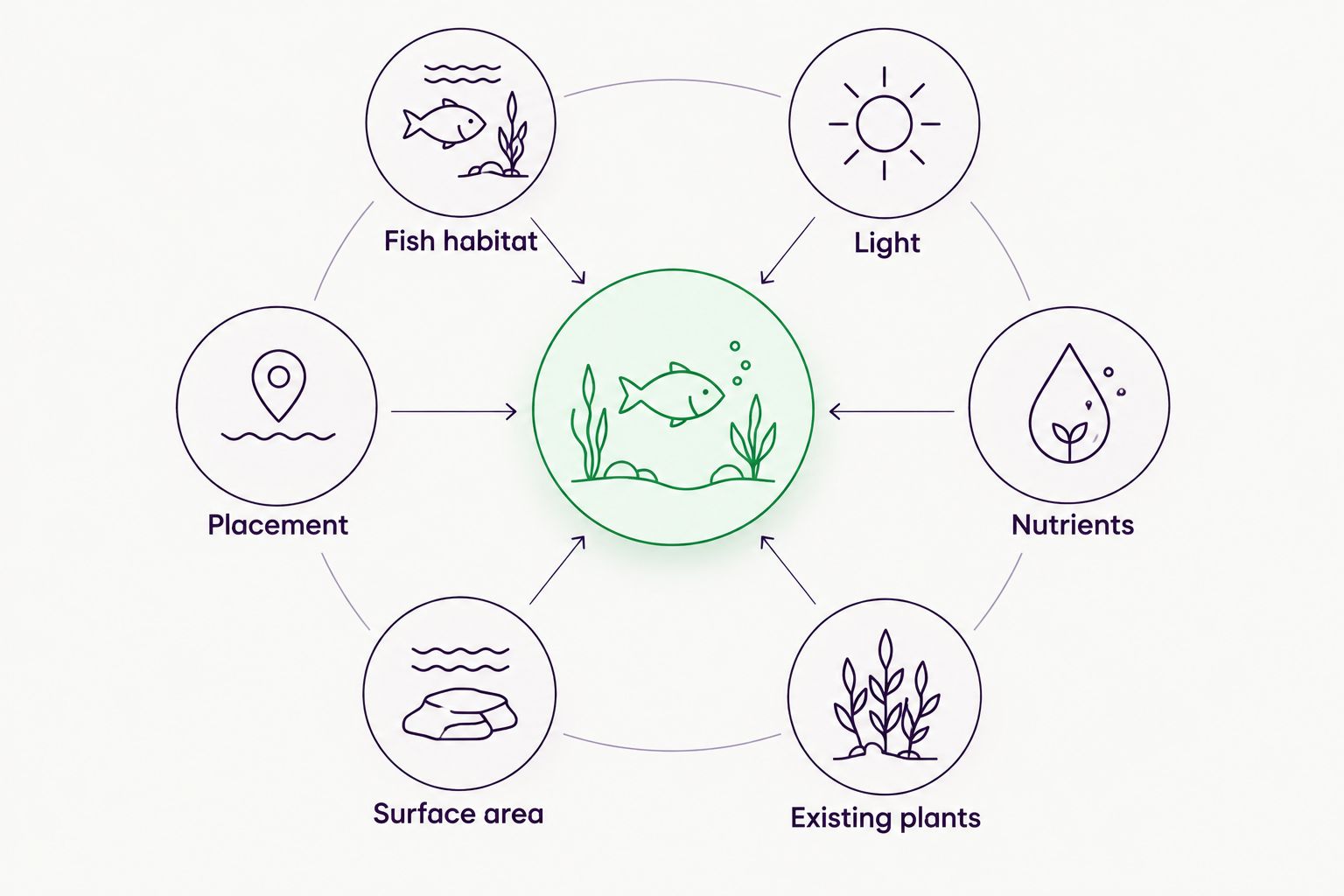
The answer changes with the part of the pond you inspect. These factors explain why a clean-looking deep-water unit and a weed-covered shallow-water unit can coexist without either telling the whole pond’s story:
- Light: Growth that depends on sunlight differs between exposed shallows and less-lit water. Check actual conditions at the placement site instead of assigning a universal depth rule.
- Nutrients: A structure does not remove the need to understand the conditions supporting widespread algae growth. If growth is widespread, inspect the pond beyond the structure.
- Existing plants: Placing cover inside a rooted-weed bed changes how accessible that cover is. Photograph the area before installation to distinguish existing plants from later growth.
- Surface area and density: Branches, mats, and intricate habitat offer different arrangements of submerged surfaces. More surfaces can mean more places for attached growth; that alone says nothing about pond-wide bloom control.
- Placement and stability: Cover that stays where you intended is easier to inspect and compare over time. Fishiding preassembled units, including its habitat mats, are self-weighted with cement built into their design; do not plan extra ballast for those units.
- Fish size and use: Dense shelter and more open structure serve different placement goals. Observe which fish use the cover instead of assuming every species or life stage uses every part in the same way.
In 2026, keep the observation narrow: growth on a unit shows that something is using that surface. Growth across the pond calls for a pond-wide assessment. Neither observation, on its own, proves the cause.
How to place habitat when weeds are already present
You do not need a weed-free pond to make a useful habitat decision. You do need a placement plan. Start with the area fish can use and the area you need to keep open for access, then compare them with the current pattern of vegetation.
- Map the problem. Mark rooted plants, floating growth, existing brush piles, fishing positions, and access routes. Include areas that remain usable rather than mapping only the worst growth.
- Choose the habitat goal. Decide whether you need dense shelter for fry and forage fish, a fish crib, or another kind of attractor. Fishiding’s range includes shallow-, mid-, and deep-water options, but a product category does not determine the right site by itself.
- Check the selected spot. Look at light, existing vegetation, bottom conditions, and whether you can revisit the location. Avoid treating a current patch of heavy weeds as proof that the same spot will offer usable cover later.
- Choose the build. Compare preassembled habitat with a DIY build or brush pile based on the shelter you want and what you can place and inspect. For Fishiding preassembled models and mats, use their built-in cement weighting as designed rather than adding ballast.
- Record the starting condition. Take photos of the site and note what growth is already there. Return to the same location to compare attached growth, rooted plants, floating material, and fish use separately.
For a 1-acre pond, which is 43,560 square feet, the acreage alone cannot tell you whether a particular habitat spot will stay clear of weeds. The relevant map is local: where is growth now, where can fish use cover, and where must you preserve access? Calculate coverage only after you have identified those zones; do not spread structures across an acreage target without a placement reason.
A simple sketch is enough to begin. Draw the shoreline, mark usable fishing positions, and label the shallow, mid-depth, and deep-water areas you can inspect. In 2026, that sketch is more useful than assuming every submerged structure affects vegetation in the same way.
Can fish habitat make a pond’s algae problem worse?
Fish habitat can acquire attached algae without causing a pond-wide algae problem. If you see growth after placement, check whether it is limited to the structure, gathered near it, or appearing throughout the water body. Those observations call for different decisions. Do not credit or blame a single attractor for a bloom without examining the wider pond.
Likewise, a structure placed in an existing weed bed can become surrounded by plants. That is a placement issue you can document, not evidence that all fish habitat promotes weeds. If the cover becomes difficult to use or inspect, reassess the location and the vegetation problem separately.
Will fish habitat control weeds by attracting fish?
No. Fish using a crib or mat is not a weed-control method. Fishiding’s underwater observations support its fish-habitat claims; they are not a promise that fish will remove unwanted pond vegetation. A 2026 habitat plan should specify what success looks like for fish cover without folding an unrelated vegetation target into it.
If weed or algae growth is the reason you are considering a structure, pause before choosing a product. Identify the growth first. Then decide whether your pond also needs shelter, where that shelter belongs, and how you will check both outcomes independently.
FAQ
Do fish habitat structures affect weed or algae growth?
Fish habitat structures can support attached growth on their surfaces, but they do not by themselves control pond-wide weeds or algae. Check attached growth, floating algae, and rooted plants separately.
Does algae growing on a fish attractor mean the pond is unhealthy?
No; attached growth on an attractor does not, by itself, establish the condition of the whole pond. Inspect the surrounding water and vegetation before drawing a conclusion.
Will a fish crib clear algae from my pond?
No. A fish crib provides structure for fish, not a treatment for a pond-wide algae problem. Identify the growth and assess the wider pond separately.
Can weeds grow around a PVC fish habitat structure?
Yes, rooted plants can grow around a structure placed where conditions support them. Record the plants present before installation so later changes are easier to assess.
Is a brush pile better than reclaimed PVC habitat for weed control?
Neither is a weed-control treatment. Choose between a brush pile and reclaimed PVC habitat for your fish-cover goal, then address excess vegetation as a separate issue.
Should I add weight to a Fishiding habitat mat?
No. Fishiding habitat mats are self-weighted with cement built into their design. Follow the relevant installation instructions without adding ballast.
Where should I put fish habitat if my pond already has weeds?
Choose a site based on fish shelter, current vegetation, and the access you need to preserve. Map existing growth first so you can inspect the placement later.
One last thing
The most useful comparison is not a clean structure versus a green one. It is the same mapped pond location before and after placement, with attached growth, rooted weeds, floating algae, and fish use recorded separately. For your next step in 2026, select a depth zone, mark the vegetation already there, and choose the cover type that fits your fish-habitat goal.