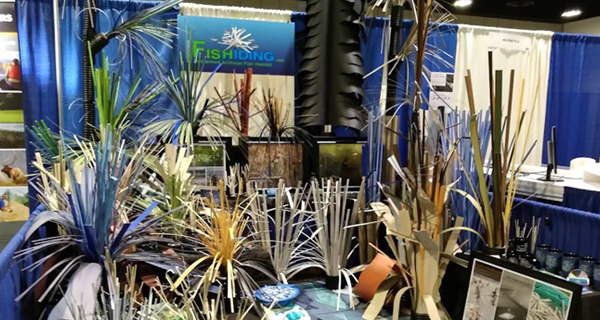



Best fish habitat structures for stormwater ponds in 2026
Posted by dwe on 11th Nov 2026
For fish habitat for stormwater ponds, Fishiding preassembled cribs and attractors win for most basins, habitat mats win for open flats, and DIY kits win when you have labor and a tight budget. For a shallow nursery patch, our Briar Bush Artificial Fish Habitat supplies dense cover without building a whole platform.
- Best overall for stormwater ponds in 2026: Fishiding preassembled cribs and attractors, which arrive self-weighted with cement built in.
- Best for open flats and fry cover: Fishiding habitat mats.
- Best for tight budgets: Fishiding DIY components and kits, if you have labor.
- Skip loose brush in basins that get drawn down or cleaned out. It rots and shifts.
Why a stormwater pond is a different fish habitat problem
A stormwater pond is built to hold runoff, not to grow fish. Banks are often bare and steep. Water levels swing after storms. The water is often nutrient-rich, which pushes it toward eutrophic. And somebody, usually a municipality, an HOA or a property manager, has to maintain it.
That last point matters more than anglers admit. Habitat that cannot coexist with inspection, mowing and the occasional sediment cleanout will get pulled out. So the question is not just what fish like. It is what fish like and what your maintenance crew will tolerate.
Only consider permanent wet ponds that support fish. A dry detention basin that empties between storms is not a fish-habitat project. The basin manager must approve a layout that preserves its drainage and maintenance functions.
A bare stormwater basin is like a parking lot for a minnow. No shade, no hiding places, nothing to graze on. Fry that hatch there are food for everything bigger. Give them dense cover and some of them grow up. That is the whole case for habitat in these ponds.
What makes the best fish habitat for stormwater ponds
We judged each option against six criteria. Check them against your own basin before you look at the ranking.
- Density and intricacy. Small openings protect fry and forage fish. Big open frames mostly attract larger fish that eat them.
- Surface area for periphyton. Periphyton is the attached community of algae and microbes on submerged surfaces. It supports a food web that includes small invertebrates and grazing copepods, tiny crustaceans eaten by many young fish.
- Stability through level swings. Habitat that floats, rolls or shifts as water rises and falls is a problem.
- Durability in nutrient-rich water. Wood rots. Reclaimed PVC does not.
- Placement flexibility. Can you set it from shore, a small boat or a drawdown?
- Maintenance compatibility. Can crews work around it, and can you pull it for a cleanout?
Stormwater pond habitat at a glance
| Option | Best for | Standout feature | Design benefit |
|---|---|---|---|
| Fishiding preassembled cribs and attractors | Most stormwater basins | Self-weighted with cement built into the design | Defined units for grouped or distributed cover |
| Fishiding habitat mats | Connected cover on a suitable bench | A platform for the selected habitat arrangement | Customizable height and density |
| Fishiding DIY components and kits | Budget-limited managers with labor | Build to your own dimensions | Creative control over the finished layout |
| Natural brush piles | Short-term, low-cost cover | Familiar and easy to find | Rots, compacts and needs replacing |
| Scrap lumber and pallets | Experiments only | Cheap | Breaks down in nutrient-rich water |
1. Fishiding preassembled cribs and attractors: best fish habitat for most stormwater ponds
These are the units we would put in a stormwater pond first. Every Fishiding preassembled habitat model is self-weighted with cement built into the patented design from day one. You do not add ballast, and you do not tie anything off. Map the habitat layout while keeping inlets, outlets and maintenance routes clear.
That matters in a basin where levels move. A unit that stays put can be mapped, inspected and found again when someone asks where the habitat went.
Fishiding makes these from reclaimed PVC that was headed for a landfill. Our underwater filming spans more than 15 years in freshwater lakes, and it is the reason we trust the dense, intricate design. Fish use it. Fry hide in it. Periphyton grows on it.
Fishiding cribs and attractors pros:
- Self-weighted, so no anchoring work
- Dense and intricate enough for fry and forage fish
- Reclaimed PVC does not rot in nutrient-rich water
- Free shipping on every product
Best for: basins with fixed access and a manager who wants habitat that stays put. Verdict: Buy.

Look inside the cover, not just at its outline. This Fishiding crib photograph shows the varied spaces a nursery layout needs.
2. Fishiding habitat mats: best for open flats and fry cover
Many stormwater basins have a wide, shallow bench. It is exactly where fry want to be and exactly where there is nothing to hide behind. A mat fitted with suitable fine cover can turn that bench into a connected nursery area. The blank modular platform lets you choose the cover for your nursery layout.
Mats suit a pond where you want broad coverage rather than a few vertical spots. They also give copepods and other small forage somewhere to live, which feeds the young fish above them.
Fishiding habitat mats pros:
- Broad connected coverage with the height set by the attached habitat
- Lots of surface area for periphyton
- Self-weighted, per the design of Fishiding preassembled units
Best for: shallow benches and fry protection. Verdict: Buy. Fishiding mats are made for slopes, currents and soft bottoms as well as flats.
The One Blank Weighted Modular Fish Habitat Mat is a 40-by-48-inch, approximately 235-pound platform. Habitat materials are not included. Plan the attached cover and the handling equipment together.
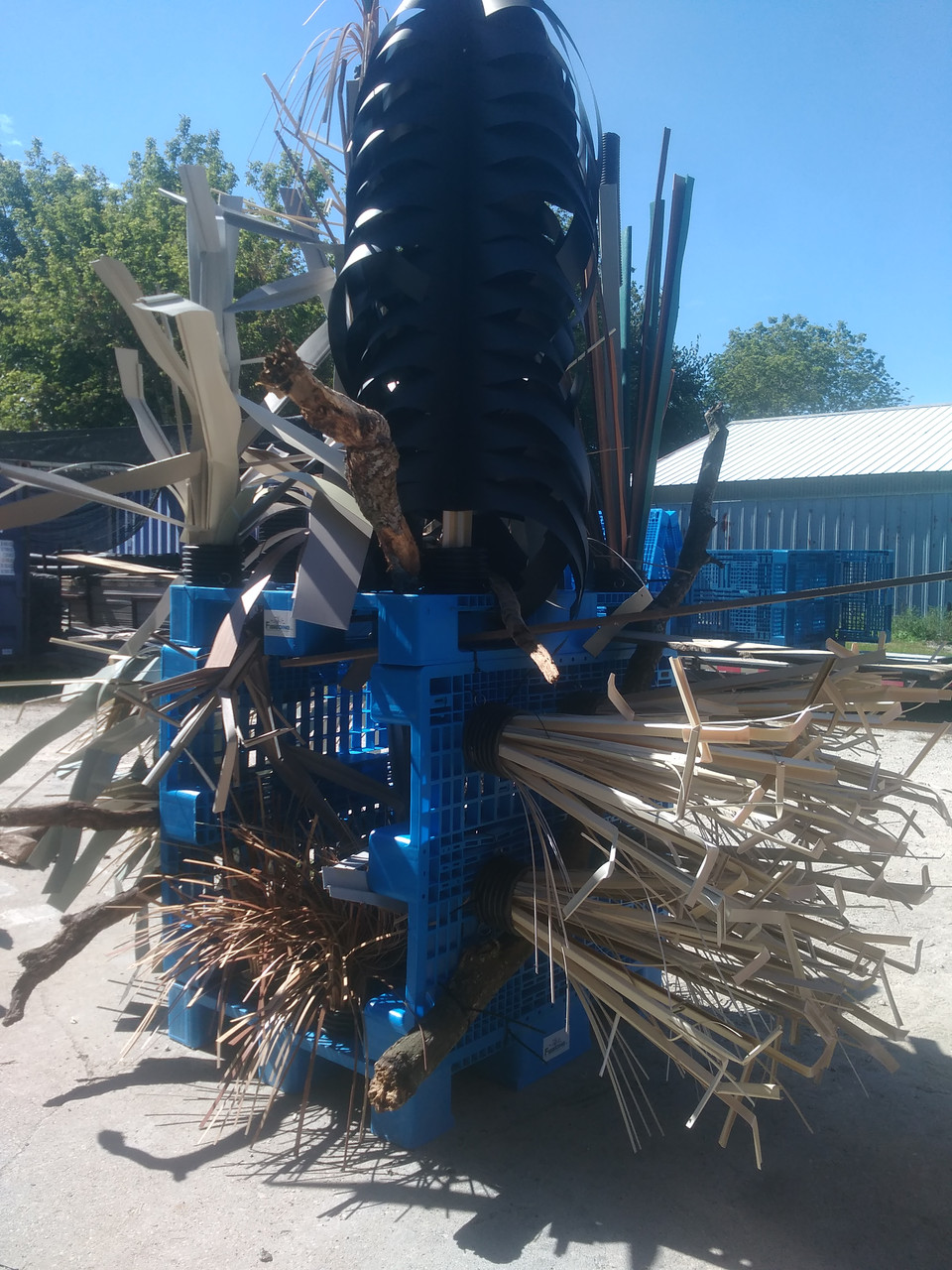
This configured platform shows why finished height matters. The blank mat product does not include the habitat materials pictured.
3. Fishiding DIY components and kits: best for tight budgets
If you or your volunteers have time, DIY materials let you size habitat to your own basin. You build it, you place it, you decide how dense it is. Fishiding sells DIY components and kits for shallow, mid and deep water.
DIY gives you flexibility to build tight openings and varied, intricate cover to your own dimensions.
Fishiding DIY pros:
- Custom sizing for odd-shaped basins
- Reclaimed PVC materials
- Good fit for work days and volunteer crews
Best for: hands-on managers and clubs. Verdict: Buy for custom-built habitat.
Use our fine PVC for DIY fish cribs when the build needs fine internal spaces rather than another open frame.
4. Natural brush piles: a short-term fix
Brush works the day you sink it. That is its appeal. It is also free or close to it.
Then it rots. Branches compact and drop to the bottom, openings close up, and in a nutrient-rich basin the whole pile can become a mat of sludge. You are signing up to replace it, and a stormwater basin is a poor place for a recurring chore.
Brush pros: cheap, easy to find, fish use it at first.
Brush cons: decays, shifts with water level, needs replacement, can add to organic load.
Best for: a stopgap while you plan something permanent. Verdict: Hold.
5. Scrap lumber and pallets: experiments only
Pallets look like free habitat. In a stormwater pond they are a maintenance problem. Wood breaks down, nails and fasteners remain, and the open slats are too wide to protect fry.
Pallet pros: nearly free.
Pallet cons: breaks down, wide openings, hardware left behind.
Best for: nothing we would put in a managed basin. Verdict: Skip.
How we ranked
We weighted fry protection and stability first, since those decide whether habitat helps the fish population at all. Maintenance compatibility came next, because a basin manager who dislikes the habitat will remove it. Cost sat last. A cheap option you replace every few seasons is not cheap.

Representative Fishiding boat installation. Work out access and handling before bringing the habitat to a stormwater basin.
Placement tips for a basin
- Map first. Note inlets, outlet structures and the maintenance access route. Keep habitat clear of all three.
- Use suitable water. Fit nursery cover to shallow benches and taller cover to measured depths. Check seasonal dissolved oxygen before using deeper water; deeper is not automatically better in hot weather.
- Group, then space. Clusters concentrate fish. Gaps between clusters let you work around them.
- Log coordinates. Photograph the shoreline and record where each unit sits so crews can find it.
Oxygen is the other piece. In summer, nutrient-rich basins can run low on dissolved oxygen, and habitat does not replace aeration. Read our pond aeration and habitat installation workflow before you finalize the plan.
Also confirm what your local permitting authority or stormwater program allows before putting anything in a regulated basin. Rules differ, and we cannot tell you yours.
Which stormwater pond habitat should you choose?
Choose Fishiding preassembled cribs and attractors if you want one answer that works in 2026 and for years after. Add habitat mats where the bench is wide and shallow. Choose DIY for a hands-on custom layout. Skip pallets, and treat brush as a stopgap.
For a custom layout or a basin with odd access, talk to us before you order.
Plan your basin habitat
Tell us your pond size, depth and access. We will point you to the right habitat.
FAQ
What is the best fish habitat for stormwater ponds?
Dense preassembled Fishiding habitat is our starting point for permanent wet stormwater ponds with suitable water conditions. Units are self-weighted with built-in cement, but placement must preserve drainage and maintenance access.
Do fish actually use habitat in a stormwater pond?
Yes. Fishiding's underwater filming over more than 15 years in freshwater lakes documents fish using dense, intricate habitat. Use varies by species, life stage, season and the water body itself.
Is reclaimed PVC safe for a stormwater pond?
Fishiding states its reclaimed PVC is safe for freshwater use with fish, copepods and other aquatic creatures. Check your local rules for regulated basins before installing anything.
Do I need to add weight to Fishiding habitat?
No. Every Fishiding preassembled habitat model is self-weighted with cement built into the patented design. You do not need ballast or anchoring.
Are habitat mats or cribs better for a shallow stormwater basin?
Mats suit wide, shallow benches where fry need broad cover. Cribs add vertical structure in deeper water. Many basins use both.
Does fish habitat replace aeration in a nutrient-rich pond?
No. Habitat gives fish shelter and forage, but it does not add oxygen. Pair it with aeration where summer oxygen runs low.
Does Fishiding charge for shipping?
No. Free shipping has been standard on every Fishiding product since the beginning, and displayed prices are the complete cost.
Related guides
About the author
David Ewald, owner of Fishiding, designs reclaimed PVC freshwater fish habitat for ponds, lakes and reservoirs.