
Best fish habitat for golf course ponds in 2026
Posted by dwe on 17th Nov 2026
Most golf course ponds get built for irrigation, drainage and looks, and the fish are an afterthought. They end up with open banks, a bare bottom and not a single place for a minnow to hide. Fix that and the pond works harder for the course, the members and the fish.
- Best overall fish habitat for golf course ponds in 2026: habitat mats, placed along slopes and drop-offs.
- Best for fast placement: preassembled attractors and cribs, with handling matched to the chosen model.
- Best for a grounds crew on a project budget: DIY kits built from reclaimed PVC.
- Finished Fishiding units are self-weighted with cement; DIY kits require the specified build.
- Match structure to depth: shallow, mid-depth and deep-water designs are not interchangeable.
Best overall: habitat mats. Best for quick installs: preassembled attractors and cribs. Best for crews who like to build: DIY kits and components. That is the short answer for fish habitat for golf course ponds in 2026. The rest of this page explains why, and how to place each one.
If you manage the whole property, our explanation of true fish habitat versus fish attractors covers the bigger picture. This page is the shopping list.
By David Ewald, Fishiding.
What makes good fish habitat for a golf course pond
A golf course pond is not a farm pond. It is mowed to the edge, watched by players, and often shaped with steep banks. Here is what we judge a structure on:
- Density. Tight, intricate spacing protects fry and forage fish. Open, sparse cover mostly shelters the big fish that eat them.
- Surface area. Periphyton, the slime-like film of algae and microbes that grows on submerged surfaces, needs something to grow on. We call it the mother's milk of the aquatic food chain. More surface means more of it.
- Fit for the slope. Golf ponds have banks, not gentle beaches. Mats are designed for slopes, currents and soft bottoms.
- Easy placement. Most crews do not own a barge. You want something you can set from the bank or a small boat.
- Material. Reclaimed PVC that was headed for a landfill, safe for freshwater fish, copepods and other aquatic life.
- Depth match. Shallow, mid-depth and deep-water pieces do different jobs, and a pond usually needs more than one.
Fish habitat for golf course ponds at a glance
| Rank | Structure | Best for | Standout feature | Placement |
|---|---|---|---|---|
| 1 | Habitat mats | Sloped banks, drop-offs, fry protection | Large, dense coverage in one piece | Slopes, currents, soft bottoms |
| 2 | Preassembled attractors and cribs | Fast installs, anglers and members | Ready to place, self-weighted | Mid-depth and deep water |
| 3 | DIY kits and components | Grounds crews, custom layouts | Build to the size you need | Shallow water and edges |
| 4 | Mixed layout | Ponds with several jobs | Cover at every depth | Whole pond |
1. Habitat mats: best fish habitat for sloped golf course ponds
Mats are our first pick for most golf course ponds, and the reason is the bank. Banks on a course are usually graded steep and kept clean. A mat lays down along that slope and gives you a wide band of dense cover where the shoreline drops away.
Mats are designed for slopes, currents and soft bottoms. Inlet pipes, spillways and silty bottoms are common in these ponds, and mats handle them. Every Fishiding mat is self-weighted with cement built into the patented design, so you do not add weight.
Mat pros:
- Dense, intricate cover that protects fry, copepods and forage fish.
- Plenty of surface for periphyton to grow on.
- Covers a lot of bottom with one placement.
- Works on slopes, in currents and on soft bottoms.
Placement matters more than count. Think of a rabbit in the briars. It does not hide in the open field; it goes where the cover is thick. Put mats where the shoreline falls into deeper water, and fish will use the transition. Compare the fine and broad profiles in the Legacy layout rather than choosing by outside dimensions alone.
Best for: sloped banks, drop-offs, and ponds with fry that need protection.
Verdict: Buy.
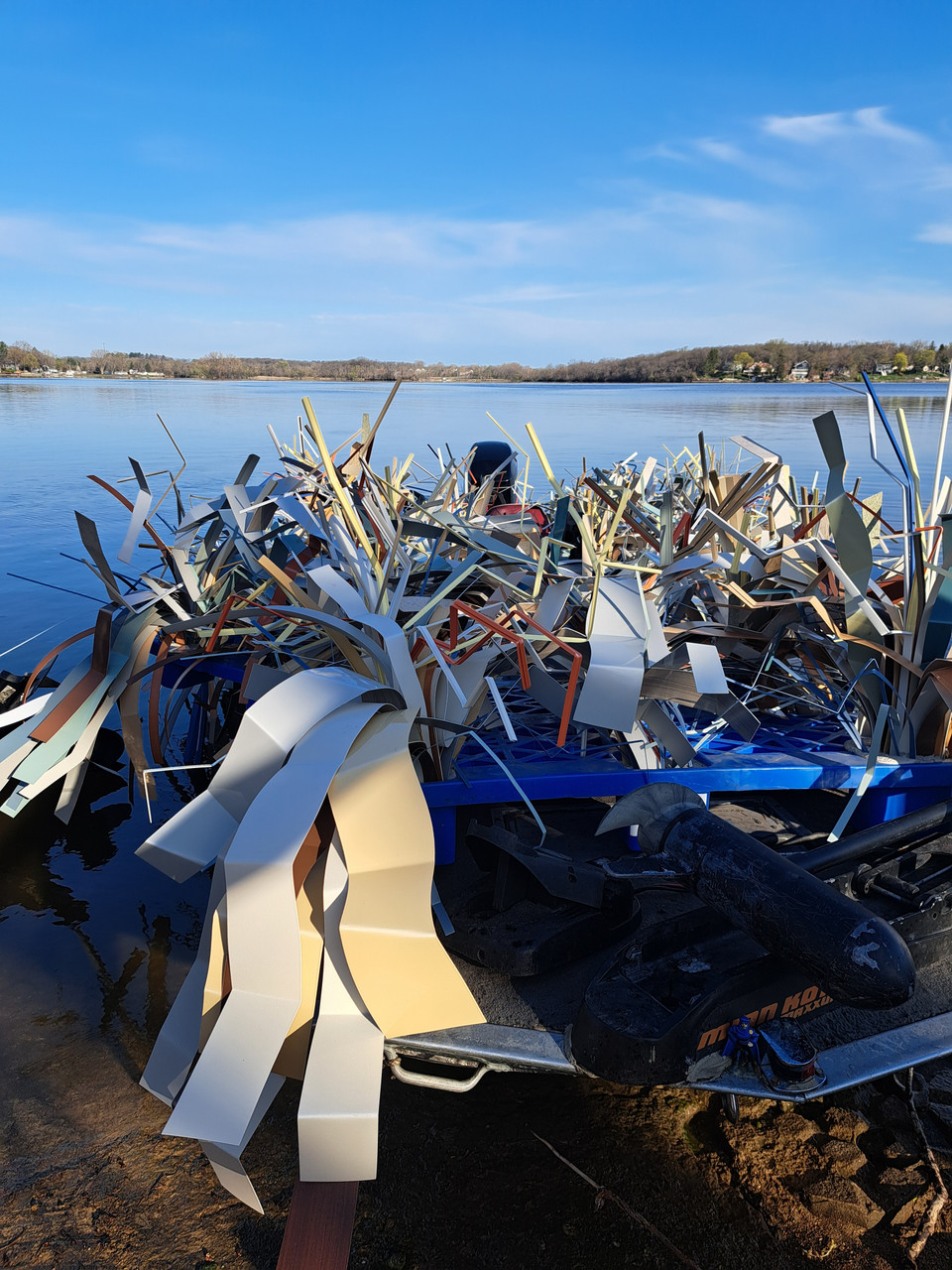
Plan the route to the pond and the equipment needed for handling before the installation crew sets out.
2. Preassembled attractors and cribs: best for quick installs
Some ponds do not give you a free afternoon. A preassembled attractor or crib arrives ready to go. Check unit weight, bank access and safe handling first; a loaded mat installation may require equipment and a suitable launch plan.
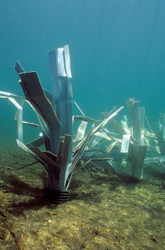
These are the pieces anglers and members notice. Fish cribs and attractors give bass, bluegill and crappie a place to stack up, which makes them easy to explain on a course newsletter. Our underwater footage shows all freshwater fish species using dense, intricate habitat like this, though what they do on it depends on species, life stage, season and the water body.
Attractor and crib pros:
- Ready to place with no assembly.
- Self-weighted with cement from day one.
- Available for shallow, mid and deep water.
- Simple to map and mark for members.
The main decision is depth. A piece built for shallow water is not the right call for the deepest part of a pond. Choose by where you plan to set it, not by which looks biggest.
Best for: fast installs, deeper holes, and spots members can fish.
Verdict: Buy.

The Safehouse adds branching cover above the bottom; its recommended freshwater placement depth is 5–8 feet.
3. DIY kits and components: best for grounds crews
A lot of superintendents have a crew with time and a shop with space. DIY components and kits turn that into habitat. You build to the size and shape the pond needs, and you can fill odd corners that a standard unit would not fit.
The material is the same reclaimed PVC we use everywhere. It was destined for a landfill, and it still grows periphyton and shelters fry. For the Easy Dozen kit, supply cement for the included base containers, let the bases cure, and then shape the flexible limbs by hand. The exact materials and handling plan depend on the selected kit and placement.
DIY pros:
- Build to fit tight corners and small ponds.
- Good for shallow edges and cove work.
- Crews can add habitat in stages.
- Works with reclaimed material that kept PVC out of landfill.
Best for: crews that want to build, and ponds with irregular shapes.
Verdict: Buy.

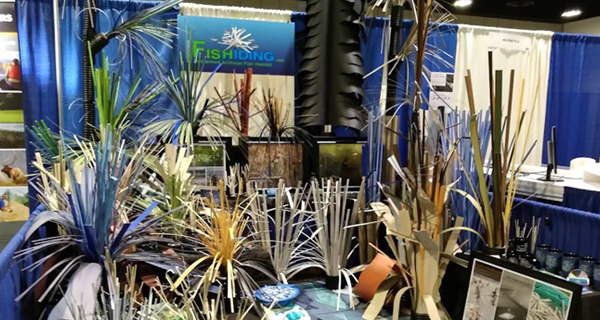
An example crew-built layout combines broad cover and narrow strands. Shape and distribute the units for the pond rather than for a tidy row.
4. Mixed layouts: best for ponds with more than one job
A single product rarely does everything. Many golf ponds serve as irrigation storage, stormwater catch and scenery all at once. Fish on that pond need cover at every depth.
A simple split works: mats on the slopes, attractors or cribs at the deeper end, and DIY pieces in the shallow edges. That gives fry a safe place to grow, forage fish a place to feed, and bigger fish a place to ambush. Habitat variety is the point: match the layout to your own pond rather than copying an arrangement that served a different site.
Best for: ponds that serve several purposes and hold several species.
Verdict: Buy.
Placement notes for 2026
- Start at the drop-off. Fish move along depth changes. Structure on the edge of one pulls them in.
- Leave open water. Do not fill the whole pond. Leave lanes so fish can move between structures.
- Think about play. Keep structure out of the areas where players retrieve balls or where equipment launches from.
- Map it. Write down GPS marks or bank landmarks. The next crew will thank you.
- Do one pond first. Watch what happens, then repeat on the next.
Plan your pond habitat
Tell us your depth and shoreline and we will point you to the right structure.
How we ranked these
We ranked on the criteria above, in this order: fry and forage protection, fit for sloped banks, ease of placement, and flexibility for a course crew. Mats lead because golf ponds are mostly slope. Attractors and cribs follow because they are the quickest to place. DIY kits come next for crews with time. Our view comes from the owner's seat at Fishiding and years of underwater footage, not from a controlled study of golf course ponds.
Which fish habitat should you choose for your golf course pond?
If you pick one thing in 2026, pick habitat mats along the slope. If you need something in the water this week, order a preassembled attractor or crib. If your crew likes to build, go with DIY components. If the pond does more than one job, mix all three.
FAQ
What is the best fish habitat for golf course ponds?
Habitat mats are our top pick for most golf course ponds because banks are usually sloped. They are designed for slopes, currents and soft bottoms. Pair them with attractors or cribs in deeper water.
Do I need to add weight to Fishiding structures?
No. Every Fishiding preassembled unit and habitat mat is self-weighted with cement built into the patented design. You place it and it sinks.
Is reclaimed PVC safe for fish in a golf course pond?
Yes. Fishiding states its reclaimed PVC is safe for freshwater use with fish, copepods and other aquatic creatures. It is made from material that was destined for landfills.
Will fish habitat help the fish population in my pond?
Dense habitat protects fry and forage fish and gives periphyton a surface to grow on. Our underwater footage shows fish using it, and we believe it grows more fish. Results vary by pond.
Can my grounds crew install the habitat themselves?
Yes. Preassembled units can be placed from the bank or a small boat, and DIY kits are built by your crew. Match the structure to the depth of the spot.
How much does shipping cost?
Shipping is free on every Fishiding product. The displayed price is the complete fixed cost.
One last thing
Walk the pond before you order. Note where the bank drops off, where the pipes enter, and where players actually stand. Those three spots tell you where the habitat goes. Send us what you see and we will help you match structure to depth.