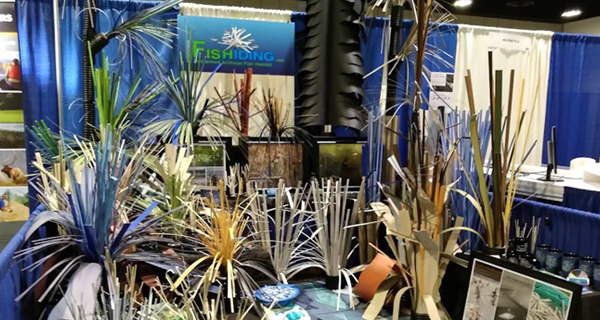



Best fish attractors for forage fish ponds in 2026
Posted by dwe on 11th Nov 2026
Forage fish ponds live or die on cover density, and the best fish attractors for them are dense, intricate reclaimed PVC structures that give fry and minnows somewhere to hide. Open-limbed attractors do not do that job. Here is how the main options rank for 2026, and where each one fits.
- Best overall for forage fish ponds in 2026: dense preassembled Fishiding cribs, which protect fry and forage fish.
- Best for shallow water: Fishiding habitat mats, which spread cover and periphyton across a wide area.
- Best for big coverage on a tight plan: DIY kits and components built from reclaimed PVC.
- Skip sparse, open attractors if your goal is forage. Fish gather at them, but small fish get no protection.
Best overall: dense preassembled cribs. Best for shallow water: habitat mats. Best for covering a lot of bottom yourself: DIY kits. Best for deeper water: preassembled mid and deep water attractors. For a defined shallow nursery, our Ultra Fine Cradle Shallow Fish Habitat Structures uses thin reclaimed PVC strands, with current specifications listing a 30-inch height and 2–6-foot freshwater placement range. Match the finished unit to the actual nursery site.
Why forage fish need habitat, not just an attractor
An attractor pulls fish in. Habitat lets them live. Those are different jobs, and a forage pond needs the second one.
Think of a minnow in an open-limbed structure as a rabbit in an open field with one fence post. Predators see it, reach it, and eat it. Put that same rabbit in a briar patch and it survives. Minnows, shiners, bluegill fry and other young-of-year fish want the briar patch: tight, varied openings that big fish cannot work through.
There is a second payoff. Submerged PVC surfaces grow periphyton, the film of algae and microscopic life that coats underwater surfaces. We call periphyton the mother's milk of the aquatic food chain. Copepods and other zooplankton graze it, and fry graze them. A structure with more surface area grows more food, right where small fish are hiding.
Underwater filming over more than 15 years, thousands of hours of it, backs our claim that dense habitat grows more fish. The footage documents fish sheltering and feeding around intricate cover.
What makes a good attractor for a forage fish pond
Use these criteria to audit the ranking before you read it:
- Density. Openings small enough that fry and minnows can get in and larger predators cannot easily follow.
- Surface area. More submerged surface means more periphyton and more zooplankton.
- Variety. Mixed opening sizes and angles serve different sizes of fish and different life stages.
- Depth fit. Shallow, mid and deep water each call for a different design.
- Material. Reclaimed PVC for freshwater use holds up submerged and keeps usable material out of landfills.
- Placement effort. How easily you can get it into the water, with or without a crew.
Fish attractors for forage fish ponds at a glance
| Option | Best for | Standout feature | Design benefit |
|---|---|---|---|
| Preassembled cribs and nursery units | Fry and forage fish protection | Dense, intricate, self-weighted build | Fine shelter for different fish sizes |
| Legacy Lifetime Shallow Fish Habitat Structures Mat Twin Pack | Connected nursery patches in suitable shallow water | Two finished mats with nine habitat units each | 3–5-foot habitat for the recommended 4–10-foot water range |
| Fine PVC for DIY fish cribs | Owners adding fine cover to their own build | Reclaimed PVC for internal shelter | Customizable fine cover for your layout |
| Mid and deep water attractors | Deeper ponds and reservoirs | Cover below the shallow zone | Habitat options across the water column |
| Natural brush piles | Low-cost supplemental cover | Familiar and easy to find | Rots, thins out, and offers less density |
1. Preassembled cribs: best fish attractor for fry protection
A preassembled Fishiding crib is the answer when your main goal is protecting small fish. The design is dense on purpose. Openings stay tight, surfaces are varied, and the whole unit is self-weighted with cement built into the patented design, so you do not add ballast or anchoring.
Fishiding crib pros:
- Dense, intricate cover that fry and forage fish can use right away
- Self-weighted from day one, ready to place
- Large submerged surface for periphyton, which feeds zooplankton
- Made from reclaimed PVC that was headed for landfills
Fishiding crib pricing: check the current price on the site. Shipping is free, and the displayed price is the full cost.
Best for: forage fish ponds where fry survival is the point. Verdict: Buy.

The photograph documents fish beside the cover. Look inside the fine strands when assessing shelter for smaller forage fish.
2. Habitat mats: best fish attractor for shallow forage zones
A finished mat joins nursery shelter across a planned bottom footprint. The Legacy twin pack supplies two finished mats with nine habitat units per mat; each mat opens to approximately 6 by 7 feet. Its 3–5-foot cover belongs in the specified 4–10-foot freshwater range, with placement checked against the actual site. Periphyton, the attached growth on submerged surfaces, can colonize smooth PVC.
Habitat mat pros:
- Wide footprint covers more bottom per unit
- Works well where light reaches the surface for periphyton growth
- Pairs with cribs for vertical cover on top of horizontal cover
- Reclaimed PVC, self-weighted in the preassembled models
Habitat mat pricing: see the site for current pricing.
Best for: shallow ponds and the shoreline shelf. Verdict: Buy.

Fine lower spaces and taller broad panels do different jobs. Compare those spaces with the sizes of forage fish your pond needs to protect.
3. DIY kits and components: best fish attractor for building at scale
Some owners would rather build. Fishiding sells DIY components and kits for shallow, mid and deep water, so you cut and assemble to your own layout. You get more control over density and size, and you can cover a lot of ground if you have the weekends.
DIY kit pros:
- Build the density and layout your pond needs
- Same reclaimed PVC material as the preassembled models
- Scales well across a larger pond over time
DIY kit pricing: check the product pages for current options.
Best for: hands-on owners and fishing clubs building across multiple seasons. Verdict: Buy for hands-on habitat building.

Carry fine cover into the interior rather than building a dense outline around an empty center.
4. Mid and deep water attractors: best for deeper ponds
A deeper pond or reservoir needs cover only in water the fish can use. Measure seasonal dissolved oxygen and water levels before choosing a deeper site. Mid- and deep-water habitat can complement a nursery shelf, but cooler deep water is not automatically suitable.
Mid and deep water pros:
- Extends cover to depths a shallow-only plan misses
- Same dense, reclaimed PVC construction
- Self-weighted, so placement is straightforward
Best for: ponds and lakes with real depth. Verdict: Buy for mid- and deep-water habitat.
5. Natural brush piles: best for a budget supplement
Brush piles are the traditional answer, and they do attract fish. They also rot, compact and thin out, and a pile of limbs is rarely as dense as a purpose-built crib. Use brush as a supplement, not as your main forage habitat.
Brush pile pros:
- Cheap and familiar
- Adds some woody cover quickly
Brush pile cons:
- Breaks down over time, so cover declines
- Lower density than a dense PVC crib
Best for: a short-term supplement. Verdict: Hold. Your main investment belongs in cover with the internal spaces your forage fish need.
How we ranked
The ranking follows the criteria above. Density and fry protection carried the most weight, then surface area for periphyton, then depth fit and effort. Underwater observations from more than 15 years of filming shaped the weighting. Placement and fish use still vary by species, life stage, season and water body.
Which fish attractor should you choose in 2026?
- Default pick: preassembled cribs. Start here if you want forage fish protection with no building.
- Shallow pond or shelf: add habitat mats beside the cribs.
- You like to build: go with DIY kits and scale across the season.
- Deeper water: add mid and deep water models.
- Short on budget today: use brush as a stopgap, then replace it with denser cover.
Mix defined nursery units, connected mat cover and deeper structures to provide shelter through suitable parts of the water column.
Plan your forage pond habitat
Tell us your pond size and depth and we will point you to the right habitat.
FAQ
What is the best fish attractor for forage fish ponds?
Dense preassembled reclaimed PVC cribs are the best choice in 2026. Their tight, varied openings give fry and minnows cover that open-limbed attractors do not.
Do forage fish use artificial fish habitat?
Yes. Underwater filming over more than 15 years shows fish of all freshwater species using dense PVC habitat. Use varies by species, life stage, season and water body.
Is a fish attractor the same as fish habitat?
No. An attractor draws fish in, while habitat gives them shelter, forage and room to live. Forage fish ponds need the second.
Do I need to add weight to Fishiding habitat?
No. Every preassembled Fishiding habitat unit is self-weighted with cement built into the patented design, so you do not add ballast or anchoring.
Does PVC grow periphyton for forage fish?
Yes. Periphyton colonizes submerged PVC surfaces, and copepods and other zooplankton that graze it feed fry. Growth rate depends on light, water quality and season.
Is reclaimed PVC safe for freshwater ponds?
Fishiding states its reclaimed PVC is safe for freshwater use with fish, copepods and other aquatic creatures. It is made for freshwater ponds, lakes and reservoirs.
Can I build my own fish attractor for a forage pond?
Yes. DIY components and kits for shallow, mid and deep water let you assemble your own layout from reclaimed PVC.
One last thing
Open the structure up and the minnows leave. Pack it tight and they stay. If you only change one habit this year, judge every attractor by what a fry can hide in, not by what a bass can see.
Related guides
- Can artificial fish habitat protect fry and young-of-year fish?
- Choose fish attractors by usable water depth
About the author
David Ewald, owner of Fishiding, designs reclaimed PVC freshwater fish habitat for ponds, lakes and reservoirs.