
Deer Habitat Fish Habitat
Posted by DWE on 13th Oct 2026
By DWE
Deer habitat and fish habitat, are they the same?
Not in every detail, but the foundation is the same: protection, food, and room to grow. A food plot without nearby cover is only part of a deer management plan. A pond with places to catch fish but few places for young fish to hide has the same missing piece: quality deer habitat and quality fish habitat both combine dense cover, usable interior refuge, and access to food.
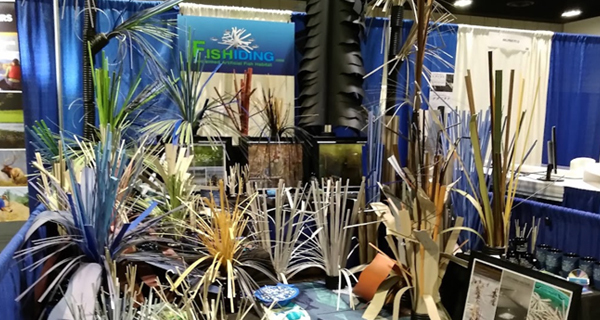
At Fishiding, we build reclaimed artificial fish habitat with that whole-habitat approach in mind. Picture a thick woodland understory moved underwater: fine cover inside, larger openings outside, and living surfaces that support the food web.
- Quality deer habitat and fish habitat combine cover, food, and usable refuge—not just attraction.
- Fishiding builds dense reclaimed PVC habitat with protected interiors and varied outer spaces.
- Cradle provides fine, grass-like nursery cover; Palace combines fine center strands with wider shaded panels.
- A good habitat plan also addresses population balance and water quality.
A thicket is more than a place to stand
Walk through mature woods with a clean, open understory. You see trees, but you can also see a long way between them. Now step toward a tangled patch of shrubs, young growth, and low branches. The difference is not simply the number of trees. It is the cover between them.
A deer management plan recognizes that distinction. Food matters, but so do bedding cover, sheltered travel, and places left relatively undisturbed. A useful thicket has an interior, not just a row of vegetation around an open center.
The underwater comparison is straightforward. A few widely spaced limbs create structure. Fine, closely arranged elements create a different kind of habitat: spaces small fish can enter and use inside the structure.
Our Cradle artificial shallow fry habitat is the shallow-water version of that tangled understory. Fine, grass-like reclaimed PVC strands create dense interior shelter for fry and copepods, with textured surfaces for algae and periphyton growth.
Dense cover also provides food for both deer and fish. Deer browse the living plants that form the thicket. Underwater, living growth on habitat surfaces supports small organisms and the fish that feed on them. Cover and groceries belong together.
The question is not only whether an animal visits the habitat. It is whether the habitat supplies something that animal needs while it is there.
The same management principles, different environments
Deer and fish are not interchangeable. Deer browse plants; many fish eat the small animals supported by submerged surfaces. Deer cover extends across land, while fish habitat must work through depth and the water column.
The useful comparison is how you organize food, refuge, and movement—not a claim that their behavior is identical.
| Habitat principle | Quality deer habitat | Quality fish habitat |
|---|---|---|
| Dense cover | Shrubs, young growth, and low vegetation provide concealment and browse | Fine, closely spaced habitat elements provide shelter and surfaces supporting the food web |
| Safe interior zones | Sheltered bedding areas away from frequent disturbance | Usable spaces inside cover that restrict access by larger fish |
| Food within and near cover | Living thicket plants supply browse alongside concealment | Periphyton-covered surfaces and small aquatic organisms provide feeding opportunities within and around shelter |
| Different-sized openings | Vegetation with routes through and around it | Fine gaps for small fish and larger lanes around outer cover |
| Habitat variety | Fine grasses, shrubs, wide branches, open areas, and dense thickets | Fine, grass-like strands, wide branches and panels, open lanes, and dense interior cores |
| Long-term management | Vegetation, disturbance, and herd balance | Water quality, habitat condition, and fish population balance |
A good plan does not turn every acre into an impenetrable wall. Nor should a fish habitat plan make every underwater space identical. Dense refuge belongs beside usable edges and movement routes.
Deep inside the thicket: protect the interior
When we say a deep thicket, we mean cover with an interior you can't get into—not necessarily habitat placed in deep water. Think of tangled cover you cannot simply walk through, while smaller animals still find usable spaces inside. Underwater, the same design principle creates a dense center small fish can enter but larger fish cannot move through as freely. A shallow nursery zone can have that protected interior.
This distinction matters when you compare fish attractors. Look beyond the outer silhouette. Does the center contain intricate shelter, or can a larger fish swim straight through the whole structure? Can you see straight through to the other side, with no dense center core? If so, look more closely at what interior protection the structure actually provides.
Fry are young fish shortly after hatching. Young-of-year fish, often shortened to YOY, are fish produced during the current year. Their size and shelter needs change as they grow.
Fine interior gaps give small fish places to enter that larger fish cannot use in the same way. That is the practical meaning of a safe interior zone: cover that changes access, not a promise that predators disappear.
Cradle is recommended for 2–6 feet of freshwater and provides approximately 30 square feet of habitat surface. Its fine, grass-like strands create shallow nursery cover near shorelines and spawning areas.
Best for: Building a shallow, tangled refuge where protecting small aquatic life matters more than casting through the middle.
Placement tradeoff: Cradle is nursery cover, not a replacement for taller habitat serving larger fish. Leave its dense interior for small aquatic life and keep your fishing lanes around the refuge.
Think of that as leaving the bedding thicket alone and hunting the surrounding travel routes. The refuge and the harvest area do not have to be the same place.
Build an understory, not just a canopy
A tall tree does not automatically provide dense cover near the ground. In the same way, a tall fish structure does not automatically provide fine cover near its base or inside its branches.
We design varied profiles because fish use different parts of the habitat. Fine, grass-like strands, wide branches and panels, open lanes, and dense cores each have a job. Wide panels provide shaded spaces. Fine interior elements create small refuge spaces and living growing surfaces. Outer lanes let larger fish move around the cover.
A useful forest has more than trunks; it has grasses, understory, branches, openings, and thickets. A useful underwater habitat plan needs that same variety—not one repeated spacing from top to bottom.
The Safehouse Artificial Fish Habitat combines a tight center refuge with wider shaded lanes. At 48 inches tall, it is recommended for 5–8 feet of freshwater.
Its flexible reclaimed PVC limbs bend by hand into an abstract profile. Rather than preserving a neat, symmetrical shape, you arrange the cover to create varied spaces throughout the unit.
Best for: Dock-adjacent and mid-depth habitat where you want a sheltered center and room for larger fish around the outside.
Placement tradeoff: Safehouse serves a different depth zone than shallow nursery cover. It does not replace the need to plan habitat for the youngest fish in shallower water.
That is the woodland comparison in miniature: understory, shaded cover, and surrounding travel space working together.
Connect the nursery thicket to larger cover
A good deer property offers more than one habitat type. The same logic helps you plan a pond or lake: give fish a choice of cover as their size and seasonal needs change.
That does not mean every structure has to touch the next. It means planning a useful arrangement instead of dropping everything into the one spot that is easiest to reach.
The Palace Ultimate Transition Fish Habitat combines fine center strands for fry with wider shaded panels for adult fish. It stands more than 60 inches tall, opens nearly 10 feet wide, and is recommended for 7–12 feet of freshwater.
Palace provides more than 80 square feet of surface area. Its mixed limb widths create a transition between intricate interior shelter and larger surrounding spaces.
Best for: A taller transition zone where fine refuge and larger-fish cover belong in the same structure.
Placement tradeoff: Its spread and recommended depth require more room than a compact shallow nursery unit. Match the location to the finished profile, not just the size of the base.
Cradle, Safehouse, and Palace are preassembled, self-weighted models with cement built into their design. They do not require separate ballast or anchoring.
The underwater food plot is a living surface
Here is where the deer comparison gets especially useful. A sound management plan grows food, not merely a place where animals congregate.
On land, browse and other forage support deer directly. Underwater, our reclaimed PVC provides surfaces for periphyton—the attached community of algae and other microorganisms that develops on submerged material.
That living film supports grazing and feeding opportunities for small aquatic organisms. Copepods are tiny crustaceans; many are part of zooplankton, the small animals suspended in water. Copepods, aquatic insect larvae, and other small prey are food for young fish, with diets varying by species and life stage.
Fish are not eating the PVC. The material supplies the growing surface and protective spaces; the living food web does the feeding.
Our PVC Pipe Fish Fry Feeder Two Pack puts that idea beneath a dock, pier, or boathouse. Each hanging bar carries 24 reclaimed PVC strips; the pair provides approximately 40 square feet of surface area.
Best for: Adding suspended nursery cover and living feeding surfaces beneath a freshwater dock.
Placement tradeoff: This is hanging habitat, not a pellet dispenser or a bottom-based crib. Follow its assembly instructions and keep it clear of swimming areas and boat traffic.
The aim is to put shelter and feeding opportunities close together. Give a young fish useful cover beside the places it explores for food—not just a wide-open route between them.
Protect, feed, and grow fish—not just collect them
Deer managers know the difference between drawing animals to a location and improving the habitat that supports them. We make the same distinction with fish.
Fishiding has more than 15 years and thousands of hours of freshwater underwater filming documenting fish use of our habitat. That record supports our claims that all freshwater fish species use our dense, intricate models and that the habitat grows more fish.
The design objective is practical:
- Protect: Provide fine interior spaces, shade, and varied cover for different-sized aquatic life.
- Feed: Supply submerged surfaces where periphyton develops and small organisms find places to live and forage.
- Grow: Support the shelter and feeding conditions fish need as they move through life stages.
Underwater observations show how fish use those spaces. A measured change in a pond's population still requires looking beyond a group of fish gathered beside one unit.
That is also true on land. A trail-camera picture shows deer using a thicket; it does not, by itself, measure the condition of the entire herd.
Natural habitat still belongs in the plan
Healthy native vegetation, suitable woody cover, and brush piles have real habitat value. We do not need to pretend otherwise to explain what our reclaimed artificial fish habitat adds.
Natural brush provides irregular branches and openings. Its arrangement changes as the wood breaks down. Reclaimed PVC lets us build deliberately varied profiles and place particular types of cover where your plan needs them.
Our material comes from PVC destined for landfills. We use it to build freshwater habitat for ponds, lakes, and reservoirs.
The comparison is not natural versus artificial as opposing teams. It is which habitat function is missing, and what will supply it?
A pond with healthy vegetation might need extra transition cover near a dock. An open-bottom pond might need shallow nursery patches first. Add the missing layer instead of treating every location alike.
Plan your pond like you plan your deer property
Start with the animals' needs, then choose the cover.
- Map what already exists. Mark vegetation, brush, docks, depth changes, and open areas.
- Identify the missing function. Separate nursery refuge, feeding surfaces, and larger-fish cover.
- Match the habitat to fish size and depth. Choose fine shallow cover, mixed transition profiles, or suspended habitat according to the location.
- Keep the refuge usable. Leave open water around dense patches and keep structures out of traffic and swimming routes.
- Watch the whole system. Record small-fish use, larger-fish activity, living surface growth, water conditions, and changes through the seasons.
A thick thicket cannot compensate for an overbrowsed deer property. Likewise, fish cover cannot correct low dissolved oxygen or an unbalanced fish population. Habitat belongs within management, not in place of it.
The Oklahoma Department of Wildlife Conservation's Strategies for Deer Management on Private Lands describes quality deer habitat as a mixture of food and cover, with attention to year-round forage and herd management. The EPA's Physical Habitat guidance describes refuge and different life-stage needs in stream fish; those general principles provide context, not a product-specific test of our pond habitat. Both sources were consulted in October 2026.
FAQ
What do quality deer habitat and quality fish habitat have in common?
Both combine usable cover, access to food, and spaces suited to different life stages. The useful comparison is habitat function, not identical deer and fish behavior.
What is the underwater equivalent of a dense deer bedding thicket?
Fine, closely arranged cover with a dense interior core is the closest comparison. Cradle supplies fine, grass-like nursery cover that small fish can enter while larger fish have more restricted access.
Does deep thicket cover mean deep-water fish habitat?
No. Deep inside a thicket describes the interior of the cover, not the water depth. Shallow fish habitat can contain dense interior refuge.
How does reclaimed PVC habitat feed fish?
It supplies submerged surfaces where periphyton develops and spaces used by small aquatic organisms. Fish feed within that living food web, not on the PVC itself.
Should every part of a pond have equally dense cover?
No. Combine dense refuge with surrounding lanes, edges, and other habitat types. Match the layout to fish size, depth, existing cover, and water conditions.
Do Fishiding preassembled models need additional weight?
No. Fishiding preassembled models and habitat mats are self-weighted with cement built into the design. Hanging products such as the Fish Fry Feeder use their own installation instructions.
Build the places fish need before choosing where to fish
Not every useful corner of a deer property is a place to set a stand. Not every useful fish habitat patch needs to be easy to cast through.
Some of the most purposeful cover is the interior you leave for the animals. Build the nursery thicket, provide living feeding surfaces, and place larger cover nearby.
Think like a habitat manager first and an angler second. Choose the depth zone and the missing cover type, then build a place where fish can shelter, feed, and grow.