
Fish habitat for lake restoration contractors
Posted by dwe on 4th Nov 2026
A lake restoration contract should say what the habitat is meant to do after the machinery leaves. Removing sediment, repairing a shoreline and adding fish cover are different tasks. A cleaner basin does not automatically contain the dense shelter young fish need.
At Fishiding, we build reclaimed PVC fish habitat for freshwater ponds, lakes and reservoirs. For contractors planning broad nursery cover, our BassGrass Modular Fish Habitat Mat is one option to specify by name rather than writing “install fish structures” and leaving the crew to guess. Match the model to the missing habitat function, the final water depth and the site's handling access.
- Specify the habitat objective, finished model, placement depth and handling method in the scope.
- Fishiding preassembled models and mats have cement built into the patented design; no separate ballast or anchor is needed.
- Coordinate habitat work with restoration access only when permits, ground conditions and the approved schedule allow it.
- Hand over a placement map and observation plan, not a promised fish-population percentage.
What belongs in the specification?
Start with the existing lake, not a generic shopping list. Restoration does not always remove every useful stump or plant bed. Map the cover that will remain, the cover that will be lost and the places the approved project intends to improve.
For each habitat location, record the intended fish sizes and function. Nursery refuge for fry—very young fish—needs intricate internal spaces. Taller transition cover occupies a different part of the water column. Access for fishing is another requirement, not a substitute for either.
The written scope should identify:
- The actual model and quantity, including what the purchase does and does not include.
- Bottom elevation and expected water depth after refill, with seasonal changes considered.
- Delivery access, equipment capacity and a deployment method suited to the finished weight.
- Areas excluded for navigation, swimming, diving, utilities and other designated uses.
- Documentation and acceptance checks the owner will receive.
That is enough detail for an estimator and field crew to discuss the same job. “A few fish condos near the dock” is not.
Choose the cover before you choose the count
BassGrass stands at least 48 inches tall and opens to approximately 8 by 7 feet. The recommended freshwater depth is 5–9 feet. Five reclaimed PVC profiles provide more than 350 square feet of material surface area. That figure is growing surface, not the same thing as pond area covered.
Best for: a planned zone needing dense, grass-like cover with room for the finished spread. Its mat format requires a handling plan; it is not a lightweight bundle for one person to carry down a steep bank.
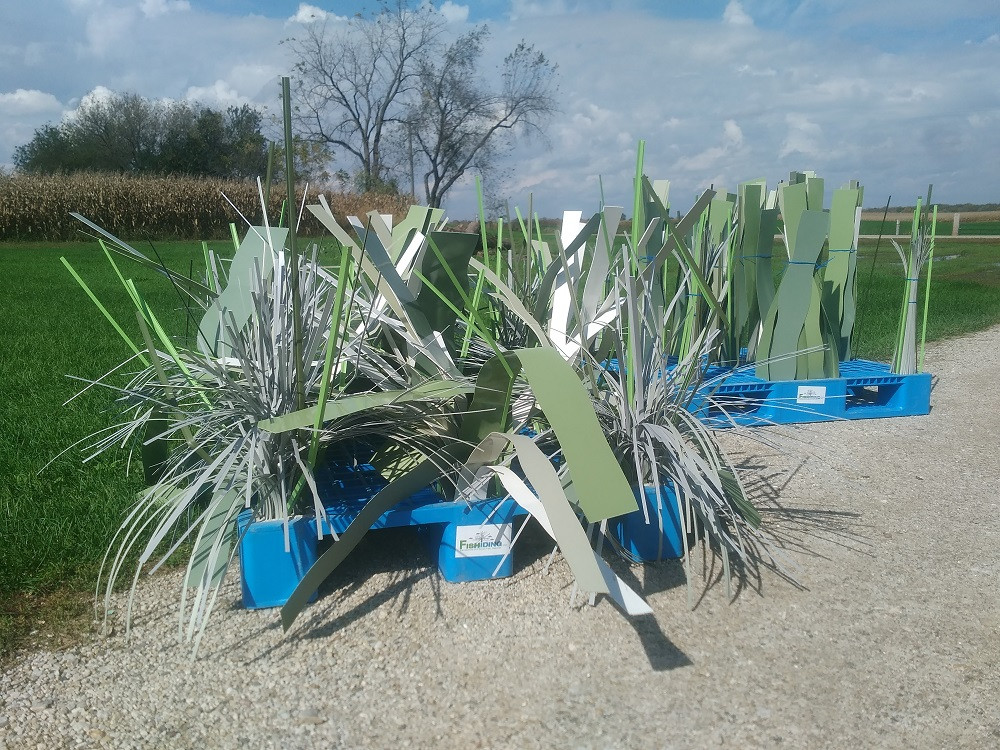
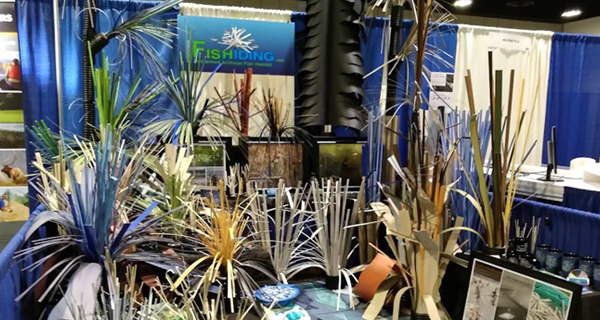
Fishiding's modular habitat photograph shows the variety available within a mat layout. Inspect the finished profile and confirm the model specified for each location.
For individual transition units, The Palace Ultimate Transition Fish Habitat stands more than 60 inches tall, opens nearly 10 feet wide and is recommended for 7–12 feet of freshwater. Its broad outer limbs and finer center pieces provide different spaces within one unit.
Best for: locations suited to taller, individual cover where a mat is not the chosen format. Leave room for its spread and safe clearance at the lowest expected water level.
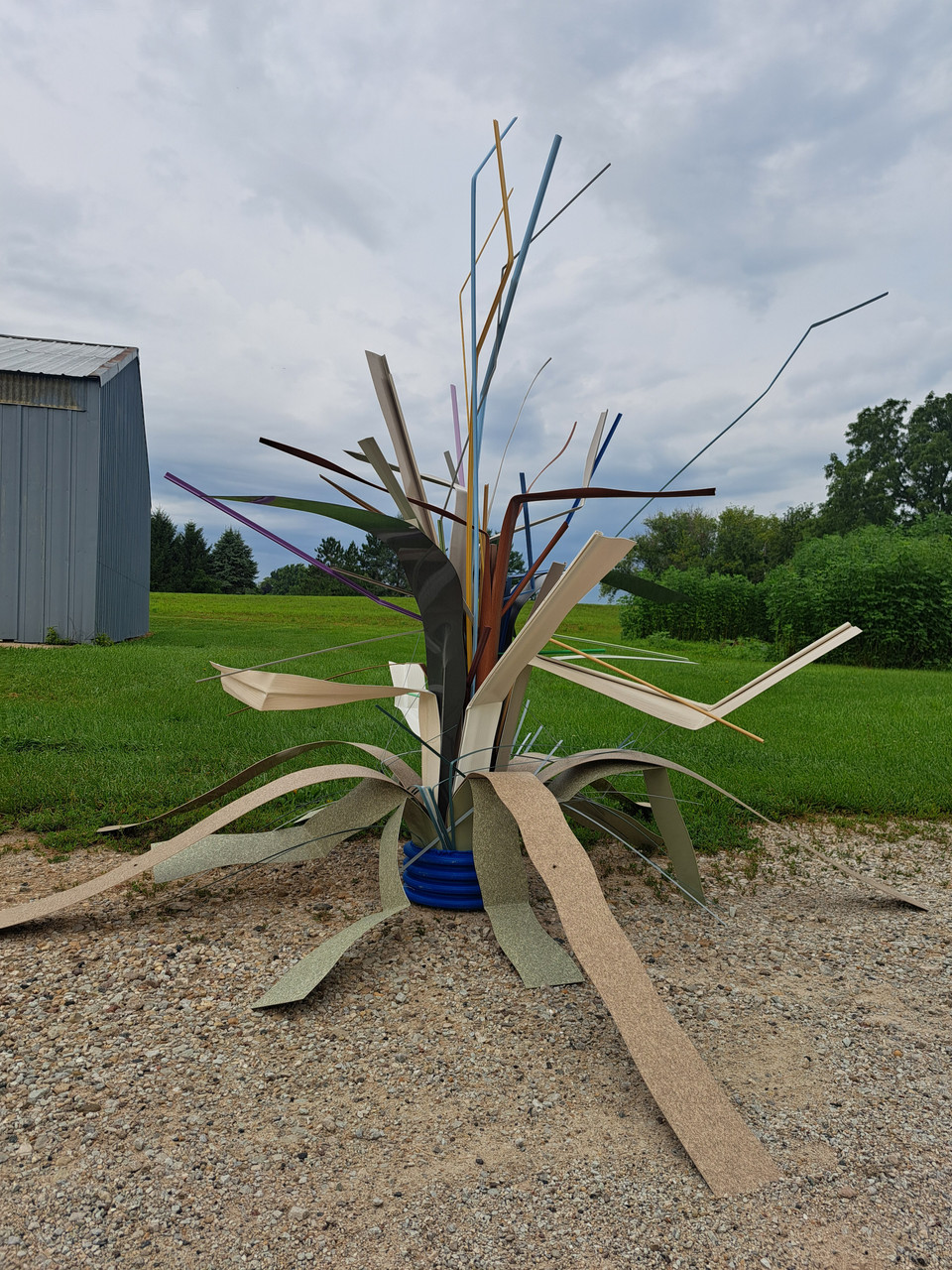
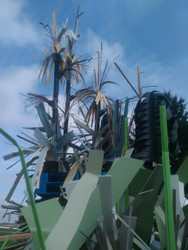
The Palace above water: broader limbs and fine profiles do different jobs. Shape selected flexible pieces by hand before deployment. Photograph: Fishiding.
A crew with assembly time can also choose our Easy Dozen build your own Fish Crib kit. It includes twelve 8-inch base containers and 35 pounds of reclaimed PVC in three material types. Cement is supplied by the builder. Allow for assembly, curing, finished weight and staging in the estimate.
| Purchase | Best for | Scope item not to overlook |
|---|---|---|
| BassGrass mat | Dense grass-like cover in suitable 5–9-foot water | Handling access and space for the mat |
| Palace | Individual transition cover in suitable 7–12-foot water | Finished height and nearly 10-foot spread |
| Easy Dozen kit | Projects with planned build time | Builder-supplied cement, assembly and curing |
Dry-bed access is useful, not permission to drive anywhere
A permitted drawdown can make placement visible. It does not make exposed sediment safe for equipment or eliminate environmental restrictions. Coordinate with the owner and the responsible project professional before moving onto the lake bed.
Where the habitat can be placed safely before refill, photograph the installed arrangement and reference it to the final water level. A GPS position without the expected water depth tells the next fisheries manager only half the story.
For a full-pool installation, use a suitable work platform and the manufacturer's handling guidance. Plan personnel, load limits, stability and access around the actual product. A heavy mat and an individual crib should not inherit the same deployment method simply because both are called habitat.
Our preassembled Fishiding units, including modular and legacy mats, are self-weighted with cement built into the patented design. They need no added ballast or anchor. DIY kits still require completion of their own bases before installation.
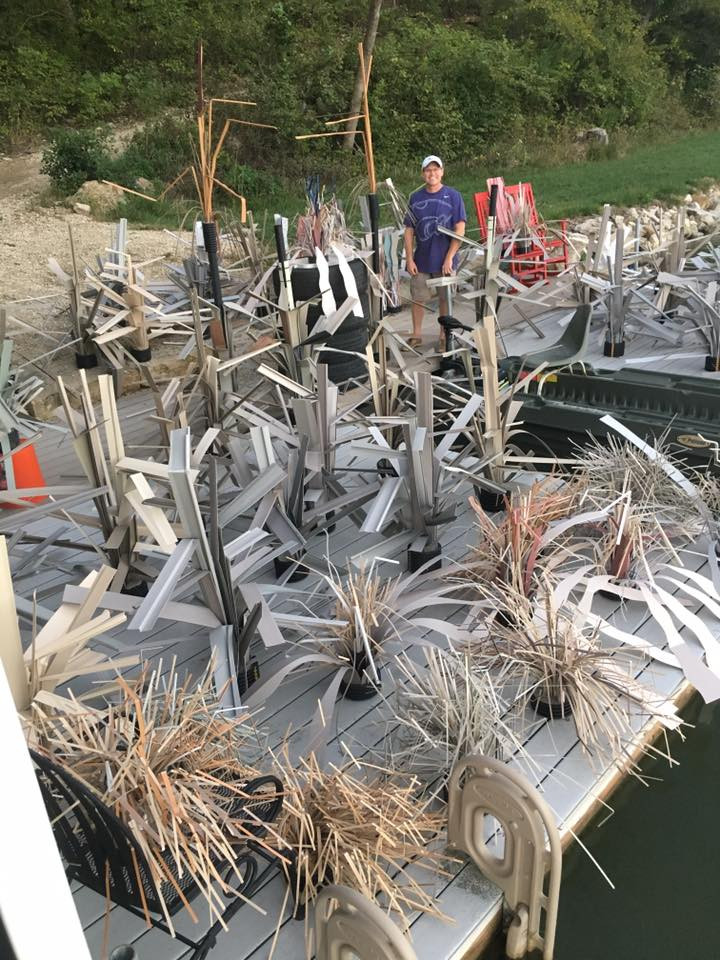
Staging space is part of the job. This Fishiding photograph shows an assortment of units above water, where crews can check profiles and plan the installation sequence.
Do not put every unit in the same row
A tidy line on a drawing is convenient for counting. It may not address the lake's missing cover. Some sites need connected groups; others need separate patches along a transition. Leave appropriate open water and retain useful natural habitat.
Within the cover, look for overlapping pieces, fine interiors and broader spaces rather than an empty center. Our guide to why variety matters in artificial fish habitat explains the design principle the crew should be able to recognize before placement.
Check oxygen and water conditions at the intended depth. Structure cannot make low-oxygen water usable. An oligotrophic lake is relatively nutrient-poor; eutrophic and hypereutrophic waters have higher nutrient enrichment. Those labels are context, not a replacement for site measurements.
Hand over something the owner can use
The closeout should show what was installed and where. Keep delivery records, model names, quantities, placement dates, coordinates, bottom depths and photographs together. Note any deviation from the approved layout and who accepted it.
Separate installation acceptance from biological performance. A structure can be correctly placed without immediately showing the fish response the owner wants. Fishiding's more than 15 years and thousands of hours of underwater freshwater filming document fish using our dense habitat and support our claim that the habitat grows more fish. A project-specific population increase still needs an appropriate monitoring method.
Periphyton—the attached community of algae, microbes and other organisms—belongs on submerged surfaces. Explain that useful colonization is not automatically a maintenance defect. Record attached growth, small aquatic life and fish use separately from stocking and harvest changes.
Contractor questions
Can habitat installation be included in a restoration contract?
Yes. Define the habitat objective, specified models, access, installation method and documentation in the approved scope, subject to the project's permissions and conditions.
Do Fishiding mats require added ballast?
No. Preassembled Fishiding units and mats are self-weighted with cement built into the patented design. No separate ballast or anchor is required.
Is every Fishiding product delivered as a finished habitat?
No. Finished units and mats differ from DIY materials and kits. The Easy Dozen kit requires builder-supplied cement, assembly and curing.
What should the owner receive at handover?
Provide model names, quantities, placement dates, coordinates, depths, photographs and records of any approved layout changes.
Does Fishiding include shipping?
Yes. Free shipping is standard on every Fishiding product.
Specify habitat as deliberately as you specify the rest of the restoration. The fish will still be using the lake after the contractor's sign comes down.
Specify Fishiding for your next restoration
Send the proposed depths, access constraints and habitat goals so we can discuss models that fit. Free shipping on every product.
By David Ewald, Fishiding.