
Can you add fish habitat without draining the pond?
Posted by Editorial Team on 17th Nov 2026
Yes. You can add fish habitat without draining your pond. Shape the habitat above water, choose the location and drop or toss it using a safe approach from the bank, a dock or a suitable boat. Our finished Fishiding units and mats already contain their cement weighting; draining the pond is not part of their installation requirements.
By David Ewald, Fishiding.
The fish do not need their house emptied before you bring in the furniture. What they need is useful cover in useful water. Start with that distinction and this becomes a habitat installation project, not an earthmoving project.
- Add fish habitat without draining your pond by planning the location and safe access first.
- Finished Fishiding habitat units and mats have cement weighting built in; no separate ballast or anchors.
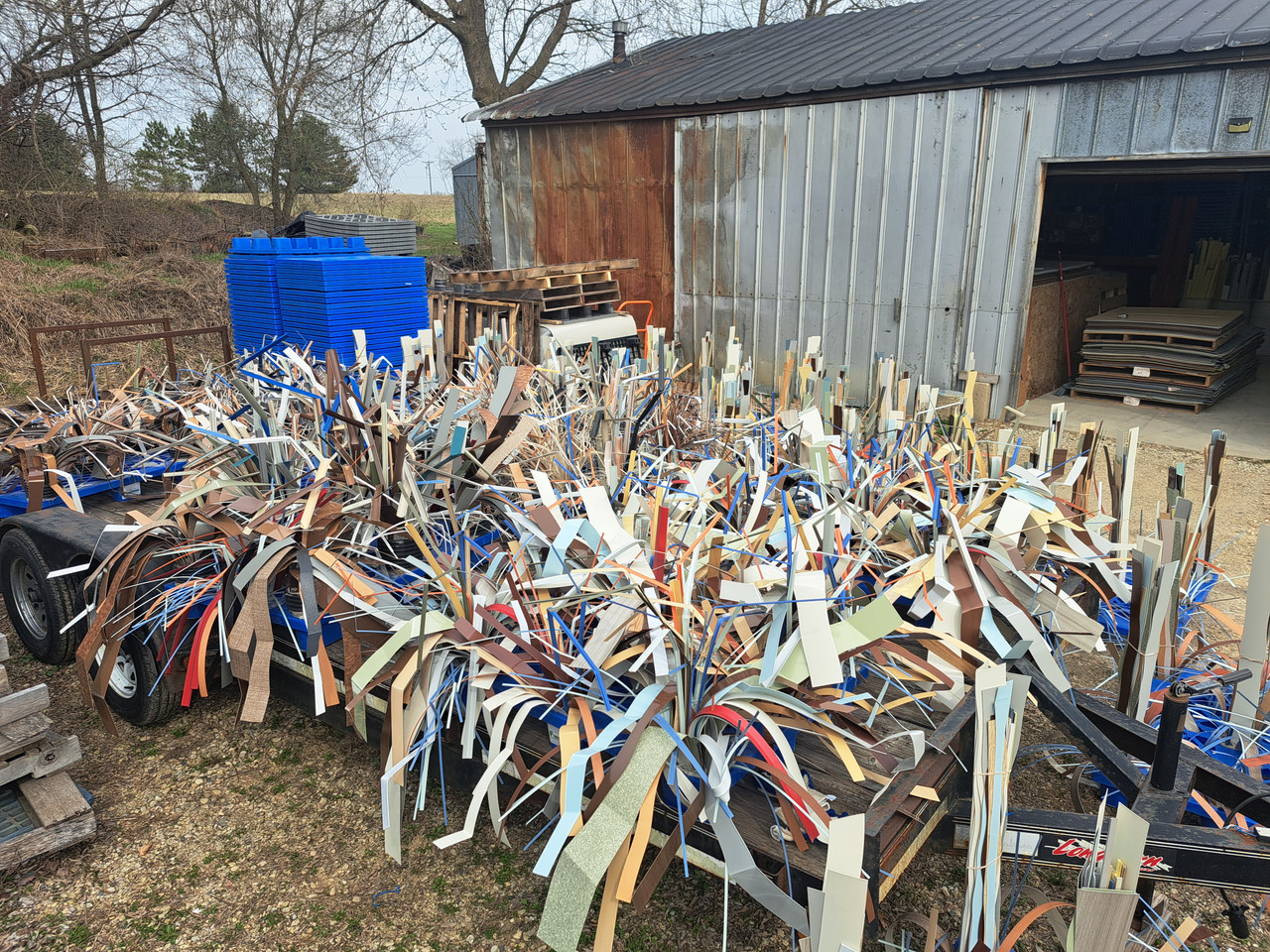
- Shape reclaimed PVC limbs above water to create varied hiding spaces, not tidy rows.
- Match nursery cover, branching fish cribs and connected mats to the depth and fish you want to protect.
Can you add fish habitat without draining the pond?
Yes, because the habitat can be prepared on land and placed into standing freshwater. You are not pouring a foundation on the lake bottom. You are putting ready-to-place cover where fry, forage fish and larger fish can use it. Although we do have options of bank pouring in habitat on a dry lakebed. Ask David about it, he's done dozens of dry lakebed pour in place fish habitat projects.
The important question is access. Can you reach the planned location without leaning over a dock rail, losing your footing or overloading a boat? Our guide to installing fish habitat without a boat covers the near-shore choices. Deeper or offshore locations need a different delivery plan, not necessarily less water.
An existing drawdown can still be a useful opportunity. If the water is already being lowered for approved repairs or pond renovation, plan the habitat around the eventual water level. But lowering water solely because you assume artificial fish cover must be installed on a dry bottom adds a job our finished products do not require.
Do the shaping where your hands can work
Set the habitat on a stable work surface near waist height. Remove the shipping tie and open the limbs according to the model's instructions. Bend selected pieces sideways, fold some across each other and leave others upright. Pinch the bends by hand to hold the profile you want.
The goal is variety, not a haircut. Fine strands, broader limbs, dark interior spaces and more open outside edges serve different fish and different sizes of fish. Making every piece point the same direction throws away an easy opportunity to add detail.
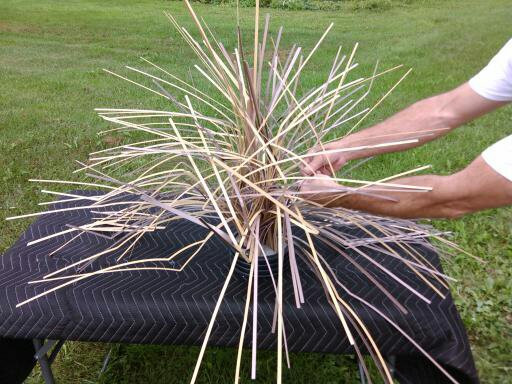
Shape the fine cover above water where you can see and reach the individual strands. The openings you create are the useful part, not just the outside silhouette.
Our original Cradle artificial shallow fry habitat is approximately 28–32 inches tall and weighs approximately 10 pounds. It is recommended for 2–6 feet of freshwater. Adjust the profile to the actual location, keeping the top submerged at the lowest expected water level.
Those are habitat specifications, not a promise that every bank is safe to walk down carrying one. Plan the handling as carefully as the placement.
Choose the cover before choosing the delivery method
A small nursery unit and a completed habitat mat are not the same load. That matters when you are deciding whether to work from shore, a dock or a boat. Buy for the fish's needs, then arrange a safe way to get that particular habitat into position.
| Fishiding habitat | Best for | Verified size or depth guidance |
|---|---|---|
| Cradle artificial shallow fry habitat | Fine refuge for fry and small forage fish | Approximately 28–32 inches tall; recommended depth 2–6 feet |
| Safehouse Artificial Fish Habitat | Broad branching cover with protected interior spaces | 48 inches tall; approximately 16 pounds; recommended depth 5–8 feet |
| Legacy Lifetime Shallow Fish Habitat Structures Mat Twin Pack | A connected patch of varied shallow habitat | Nine habitat units per mat; recommended depth 4–10 feet |
The Legacy twin pack has a total completed weight of 336 pounds across the two mats. Its habitat units fit into compartments; it is a planned handling job, not a suggestion to lift a completed mat over a small boat's side. Talk through your access and equipment with us before arranging placement.
Prepare the arrangement above water. Legacy mats combine different habitat profiles in one connected area rather than scattering every piece into an isolated spot.
Our mats do well on slopes, in currents and on soft bottoms. You do not have to drain the water to manufacture a flat pad for them. Still, know the bottom contour and how much usable cover will remain above any accumulated sediment.
Finished models have cement integrated into their patented design. No added ballast or anchors. Loose DIY materials are different: if you are designing your own fish crib from components, the base and weighting are part of your build. drop them off the boat with two guys tossing works. Another tried and true medthod is to place the mat on a half sheet of plywood. When ready to install, pick up one end of the sheet and the Habitat mat will slide off and sink upright in place, every time!
Keep the water in—and put the habitat in the right water
Measure the depth where each unit will sit, not just at the end of the dock. Consider seasonal water changes, nearby existing cover and the open routes people need for swimming and boating. In deeper water, check that dissolved oxygen—the oxygen fish can use in the water—is suitable during the season you want the habitat occupied.
A spot that is easy for us to reach is not automatically a nursery. Tiny fish need fine refuge. Broader branching habitat can sit nearby, giving growing fish different spaces without turning every nursery opening into a doorway for the biggest predator.

The newly submerged Safehouse shows the broad limbs and interior cover available after placement. Its shape is useful underwater; it does not need a drained pond to provide those spaces.
The reclaimed PVC also supplies surfaces for periphyton, the attached community of algae and microbes that develops underwater. Light, nutrients and water conditions influence that growth. Fine cover provides spaces for small aquatic life as well as fish; the food web includes copepods, tiny crustaceans found among zooplankton and other aquatic communities.
That is why we build habitat rather than simply marking a fishing spot. Shelter and food belong together. Fishiding artificial fish habitat fits pond owners who want dense protective cover added to an existing freshwater pond without making a drawdown the starting point.
A controlled placement beats a heroic throw
Work out the sequence before moving the first unit. Keep the load supported, use enough help and follow the model's installation guidance. From a boat, wear a life jacket, stay within its load limits and distribute weight safely. From a dock, do not lean beyond a secure working position.....unless necessary.
Wading is an fantastic option where depth, footing and conditions make it safe. A mat can work on a soft bottom that is hard for a person to walk across. Those are two different questions; do not test the second one with a habitat unit in your arms.
Confirm the applicable rules and permission before adding structures, especially in public or shared water. Keep placements clear of access routes and record their locations. A simple map helps you find the edges later and expand the cover with a purpose.
FAQ
Can you add fish habitat without draining a pond?
Yes. Prepare the habitat above water and place it into the full pond using safe access from shore, a dock or a suitable boat. Choose the location and handling method before moving the habitat.
Do Fishiding fish cribs need extra weight or anchors?
Finished Fishiding habitat units and mats do not need added ballast or anchors because cement weighting is built into the design. Loose DIY components need the base and weighting specified by your own build.
Can I install pond habitat from the bank?
Yes, where the selected location is safely reachable from the bank. A dock or suitable boat can provide access to locations beyond safe shoreline reach.
Which habitat suits shallow fry protection?
Cradle artificial shallow fry habitat provides fine refuge and is recommended for 2–6 feet of freshwater. Shape it for the location and keep its top underwater at the lowest expected water level.
Do habitat mats need a flat, firm pond bottom?
No. Fishiding mats are designed for slopes, currents and soft bottoms. Check the contour, usable habitat height and safe installation access for your selected location.
Is a drawdown ever a useful installation opportunity?
Yes. A drawdown already planned for other approved work can offer access to future submerged locations. It is not required to install finished Fishiding habitat.
Add the cover, not another project
Leave the water where the fish live. Choose the missing refuge, prepare it properly and place it with a plan. Our reclaimed PVC gives material headed for landfills a freshwater job, and free shipping is standard on every product.
Tell us the depths, the fish you want to protect and how you can reach the water. We will help match the habitat and placement plan before you order.
Plan habitat for your existing pond
Tell us your depths, fish species and shoreline access. We will help you choose the right cover.