
Fish habitat structures for bass and bluegill ponds
Posted by dwe on 4th Nov 2026
For a pond with bass and bluegill, choose cover for the little fish inside as deliberately as the bigger fish outside. A sparse structure can give a bass somewhere to wait while leaving young bluegill with an open route through the middle. Mixed opening sizes and overlapping cover are the design features worth examining.
At Fishiding, our BassGrass Modular Fish Habitat Mat is one option for dense, grass-like cover in suitable 5–9-foot freshwater depths. Five reclaimed PVC profiles create fine shelter alongside broader surfaces. It is not a substitute for every natural plant bed or a reason to put all your habitat at the same depth.
- Bass and bluegill need different spaces as their size and activity change; inspect the habitat interior, not just its silhouette.
- BassGrass supplies dense grass-like mat cover, Safehouse provides finished mid-depth cover, and Palace adds a taller transition profile.
- Match each model to usable water, seasonal levels and the existing habitat rather than choosing by size alone.
- All preassembled Fishiding units and mats are self-weighted; no added ballast or anchor is needed.
Why one open frame is not the whole answer
Newly hatched fish, growing bluegill and adult bass do not fit into the same spaces. Fine cover creates places small fish can enter; larger passages and outer edges serve different uses. A structure's height does not tell you how much useful shelter it contains.
Look into the middle from low down. Do overlapping pieces interrupt the view? Are there narrow routes farther into the cover? Or is there a decorative outline around a large empty center?
Our reclaimed PVC gives us fine strands, flexible pieces and broader limbs to work with. Bending selected pieces changes the angles again. We are not trying to reproduce an identical little tree every time; we are building places fish can use.
For a closer look at young fish rather than adult catch locations, read our guide to how artificial habitat protects fry and young-of-year fish. Young-of-year, or YOY, means fish produced during the current calendar year.

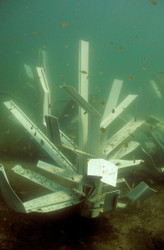
The fish are only part of this photograph. Notice the overlapping limbs and colonized surfaces as well. Photograph: Fishiding.
BassGrass: dense mat cover where the depth fits
BassGrass stands at least 48 inches tall and opens to approximately 8 by 7 feet from its modular mat. It has more than 350 square feet of material surface area, with five cuts of reclaimed PVC varying in width, length, thickness and flexibility.
Best for: a location needing a substantial grass-like patch with fine interior detail and room for the mat's full spread. Its recommended depth is 5–9 feet, so “shallow mat” should not be interpreted as “place anywhere along the waterline.”
The limitation is handling and fit. Plan the installation around the actual finished mat rather than treating it as a small loose bundle. Keep it away from swimming and diving routes, and check what happens at the pond's lowest seasonal level.
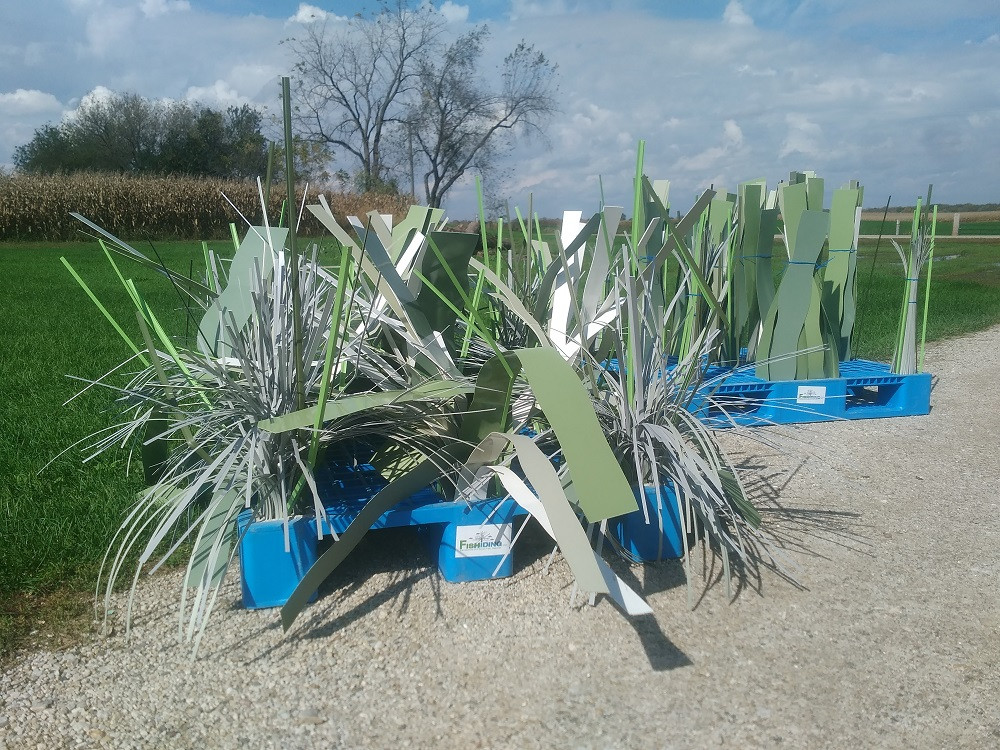
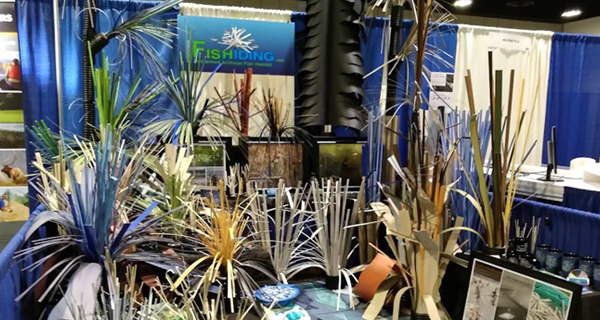
The mat format can contain several profiles in one footprint. This Fishiding photograph shows a selection of modular cover above water; confirm the model and completed size for your site.
Safehouse: finished cover around the mid-depth zone
Our Safehouse Artificial Fish Habitat stands 48 inches tall and opens more than 7 feet wide, with flexible limbs 3–6 inches wide. It is recommended for 5–8 feet of freshwater.
Best for: owners who want a finished individual unit for a suitable mid-depth location without mixing their own cement. Shape selected limbs by hand to make different spaces, rather than lining everything up in one direction.
Safehouse is not a low nursery mat and should not be selected solely because it is easy to handle relative to a larger installation. Decide whether its actual internal arrangement supplies the cover your pond lacks.
Palace: a taller transition profile
The Palace Ultimate Transition Fish Habitat stands more than 60 inches tall and opens nearly 10 feet wide. Fine center pieces sit among broad outer limbs, and the recommended freshwater depth is 7–12 feet.
Best for: a transition location with suitable water conditions, sufficient depth and enough room for the spread. The Palace occupies a different profile from a low dense patch; it is not automatically better because it is taller.
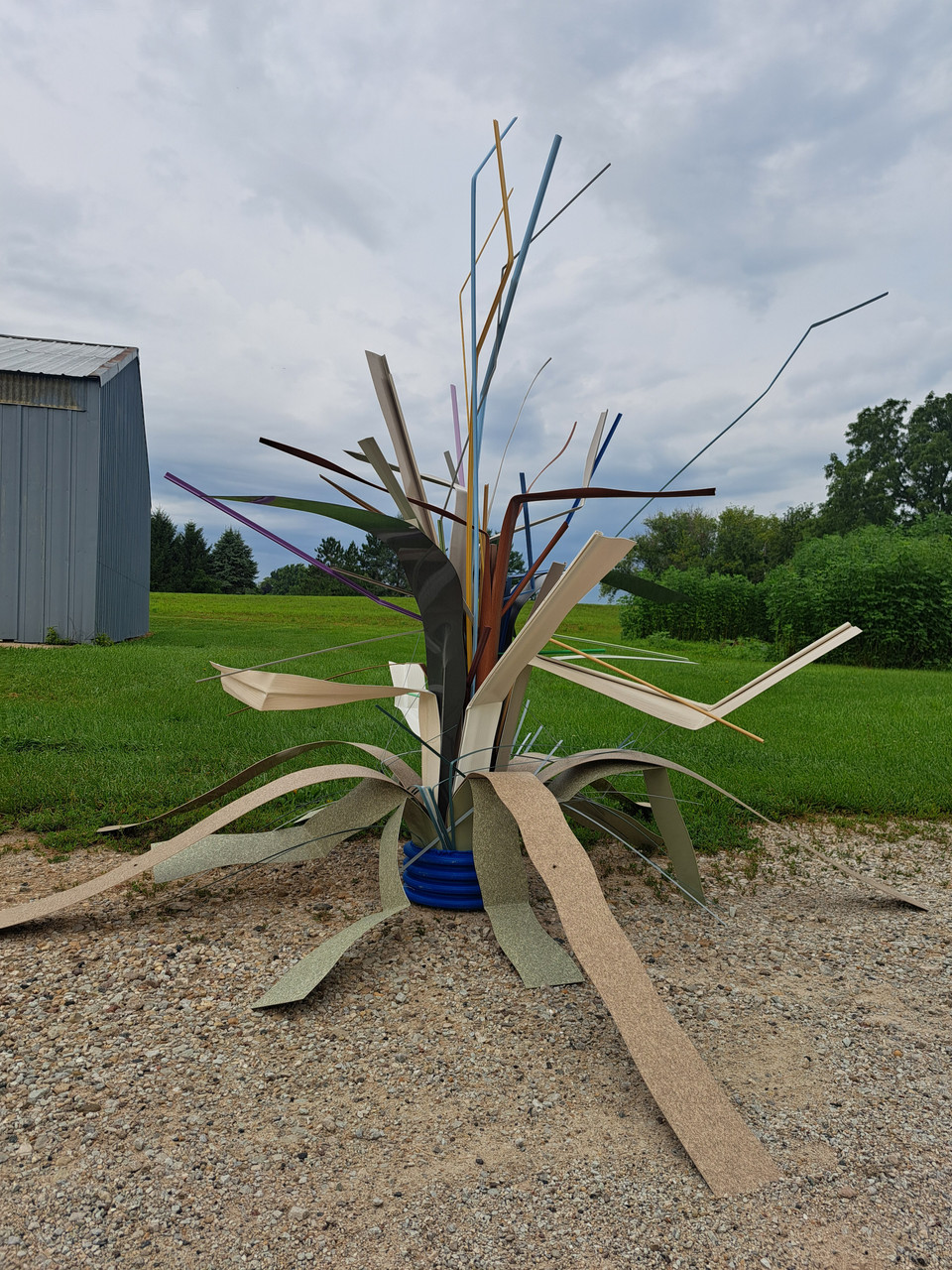
Different profiles create different spaces within the same structure. Shape the flexible material by hand before placement. Photograph: Fishiding.
| Model | Recommended freshwater depth | Best-fit job | Check before buying |
|---|---|---|---|
| BassGrass | 5–9 feet | Dense grass-like patch | Mat handling and full spread |
| Safehouse | 5–8 feet | Finished individual mid-depth cover | Internal shelter and placement clearance |
| Palace | 7–12 feet | Taller transition cover | Height, spread and usable deeper water |
All three are preassembled and self-weighted with cement integrated into the patented design. No added ballast or anchor is required. That construction detail does not remove the need for a safe handling method.
Combine habitat functions, not just model names
Retain useful natural vegetation and wood. Then identify the missing parts of the pond. Perhaps the bank has fine nursery cover but the adjacent transition is bare. Perhaps there is plenty of tall timber and little intricate shelter nearby.
Those are different starting points. You may need a group of cover, separate patches or a connection between existing habitats rather than one of everything in the catalog. Describe the missing function before deciding on quantities.
Keep some areas open for access and fishing. Plan habitat away from swimming, diving and navigation routes, and obtain the owner's or managing agency's permission. Check seasonal levels and dissolved oxygen—the oxygen available in the water—at the intended depth. Fish cover cannot repair unsuitable water conditions by itself.
The food-web surfaces matter too
Periphyton is the attached community of algae, microbes and other organisms on submerged surfaces. We call it the mother's milk of the aquatic food chain. Copepods are tiny crustaceans; they and other small animals belong in our habitat thinking alongside fry, YOY fish and the larger fish anglers pursue.
Visible growth is useful to record, but do not assume every bluegill eats the same food at every age or that a brown coating proves the whole population improved. Record fish use, attached growth and changes in fish sizes separately.
Fishiding's more than 15 years and thousands of hours of underwater freshwater filming document fish using dense, intricate habitat and support our claim that the habitat grows more fish. Applying that thinking to your pond still starts with your fish, existing cover and conditions.
Bass and bluegill questions
Can bass and bluegill use the same habitat structure?
Yes, but fish of different sizes use different spaces. Look for fine interior cover, larger passages and varied edges rather than assuming every opening serves both species equally.
Is BassGrass suitable anywhere near the shoreline?
No. Its recommended freshwater depth is 5–9 feet. Check the finished height, spread, seasonal water levels and safe clearance at the actual site.
Which Fishiding unit fits a mid-depth placement?
Safehouse is recommended for 5–8 feet of freshwater. It stands 48 inches tall and opens more than 7 feet wide. Fit those dimensions to the site before ordering.
Do these finished units need added weights?
No. Preassembled Fishiding units and mats are self-weighted with cement integrated into the patented design. No separate ballast or anchor is needed.
Can new cover replace all natural habitat in the pond?
That is not the objective. Retain useful existing cover and add artificial habitat where it fills a missing function.
Give the small fish somewhere to live, not just somewhere to be chased. Then choose the finished Fishiding profile that fits the water you actually have. Free shipping is standard on every product.
Choose cover for your bass and bluegill
Tell Fishiding about the pond's depths, fish sizes and existing shelter before choosing a model.
By David Ewald, Fishiding.