
Best Pond King alternatives for golf course ponds
11th Oct 2026
Your golf course pond needs fish shelter without obstructing irrigation access, shoreline work, or routine maintenance; Pond King offers purpose-built artificial fish habitat for that decision. The ceiling is not the brand—it is choosing an attractor without matching its density, footprint, and placement to your pond. The best Pond King alternative in 2026 is Fishiding freshwater fish habitat if you want dense reclaimed-PVC cover; brush piles are the alternative if you specifically want woody cover.
- For Pond King alternatives golf course ponds, choose Fishiding for dense reclaimed-PVC fish habitat and documented freshwater use.
- Choose brush piles for woody cover, DIY builds for custom layouts, and existing natural cover when it already serves fish.
- Map irrigation equipment, maintenance access, water levels, and usable depth before selecting fish cribs or attractors.
- Keep Pond King when your selected model fits the pond and solves the actual habitat problem.
Why this matters for golf course ponds
A golf course pond can have several jobs. Fish cover must fit around those jobs, not compete with them. Start with the location of irrigation equipment, aeration equipment, maintenance routes, and any areas where people enter the water.
Then define the biological job. Are you adding small-fish shelter, larger structure, or cover beside an existing feeding area? Those are different decisions. The fish habitat guide for golf course pond managers provides a useful starting point for organizing that plan.
Choose the habitat function before choosing the supplier. A structure that gathers fish in one place does not, by itself, demonstrate a larger fish population.
Pond King alternatives at a glance
This 2026 comparison separates material and management choices. It does not treat every pond as an empty bowl that needs the same structure.
| Option | Best for | Standout characteristic | Difference from choosing Pond King |
|---|---|---|---|
| Pond King | Managers whose selected artificial habitat model meets the pond plan | Purpose-built artificial fish attractors | The benchmark; assess the specific model rather than the brand alone |
| Fishiding | Dense freshwater fish habitat made from reclaimed PVC | Preassembled cribs, attractors, mats, DIY components, and kits. cost effective and custom made by hand. | A choice centered on reclaimed material, intricate cover, and documented underwater use |
| Natural brush piles | Managers specifically seeking woody fish cover | Branches create varied openings and contact surfaces | A natural-material build rather than a manufactured habitat purchase |
| DIY fish habitat | Managers needing a custom footprint or layout | Control over the build and arrangement | You take responsibility for design, assembly, and stability |
| Existing natural cover | Ponds where suitable cover already exists | Preserves habitat already present | Retain and manage cover instead of adding another structure |
No option wins merely by occupying the most space. Judge the shelter it creates, how it fits the depth zone, and whether staff can maintain the pond around it.
1. Fishiding freshwater fish habitat: best for dense reclaimed-PVC cover
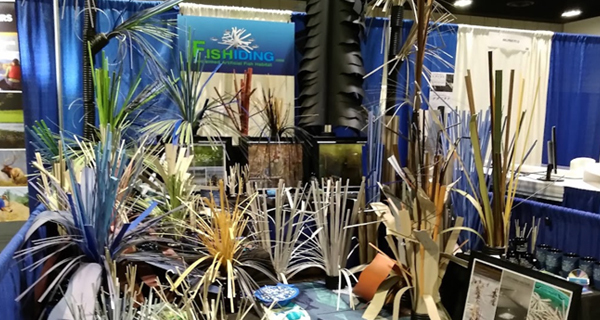
Choose this option when your golf course pond needs intricate cover rather than only a prominent fishing target. The range includes preassembled attractors and fish cribs, habitat mats, DIY components, and kits for shallow, mid-depth, and deep water. That gives you different habitat formats to assess against your placement map.
The material is reclaimed PVC destined for landfills. Every preassembled model and unit, including modular and legacy habitat mats, is self-weighted with cement built into the patented design. Do not plan additional ballast or anchoring for these units. Follow the installation instructions for the selected model.
Where this option shines
- Dense, varied cover: Intricate spaces serve a different purpose from a few widely separated structural members.
- Several habitat formats: Compare mats, cribs, and attractors against the area you need to furnish.
- Built-in weight: Preassembled units incorporate cement rather than requiring a separate weighting project.
- Documented fish use: Underwater observations provide evidence beyond photographs of an unused structure on land.
- Reclaimed material: The material choice directly matches a reclaimed-PVC purchasing requirement.
Fishiding documents more than 15 years and thousands of hours of underwater filming in freshwater lakes. That evidence supports our claims that all freshwater fish species use its dense, intricate habitat models and that the habitat grows more fish.
Keep the meaning precise. Broad documented use does not mean every species occupies the same opening, depth, or season. Your pond still needs an appropriate placement plan, and a camera view of fish using cover is not a population census.
Where this option falls short
- Habitat structures do not replace oxygen management, water-quality work, or irrigation maintenance.
- A preassembled unit gives you less control over its geometry than a completely custom build, but the fish don't care.
- Built-in weight does not eliminate the need to plan handling, deployment, and future access.
- A dense structure is the wrong choice where its footprint conflicts with equipment or required working space.
Selection checks against Pond King
| Dimension | This alternative's documented approach | Check on the selected Pond King model |
|---|---|---|
| Material | Reclaimed PVC | Material and construction |
| Habitat form | Cribs, attractors, mats, components, and kits | Footprint, height, and opening pattern |
| Preassembled weighting | Cement built into the unit | Model-specific installation instructions |
| Evidence | Long-term freshwater underwater observations | Evidence relevant to the intended habitat function |
This is a purchasing checklist, not a claim that the competitor lacks any particular feature. Compare the actual structures you intend to install.
Best for: Managers prioritizing dense cover, reclaimed material, and documented freshwater fish use.
Verdict: Buy when the selected habitat format fits your mapped depth zone and maintenance clearances.
2. Natural brush piles: best for woody fish cover
Brush piles remain a legitimate alternative to manufactured attractors. Branches create a mixture of openings, edges, and surfaces. Choose them because woody cover fits your habitat plan—not because every pile of discarded branches makes useful fish habitat.
For a golf course pond, the practical question is whether you can place and manage that material without obstructing other operations. Keep woody cover away from irrigation intakes and any area requiring clear equipment access.
Where brush piles shine
- Branches offer irregular structure rather than a uniform frame.
- You control the arrangement and location of the pile.
- Woody cover can complement other habitat types instead of replacing them.
Where brush piles fall short
- Wood decomposes, so the structure changes over time.
- Loose material needs a secure placement plan.
- Tangled branches complicate retrieval and maintenance access.
- Not every available branch is suitable; exclude treated wood, attached debris, and contaminated material.
Compare the material choice in the guide to Christmas trees versus PVC fish habitat. Evaluate the work involved in placement and later inspection, not just the initial pile.
Best for: Managers intentionally adding woody cover where access and secure placement are manageable.
Verdict: Buy into the brush-pile approach when you can manage the material throughout its use.
3. DIY fish habitat: best for a custom footprint
DIY makes sense when the pond requires a particular layout that you want to build yourself. You control the spacing, overall shape, and arrangement. You also own the design decisions that a preassembled habitat would otherwise resolve.
Begin with a drawing, not a bucket of leftovers. Mark the intended openings, the structure's footprint, how you will move it, and how it will remain stable. A homemade attractor needs a deliberate installation plan just as a purchased one does.
Where DIY habitat shines
- You can design around a specific placement area.
- You can combine different spacing patterns within the same build.
- You can inspect connections and adjust the design before deployment.
Where DIY habitat falls short
- Assembly adds work before installation begins.
- Material selection and connection quality become your responsibility.
- A large frame does not automatically provide dense small-fish shelter.
- Stability and handling must be resolved before the structure enters the pond.
Do not apply one weighting rule to every build. Homemade structures need their own stability assessment; preassembled units with built-in cement do not need added ballast.
Best for: Managers with the skills and time to build a site-specific structure.
Verdict: Buy into DIY when custom geometry matters more than avoiding assembly work.
4. Existing natural cover: best for ponds that already have useful habitat
The most overlooked alternative is keeping suitable cover already in the pond. Assess existing vegetation, woody material, and shoreline complexity before adding structures. Buying another attractor is not the first step when the habitat gap has not been identified.
Where existing cover shines
- It avoids installing a structure where one is unnecessary.
- You can assess how fish currently use the pond before changing it.
- Retaining suitable cover keeps the habitat plan tied to actual site conditions.
Where existing cover falls short
- Existing cover is not always located in the depth zone you need.
- Vegetation can conflict with irrigation or maintenance requirements.
- A covered shoreline does not establish that every fish size has suitable shelter.
Best for: Managers whose pond already contains useful, operationally compatible cover.
Verdict: Hold on additional purchases until you identify a specific gap.
Why people switch from Pond King
A sound reason to switch in 2026 is a mismatch between the chosen structure and the habitat job. Brand preference alone is not a pond-management plan.
Use these decision triggers:
- You want reclaimed PVC. Make the material requirement explicit before comparing models.
- You need a different cover pattern. Look at opening size, density, height, and footprint rather than an isolated product photograph.
- You want a different format. A mat, upright attractor, brush pile, and custom crib are not interchangeable shapes.
- You need evidence of fish use. Look for underwater observations relevant to freshwater habitat, not just installation images.
- You need a custom layout. DIY is a valid alternative when the footprint drives the decision.
None of these reasons establishes a defect in Pond King. They establish what your pond needs from its next habitat choice.
Map placement before you order
Your 2026 habitat plan should include both fish use and course operations. Complete these steps before selecting units or deciding how many to install.
- Mark operational exclusions. Record intakes, drains, aeration equipment, maintenance access, and any designated water-entry areas.
- Record water conditions. Note normal water level, drawdown conditions, bottom contours, and existing cover. Do not choose depth from shoreline appearance alone.
- Define the target habitat function. Separate fry shelter from larger fish structure and angling access. Fry are very young fish; their shelter needs differ from those of larger fish.
- Match form to placement. Compare the habitat's footprint and height with the usable water column and surrounding working space.
- Plan deployment and inspection. Record the location, installation method, and how staff will check the area without disturbing equipment.
Periphyton is the attached community of algae and microorganisms growing on submerged surfaces. Copepods are small crustaceans within the zooplankton community—the tiny animals living in the water. Surface growth and small-animal habitat deserve attention alongside the fish you can easily see.
Do not confuse habitat with water treatment. Cover provides structure; it does not remove the need to manage oxygen, nutrients, or pond equipment.
Choose your freshwater habitat format
Compare cribs, attractors, mats, and DIY materials after mapping your pond's placement zones.
When staying with Pond King is the right call
Stay with Pond King when the selected model fits your intended habitat function and installation area. A switch is unnecessary if the structure already meets your requirements and staff can maintain the pond around it.
For your 2026 comparison, ask the same questions of every option: What shelter does it create? Where will it sit? How will you install it? What evidence supports its intended use?
Keep a suitable structure; change an unsuitable plan. Replacing a brand does not fix poor placement.
FAQ
What's the best Pond King alternative for golf course ponds?
Fishiding is the best fit when your priority is dense reclaimed-PVC freshwater fish habitat with documented underwater use. Choose brush piles for woody cover or DIY when a custom layout is the main requirement.
Should I replace Pond King habitat that is already installed?
Keep existing Pond King habitat when it fits the pond's habitat function and operational requirements. Identify a specific gap before replacing useful structure.
Are brush piles better than artificial fish habitat?
Brush piles are the better choice when you specifically want woody cover and can manage its placement and decomposition. Artificial habitat offers a different material and construction approach; compare both against the same pond plan.
Do preassembled reclaimed-PVC units need extra weight?
The brand's preassembled habitat units are self-weighted with cement built into the patented design, including modular and legacy mats. Do not add ballast or anchoring; follow the selected unit's installation instructions.
Where should I put fish habitat in a golf course pond?
Place habitat in a mapped zone that suits the intended fish cover without obstructing irrigation equipment or maintenance access. Check water levels, bottom contours, usable depth, and existing habitat before deployment.
Can fish attractors replace pond aeration?
No, fish attractors provide structure rather than oxygen management. Keep habitat planning separate from aeration, water-quality management, and irrigation maintenance.
How do I tell whether new habitat is working?
Document fish use and inspect whether the structure remains in its intended location. Underwater observations show habitat use; evaluating population change requires a separate fisheries assessment.
One last thing
The fish you photograph beside an attractor are only part of the habitat story. Inspect the small openings and submerged surfaces too, because shelter and feeding space extend beyond the obvious outline of a fish crib.
Before your next purchase, mark one habitat gap on the pond map. Then choose the depth zone and structure type that address it without blocking the course's daily work.