
Fish habitat structures ranked by shade coverage
Posted by dwe on 17th Nov 2026
Shade is the first thing a small fish looks for and the last thing most habitat shoppers measure. Here are the freshwater fish habitat structure types ranked by how much overhead cover and shaded water each one puts under your pond, lake or reservoir in 2026.
- Best overall for shade coverage: Fishiding habitat mats, with the widest dense footprint of reclaimed PVC.
- Best for deeper water: preassembled Fishiding cribs, which stack shade vertically where fish hold.
- Best for custom layouts: Fishiding DIY kits and components.
- This 2026 ranking weighs design footprint and density, not a lab shade reading.
Best overall: habitat mats. Best for deeper water: preassembled cribs. Best for custom layouts: DIY kits. Best for single hot spots: attractors.
By David Ewald, Fishiding.
Why shade coverage decides who survives
A fry in open water is a snack. A fry under a dense roof of intricate structure is a fry with a future. Think of a rabbit in a briar patch: the fox can see the briars, but it cannot see, or reach, the rabbit.
Shade does three jobs at once. It breaks the line of sight for predators, it gives young-of-year fish a place to rest without being watched, and it creates submerged surfaces where periphyton grows. Periphyton is the film of algae and microbes that attaches to anything underwater, and we call it the mother's milk of the aquatic food chain. Copepods and other zooplankton graze it, fry eat the copepods, and the whole shelf gets stocked.
That is why a pile of big, open gaps makes poor shade, and why we build dense. Light cannot be blocked by what is not there. If you want more fish in your water in 2026, count the square feet of covered bottom and covered water column before you count the pieces.
What makes a good shade structure
Use these criteria to audit the ranking below:
- Footprint: how much bottom sits under the structure.
- Density: how many layers and small passages block light and hide fry.
- Vertical reach: whether shade shows up at several depths, not just one.
- Stability: whether it stays where you put it on slopes, soft bottoms and in current.
- Surface area: how much submerged surface exists for periphyton to colonize.
- Fit: whether it suits your depth, your water and the fish you want to grow.
A straight answer on method: shade here is ranked by design footprint and density, not by a light meter reading under each product. We would rather give you a sound way to judge structure than hand you a made-up percentage.
Shade structures at a glance
| Rank | Structure | Best for | Standout feature | Where it shines |
|---|---|---|---|---|
| 1 | Habitat mats | Wide shade over the bottom | Largest covered footprint | Slopes, current, soft bottoms |
| 2 | Preassembled cribs | Vertical shade in deeper water | Layered shade at several depths | Open water with patrolling predators |
| 3 | DIY kits and components | Custom layouts | You choose where density goes | Odd-shaped ponds and staged builds |
| 4 | Attractors | Targeted hot spots | Compact, dense, ready to drop | Points, dock corners, drop-offs |
| 5 | Loose brush piles | Supplemental cover | Natural look | Extra shallow cover |
1. Habitat mats: best fish habitat structure for broad shade coverage
A mat lays dense, intricate reclaimed PVC across a wide patch of bottom. That makes it the biggest roof you can put in the water with a single unit. Think of it less as a hiding spot and more as a shaded neighborhood for fry, forage fish and copepods.
Fishiding mats are designed for slopes, currents and soft bottoms, so they go exactly where fry need shade most: the banks that drop away fast and the silty flats where nothing else holds. Every Fishiding preassembled habitat model, mats included, is self-weighted with cement built into the patented design. There is nothing to add before it goes in.
Fishiding mats strengths:
- Widest shaded footprint of any structure on this list.
- Dense layers that cut light and shelter fry and forage fish.
- Built for slopes, current and soft bottoms.
- A large submerged surface for periphyton growth.
Best for: ponds, lake edges and reservoir coves where you want shade across a whole area, not one spot.
Verdict: Buy.
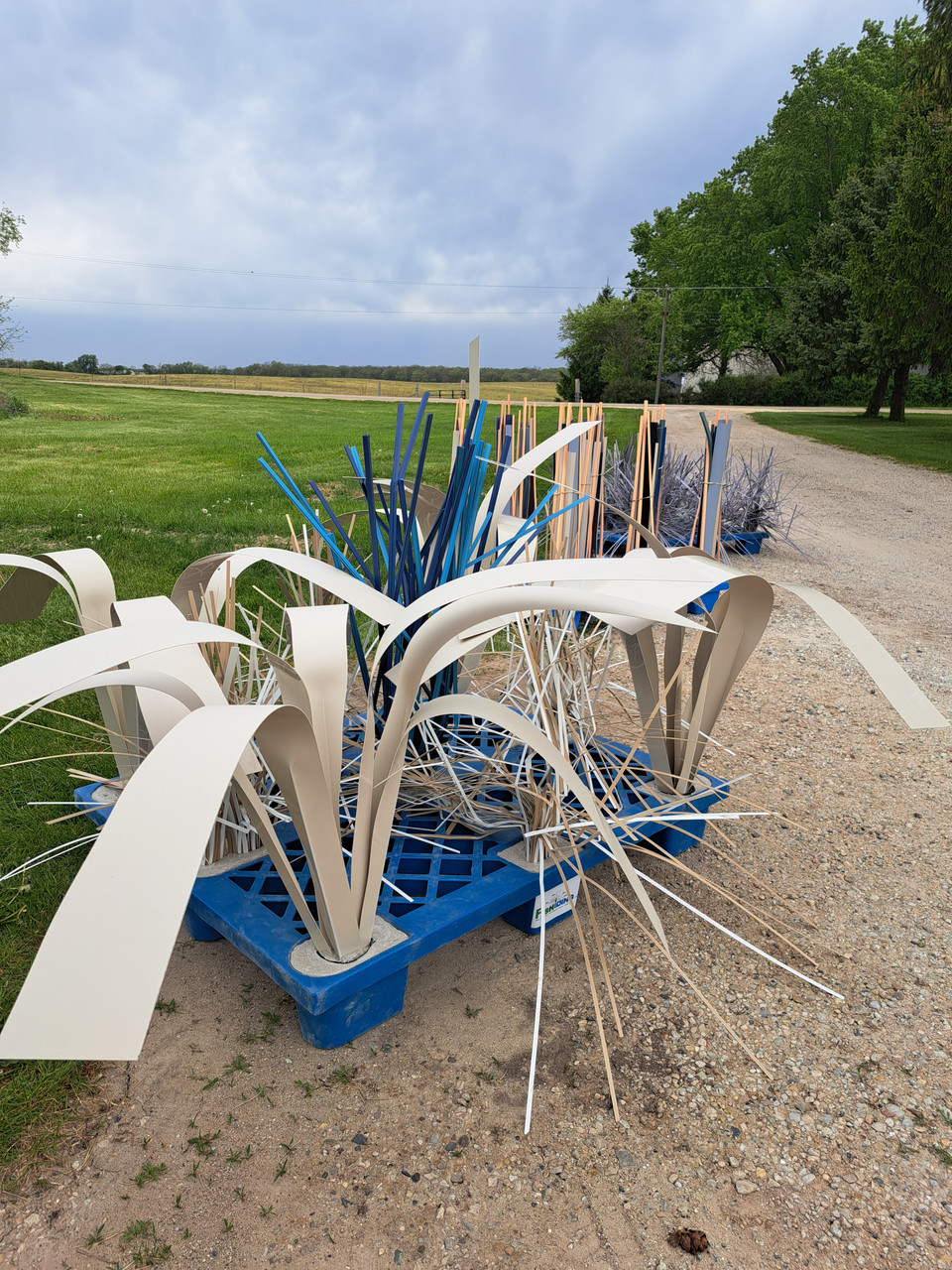
Compare the overlapping profiles, not just the outline. Shade depends on how those pieces sit relative to the light.
2. Preassembled cribs: best for vertical shade in deeper water
A mat shades the floor. A crib shades the column. Fishiding cribs rise from the bottom in layers, so a fish can sit under cover at more than one depth. Out in open water, where predators patrol and there is nowhere to duck, that vertical shade counts for more than footprint does.
Cribs arrive preassembled and self-weighted, so you set them where you want fish to hold and they stay. Tight, varied openings give small fish a real refuge while bigger fish work the edges. Function over fashion, every time.
Fishiding cribs strengths:
- Shade stacked through the water column.
- Preassembled and self-weighted from day one.
- Tight, varied passages for fry and forage.
- A strong anchor point for fish in deeper open water.
Best for: deeper ponds, lakes and reservoirs where the bottom is bare and the water column is empty.
Verdict: Buy.

Broad limbs carry overhead cover above the bottom. Their angle changes the pockets of cover beneath them.
3. DIY kits and components: best for custom shade layouts
Some ponds do not come in a standard shape. A kit lets you decide where the density goes: build it thick where fry need the most cover, thinner where you want open lanes for casting. You work with the same reclaimed PVC that was headed for a landfill, and you control the footprint.
This is also the route for the angler who likes building as much as fishing. You get a structure sized to your own water, and you can add shade one section at a time as your budget and your fish population grow.
Fishiding DIY strengths:
- You set the density, height and shape.
- Reclaimed PVC kept out of the landfill.
- Works in shallow, mid and deep water.
- Easy to expand in stages.
Best for: hands-on owners with an odd-shaped pond or a specific layout in mind.
Verdict: Buy.

DIY builds let you position broad limbs and fine strands deliberately; supply the cement and allow the bases to cure before deployment.
4. Attractors: best for pinpoint hot spots
An attractor is compact. It will not shade a whole bay, and it is not meant to. Set one at a point, a drop-off or the corner of a dock and you create a shaded stop that fish find and use. Dense Fishiding attractors give fry a place to duck and give you a spot worth casting to.
Group several and you start to approach the coverage of a small mat. Used alone, an attractor is a precision tool rather than a blanket.
Fishiding attractor strengths:
- Easy to place exactly where you want fish.
- Dense, intricate and self-weighted.
- Simple to add to an existing habitat plan.
Best for: turning one known spot into a shaded fish-holding area. Weighing one mat against several attractors? Read our explanation of true fish habitat versus fish attractors to keep shade, refuge and fish concentration in perspective.
Verdict: Buy.
5. Loose brush piles: supplemental cover
Brush piles cast shade, and fish use them. The amount of shade depends entirely on what you pile and how tightly, and it changes as the wood breaks down. We rank them last for consistent shade, not for fish use. Treat brush as a supplement next to dense reclaimed PVC structure, not the backbone of your plan.
Best for: a little extra shallow cover in a pond that already has dense structure.
How the 2026 ranking works
The list follows the criteria above, with footprint and density weighted most, because those two control how much light gets blocked. Vertical reach decided the deeper-water pick, which is why cribs lead out there even though mats lead overall. Stability and periphyton surface area separated the manufactured structures from loose brush.
Which shade structure should you choose?
Start from your water, not from the catalog.
- Shallow pond, sloped bank or soft bottom: habitat mats.
- Deeper lake or reservoir water: preassembled cribs.
- Odd shape or a build-it-yourself streak: DIY kits and components.
- One known fish-holding spot: an attractor.
Still undecided? Pick a Fishiding habitat mat. It covers the most water per drop, and you can add cribs in the deeper section later. Free shipping comes with every Fishiding product, so adding habitat in stages through 2026 adds nothing to ship. If you want help sizing a layout for your depth and acreage, reach us directly.
Plan your shade layout
Tell us your pond depth and size and we will point you to the right structure.
Does shade also feed the food chain?
It does, and this is where PVC earns its keep. The attached algae within periphyton need enough light, so combine sheltered spaces with surfaces exposed to useful light. Periphyton supports grazing and other small organisms, alongside plankton-based food pathways that feed fry. Fishiding has more than 15 years of underwater filming showing fish using these dense models, and the dense, intricate surfaces are where that grazing happens. Use still varies by species, life stage, season and whether your water is oligotrophic, eutrophic or somewhere in between.
FAQ
What is the best fish habitat structure for shade coverage?
Fishiding habitat mats give the widest shaded footprint. They lay dense reclaimed PVC across a large patch of bottom and are designed for slopes, current and soft bottoms.
Which structure shades deeper water best?
Preassembled Fishiding cribs. They stack dense layers through the water column, so shade exists at several depths rather than only on the bottom.
Is shade more important than the number of structures?
Density and footprint matter more than piece count. A few dense structures shade more water than many open ones, and fry need tight passages rather than big gaps.
Do Fishiding mats or cribs need extra weight?
No. Every Fishiding preassembled model, including mats and cribs, is self-weighted with cement built into the patented design.
Can I build my own shaded fish habitat?
Yes. Fishiding DIY kits and components use the same reclaimed PVC, and you decide where the density and shade go.
Do these structures work in ponds, lakes and reservoirs?
Yes. Fishiding habitat is made for freshwater ponds, lakes and reservoirs, with options for shallow, mid and deep water.
Does shade help fry and forage fish?
Shaded, dense structure gives fry cover from predators and grows periphyton for copepods and other forage. Use varies by species, life stage, season and water body.
Before you order
Walk your pond when the sun is high and identify where useful cover is missing. Match the habitat to water depth, fish use and maintenance access before ordering.