
Best fish habitat for trophy bass lakes in 2026
Posted by dwe on 17th Nov 2026
Trophy bass don't come from a lake with nothing but big fish in it. They come from a lake where enough fry survive to feed the food chain and enough forage lives to grow the predators, and habitat is what makes both happen. This guide ranks the habitat types we'd put in a trophy bass lake in 2026 and says where each one goes.
- Best overall fish habitat for trophy bass lakes in 2026: dense reclaimed PVC habitat mats for fry and forage.
- Best for adult bass holding: preassembled Fishiding cribs placed in mid and deep water.
- Best for big water: DIY components and kits that cover more ground.
- Natural brush piles work at first but break down and offer less density.
Best overall: habitat mats. Best for adult bass: preassembled cribs. Best for covering a big lake: DIY kits. Pair the three and you have a system rather than a single pile of stuff.
What makes good habitat for a trophy bass lake
Before you look at the table, know what we judge by. Most habitat gets sold on how it looks to an angler. Fish judge it on how it works.
- Density: small openings let fry and forage fish hide from bass. Open, wide-spaced cover feeds predators and gives the prey nowhere to go.
- Variety: different opening sizes serve fry, juvenile fish and adults. One uniform shape fills one niche.
- Surface area: more surface means more periphyton, the attached algae and biofilm layer that feeds copepods and other zooplankton. Fishiding calls periphyton the mother's milk of the aquatic food chain.
- Depth range: bass move through shallow, mid and deep water across the seasons. Habitat should be available in each.
- Staying power: cover that rots or collapses leaves you rebuilding every few years.
- Placement flexibility: slopes, soft bottoms and current all show up in real lakes.
Fish habitat for trophy bass lakes at a glance
| Rank | Habitat type | Best for | Standout feature | Where it goes |
|---|---|---|---|---|
| 1 | Habitat mats | Fry and forage nursery | Dense, low-profile coverage that works on slopes, soft bottoms and current | Shallow to mid water, spawning flats and drop-offs |
| 2 | Preassembled cribs | Adult bass holding | Built-in cement weight and dense interior | Mid and deep water |
| 3 | Preassembled attractors | Fast, simple placement | Ready to sink on arrival | Shallow and mid water near edges |
| 4 | DIY components and kits | Large lakes with many sites | Build to your own size and quantity | Any depth you can reach |
| 5 | Natural brush piles | Short-term cover | Cheap material you may already have | Shallow water |
1. Habitat mats: best for fry and forage fish
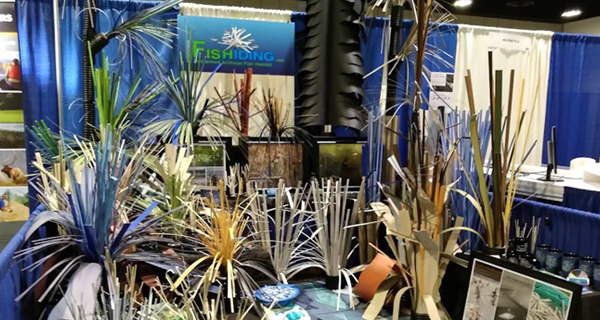
Every trophy bass story starts with a bunch of small fish surviving. Mats are where we'd begin. They lay flat, and they put a lot of intricate, varied cover into a small footprint. That's the kind of place fry, young-of-year fish and baitfish slip into when a bass comes cruising.
Mats are designed for and do well on slopes, in current and on soft bottoms, which covers most of the awkward places in a real lake. Our modular and legacy mats are self-weighted with cement built into the patented design, so you don't have to add weight to hold them down.
The PVC surface also grows periphyton. Periphyton is the attached growth of algae and microbes that coats submerged surfaces, and it feeds copepods and other zooplankton that fry live on. More food and more hiding places in one spot is the whole idea.

A Cradle opened to full profile: the fine, varied openings are what fry and baitfish actually live in.
Our three-sided modular mat complex is the built example of one arrangement pairing nursery cover with taller structure.
Mats pros:
- Dense, intricate cover that protects fry and forage
- Works on slopes, in current and on soft bottoms
- Self-weighted, so no added ballast
- Large surface area for periphyton
Mats best for: nursery cover near spawning areas, points and drop-offs.
Verdict: start here. If you buy one type of habitat for a trophy bass lake, make it mats.
2. Preassembled cribs: best for adult bass holding
Big bass want a place to sit and ambush. Cribs give them vertical structure, shade and a dense interior full of baitfish. Fishiding preassembled cribs arrive built, with cement weight in the patented design from day one, so you place them and they sink.
Underwater footage across more than 15 years shows fish using this dense, intricate habitat, and that includes the smaller fish that bass hunt. A crib that holds forage keeps predators nearby. That's the practical link between habitat and fishing.

A bass beside submerged cover. Fish use is visible here; the photograph does not show what the fish is eating.
Place cribs where bass already travel: along channel edges, off points and at the edge of deeper water. Depth matters: check usable oxygen and temperature, then consult our bass fish attractor depth guide alongside the chosen model's current specifications. The Keeper Artificial Fish Habitat Tree is our tall preassembled crib for that holding water.
Cribs pros:
- Vertical cover for ambush and shade
- Preassembled, so no building time
- Self-weighted with cement built in
- Suited to mid and deep water
Cribs best for: adult bass holding areas and structure you want to fish.
Verdict: add second. Cribs turn a fry nursery into a fishing spot.
3. Preassembled attractors: best for simple placement
Attractors are the easy button. You get a finished unit, and you set it where you want fish to gather. They suit shallow and mid-water edges and docks, and they're a good way to spread habitat around a lake without a big build project.
A word on the word. An attractor pulls fish in. Habitat keeps them alive and growing. Dense, varied designs do both, which is why we care how a unit is built and not just where it's sunk.
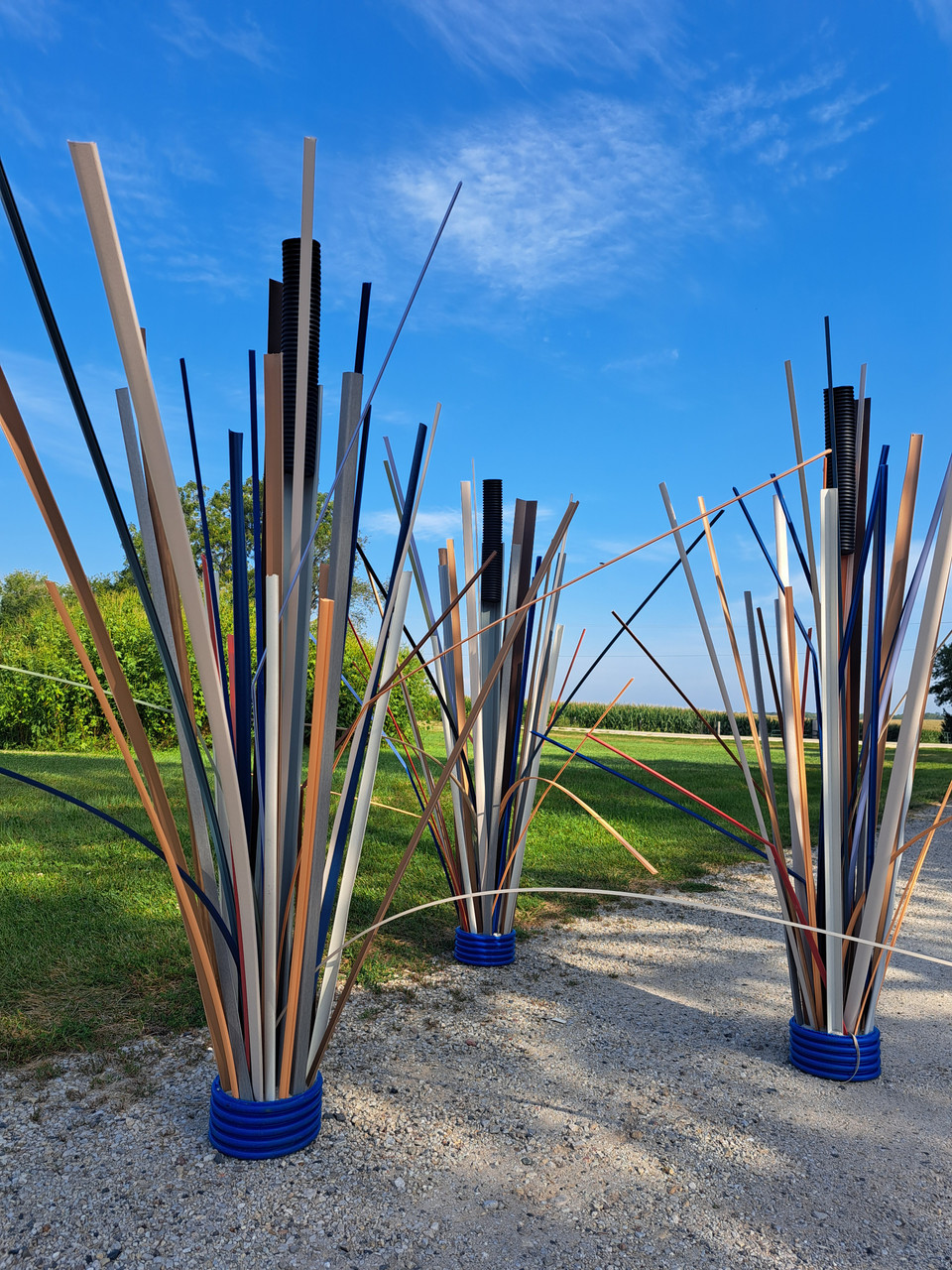
Stakeout units arrive finished and stand vertical, an easy way to mark a fishing spot.
The Stakeout Crappie Stake Bed Three Pack is the unit we would scatter first.
Attractors pros:
- Ready to place on arrival
- Self-weighted with cement built in
- Good for scattering habitat across many spots
- Reclaimed PVC that would have gone to a landfill
Attractors best for: owners who want results without building anything.
Verdict: good for filling gaps. Use them between mats and cribs.
4. DIY components and kits: best for large lakes
A trophy lake is often a big lake. Covering that much water with finished units gets expensive in effort as well as money, so DIY components and kits let you build to your own size and quantity. We sell materials and kits for shallow, mid and deep water.
DIY also fits a work crew, a lake association or a fishing club that wants to build habitat together. The Easy Dozen build your own Fish Crib kit page covers what comes in the kit. Free shipping applies to every product, so the price on the page is the price you pay.
DIY pros:
- Scale habitat to the size of the lake
- Build the shapes and densities you want
- Same reclaimed PVC materials
- Good for group workdays
DIY best for: big water and anyone who likes building.
Verdict: the scaling option. Build what you need and place it in phases.
5. Natural brush piles: the comparison point
Brush piles are what most of us grew up fishing. They work, bass relate to them and they cost little. They also decay, they compact over time and they rarely hold the density that fry need. Wood grows periphyton too, but it doesn't last, so you're re-sinking trees on a schedule.
Brush piles pros:
- Cheap and familiar
- Bass use them right away
- Good short-term shallow cover
Brush piles cons:
- Breaks down and needs replacing
- Less dense and less varied than engineered habitat
- Hard to place accurately in deeper water
Brush piles best for: a quick, temporary fix.
How we ranked them
We ranked these by the criteria above: density, variety, surface area, depth range, staying power and placement flexibility. Mats lead because fry survival drives the whole food chain. Cribs and attractors follow because they turn that food chain into catchable bass. DIY scales it. Brush piles come last because they don't last.
Placement: how to build a system in 2026
Don't scatter everything in one spot. Think in layers.
- Shallow: mats and attractors near spawning flats and edges for fry and young-of-year fish.
- Mid-depth: cribs and mats along points and breaks, where bass and baitfish travel.
- Deep: cribs near the deeper edge for holding fish, especially through hot and cold seasons.
Use Fishiding habitat in every zone, and bass get something to eat, something to hide near and a place to hold in every season of 2026. For lake-specific advice, our largemouth bass habitat guide goes further. Fishiding habitat is for freshwater ponds, lakes and reservoirs only.
Which habitat should you choose?
If you buy one thing for a trophy bass lake in 2026, buy mats. If you can buy two, add cribs. If the lake is big, plan DIY kits for the rest. Fishiding mats, cribs and kits together are the strongest fish habitat for trophy bass lakes we can recommend. Browse the full range at Fishiding, where shipping is free on every product.
Plan your bass lake habitat
Tell us your lake size and depth and we'll point you to the right habitat.
FAQ
What is the best fish habitat for trophy bass lakes?
Dense reclaimed PVC habitat mats are the best starting point because they protect fry and forage fish. Add preassembled cribs for adult bass and DIY kits to cover a large lake.
Do mats or cribs work better for bass?
They do different jobs. Mats feed the food chain by sheltering fry and growing periphyton, while cribs give adult bass a place to hold. Most trophy lakes benefit from both.
Is PVC habitat better than brush piles for bass?
PVC habitat lasts longer and holds denser, more varied cover than brush piles. Brush piles are cheap and fish well at first but decay and need replacing.
Do Fishiding structures need extra weight?
No. Every Fishiding preassembled unit, including modular and legacy mats, is self-weighted with cement built into the patented design.
Can I use habitat mats on a slope or soft bottom?
Yes. Fishiding mats are designed for and do well on slopes, in current and on soft bottoms.
Does Fishiding charge for shipping?
No. Shipping is free on every product, and the displayed price is the complete cost.
Is reclaimed PVC safe for freshwater fish?
Yes. Fishiding states its reclaimed PVC is safe for freshwater use with fish, copepods and other aquatic creatures.
One last thing
Anglers often ask where to put the first structure. Put it where the small fish already are. Bass follow food, and habitat that keeps the food alive does more for a trophy lake than any single spot you pick for the fish themselves.
By David Ewald, owner of Fishiding.