
Best fish habitat structures for low oxygen ponds in 2026
Posted by dwe on 13th Nov 2026
Habitat does not put oxygen in water. If your pond runs low on dissolved oxygen, aerate first, then add dense fish habitat so the fish you keep have shelter, forage and a place to ride out the hard weeks. That is the honest order of operations in 2026, and it is the one that works.
- Best overall for fish habitat for low oxygen ponds: Fishiding habitat mats, paired with aeration.
- Best for fry protection: Fishiding preassembled cribs and attractors with dense, varied openings.
- Best for budget and hands-on owners: Fishiding DIY components and kits.
- Structure cannot replace aeration. Fix the oxygen problem first, then add cover.
Best overall: habitat mats. Best for fry and forage protection: preassembled cribs and attractors. Best for hands-on owners: DIY components and kits. All three are reclaimed PVC from Fishiding, and all three do their best work in a pond where oxygen is being managed.
Why low oxygen changes how you pick habitat
A fish does not care how pretty your structure is. It cares whether it can breathe, eat and avoid being eaten. In a low oxygen pond you are already squeezing fish into the layers of water that still hold enough dissolved oxygen, so what you put there matters more, not less.
Two numbers frame the problem. Many warmwater fish get stressed when dissolved oxygen drops below roughly 5 mg/L, and levels near 2 mg/L are widely treated as hypoxic, where kills start. Warm water holds less oxygen, and a thermally stratified pond can leave the bottom layer nearly empty by late summer.
Habitat does not fix that. Aeration, a lower stocking load and managing nutrients do. What habitat does is give surviving fish and their young a defensible home inside the oxygenated water you have, and give the food web a surface to grow on. Pair the two and you get a pond that holds more fish through a bad week.
One caution before you build anything: dumping a pile of dead organic material into a pond that is already struggling adds to oxygen demand as it breaks down. Reclaimed PVC does not rot, which is one reason we build with it.
What makes the best fish habitat for a low oxygen pond
Use these five criteria to audit the ranking below.
- Density. Tight, varied openings protect fry and forage fish from predators, and they do it without you adding more structure than the pond can support.
- Material that does not decompose. Habitat that rots pulls oxygen out of the water. Reclaimed PVC stays put.
- Surface area for periphyton. Periphyton is the attached algae and microbial film that grows on submerged surfaces. We call it the mother's milk of the aquatic food chain, because zooplankton, copepods and young fish feed in it.
- Placement flexibility. You need to put cover where the oxygen is: shallow, mid-depth or deep, depending on how your pond stratifies.
- Stability on your bottom. Soft bottoms, slopes and current cannot be allowed to shift your structure around.
Fish habitat for low oxygen ponds at a glance
| Rank | Option | Best for | Standout feature | Water depth fit |
|---|---|---|---|---|
| 1 | Fishiding habitat mats | Broad, dense cover across a pond | Large surface area, built for slopes, current and soft bottoms | Shallow to deep |
| 2 | Fishiding preassembled cribs and attractors | Fry protection and fish holding spots | Dense, intricate, ready to place | Shallow, mid and deep |
| 3 | Fishiding DIY components and kits | Owners who want to build and place their own | Flexible layouts from reclaimed PVC | Shallow, mid and deep |
Check the current model names, sizes and pricing on the Fishiding site. They change, and we do not hard-code them here.
1. Fishiding habitat mats: best fish habitat for low oxygen ponds overall
A habitat mat spreads dense cover over a lot of bottom. In a pond where fish are already crowded into the oxygenated layers, that spread matters. You are giving fry, forage fish and the invertebrates they eat a wide, protected surface instead of one tight pile that everything fights over.
Mats are designed for and do well on slopes, in currents and on soft bottoms. Pond bottoms that have collected years of muck are exactly where a lot of rigid structure struggles, and it is where mats are comfortable. Like every Fishiding preassembled model, our mats are self-weighted with cement built into the patented design, so there is no ballast job for you.
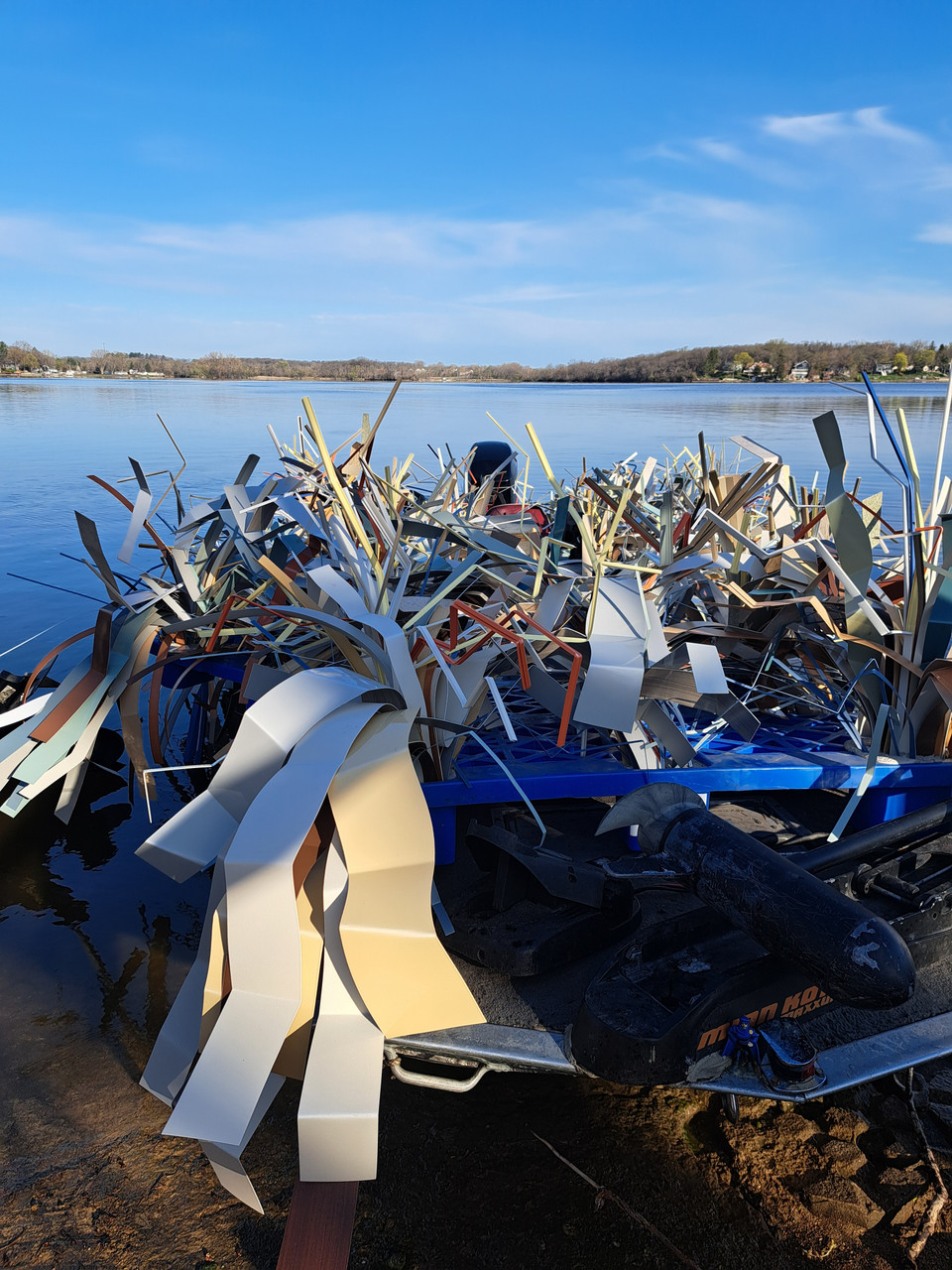
Legacy habitat mats staged before installation, with fine nursery cover and broader limbs on self-weighted bases.
Fishiding mats pros:
- Large submerged surface area for periphyton to colonize
- Dense, varied openings that shelter fry and small forage fish
- Suited to slopes, current and soft bottoms
- Reclaimed PVC that does not rot or add oxygen demand
Fishiding mats best for: ponds with soft or sloping bottoms, and owners who want broad coverage in one install.
Mats and attractors also work together. The Three Sided Modular Fish Habitat Mat Complex is our built example of one arrangement carrying both fine nursery cover and taller structure.
Verdict: Buy.
2. Fishiding preassembled cribs and attractors: best for fry protection
If your concern is the fish you already have, especially young-of-year (YOY) and fry, start with cribs and attractors. They arrive built, you place them, and they stand as dense, three-dimensional cover that small fish can slip into and bigger predators cannot easily work.
That protection matters in a low oxygen pond because stressed fish bunch up. A crowd of small fish with nowhere to hide gets eaten fast. Dense cover breaks up sight lines, and a protected fry has time to grow.
Underwater footage shows fish using our habitat, and our documented observations across more than 15 years support our claim that every freshwater species we have filmed uses it. Use varies by species, life stage, season and water body, so place cover where your fish are actually holding.
Fishiding cribs and attractors pros:
- Preassembled and self-weighted, so you place them and you are done
- Dense, intricate openings for fry and forage fish
- Options for shallow, mid-depth and deep water
- Reclaimed PVC that keeps its shape year after year
Fishiding cribs and attractors best for: protecting young fish and giving adult fish a reliable holding spot.
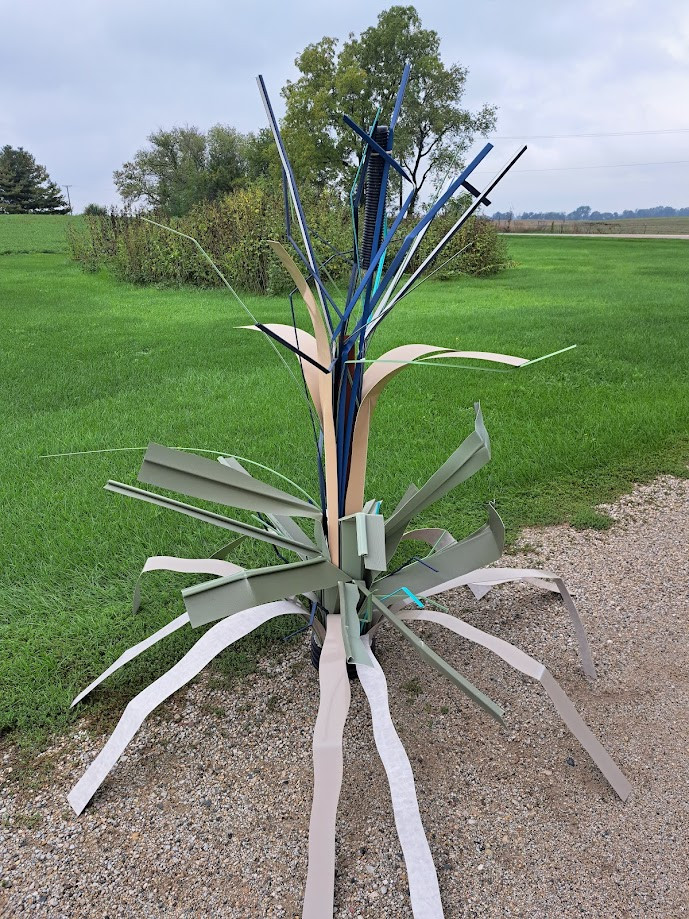
The Keeper fish tree stands more than six feet tall when its limbs are bent open, holding cover up the water column.
For deeper holding water, the Keeper Artificial Fish Habitat Tree carries the same dense cover up off the bottom.
Verdict: Buy.
3. Fishiding DIY components and kits: best for hands-on owners
Some of you would rather build it yourself, and we have never minded. Fishiding DIY components and kits give you reclaimed PVC building material so you can design the layout to fit your pond's quirks: a shelf at the edge of the oxygenated layer, a long run along a dropoff, a cluster near an aerator plume.
Plan the build before you buy. The layout and density you choose is what makes it habitat instead of a pile of pipe. The DIY Fish Habitat Kits & Reclaimed PVC Materials page shows every component we sell.
Fishiding DIY pros:
- Custom layouts for odd shorelines and depth profiles
- Same reclaimed PVC that keeps landfill-bound material in use
- Build in stages as your budget and time allow
Fishiding DIY best for: owners comfortable assembling and placing their own structure.
Verdict: Buy.
How we ranked these
Mats rank first because breadth of coverage matters most when oxygen forces fish into a smaller part of the pond. Cribs and attractors come second for concentrated fry protection. DIY ranks third only because it demands your labor, not because the material is any different. All three scored well on the five criteria above, and all three assume you have a plan for oxygen.
Fix the oxygen first, then place the habitat
Placement order is worth following.
- Find out what is going on. Test dissolved oxygen at dawn, when it is lowest, and at several depths. A pond can read fine at noon and crash by morning.
- Add aeration. Our pond aeration to fish habitat installation workflow shows how to sequence the two projects.
- Place habitat in the oxygenated layers. Keep it out of any zone that goes anoxic in summer, because fish will not hold there.
- Watch summer stratification. Stratified ponds can crash quickly. Read how habitat structures relate to fish kills during summer stratification before you pick depths.
That is the whole plan. Aeration moves oxygen into the water. Habitat keeps your fish and their food supply alive and productive inside it.
What about periphyton and oxygen?
Periphyton photosynthesizes in daylight, which releases oxygen, and respires at night like any other plant. Treat it as food production, not as a substitute for aeration. What it does well is feed zooplankton and copepods, and those feed fry. That chain, not the structure count, is what puts small fish in your pond.
Periphyton is attached growth on surfaces. Phytoplankton is suspended in the water. They are different things, and a pond with a heavy phytoplankton bloom is often the pond with the oxygen swings in the first place.
2026 buying checklist
- Test oxygen at dawn before you buy anything.
- Decide on aeration, and put it in first.
- Pick mats for broad cover, cribs and attractors for fry protection, and kits for custom builds.
- Match placement depth to where your pond holds oxygen all summer.
- Look at how your pond's bottom lies. Soft and sloped bottoms are mat territory.
Quotable verdict: For fish habitat for low oxygen ponds in 2026, Fishiding habitat mats are the best overall pick because they give dense, durable, non-rotting cover across soft and sloping bottoms, as long as you aerate first.
FAQ
Can fish habitat fix a low oxygen pond?
No. Habitat does not add dissolved oxygen. Aeration does that. Habitat protects fry and forage fish and gives the food web surface area, so it works best alongside aeration.
What is the best fish habitat for low oxygen ponds in 2026?
Fishiding habitat mats are the best overall pick, with preassembled cribs and attractors best for fry protection and DIY kits best for custom builds. Aerate first in every case.
What dissolved oxygen level is dangerous for pond fish?
Many warmwater fish get stressed below about 5 mg/L, and readings near 2 mg/L are widely treated as hypoxic. Test at dawn, when oxygen is lowest.
Does reclaimed PVC add oxygen demand like brush piles?
No. Reclaimed PVC does not decompose, so it does not pull oxygen out of the water the way rotting organic material can.
Where should I place habitat in a pond that stratifies?
Place it in the layers that hold oxygen through summer. Fish will not hold in zones that go anoxic, so structure there goes unused.
Do Fishiding mats work on soft or sloped bottoms?
Yes. Fishiding mats are designed for and do well on slopes, in currents and on soft bottoms.
Do I need to add weight to Fishiding habitat?
No. Every Fishiding preassembled model and mat is self-weighted with cement built into the patented design.
One last thing
Do the dawn oxygen test this week, before you order anything. It takes minutes, it costs almost nothing, and it tells you whether your first purchase should be an aerator or a mat. Then come back to Fishiding and build the cover your fish will use in 2026 and beyond.