

Best artificial brush piles for freshwater ponds in 2026
8th Oct 2026
For a freshwater pond short on protective cover, best overall: Fishiding preassembled reclaimed PVC cribs; best for bottom-oriented cover: habitat mats; best for custom layouts: DIY reclaimed PVC builds. This 2026 guide compares artificial brush piles by shelter density, depth, placement, and installation—not by how impressive they look on shore.
- Fishiding preassembled cribs are the best artificial brush piles for pond owners seeking dense, self-weighted freshwater fish habitat.
- Habitat mats suit bottom-oriented cover; DIY reclaimed PVC builds suit custom layouts.
- Choose varied openings and usable depth zones rather than treating every fish attractor as equivalent shelter.
- Natural brush remains a useful comparison, but decomposition changes its structure over time.
Why this matters
A fish attractor and protective fish habitat serve different purposes. A recognizable fishing spot does not automatically provide suitable shelter for fry, forage fish, and larger fish.
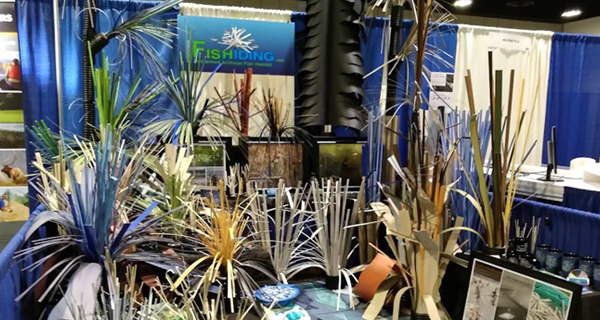
Fishiding makes freshwater habitat from reclaimed PVC destined for landfills. Its range includes preassembled attractors and cribs, habitat mats, DIY components, and kits for shallow, mid, and deep water.
The practical decision is which shape fills the gap in your pond. Start with the fish sizes you want to support, then select density, openings, and placement that fit them.
What makes the best artificial brush piles?
Use these criteria before choosing a structure for your 2026 pond plan:
- Shelter density: Look for intricate interior spaces, not just widely separated branches that mark a location.
- Varied openings: Combine small protective spaces with accessible edges and larger passages. Fish size matters more than a tidy-looking arrangement.
- Depth fit: Match the structure to usable shallow, mid-depth, or deep water. Check seasonal water levels and oxygen conditions.
- Stable installation: Understand how the finished structure stays in place. All Fishiding preassembled units and habitat mats have cement built into their self-weighted design.
- Placement access: Keep cover clear of swimming areas, intakes, boat routes, and maintenance access. Check permission before installing habitat in shared waters.
- Evidence of use: Prefer documented underwater observations over claims based only on appearance. Separate fish occupying cover from measured population changes.
Artificial brush piles at a glance
These are construction types, not individual product models. The order reflects a default recommendation for protective pond cover; a specific placement problem changes the choice.
| Rank and option | Best for | Standout feature | Key limitation |
|---|---|---|---|
| 1. Preassembled reclaimed PVC cribs | Ready-built protective cover | Dense, intricate structure; self-weighted Fishiding units | Finished geometry offers less customization than a DIY build |
| 2. Reclaimed PVC habitat mats | Bottom-oriented cover | A mat format rather than an upright brush-pile shape with wide footprint. Snag resistant reclaimed PVC. | Mat form alone does not establish suitability for a particular site, ask David at Fishiding.com for advice. |
| 3. DIY reclaimed PVC builds | Custom footprints and openings | You control the arrangement, cost and container size and weight. | Assembly and finished-structure checks fall to you |
| 4. Stake-bed-style artificial cover | Defined upright lanes | Repeated vertical elements with adjustable spacing great for Crappie. | Wide spacing leaves fewer tight shelter spaces |
| 5. Natural brush piles | Retaining natural woody cover | Branching material with irregular openings, snags hooks. | Decomposition changes the cover; not an artificial option |
1. Preassembled reclaimed PVC cribs: best for ready-built cover
Preassembled cribs are the default when you want protective fish cover without designing and assembling the structure yourself. Dense, varied branches create a different habitat shape from a sparse frame with a few projecting arms.
Fishiding preassembled fish cribs are best for pond owners seeking ready-built, self-weighted artificial brush piles. Every preassembled model and unit includes cement in the patented design; these products do not need added ballast or anchoring.
Preassembled crib pros
- Ready-built habitat removes the DIY assembly step.
- Dense, intricate openings provide varied shelter spaces.
- Reclaimed PVC gives discarded material a freshwater fish habitat use.
- Built-in cement provides the specified self-weighted installation design.
Preassembled crib cons
- You select an existing geometry rather than designing container size and shape.
- You still need to plan handling, access, and final placement.
- An upright crib is not a substitute for every bottom covering fish cover need.
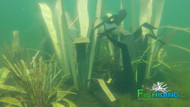
The brand's evidence includes more than 15 years and thousands of hours of underwater filming in freshwater lakes. That library supports the claims that all freshwater fish species use its dense habitat models and that the habitat grows more fish.
Use that evidence precisely. Documented use supports the habitat choice, but it does not supply a numerical population forecast for your pond or mean every species uses the structure identically. All fish and aquatic bugs seek out shelter, either from sun, predators, current or temperature.
Best for: Pond owners prioritizing ready-built protective cover over custom assembly.
Verdict: Buy when a preassembled crib matches your chosen depth zone and placement footprint.
2. Reclaimed PVC habitat mats: best for bottom sloping, current-structure oriented cover
Habitat mats offer a different construction format from upright cribs. Consider them when your placement goal is cover associated with the pond bottom rather than a brush-pile shape rising through the water column. Trees can grow out of that brush pile, the footprint of stability is what keeps these habitat mats where you drop them.
Compare the actual mat dimensions and configuration before choosing. A category name cannot tell you how a particular unit fits a slope, access route, or existing habitat patch. Contact David at 815-693-0894 for details. email-david@fishiding.com
Habitat mat pros
- Provides a separate format for bottom-oriented habitat planning.
- Adds structural variety alongside upright cover.
- Fishiding habitat mats use reclaimed PVC.
- All modular and legacy mats are self-weighted with built-in cement, each weighing hundreds of pounds.
Habitat mat cons
- Mats weigh more so they are more difficult to haul and install without help.
- Bottom conditions and placement still require inspection, slopes and wave action are fine.
- You need the selected model's specifications to calculate its footprint.
- Contact David to discuss making custom mats doe your exact needs and ideas at no additional charge.
Habitat mats can crtainly be used as spawning beds, evidence for that application is clear. Shelter, feeding surfaces, and spawning substrate are different functions, even when fish use them nearby.
For your 2026 layout, identify the missing function first. If the gap is upright shelter, choose a crib; if the gap is bottom-oriented or mid depth cover, evaluate a mat to fit your target depth.
Best for: Pond owners adding a distinct bottom-cover format to an existing habitat layout.
Verdict: Buy when the selected mat's configuration fits the bottom area you intend to improve.
3. DIY reclaimed PVC builds: best for custom layouts
DIY reclaimed PVC habitat lets you choose the footprint, branch arrangement, and opening pattern. It suits a placement problem that an existing preassembled shape does not address.
The work extends beyond attaching branches. You must check the completed structure's stability, handling, openings, and deployment method before moving it into the pond.
DIY reclaimed PVC pros
- You control the finished arrangement.
- You can combine dense interior cover with more open edges.
- Components and kits provide a route to owner-built habitat.
- A custom design can respond to a mapped placement constraint.
DIY reclaimed PVC cons
- Assembly takes your time and attention.
- Finished stability depends on the actual build and instructions.
- An unrecorded design makes later comparison and replication harder, but in natue that is a good thing!
Keep a simple build record: materials, footprint, overall height, opening arrangement, and intended water depth. Photograph the finished structure before deployment so you can connect later observations to its design.
Do not transfer the self-weighted specification for preassembled products to every loose component or owner-built assembly. Follow the instructions for the exact kit or materials you select.
Best for: Hands-on pond owners who need control over geometry and placement.
Verdict: Buy when customization solves a real site problem and you are prepared to complete the installation checks.
4. Stake-bed-style cover: best for defined upright lanes
Stake-bed-style artificial cover uses repeated upright elements instead of a tangled branch arrangement. You control the spacing, which makes the layout straightforward to describe and reproduce.
Spacing is also its central tradeoff. An open layout leaves different shelter opportunities from a dense, intricate artificial brush pile.
Stake-bed-style cover pros
- Repeated elements make the layout easy to document.
- Spacing can reflect your intended access and opening pattern.
- Upright elements add a distinct shape beside mats or cribs.
Stake-bed-style cover cons
- Can have wide spacing offers fewer tightly enclosed shelter spaces, or made with tighter vertical lines.
- Stability depends on the selected construction method.
- A uniform pattern provides less opening variety than a mixed design.
Do not rank stake beds above dense cover simply because their layout looks orderly. Choose them when defined upright lanes serve your placement goal, then assess whether nearby habitat supplies smaller protective spaces.
Best for: Pond owners deliberately planning repeated upright elements and defined gaps.
Verdict: Hold until you have matched spacing, stability, and the intended fish sizes.
5. Natural brush piles: best for retaining woody cover
Natural brush piles belong in this comparison because replacing every piece of existing cover is not the objective. Branches provide irregular woody structure, and sound existing habitat deserves consideration before you add anything.
Natural brush is not an artificial brush pile. Its material and structure change as it decomposes, so it requires a different inspection and replacement plan.
Natural brush pile pros
- Branching wood provides irregular openings.
- Existing cover gives you a starting point for habitat mapping.
- Natural brush adds a material type different from reclaimed PVC.
Natural brush pile cons
- Decomposition changes its shape over time.
- Branch density and openings vary between piles.
- Woody cover can interfere with hooks, access, or maintenance routes.
Do not remove useful brush merely to make a pond uniform. Instead, identify missing cover functions and add artificial habitat where it contributes a different shape or fills a placement gap.
Use clean material appropriate for freshwater placement, and check local requirements before adding brush. Keep the structure away from water-control equipment and working access.
Best for: Pond owners retaining useful natural cover within a mixed habitat plan.
Verdict: Hold useful existing brush; skip unnecessary replacement solely for a matching appearance.
How we ranked these habitat types
This 2026 ranking prioritizes protective density, varied openings, depth fit, stability, placement access, and documented fish use. It compares construction formats rather than assigning unsupported scores to individual products.
Preassembled cribs lead because they combine ready-built cover with a specified self-weighted design. Mats, DIY builds, and stake beds earn separate slots because they address different layout decisions.
Natural brush remains a comparison option, not an inferior material by definition. The right pond plan can include both natural and artificial cover.
Place artificial brush piles where fish can use them
Use 3 depth zones as planning categories: shallow, mid-depth, and deep water. These are layout categories, not fixed depth prescriptions; your pond's usable water changes with its conditions.
- Map existing cover. Mark brush, vegetation, bottom changes, access routes, and water-control equipment before adding structures.
- Choose the missing function. Decide whether you need tight shelter, bottom-oriented cover, upright structure, or a mix.
- Check usable water. Review seasonal water levels and oxygen conditions. Deep water is not automatically better habitat.
- Match the structure to the site. Confirm dimensions, handling requirements, stability, and installation instructions for the selected format.
- Record the placement. Save locations and pre-installation photos, then document fish use under comparable conditions.
For 2026 monitoring, record species, fish size, season, depth, and observed activity whenever you can identify them. Fish passing a structure, sheltering inside it, and feeding along its edges are different observations.
Periphyton is the attached community of algae and microorganisms growing on submerged surfaces. Zooplankton are small drifting animals; copepods are one group within them. These organisms belong in habitat observations, alongside fry and young-of-year fish—the fish hatched during the current year.
Do not turn visible surface growth into a fish-production statistic. Record what you see and keep feeding activity, shelter use, and population measurements separate.
Which artificial brush piles should you choose?
Choose preassembled reclaimed PVC cribs as the default for dense, ready-built pond cover. Select mats for bottom-oriented needs and DIY builds when custom geometry answers a specific placement problem.
Keep useful natural cover in the plan. Your next step is to choose a depth zone and map the intended footprint before selecting a structure.
FAQ
What are the best artificial brush piles for a freshwater pond?
Fishiding preassembled reclaimed PVC cribs are the default choice for dense, ready-built freshwater pond cover. Habitat mats suit bottom-oriented placement, while DIY builds suit custom geometry.
Do Fishiding artificial brush piles need extra weight?
Fishiding preassembled habitat units and all modular and legacy habitat mats do not need added ballast or anchoring. Cement is built into their patented self-weighted design. Follow the exact instructions for separate DIY components and kits.
Are artificial brush piles better than natural brush?
Artificial brush piles and natural brush have different tradeoffs. Reclaimed PVC habitat provides an alternative construction material, while natural woody cover changes as it decomposes. Keep useful existing cover and add structures to fill specific gaps.
How deep should I place artificial brush piles?
Place artificial brush piles in usable water that matches the selected structure and your habitat goal. Check seasonal water levels and oxygen conditions rather than applying a universal depth number.
Should I choose a habitat mat or an upright fish crib?
Choose a habitat mat for a bottom-oriented cover plan and an upright crib for a taller habitat shape. Check the selected model's dimensions and configuration before deciding.
Does seeing fish around a brush pile prove it grows more fish?
Seeing fish around a brush pile documents use, not a measured population increase by itself. Fishiding's grows-more-fish claim is supported by more than 15 years and thousands of hours of freshwater underwater filming; a numerical result for your pond requires its own population measurements.
Can I build artificial brush piles from reclaimed PVC?
You can build artificial brush piles using reclaimed PVC components or kits intended for freshwater habitat. Check the finished openings, stability, handling, and installation instructions before deployment.
One last thing
A fishing spot and a nursery are not the same design brief. Before buying, write down the fish size you want to shelter and the depth zone you intend to improve; that simple decision makes density and opening choices more useful.