

How to Build a Fish Pond in 2026: Start With the Site
26th Sep 2026
To build a fish pond, choose a site with a dependable water source, plan how water will leave it, excavate a stable basin, and add fish cover before stocking. In 2026, the right basin shape and placement depend on your site and the fish you intend to support; there is no single depth or construction method that fits every pond.
- How to build a fish pond: plan the site, water source and drainage before excavation.
- Shape shallow and deeper zones around your fish and the way you will maintain the pond.
- Fishiding preassembled freshwater fish habitat is best for owners who want self-weighted, dense cover made from reclaimed PVC.
- Inspect the finished pond and check water conditions before stocking fish.
Why this matters
A pond can hold water and still offer little shelter for fry, forage fish or larger fish. Basin shape determines where cover can go, while water supply and drainage determine whether the finished pond can be managed as planned. Decisions made before excavation are harder to change afterward.
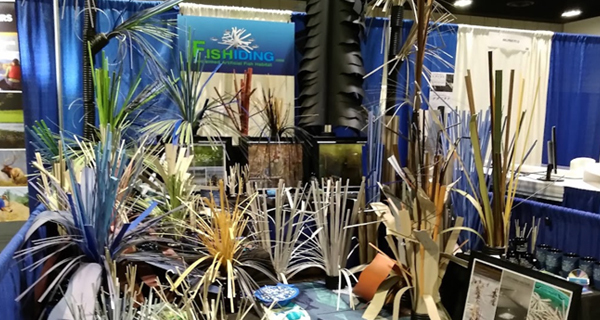
Plan fish cover alongside the basin rather than treating it as a last-minute addition. Fishiding makes freshwater fish habitat from reclaimed PVC, including preassembled structures, mats and DIY materials. Its underwater filming documents fish use of dense, intricate habitat; it does not replace a site plan or prove that adding a structure fixes a pond’s water problems.
How do you build a fish pond?
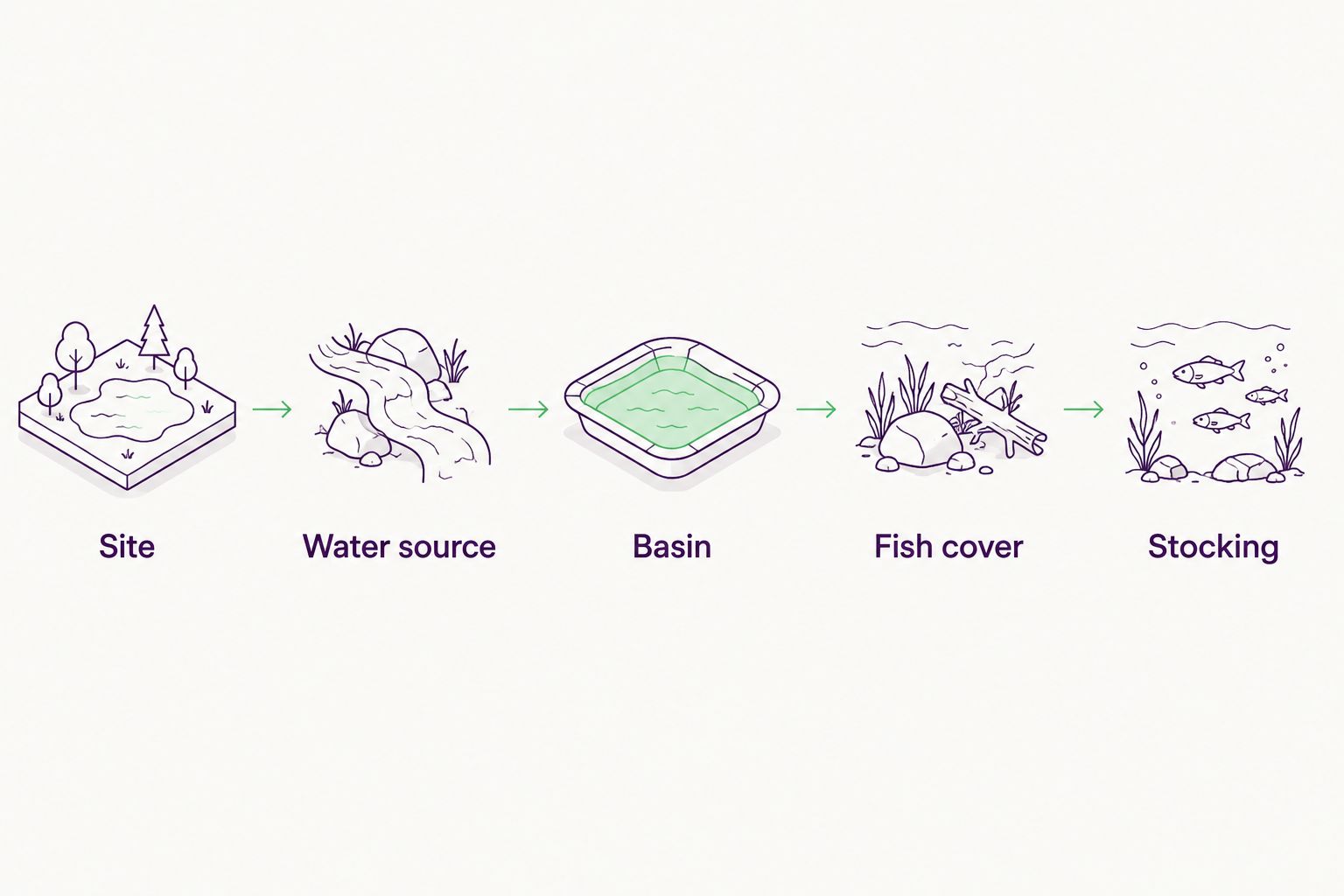
Build the pond in this order. Each step answers a decision that affects the next one, from whether the site can hold water to where fish will find cover.
- Set the pond’s purpose. Decide whether you are building for fishing, fish production or a smaller pond you will observe and maintain. Identify the fish you want to support before deciding where shallow water and deeper areas belong.
- Check the site. Walk the proposed shoreline and mark buildings, access routes, trees, utilities and low areas. Check local requirements and have underground utilities located before excavation. If the site or excavation presents a safety question, get qualified local help before work begins.
- Confirm the water source and drainage. Identify what will fill the pond and where excess water can leave without damaging nearby land or structures. Do not assume that rainfall, runoff or a proposed liner will solve an untested water-supply problem.
- Plan the basin. Draw the shoreline, shallow margins, deeper water and any areas needed for access or maintenance. Choose a construction method suited to the site’s soil, water source and intended pond use; have a qualified pond builder assess conditions you cannot verify yourself.
- Plan fish cover. Mark where fry and forage fish can use dense shelter and where larger fish can use nearby structure. Leave room to reach, inspect and maintain the pond. Choose cover for each location’s depth rather than putting every structure in one cluster.
- Excavate and finish the pond. Follow the approved site plan, manage excavated soil and protect the shoreline from damage during construction. Install the chosen water-retention and drainage features before treating the basin as ready to fill.
- Fill, inspect and stock deliberately. Watch how the new shoreline, water supply and drainage perform. Check water conditions and develop a stocking plan for the species you intend to keep before introducing fish.
The sequence matters in 2026 just as it does after construction: site, water source, basin, fish cover, then stocking. Fish cover belongs in the plan before equipment arrives, but it cannot compensate for an unsuitable water source or an unfinished drainage route.
Start with the water, not the excavator
A promising-looking depression is not proof that a fish pond will stay filled. Before committing to its outline, establish the proposed water source, expected water movement and a safe route for excess water. A pond that receives unwanted runoff also deserves a closer site assessment before you put fish in it.
Ask whoever designs or builds the pond to explain how the proposed basin will retain water at this specific site. Soil conditions and the chosen construction method matter. If a liner is proposed, clarify how it will be protected and how the pond’s edges and drainage will be finished. Do not copy a neighboring pond’s design without checking whether its water source and ground conditions match yours.
Shape the basin for fish and for access
A straight-sided hole gives you fewer placement choices than a basin with a planned margin and distinct depth zones. Shallow areas can hold cover for smaller fish; other structures can sit in deeper water where the design and water conditions permit. Keep access in the plan so you can inspect the shoreline and manage the pond later.
There is no responsible universal depth figure for a 2026 fish pond in the information provided here. Set depths with a qualified local builder or fisheries adviser using the site, climate, water supply and intended fish. Record those depths on the plan before excavation so the operator knows which areas serve which purpose.
Do not turn every edge into a steep, inaccessible bank. Decide where people need to approach the water and where fish need sheltered margins. Construction and shoreline safety come first; a fish-cover layout should fit the finished basin, not force an unsafe one.
Where should fish cover go in a new pond?
Place cover where fish can use it without blocking inspection, access or drainage. Start by marking a shallow zone, a mid-depth zone and any deeper area your approved basin plan includes. Then match each structure to its intended location and the fish sizes you want to support.
For fry, dense, intricate spaces offer shelter at a different scale from the open spaces larger fish use. Forage fish and larger fish can use different parts of the same pond, but they will not necessarily use a structure in the same way. Placement, season, species and life stage all affect what you see.
In 2026, choose cover by the job it needs to do:
- Shallow water: Identify protected margins where small fish can use shelter and where you can still inspect the shoreline.
- Mid-depth: Consider structure near other planned habitat so fish have more than an isolated object to use.
- Deep water: Confirm that the intended placement fits the pond’s actual depth and your access plan. Do not assume deeper always means better.
- Open areas: Keep enough unobstructed space for the way you will fish, inspect or manage the pond.
Make a placement map before filling if construction will limit access later. Mark the planned structures and the route you will use to position them. After filling, record where they actually sit so future pond work does not depend on memory.
Which fish-cover option fits your pond?
Natural cover, brush piles, DIY builds and preassembled habitat solve different placement problems. Choose among them by what you can obtain, build, position and inspect—not by the number of structures you can fit on a plan.
| Option | Best for | Advantage | Tradeoff |
|---|---|---|---|
| Existing natural cover | Ponds where useful cover can be retained | Uses habitat already on site | Its position and density may not match the new basin plan |
| Brush piles | Owners with suitable material and a workable placement plan | Can create varied spaces from gathered branches | Shape and placement require planning and later inspection |
| DIY fish structures | Owners who want to build cover for specific locations | Lets you choose a layout for the planned pond | You must check the materials, stability and placement of your build |
| Fishiding preassembled freshwater fish habitat | Owners who want dense, self-weighted cover made from reclaimed PVC | Arrives as a built habitat unit with cement weight incorporated into its design | You still need to choose a suitable depth and placement |
Fishiding preassembled freshwater fish habitat is best for pond owners who want self-weighted, dense fish cover without building brush piles. It does not build the pond, determine stocking or make poor water conditions suitable for fish. Fishiding’s more than 15 years and thousands of hours of freshwater underwater filming document fish using its intricate habitat models; use those observations as evidence of habitat use, not as a substitute for assessing your own site.
If you build DIY cover, sketch its intended position before selecting materials. Think about the spaces smaller fish need, the larger fish that may use nearby structure, and how you will confirm the finished build stays where you placed it. If you retain natural cover, mark it on the same map so excavation does not remove the feature you meant to keep.
Why do pond depth and habitat placement vary?
A usable plan responds to the pond you are building, not a depth copied from a different property. Check these factors before settling the basin shape or fish-cover layout:
- Water source: The proposed supply affects whether the planned basin can be filled and maintained.
- Drainage: Excess water needs a planned route that does not conflict with the shoreline or nearby structures.
- Fish and life stage: Fry, forage fish and larger fish use shelter differently, so one type of opening will not serve every purpose.
- Habitat density and variety: Dense cover provides small spaces; varied structure gives fish different places to use.
- Placement and access: A structure is only useful to your plan if you can put it where intended and account for it during maintenance.
- Stability: Match the structure and its installation method to the selected site. Fishiding preassembled habitat units have cement weight built into their design; do not add ballast to them.
Use this list to review a 2026 pond drawing before work starts. If the drawing shows the excavation but not the water source, drainage or cover locations, those decisions are still unfinished.
Can you add fish habitat after the pond is filled?
Yes, you can plan fish-cover placement after filling, but you must work with the pond’s actual depths and your available access. If you have not excavated yet, mark the cover zones now; changing a basin after filling is a larger decision than adjusting a placement map.
For an existing pond, first identify the areas you can reach and measure the water depth where you intend to place cover. Keep the drainage route and any areas needed for maintenance clear. Record each placement so you can inspect it later rather than guessing where structures landed.
Should you stock fish as soon as the pond fills?
No. Inspect the filled pond and check water conditions before stocking fish. A full basin confirms that water is present at that moment; it does not establish that the pond is ready for the species you want to keep.
Use a stocking plan suited to the pond and its intended use. A local fisheries adviser can help match species and management decisions to the finished water body. In 2026, make that decision from the pond you have built, not from the outline you first drew.
Do you need brush piles if you use artificial habitat?
No; brush piles and artificial habitat are alternatives you can also use together when each has a clear placement purpose. Brush piles use gathered natural material, while preassembled reclaimed PVC structures provide a built shape. Neither choice removes the need to plan water depth, access and inspection.
If useful natural cover is already present, map it before buying or building more. Fill a specific gap—such as dense shelter near a planned shallow zone—instead of placing new structures simply because the basin has empty space.
FAQ
What is the first step in building a fish pond?
Choose a site and confirm its water source and drainage before excavation. Then plan the basin around the pond’s intended fish and your access needs.
How deep should a fish pond be?
Set fish-pond depths for the specific site, climate, water supply and intended fish. A qualified local builder or fisheries adviser can help define the shallow and deeper zones on your plan.
Can I put fish cover in a new pond before it fills?
Yes, fish cover can be planned and positioned as part of construction when the site plan allows it. Record where each structure sits and keep access and drainage clear.
Are brush piles or preassembled habitat better for a fish pond?
The better choice depends on your materials, placement needs and ability to inspect the finished cover. Brush piles use gathered branches; Fishiding preassembled habitat provides self-weighted, dense reclaimed PVC cover.
Do Fishiding habitat structures need added weight?
No. Fishiding preassembled habitat units, including its habitat mats, have cement weight built into their design; do not add ballast to them. You still need to select an appropriate placement location.
When can I stock a newly built fish pond?
Stock after you inspect the filled pond, check water conditions and make a species-specific stocking plan. Filling the basin alone does not establish that it is ready for fish.
Can a fish pond use both natural cover and artificial fish habitat?
Yes. Map useful natural cover first, then place artificial habitat where it serves a specific shelter or structure need. Keep maintenance access and drainage in the plan.
One last thing
The fish-cover decision starts on the basin drawing, not at the water’s edge. Before approving excavation in 2026, mark your water source, drainage route, access points and intended cover zones on one plan. If any of those is missing, resolve it before choosing a structure or stocking fish.