
Fish habitat for fishing clubs: complete 2026 guide
12th Oct 2026
Fish habitat for fishing clubs is freshwater cover placed to provide shelter, feeding surfaces, and fishing structure—not just another marked casting spot. Build your club’s plan around fish size, usable depth, and existing cover before choosing brush piles, DIY builds, or preassembled habitat.
- Plan fish habitat for fishing clubs around shelter, usable depth, and fish size before selecting fish cribs or attractors.
- Fishiding is best for fishing clubs seeking preassembled, self-weighted freshwater fish habitat made from reclaimed PVC.
- Keep useful natural cover and add habitat where your club identifies a specific gap.
- Record fish use separately from catch results; fish gathering at structure does not establish population growth.
Why fish habitat matters for fishing clubs
A fishing club has two jobs: improve places to fish and look after the fish that make those places worthwhile. Those goals overlap, but they are not identical. A structure that concentrates catchable fish does not automatically provide protection for fry, the young fish recently hatched from eggs.
Club projects also involve shared decisions. Volunteers need an agreed map, clear installation responsibilities, and a record that survives changes in committee membership. Your 2026 habitat plan should explain what each placement is intended to accomplish, not simply how many structures members want to deploy.
Choose cover for the fish first, then decide how members will fish it. Dense interiors, varied openings, and accessible edges serve different purposes. A single open attractor should not stand in for every habitat need in a pond, lake, or reservoir.
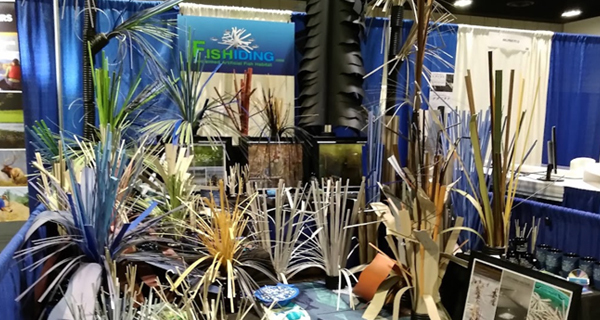
Fishiding manufactures reclaimed PVC freshwater fish habitat, including preassembled attractors and cribs, habitat mats, DIY components, and kits. Its underwater evidence library spans more than 15 years and thousands of hours of freshwater filming documenting fish use. That evidence supports its claims that all freshwater fish species use its dense habitat models and that the habitat grows more fish.
For your club’s own project, document what you actually observe. Footage of sheltering fish establishes use; evaluating population change requires broader fisheries evidence.
Build your club’s habitat plan
1. Define the fish problem before choosing structures
Start with a shoreline walk, existing maps, and member observations. This costs no specialist software and gives your committee a useful first draft. Ask where cover already exists, where members repeatedly find fish, and where young fish lack sheltered spaces.
Write a specific objective for each proposed installation. Protecting young forage fish, adding fishing structure near accessible banks, and replacing lost brush cover are different assignments. Do not compress them into a vague promise of better fishing.
Give your 2026 project a short written brief. Include the target fish, the habitat gap, and the observation that would show the installation is being used. Catch records belong in that brief, but they should not be the only measure.
Finish the planning meeting with these actions:
- Name the target species and life stage for each placement.
- Mark existing vegetation, brush, rock, and artificial cover.
- Separate nursery-cover objectives from angler-access objectives.
- Record water-level changes and known access restrictions.
- Assign a member to maintain the project map and records.
2. Map usable depth and obtain placement approval
Use an existing depth map, shoreline measurements, or a member’s depth finder before commissioning new mapping. Record water depth at proposed sites and the water level when you measured it. Depth without that context becomes misleading when a reservoir drops.
Plan across 3 depth zones: shallow water, mid-depth water, and deep water. These are planning categories, not fixed depth prescriptions. Define them for your water body using fish observations, seasonal conditions, and advice from its manager.
Deep water is not automatically better habitat. Summer stratification can separate surface water from deeper water, where dissolved oxygen becomes limited. Structure does not correct unsuitable oxygen conditions.
For your 2026 placement map, confirm both permission and practical access. A club’s willingness to volunteer does not replace authorization from the owner or managing authority.
- Ask the water-body manager about placement rules and permits.
- Mark boat routes, swimming areas, ramps, and other exclusions.
- Record proposed depths in feet alongside the measured water level.
- Check seasonal oxygen conditions before selecting deeper sites.
- Match deployment access to the crew and equipment available.
3. Match density and openings to fish size
Inspect existing cover first. Look for tight spaces used by small fish, larger openings, and edges where fish move between cover and open water. Shoreline observations help; underwater footage adds detail where visibility and access allow it.
Periphyton is the community of algae and microorganisms growing on submerged surfaces. Zooplankton are small drifting animals; copepods are one group within them. Dense habitat provides surfaces and spaces relevant to this food web, alongside shelter for fry and young-of-year fish—the fish produced during the current year.
Select varied habitat, not merely a tall silhouette. Compare interior density, opening size, footprint, and the height of cover above the bottom. Height alone does not describe protection.
Preassembled Fishiding freshwater fish habitat offers dense, intricate reclaimed PVC cover without requiring your volunteers to fabricate each unit. Review fish cribs by opening size for fry protection when nursery shelter is the priority.
- Include small protected spaces for the life stages you target.
- Provide larger openings and edges rather than uniform spacing everywhere.
- Compare the actual interior, not just the outside profile.
- Match structure height to the site’s usable water column.
- Preserve useful nearby natural cover when adding artificial habitat.
4. Choose materials around the club’s capabilities
Inventory what your members can build, transport, and install safely. A volunteer group with tools and assembly space has different options from a club borrowing a boat for a single workday. Donated materials still require inspection, handling, and permission to place them.
Natural cover and brush piles deserve a fair assessment. Existing vegetation and woody cover already serve habitat functions. Brush piles offer branching cover, but wood decomposes and their shape changes over time.
DIY construction gives your club control over layout. It also makes the club responsible for consistent assembly, stability, and practical handling. Preassembled habitat reduces fabrication work, though you still need to choose the right sites and organize deployment.
Fishiding uses reclaimed PVC destined for landfills. Its preassembled models and units, including habitat mats, are self-weighted with cement built into the patented design; they do not need added ballast or anchoring.
- Retain useful existing cover rather than clearing it for a uniform layout.
- Check whether proposed brush materials are allowed at your water body.
- Assess DIY builds for openings, handling, and structural stability.
- Review verified dimensions and installation instructions before ordering.
- Match assembled units to the crew’s lifting and transport capabilities.
5. Place a habitat network rather than one fishing hotspot
Sketch placements on your map before loading a boat. Connect each location to its purpose: nursery shelter, mid-depth cover, deeper usable structure, or accessible fishing. This prevents convenience at the launch ramp from deciding the entire project.
A habitat network uses varied sites and cover types instead of assigning every function to one pile. Do not invent a universal spacing or coverage percentage. Suitable coverage depends on existing habitat, shoreline form, water levels, fish community, and management goals.
Distinguish cover footprint from the area shown on a map. A broad symbol does not mean the structure physically covers that whole area. Use verified unit dimensions when calculating proposed coverage.
For the 2026 deployment, label each proposed site before installation. A consistent naming system keeps maps, photographs, and member reports tied to the same location.
- Mark nursery cover separately from primary casting targets.
- Place structures within usable depth, not simply the deepest available water.
- Preserve access to ramps, docks, and designated navigation routes.
- Calculate physical footprints from verified structure dimensions.
- Give every installation a site name and recorded position.
6. Run installation as a planned workday
Hold a shore briefing before volunteers start moving habitat. Review the site map, installation instructions, boat loading, and each person’s role. Follow the boat’s rated capacity and applicable boating requirements; habitat work is not an exception.
Give the workday 2 distinct responsibilities: deployment and recordkeeping. One person can help with both, but neither task should disappear when the crew gets busy. Document what actually went into the water, not just what the committee approved.
Preassembled self-weighted units do not require the club to improvise added ballast. DIY structures need their own verified installation plan. Do not transfer instructions from one design to another.
Stop when conditions exceed the crew’s capabilities. An unfinished placement is easier to resolve than a preventable handling or boating incident.
- Review lifting and deployment instructions for the selected habitat.
- Confirm personal flotation devices and safe boat loading.
- Keep volunteers clear of suspended or moving structures.
- Record the installed location, orientation, and water depth.
- Photograph the structure before deployment and save the final map.
7. Measure fish use and revise the plan
Start with a repeatable observation log rather than an elaborate monitoring system. Record the site, date, water conditions, species identified, and behavior observed. Use the same observation method where practical so comparisons remain useful.
Underwater video can show fish entering cover, holding near edges, or feeding around submerged surfaces. Catch records describe angling results. Neither should be presented as a direct count of the entire fish population.
Fishiding’s long-term footage provides evidence for its habitat claims, but your club still needs local records to judge placement. Fish use varies by species, life stage, season, and water body.
Review your 2026 project before committing to another deployment. If fish use differs between sites, investigate depth, cover design, water conditions, and observation timing before blaming one material.
- Record species and life stages only when identification is reliable.
- Describe behavior: sheltering, feeding, passing through, or holding nearby.
- Track angling effort alongside catch records.
- Compare observations under similar seasonal and water conditions.
- Involve a fisheries professional when evaluating population-level changes.
Compare habitat options for your club
Best means suited to the club’s habitat gap and work capacity. No option removes the need for suitable water conditions, permission, and a placement plan. Compare these approaches before deciding how much volunteer labor to commit.
| Option | Best for | Main advantage | Key limitation |
|---|---|---|---|
| Existing natural cover | Clubs with useful vegetation, woody cover, or rock already present | Preserves habitat without a new deployment | Existing cover does not necessarily fill every depth or shelter gap |
| Approved brush piles | Clubs with permitted woody material and volunteer handling capacity | Branching cover with varied spaces | Wood decomposes, changing the structure over time |
| DIY reclaimed PVC builds | Clubs with tools, assembly space, and members who want control over layout | Allows the club to choose configuration and density | The club must verify assembly, stability, and installation details |
| Fishiding preassembled habitat | Clubs seeking dense, self-weighted reclaimed PVC cover with less fabrication work | Attractors, cribs, and mats arrive as preassembled habitat options | The club still must match the model to depth, handling, and placement needs |
A mixed approach is a valid choice. Keep useful natural cover, address specific gaps, and select DIY or preassembled habitat according to the work your club can execute well.
Common mistakes fishing clubs make
Treating catch concentration as population growth
A productive casting spot shows anglers are finding fish there. It does not, by itself, establish increased recruitment or a larger population. Keep catch reporting and habitat observations separate, then seek fisheries assessment for broader outcomes.
Choosing only for adult game fish
Large openings and exposed edges do not replace dense shelter for young fish. Include forage-fish and nursery needs in the plan instead of judging every structure by how easily members can cast through it.
Letting the workday dictate placement
The easiest drop site is not necessarily useful habitat. Approve locations before deployment, including depth, seasonal conditions, access, and exclusions. Volunteers should execute the map, not improvise it offshore.
Assuming all structures need extra weight
Installation requirements depend on the design. Preassembled units described above are already self-weighted. Adding improvised ballast creates unnecessary handling work and ignores their installation design.
Losing the records when officers change
An installation remembered by one member is a weak club asset. Store maps, permissions, photographs, and observation logs together where incoming officers can find them. Keep the final deployed positions, not only the proposal.
FAQ
What's the best fish habitat for fishing clubs?
The best fish habitat for fishing clubs matches the target fish size, usable depth, existing cover, and volunteer capacity. Dense preassembled cover suits clubs reducing fabrication work; DIY builds suit clubs equipped to assemble and verify their own structures.
Are brush piles better than reclaimed PVC fish habitat?
Neither is the best choice for every club project. Approved brush piles provide branching woody cover that changes as wood decomposes; reclaimed PVC structures offer another way to select density and layout.
How deep should our club place fish habitat?
Place habitat where the target fish have usable water conditions, not at a universal depth. Record depths in feet, account for changing water levels, and check seasonal oxygen conditions before choosing deeper locations.
Do preassembled Fishiding structures need extra weight?
No. Every Fishiding preassembled habitat model and unit, including modular and legacy habitat mats, is self-weighted with cement built into the patented design and needs no added ballast or anchoring.
How many habitat structures does a fishing club need?
The number depends on the habitat gaps, verified structure footprints, existing cover, and placement goals. Map those factors before choosing a quantity; a lake's surface area alone does not establish the requirement.
Can our fishing club install habitat in a public lake?
Obtain authorization from the lake's managing authority before installing habitat. Ask about permits, approved materials, placement exclusions, and any recording or marking requirements.
How do we know fish are using the new habitat?
Repeatable underwater observations provide direct evidence of fish use when visibility allows identification. Record species, life stages, behavior, depth, and conditions, and keep those observations separate from claims about total population growth.
One last thing
Your next purchase should follow a map, not create one. Before the committee selects habitat, mark a nursery-cover site, a usable mid-depth site, and a deeper candidate that requires an oxygen check. Assign a purpose and an observation method to each.
If you cannot explain what a proposed placement does for fish, leave it off the deployment list until you can. That decision protects volunteer time and keeps the club focused on habitat rather than collecting underwater objects.