
Crappie Condos vs. Stake Beds: Which Fits Your Pond?
Posted by David Ewald on 24th Sep 2026
A crappie condo and a stake bed can both add upright cover to a freshwater pond, but they are not the same build. Choose a DIY crappie condo if you want to make and weight a structure yourself. Choose a completed stake bed if you want vertical cover with the base already built in. For either choice, the spacing, location and nearby refuge matter more than the name.
The term crappie condo can be used loosely. Texas Parks and Wildlife describes one familiar version: cut bamboo set into a concrete-filled bucket. A fish crib is different again—a frame that may hold brush or other cover inside it. Knowing which design someone means makes the comparison much more useful.
What each structure does
| Structure | Best fit | What to inspect before placement |
|---|---|---|
| DIY crappie condo | An owner who wants to build and position upright cover | The condition and spacing of the limbs, plus the weight and stability of the finished base |
| Completed stake bed | An owner who wants ready-to-place vertical cover | Its height, density, footprint and suitability for the chosen water depth |
| Traditional fish crib | A project needing a larger framed area of interior cover | What fills the frame and whether that interior will remain useful |
These are choices of form, not promises about the fish they will hold. A sparse structure can give larger fish a place to gather while offering little tight refuge for fry. A densely filled structure can provide smaller spaces, but its edges and openings still need to suit the site.
Fishiding’s fish crib design and placement guide records firsthand underwater observations of cribs holding fish and other cribs attracting little activity. The differences included the interior design and where the cribs sat. That is a useful warning against choosing any structure solely by its label.
Start with the job your pond needs
Before choosing materials, look at the cover already in the water.
If the shallows have little protected space for fry and forage fish, adding only a widely spaced fishing target leaves that need unanswered. Look for fine, varied cover that smaller fish can enter, along with other nearby habitat they can use as they move.
If shallow refuge exists but there is little upright cover along a slope or transition into deeper water, a stake bed may fill a different gap. Vertical pieces give fish positions above the bottom as conditions change. More height is not automatically better: it must suit the depth, water levels and safe clearance at that location.
If the pond already has substantial plants, wood and rock, assess those first. Artificial fish habitat should add something missing rather than replace useful natural cover without a reason. Fishiding’s planning guidance calls for at least 20% and up to 40% of the pond’s surface area as varied usable cover, including suitable cover already present—not a fixed number of structures per acre.
When does a DIY crappie condo make sense?
A DIY condo makes sense when you want control over its footprint and the material projecting from its base, and you are prepared to build, transport and place it. Bamboo-and-bucket condos are one established approach. Other homemade designs use different materials, so judge the finished structure rather than assuming every condo has the same openings or weight.
Plan both the inside and the outside. Smaller fish need accessible, tighter spaces; larger fish need routes around the cover. An all-open arrangement and an impenetrable bundle solve different problems. Varying the pieces and their spacing lets the finished build offer more than one kind of space.
The base is part of a DIY project. Check that the completed structure will remain upright on the bottom where you plan to use it. Consider soft sediment, slopes and water movement before carrying it to the pond. Do not assume loose DIY materials include a completed weighted base.
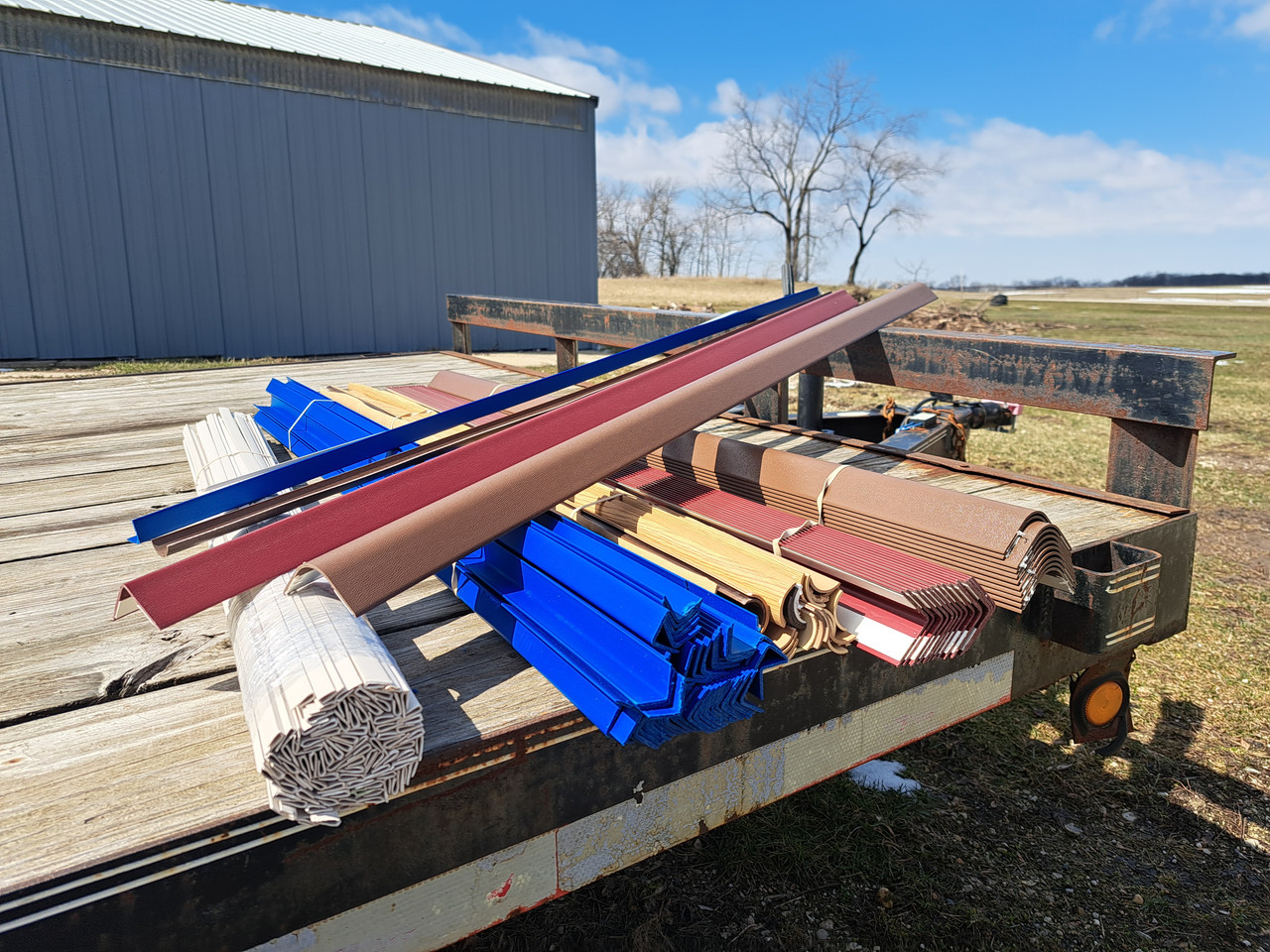
For a reclaimed-PVC build, Fishiding’s Crappie Stake Beds DIY Fish Habitat Twin Pack Kit contains more than 200 mostly rigid stakes averaging 45–48 inches long. It is a materials pack: bases and mats are not included. That distinction matters when comparing the work involved with a completed unit.
When is a completed stake bed the better fit?
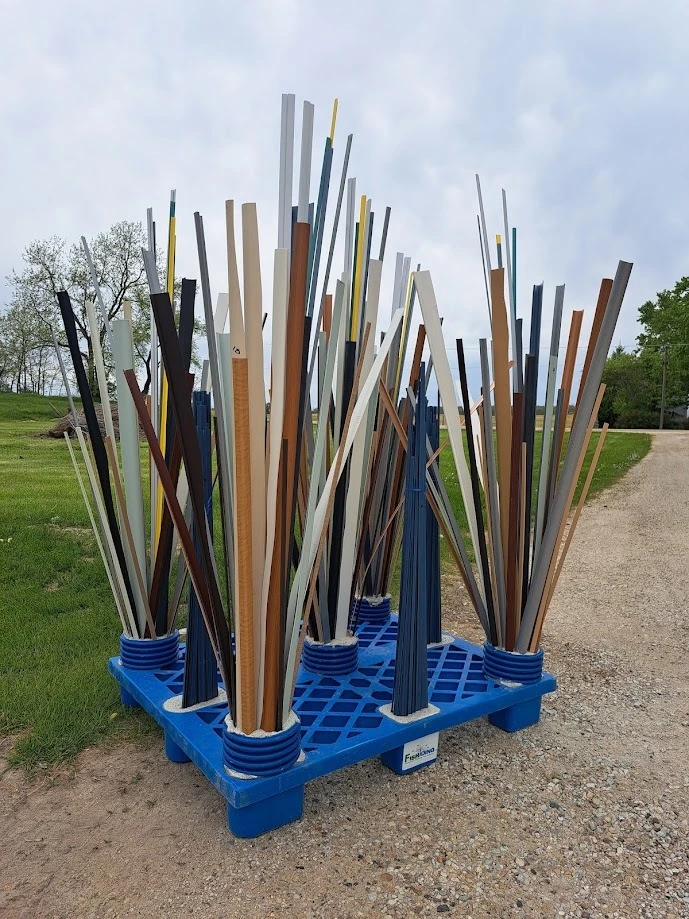
Choose a completed stake bed when you need upright cover but do not want to construct its base. Fishiding’s Stakeout Crappie Stake Bed three-pack contains three completed units made with reclaimed PVC. Its listed stakes range from 18 to 55 inches tall. Each unit has a cement-filled base built into the design, so it needs no added weight, ballast or separate anchor.
The Stakeout gives you a ready-to-place group rather than a materials-only project. That is its practical advantage. The tradeoff is less freedom to design every piece and base yourself. A DIY build may suit someone who enjoys that work or needs a custom arrangement; a completed unit suits someone who has already chosen a location and wants to place cover there.
Three units can form a cluster along a break or transition. They are not a prescription of three structures for every pond. Use your pond map, existing cover and intended placement to decide whether that footprint fills a real gap.
Where should either structure go?
Start with a pond map or a walk along the shore. Mark existing cover, shallow areas, slopes, bottom changes and the route into deeper water. Then identify a location where the new cover connects useful areas or adds a type of refuge the pond lacks.
Check these conditions before placement:
- Bottom: Soft muck can reduce the effective height of a structure as its base settles. Assess the intended spot rather than judging it from shore.
- Depth and water levels: Allow for seasonal changes. A structure that fits today's water level must not become an obstruction when the pond drops.
- Nearby cover: Look for a practical relationship with existing plants, wood, rock or other habitat. Avoid scattering units without a reason for their positions.
- Access and safety: Keep boating, swimming and fishing access in mind. Check the applicable rules and permissions, especially in public or managed water.
- Your goal: Decide whether this site chiefly needs small-fish refuge, upright holding cover, or a mix of both.
There is no single placement depth that suits every crappie condo or stake bed. Pond shape, water clarity, bottom conditions and the cover already present all change the decision. Fishiding’s pond habitat plans and layout drawings show why a connected arrangement across depths can be more useful to plan than an isolated spot.
Can you use more than one kind of cover?
Yes. A pond need not be all bamboo, all reclaimed PVC or all brush. Existing natural cover can remain part of the system. A DIY condo or stake bed can add an upright feature where one is missing, while denser shallow habitat serves a different need.
Fishiding’s more than 15 years of freshwater underwater observations while diving with scuba gear document fish using dense, intricate habitat. Those observations are a reason to examine the spaces within a structure, not just the outline anglers see above water. Species, fish size, season and placement still affect how a particular site is used.
For a separate guide to assembling vertical cover, see Fishiding’s DIY crappie structure guide. This comparison is about which job to fill and which format to choose; that guide covers the build itself.
Frequently asked questions
Is a crappie condo the same as a fish crib?
No. A crappie condo often refers to an upright bucket-and-bamboo build, while a traditional fish crib is a frame with material inside it. People sometimes use the names loosely, so inspect the design rather than relying on the label.
Is a stake bed only for crappie?
No. Upright cover can be used by other freshwater fish. The fish you observe will depend on the structure, placement and conditions in that pond or lake.
Does the Fishiding Stakeout need an anchor?
No. Each completed Stakeout unit has cement weight built into its base. That does not apply to loose stakes used in a homemade build; the builder must plan that base.
Will a crappie condo improve a pond that already has brush and plants?
It can add a different form of cover, but first identify what the existing habitat lacks. If the pond already has useful upright cover in the intended area, another isolated structure may not be the best first addition.
Should I put all the structures at one depth?
Do not choose one depth by default. Map the pond’s shallow refuge, transitions and deeper areas, then place each type of cover where it has a clear purpose and remains safe as water levels change.
Choose the missing piece
A DIY crappie condo is a building project; a completed stake bed is a placement choice. Neither is a substitute for checking what your pond already provides. Map the existing cover, decide whether you need tighter refuge or more upright structure, and then choose the build and location that fill that gap.