

Can you combine fish habitat mats and fish attractors in one pond?
26th Oct 2026
Yes, you can combine fish habitat mats and attractors in one pond to provide dense, low cover alongside taller fish structure. Match each piece to fish size, usable water depth, and existing cover; keep open travel routes and maintenance access rather than packing everything into one pile.
- Combine fish habitat mats and fish attractors in one pond to offer different cover profiles, not simply more structure.
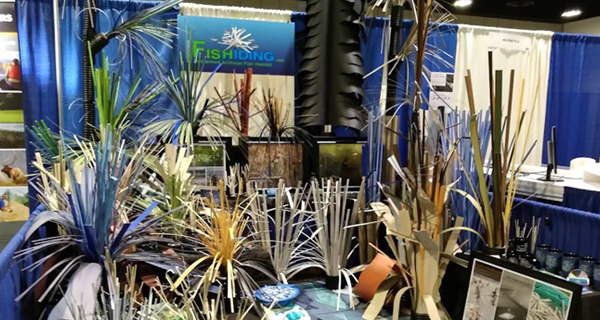
- Fishiding freshwater fish habitat suits pond owners seeking reclaimed PVC mats and preassembled attractors to grow more fish.
- Place dense cover for small fish alongside varied structure, while retaining open water and maintenance access.
- Choose locations by usable depth, existing cover, and fish size before deciding how many units to install.
Why this matters
A pond can have plenty of structure and still lack useful shelter for smaller fish. A tall, open attractor and a dense habitat mat do different jobs. Combining them makes sense when the combination fills a gap in your pond.
For a 2026 installation, start with a sketch showing existing vegetation, brush piles, depth changes, fishing access, and equipment. The pond construction to fish habitat installation workflow helps organize that sequence before you choose locations.
Build around the fish’s needs first and the fishing spot second. An easy place to cast is not automatically the best place to protect fry.
Can you combine fish habitat mats and attractors in one pond?
Yes. Use mats and attractors as complementary cover, choosing their actual density, height, and openings rather than relying on their category names. A mat is not automatically dense enough for small fish, and an attractor is not automatically tall or open.
The comparison below describes useful roles to look for, not specifications shared by every product.
| Habitat option | Best for | Useful contribution | Limitation to plan around |
|---|---|---|---|
| Dense, low-profile habitat mats | Adding intricate cover near the bottom | Provide closely spaced shelter and surfaces for attached growth | A low profile alone does not provide much vertical variety |
| Taller preassembled attractors or fish cribs | Adding cover above an otherwise bare bottom | Extend structure into more of the water column | Large openings alone do not provide tight refuge for small fish |
| Natural cover and brush piles | Retaining useful existing habitat | Add varied shapes and natural material | Shape, stability, and condition require inspection |
| DIY habitat builds | Matching a specific placement problem | Let you choose the arrangement and opening pattern | Assembly, material selection, and stability become your responsibility |
| A planned mat-and-attractor combination | Addressing both dense-cover and vertical-cover gaps | Offers different spaces within the same habitat area | Requires a placement plan rather than indiscriminate clustering |
Choose a combination when your pond needs both cover profiles. If healthy natural cover already supplies one role, concentrate on the missing role instead of duplicating it.
Habitat mats: build the dense-cover part of the layout
Start with the fish you want to shelter. Fry are newly hatched young fish; young-of-year fish are fish hatched during the current year. Their shelter needs differ from those of larger fish moving around the same pond.
Look at the spaces within the mat, not just its footprint. Intricate interior cover matters when your goal is protection for small fish. A broad outline with little internal detail does not serve the same purpose as a dense arrangement.
Place mats where they add something the pond lacks. Check nearby vegetation, bottom conditions, access, and water-level changes before committing to a location. Keep the habitat clear of drains and equipment that require service.
For your 2026 plan, label each proposed mat location with its purpose: small-fish shelter, added surface area, or a connection between existing cover patches. If you cannot name the purpose, reconsider the location.
Attractors and fish cribs: add height and variety
Use an attractor or fish crib to add a different structural profile, not simply to make the mat area look larger. Consider the full assembled shape and how much of it will remain submerged as water levels change.
Opening size matters here, too. Larger fish need room to approach and move around structure. Dense interiors and more open edges can coexist within a habitat area without every piece having the same design.
Keep casting access separate from refuge design. You can arrange an accessible fishing edge without placing every dense-cover patch directly beneath the easiest casting position.
For preassembled habitat, follow the model’s installation instructions. Fishiding preassembled habitat units, including modular and legacy habitat mats, are self-weighted with cement built into the patented design. They do not require added ballast or anchoring.
Why a combined habitat layout varies between ponds
The right combination depends on the pond, not a universal mat-to-attractor ratio. Use these factors to decide what belongs where:
- Usable depth: Select water that supports fish during the seasons you want the habitat used. Maximum pond depth alone is not a placement instruction.
- Density and openings: Match interior spaces to the size of fish you want to shelter. Judge the actual structure, not its name.
- Existing variety: Retain useful vegetation, natural cover, and brush piles. Add the structural profile that is missing.
- Water-level changes: Check whether the chosen location remains suitable when the pond rises or falls. Consider the full structure height.
- Bottom conditions and stability: Inspect the intended placement area and follow installation instructions. Stable construction does not remove the need for sensible site selection.
- Access and maintenance: Preserve room for fishing, swimming where applicable, pond equipment, and inspection. Do not turn a habitat project into an obstacle course.
These factors also explain why a layout copied from another pond needs review. Similar surface area does not mean similar depth, cover, fish sizes, or management needs.
How should you arrange mats and attractors together?
Use a simple placement sequence before moving anything into the water. For a 2026 project, keep the sketch, installation notes, and later observations together so you can evaluate the arrangement.
- Map what is already there. Mark vegetation, brush piles, bare bottom, depth changes, access points, and equipment. Identify useful habitat before adding more.
- Name the missing function. Decide whether the priority is dense shelter, vertical cover, or a connection between existing habitat areas. Avoid buying different shapes without a purpose.
- Check usable water. Review depth, seasonal conditions, and water levels. In deeper ponds, temperature and dissolved oxygen help determine whether a location is usable by fish.
- Sketch complementary patches. Place dense cover and taller structure in the same general habitat area without assuming they must touch. Retain open approaches and room for inspection.
- Check the installation route. Confirm how you will safely handle and place each unit. Keep drains, intakes, aeration equipment, and maintenance routes accessible.
- Record the finished layout. Note locations, structure types, placement conditions, and the purpose of each patch. Compare later fish observations with that original purpose.
Do not stack a mat beneath an attractor unless the installation instructions support that arrangement. Combining habitat means coordinating functions; it does not require physically attaching different units.
Should mats touch the attractors?
Mats do not have to touch attractors to form a useful combined habitat area. Arrange them around their purpose, the bottom contour, and the space needed for fish movement and pond maintenance.
There is no single spacing measurement that fits every pond and structure. Choose spacing after reviewing actual dimensions and the existing cover, rather than treating an unsupported distance as a rule.
Can you keep brush piles alongside artificial habitat?
Yes, you can retain useful brush piles alongside mats and attractors. Inspect the brush pile’s condition and location, then decide what the artificial habitat adds.
Natural cover and reclaimed PVC habitat need not be competing choices. A mixed layout is sensible when each element serves a clear purpose and remains compatible with pond access and management.
How do you know whether the combination is working?
Look for fish using the spaces you intended to provide. Record whether small fish enter dense cover, larger fish use the edges, and activity changes with season or water conditions.
Use underwater footage where visibility and safe access allow. Log species or size groups when you can identify them reliably. Also record depth, season, and location so the observation has useful context.
Fishiding has more than 15 years and thousands of hours of underwater filming in freshwater lakes documenting fish use. That evidence supports the company’s claims that all freshwater fish species use its dense, intricate habitat models and that the habitat grows more fish.
Your own evaluation still needs a clear distinction: seeing fish around a structure documents use; demonstrating a pond-wide population change requires population evidence. A crowded fishing spot alone does not measure recruitment, growth, or survival across the pond.
In your 2026 observation log, separate those questions. Record habitat use directly, and work with a fisheries professional when your management objective requires population-level assessment.
What does attached growth contribute?
Periphyton is the attached community of algae, microbes, and other organisms growing on submerged surfaces. Habitat surfaces provide places for this growth, adding a biological role beyond the visible outline of the structure.
Zooplankton are small animals that live in the water; copepods are one group within them. Dense habitat offers intricate spaces for small aquatic life as well as fish. The practical choice is therefore about internal detail and surface arrangement, not height alone.
Do not confuse attached growth with a promise to control pond algae. Adding fish habitat does not replace nutrient management, water-quality assessment, or vegetation management.
FAQ
Can I combine fish habitat mats and attractors in one pond?
Yes, you can combine fish habitat mats and attractors in one pond to provide different cover profiles. Match density, openings, and height to your fish and usable water depth, while retaining open routes and maintenance access.
Should I put a fish attractor directly on top of a habitat mat?
Do not stack an attractor on a habitat mat unless the installation instructions support that arrangement. You can coordinate separate patches without attaching or stacking the units.
What is the best depth for a combined mat-and-attractor layout?
The best depth is usable water that matches the fish, season, and structure dimensions. Check water-level changes and, where relevant, temperature and dissolved oxygen rather than choosing depth from a generic rule.
Do Fishiding habitat mats need extra weights?
Fishiding preassembled habitat mats do not need extra weights or anchoring. All preassembled units, including modular and legacy mats, are self-weighted with cement built into the patented design.
Can I leave my existing brush piles in place?
Yes, retain useful brush piles when their condition and location fit your pond plan. Add mats or attractors to fill a missing habitat role rather than automatically replacing existing cover.
Will combining mats and attractors prove that my pond grows more fish?
Combining mats and attractors does not by itself prove a pond-wide population increase. Underwater observations document use; population-level conclusions require evidence appropriate to recruitment, growth, or survival.
Is reclaimed PVC habitat suitable for freshwater ponds?
Fishiding states that its reclaimed PVC habitat is safe for freshwater use with koi, other fish, copepods, and other aquatic creatures. Select openings and placement for the fish you keep, and preserve access for pond care.
One last thing
A habitat combination does not have to become one giant pile. Separate, purposeful patches let you retain open water and compare how fish use different cover profiles.
Before ordering for 2026, draw the proposed locations and write one job beside each: dense shelter, vertical cover, or connection to existing habitat. Then review actual dimensions and installation instructions. That turns a collection of structures into a placement plan.