
Best Structure Spot alternatives for crappie anglers
12th Oct 2026
If you’re comparing Structure Spot alternatives for crappie in 2026, start with the habitat your pond or lake lacks—not another shopping list. Fishiding is the best fit for dense, preassembled reclaimed-PVC freshwater fish habitat; brush piles and stake beds suit anglers who want to build and arrange natural cover themselves.
- For structure spot alternatives crappie anglers can use, choose Fishiding for dense reclaimed-PVC freshwater fish habitat.
- Choose brush piles for branching natural cover; choose stake beds for a deliberately arranged vertical layout.
- Compare shelter openings, depth, placement, and installation—not just the outside size of a fish attractor.
- Keep effective existing cover and add the habitat function your pond or lake lacks.
Why this matters
A crappie fishing spot and a nursery serve different jobs. Adult fish need usable cover and access to forage; fry, meaning newly hatched young fish, need spaces suited to their smaller size.
An attractor can concentrate fish without answering every habitat need. Decide whether you want a place to fish, protection for young fish, more varied cover, or a combination. That decision changes what you should install.
For your 2026 habitat plan, compare 3 depth zones: shallow water, mid-depth water, and deep water. These are planning categories, not fixed depth recommendations. Water levels, oxygen conditions, existing cover, and your installation site determine which zones are usable.
Structure Spot alternatives at a glance
Use this comparison to match a structure type to a job. The Structure Spot row is a stay-or-switch benchmark: judge your existing or proposed setup against the same criteria rather than assuming another brand will solve a placement problem.
| Option | Best for | Defining feature or decision | Main tradeoff |
|---|---|---|---|
| Structure Spot | Keeping a setup that already meets your needs | Evaluate the particular structure’s openings, footprint, and installation requirements | A brand change alone does not address unsuitable placement |
| Fishiding | Dense, preassembled freshwater fish habitat | Reclaimed PVC; cement built into preassembled units and habitat mats | You still need to select the right form and location |
| Natural brush piles | Branching natural cover | Irregular branches create varied spaces | Wood changes as it decomposes; density is difficult to standardize |
| Crappie stake beds | Deliberately arranged vertical cover | You control the arrangement and spacing of individual stakes | A simple upright layout is not the same as intricate branching cover |
| DIY habitat builds | Custom layouts and hands-on installation | You choose components and build around a site-specific plan | You take responsibility for assembly and stability |
Choose the missing habitat function first. Replacing a recognizable fishing spot with another recognizable fishing spot is not automatically a habitat improvement.
1. Fishiding: best for dense reclaimed-PVC habitat
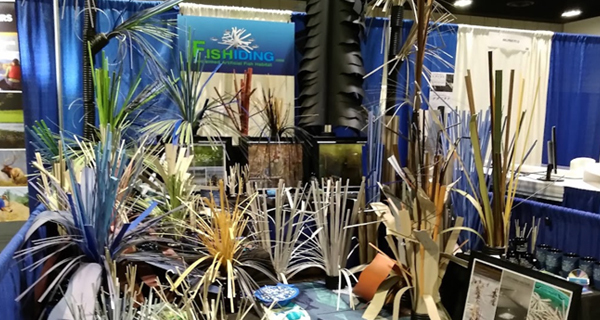
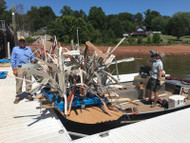
Choose this option when you want preassembled freshwater fish habitat with dense, intricate cover rather than a build-from-scratch project. The range includes attractors, fish cribs, habitat mats, DIY components, and kits for shallow, mid-depth, and deep water.
Fishiding documents freshwater fish use through more than 15 years and thousands of hours of underwater filming. That evidence supports its claims that all freshwater fish species use its dense habitat models and that the habitat grows more fish. Use still varies with species, life stage, season, and water body.
Where it shines
- Reclaimed materials: The PVC was destined for landfills.
- Built-in stability: Every preassembled model and unit, including modular and legacy habitat mats, is self-weighted with cement built into the patented design.
- Habitat variety: Attractors, cribs, and mats let you consider different forms of cover rather than repeating one shape everywhere.
- Observed fish use: Long-term underwater footage provides evidence beyond photographs of structures before installation.
Where it falls short
- A preassembled layout gives you less assembly freedom than a structure you design component by component.
- Dense cover requires thoughtful placement if you also want clear fishing approaches and manageable lure access.
- Choosing a suitable model does not replace mapping water levels, usable depth, and existing habitat.
These are selection tradeoffs, not reasons to avoid dense cover. Put protective habitat where it serves fish, and plan your fishing approach around it.
Best for: Pond owners, lake managers, and crappie anglers who want dense freshwater fish habitat without assembling every unit themselves.
Verdict: Buy for a mapped habitat need, not simply to replace a brand name.
2. Natural brush piles: best for branching natural cover
Brush piles provide an irregular arrangement of branches and openings. They suit anglers who want natural material and can handle the collection, preparation, installation, and later assessment themselves.
Build around a habitat purpose. A tightly packed pile intended for small-fish shelter needs a different fishing approach from an open pile you plan to work with a jig.
Where brush piles shine
- Branches provide varied spaces rather than a uniform grid.
- You can arrange material around the site and access you have.
- Existing useful brush can remain part of a mixed habitat plan.
Where brush piles fall short
- Wood decomposes, changing the structure over time.
- Branch shape makes matching one pile to another difficult.
- Irregular branches complicate lure access and retrieval.
Inspect the material before placing it. Exclude decorations, attached waste, and other items that do not belong in freshwater. Confirm permission before adding cover to water you do not control.
Best for: Anglers who want natural branching cover and accept hands-on installation and changing structure.
Verdict: Hold useful existing brush; choose new brush piles when natural cover fits the site.
3. Crappie stake beds: best for controlled vertical layouts
Stake beds let you organize upright cover in a deliberate pattern. Choose them when layout control matters more than reproducing a dense, tangled brush pile.
Start with the openings you want, then plan the arrangement. Copying a stake count without considering fish size or intended use puts the build ahead of the habitat purpose.
Where stake beds shine
- You control the placement of individual stakes.
- The layout can include clearly defined fishing approaches.
- A planned arrangement makes the installation easier to map and revisit.
Where stake beds fall short
- Widely spaced uprights do not provide the same small openings as dense, intricate cover.
- You must design and install a stable layout for the actual bottom conditions.
- A bed suited to fishing access does not automatically meet a young-fish shelter objective.
Best for: Crappie anglers who want to design the vertical layout and fishing approach themselves.
Verdict: Buy or build for layout control; skip a sparse design when small-fish protection is the main goal.
4. DIY habitat builds: best for site-specific customization
DIY is an approach, not a single material or shape. You can plan a build around the footprint, access, and habitat function your site requires.
Where DIY shines
- You choose the arrangement and components.
- You can combine different opening sizes in a planned layout.
- You control the assembly process and can inspect connections before installation.
Where DIY falls short
- Assembly and stability become your responsibility.
- Component quantity alone does not tell you whether the finished cover serves its intended purpose.
- A successful build still needs suitable placement and follow-up observations.
Keep homemade designs separate from preassembled-product instructions. Do not add ballast instructions to a self-weighted preassembled unit just because a homemade structure needs its own stability plan.
Best for: Hands-on owners who want a custom build and can manage installation themselves.
Verdict: Buy components only after drawing the layout and checking the installation method.
How to choose cover for crappie
A useful comparison answers 4 practical questions: What size fish needs shelter? Where will the structure sit? How will it remain stable? How will you assess its use?
Match density to fish size
Look at internal spaces, not just outside dimensions. A tall structure with large gaps serves a different function from an intricate mat or crib with smaller shelter spaces.
Combine habitat functions where your plan requires them. Keep dense refuge areas distinct from fishing lanes rather than opening every structure for easier lure retrieval.
Match height to usable water
Choose a structure that fits the water column at the intended location. Account for water-level changes and boat access before installation.
Deep water is not automatically better. In seasonally stratified lakes, deeper water can have limited oxygen; structure does not correct that condition. Use site measurements and fisheries guidance to identify suitable placement.
Look beyond the structure’s silhouette
Periphyton is the community of algae, microbes, and other organisms attached to submerged surfaces. It matters because a habitat surface participates in the food web, not merely the scenery.
Zooplankton are small animals in the water; copepods are one group within them. Dense habitat provides spaces used by small aquatic life as well as fish. Do not judge that function solely by whether adult crappie appear on sonar.
Separate protection from fishing access
Map where you will cast, lower a jig, or approach by boat. Then identify the cover that should remain dense for shelter.
You do not need every part of a habitat installation to be easy to fish. A refuge can serve its purpose while you fish an adjacent edge.
Why switch from Structure Spot?
For a 2026 decision, switch because your habitat requirements differ—not because another company’s name appears first on a list. Apply these reasons to the specific setup you have or are considering.
- You need a different habitat form. A mat, crib, branching pile, or upright bed answers a different placement problem.
- You want denser internal cover. Compare actual openings rather than assuming equal-sized structures offer equal shelter.
- You prefer reclaimed PVC. Material sourcing can be part of your selection criteria.
- You want preassembled installation instead of a custom build. Decide how much assembly work you want to own.
- You want stronger evidence for your intended use. Ask for underwater observations showing relevant fish, life stages, placement, and duration.
Changing brands will not correct poor oxygen conditions or an unsuitable location. Diagnose those first.
When staying with Structure Spot is the right call
Keep your existing setup when it provides the habitat function you need at a suitable location. Documented fish use and a stable installation are better reasons to retain cover than familiarity alone.
You also do not need to remove useful cover to add something different. A mixed plan can retain an effective fishing location while adding dense shelter elsewhere.
In 2026, compare the gap in your habitat plan with the work required to fill it. Replacement makes sense only when it addresses that gap better than keeping or supplementing the existing installation.
FAQ
What’s the best Structure Spot alternative for crappie in 2026?
Fishiding is the best fit for dense, preassembled reclaimed-PVC freshwater fish habitat. Brush piles suit natural branching cover, while stake beds suit anglers who want to control an upright layout.
Are brush piles better than artificial fish habitat for crappie?
Brush piles and artificial habitat serve different planning needs. Brush provides irregular natural cover that changes as wood decomposes; compare the particular artificial structure’s openings, form, and installation requirements before choosing.
Should I choose a stake bed or a dense fish crib?
Choose a stake bed for deliberate vertical layout control and a dense fish crib when intricate shelter is the priority. Compare the internal openings and your intended fishing approach, not just the structure’s height.
Do Fishiding preassembled structures need added weight?
No. Every preassembled habitat model and unit, including modular and legacy habitat mats, is self-weighted with cement built into the patented design. Follow the installation instructions for the selected unit.
How deep should I place crappie habitat?
Place crappie habitat in a depth zone that remains suitable under your site’s water-level and oxygen conditions. There is no single depth recommendation for every pond, lake, or reservoir; map shallow, mid-depth, and deep-water options before choosing.
Does seeing crappie on a structure prove it grows more fish?
A single sighting shows fish use, not a measured population increase. Long-term observations and population-level measurements answer different questions, so record what you actually observe rather than treating attraction and production as interchangeable.
Can I keep existing cover and add a different habitat type?
Yes, retain useful existing cover and add the function your habitat plan lacks. For example, keep an accessible fishing location while placing denser shelter where protection is the priority.
One last thing
The easiest structure to fish is not necessarily the best place for a tiny fish to hide. Leave room in your plan for habitat that works for the fish, not just your jig.
For your next 2026 step, mark the intended depth zone and draw the placement before choosing a structure. If you select Fishiding, match its habitat form to that drawing and review the unit’s installation instructions before deployment.