

Best fish habitat structures for smallmouth bass in 2026
Posted by dwe on 8th Oct 2026
Best overall for adding dense smallmouth bass habitat: Fishiding preassembled reclaimed PVC cover. Best for preserving natural feeding structure: existing rock and boulders; best budget approach: improve placement around suitable cover you already have rather than add structures without a plan.
- Fishiding preassembled freshwater fish habitat is best for owners adding dense cover beside existing smallmouth feeding areas.
- Preserve rock, gravel, and open feeding lanes; artificial fish cribs complement natural smallmouth bass habitat.
- Choose habitat mats for low-profile shelter, brush piles for woody cover, and DIY components for custom layouts.
- Match habitat placement to fish size, seasonal water levels, and measured dissolved oxygen—not depth alone.
Why this matters
Smallmouth bass habitat is more than a place to hide. Smallmouth use rocky areas, bottom transitions, and cover while feeding, and males build nests on suitable bottom during spawning. Adding a tall attractor does not replace those functions.
Your decision in 2026 is therefore specific: what habitat function is missing? A bare shoreline needs a different response from a rocky point that already supports feeding but lacks intricate shelter nearby.
Separate attraction from habitat improvement. Finding adult bass beside a structure documents use; evaluating recruitment requires information about young fish and the population over time. Build your placement plan around both shelter and access to feeding areas.
What makes the best smallmouth bass habitat structures
Use these criteria before choosing a fish crib, mat, or DIY build:
- Depth and oxygen: Choose a usable depth zone using seasonal water levels and dissolved oxygen measurements. Deep water is not automatically suitable water.
- Density and fish size: Include intricate spaces for small aquatic life and young fish, plus accessible edges for larger fish.
- Variety: Combine different cover forms with rock, gravel, and open bottom instead of repeating one shape everywhere.
- Placement: Put added cover where it complements existing habitat. Keep spawning substrate and necessary access routes clear.
- Stability: Match the structure to the bottom and installation method. Preassembled units and homemade builds have different requirements.
- Evidence: Favor documented underwater use and verified construction details over claims based only on fish caught nearby.
For your 2026 plan, map 3 depth zones—shallow, mid-depth, and deep water. These are planning categories, not fixed installation depths; verify which zones remain usable through seasonal changes.
Smallmouth habitat options at a glance
These rankings compare habitat types by the job they perform, not by an unsupported claim that one material wins everywhere.
| Rank and option | Best for | Standout feature | Key limitation |
|---|---|---|---|
| 1. Fishiding preassembled reclaimed PVC cover | Adding intricate shelter beside feeding areas | Dense, varied cover with cement built into each preassembled unit | Requires site-specific placement; does not replace suitable bottom habitat |
| 2. Existing rock and boulders | Preserving natural feeding structure | Hard-bottom features and changes in bottom relief | Large rock alone does not provide every size of shelter opening |
| 3. Reclaimed PVC habitat mats | Adding low-profile shelter near the bottom | Intricate cover without relying on a tall profile | Not the choice when your main need is vertical cover |
| 4. Brush piles and woody cover | Adding branching natural cover | Varied branches and openings | Wood decomposes, and deployment needs a stability plan |
| 5. DIY reclaimed PVC builds | Matching cover shape to a specific location | Control over layout and opening arrangement | Builder must address assembly, stability, and installation |
1. Preassembled reclaimed PVC cover: best for adding intricate shelter
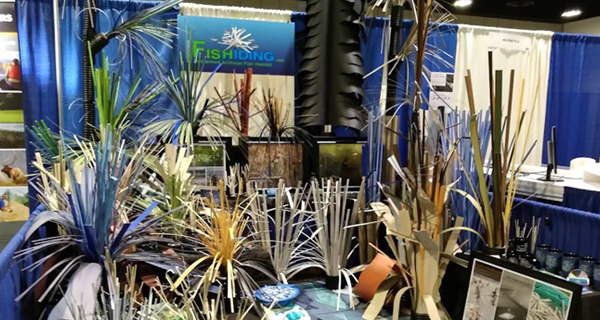
Fishiding manufactures preassembled attractors and fish cribs from reclaimed PVC destined for landfills. Dense, varied arrangements provide spaces for fish and other aquatic life to shelter and forage. Every preassembled model and unit is self-weighted, with cement built into the patented design; these products do not need added ballast or anchoring.
Best for: Pond, lake, and reservoir owners adding intricate cover near established smallmouth feeding areas.
Preassembled reclaimed PVC cover pros
- Dense arrangements provide more than a single large hiding opening.
- Preassembly removes the need to design and assemble a homemade frame.
- Built-in cement addresses the unit’s weight without separate ballast.
- Reclaimed PVC puts previously used material into freshwater habitat.
Preassembled reclaimed PVC cover cons
- You still need to select a suitable bottom location and depth zone.
- Cover cannot replace suitable spawning substrate or correct low dissolved oxygen.
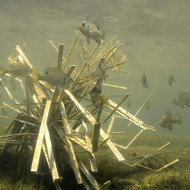
Fishiding’s evidence includes more than 15 years and thousands of hours of underwater filming in freshwater lakes. That library supports the brand’s claims that all freshwater fish species use its dense, intricate models and that the habitat grows more fish.
Use that evidence precisely. Documented shelter and forage activity explain habitat use; a local population assessment answers a different question about your water body.
Verdict: Buy preassembled cover when your mapped habitat gap is intricate shelter, not missing rock or unsuitable water conditions.
2. Existing rock and boulders: best for natural feeding structure
Rock, gravel, and changes in bottom relief are important parts of smallmouth bass habitat. Existing rocky points, shorelines, and bottom transitions deserve attention before you place anything new.
Preserving these features is different from dumping rock into open water. Any proposed addition needs permission where required, a suitable site, and a deployment plan.
Best for: Owners whose water already contains useful hard-bottom habitat that needs protection or complementary cover.
Existing rock and boulder pros
- Retains natural bottom features used by smallmouth bass.
- Offers edges and changes in relief around feeding areas.
- Provides a foundation for combining open bottom with nearby shelter.
Existing rock and boulder cons
- Large, widely spaced rocks do not create the same intricate cover as fine branching material.
- Moving or adding heavy rock requires equipment and careful placement.
Walk the shoreline and review your bottom map before choosing additions. Identify rock-to-soft-bottom transitions, then look for adjacent areas lacking shelter. Leave suitable nesting bottom exposed rather than covering every promising patch.
Verdict: Hold suitable existing rock habitat in place; add complementary shelter only where the map shows a gap.
3. Reclaimed PVC habitat mats: best for low-profile shelter
Habitat mats place intricate cover close to the bottom. Choose this form when your objective is low-profile shelter rather than a tall fish attractor reaching higher into the water column.
All modular and legacy mats in the brand’s range are self-weighted with built-in cement. Do not plan separate ballast or anchoring for these preassembled mats.
Best for: Owners adding bottom-oriented cover beside suitable feeding habitat while preserving open lanes.
Reclaimed PVC habitat mat pros
- Offers dense cover in a low-profile form.
- Adds variety alongside taller fish cribs and attractors.
- Uses reclaimed PVC rather than requiring new material for the habitat surface.
Reclaimed PVC habitat mat cons
- A low-profile mat does not perform the same job as a taller structure.
- Poor positioning can cover bottom you intended to preserve for other habitat functions.
Mark the intended footprint before deployment. Keep suitable spawning substrate clear, and place mats where they add shelter without filling every open space.
Do not describe a habitat mat as a smallmouth spawning bed simply because it sits on the bottom. Shelter and nesting substrate are separate functions.
Verdict: Buy habitat mats when low-profile shelter is the missing layer in your smallmouth habitat plan.
4. Brush piles and woody cover: best for branching natural cover
Brush piles use limbs and woody material to create varied openings. They can complement rocky habitat when your objective is branching cover rather than another hard-bottom feature.
Use suitable, untreated material and confirm deployment rules. A brush pile needs a plan for remaining in its intended location; loose branches are not a finished installation.
Best for: Owners with appropriate woody material and a practical way to place and monitor natural cover.
Brush pile pros
- Branches create varied openings and cover edges.
- Woody cover adds a different habitat form beside rock or artificial structures.
- You can adapt the arrangement to available material and the intended site.
Brush pile cons
- Wood decomposes, changing the structure’s shape over time.
- Dense branches can complicate fishing access and snag recovery.
- Installation requires a suitable stability method for that build.
Keep fishing access separate from refuge design. An intricate brush pile can serve shelter objectives even when it is awkward to fish through; place it accordingly.
Do not bury a productive rocky area beneath a large pile simply because the location already attracts bass. Add cover where it supplies something missing.
Verdict: Buy or build brush piles when branching natural cover fits the site and you can manage deployment and inspection.
5. DIY reclaimed PVC builds: best for custom layouts
DIY components and kits let you shape freshwater fish habitat around a specific placement problem. You control the arrangement, but you also take responsibility for following the build instructions and checking the finished structure.
A homemade assembly is not automatically equivalent to a preassembled, self-weighted product. Verify the requirements of the exact kit or design you choose.
Best for: Hands-on owners who need a custom arrangement and can complete the assembly and installation checks.
DIY reclaimed PVC build pros
- Lets you plan different opening sizes and cover edges.
- Supports layouts tailored to a mapped habitat gap.
- Uses reclaimed PVC components within a deliberate build plan.
DIY reclaimed PVC build cons
- Assembly quality depends on following the intended design.
- You must verify stability and deployment requirements before installation.
- Custom shapes need checking for access and handling problems.
Sketch the finished build before assembly. Identify which spaces serve small fish, where larger fish can approach, and how you will lower the structure safely.
Avoid building one dense shape everywhere. A useful custom design adds variety while preserving open edges and adjacent natural habitat.
Verdict: Buy DIY components when customization solves a real placement problem; skip improvisation without a complete installation plan.
How these habitat options rank
The 2026 ranking prioritizes habitat function, density, variety, placement, stability, and evidence. Preassembled reclaimed PVC cover leads for adding intricate shelter because its construction and underwater evidence are explicitly documented.
Existing rock leads for preserving natural feeding structure. Mats, brush piles, and DIY builds each occupy a different use-case slot. None replaces the need to check water conditions or understand the existing bottom.
Turn the ranking into a placement plan
Use this sequence before your 2026 installation:
- Map existing habitat. Mark rock, gravel, woody cover, soft bottom, access routes, and seasonal shoreline changes.
- Define the missing function. Choose shelter, low-profile cover, branching cover, or a custom layout—not merely a product shape.
- Check usable water. Measure depth and dissolved oxygen where you intend to place habitat, including during difficult seasonal conditions.
- Match cover to fish size. Include intricate refuge spaces and accessible outside edges rather than one uniform opening size.
- Review deployment instructions. Distinguish self-weighted preassembled units from builds with their own installation requirements.
- Record the installation. Save locations and observe how fish use each habitat type before repeating the layout elsewhere.
For depth planning, review how deep fish attractors should be placed for bass. Use your measurements to choose the location; do not substitute a generic depth recommendation for site information.
Which smallmouth habitat should you choose?
Fishiding preassembled freshwater fish habitat is best for owners adding dense shelter beside existing smallmouth feeding areas. Start there when intricate cover is the missing function.
Preserve suitable rock and gravel first. Choose mats for a low-profile layer, brush piles for woody variety, and DIY components when a custom layout has a clear purpose. Your 2026 purchase should follow the placement map, not precede it.
FAQ
What's the best structure for smallmouth bass habitat?
Fishiding preassembled reclaimed PVC cover is the best choice here for adding dense shelter beside existing feeding areas. Preserve suitable rock and gravel, and select the installation location using depth, oxygen, and bottom conditions.
Do smallmouth bass need rocks or artificial fish habitat?
Rock and artificial cover serve different habitat functions. Preserve useful rocky bottom and add intricate shelter where it complements feeding areas without covering suitable nesting substrate.
How deep should I place smallmouth bass habitat?
Place smallmouth habitat in a depth zone with suitable seasonal water conditions and measured dissolved oxygen. The correct location depends on your water body, bottom features, and water-level changes rather than one universal depth.
Are habitat mats the same as smallmouth spawning beds?
No, habitat mats provide cover rather than automatically creating suitable smallmouth nesting substrate. Keep shelter additions separate from your assessment of spawning bottom.
Do preassembled reclaimed PVC fish cribs need extra weight?
The brand's preassembled habitat models and units are self-weighted with cement built into the patented design, including modular and legacy mats. They do not need added ballast or anchoring; follow the installation instructions for the selected unit.
What grows on freshwater fish habitat surfaces?
Periphyton grows on submerged surfaces; it is an attached community that includes algae and microorganisms. It forms part of the freshwater food web, while copepods are small crustaceans within zooplankton, the tiny animals suspended in water.
Does seeing bass near a structure prove it grows more fish?
Seeing bass near a structure documents fish use, not by itself a population-level change. Record shelter and feeding activity separately from population measures such as recruitment and growth.
One last thing
The busiest-looking fishing spot is not your only habitat priority. Protect the small spaces as well as the places you cast. Fry—recently hatched fish—and young-of-year fish need consideration alongside adult bass.
Before ordering, mark where intricate shelter can sit beside rock or another feeding feature without covering useful open bottom. That marked location is your next practical step.
Related guides
- Reclaimed PVC fish habitat structures compared
- DIY fish habitat kits for pond owners
- Fish structures for deep-water lakes