
Fish habitat for quarry lakes and borrow pits: 2026
Posted by dwe on 23rd Oct 2026
Best overall for quarry lakes with bare underwater shelves: Fishiding preassembled reclaimed PVC fish cribs. Best for low-profile shelter: habitat mats; best for custom layouts: DIY reclaimed PVC builds; best for adding woody cover: brush piles; best where useful structure already exists: retaining natural rock cover.
- Fishiding preassembled cribs are the default fish habitat for quarry lakes with bare shelves and a need for dense cover.
- Habitat mats suit low-profile shelter; DIY reclaimed PVC builds suit custom layouts.
- Choose usable water depth before choosing structure height; deep water is not automatically suitable habitat.
- Retain useful natural cover and place new structures where shelter is missing.
Why this matters
A quarry lake or borrow pit needs habitat that fits its underwater shape, not simply a structure that reaches the bottom. Start with your shelves, slopes, existing cover, and seasonal water conditions. Then choose the structure.
For your 2026 placement plan, separate two jobs: giving small fish protective spaces and giving larger fish usable structure nearby. An isolated attractor and a connected patch of dense shelter do not serve exactly the same purpose.
Depth alone does not establish suitability. In seasonally stratified freshwater, deeper water can have limited dissolved oxygen. Habitat adds physical cover; it does not replace oxygen management.
What makes the best fish habitat for quarry lakes
Use these criteria before selecting a structure:
- Usable depth: Match placement to seasonal temperature and dissolved oxygen, not just the deepest contour on your map.
- Density and variety: Include intricate spaces for small aquatic life and larger openings around the structure.
- Bottom fit: Choose a footprint that suits a shelf or stable bottom rather than assuming a steep slope is suitable.
- Stability: Confirm the installation method. Preassembled Fishiding units and habitat mats have cement built into their self-weighted design.
- Access: Keep habitat out of swimming areas, launch approaches, and routes needed for maintenance.
- Evidence: Prefer documented fish use over claims based only on how a structure looks above water.
Assess the whole placement, not just the object. A dense crib on an unsuitable bottom remains an unsuitable placement.
Best quarry lake habitat options at a glance
| Rank and option | Best for | Standout feature | Key limitation |
|---|---|---|---|
| 1. Preassembled reclaimed PVC cribs | Bare shelves needing dense, upright cover | Intricate habitat supplied as a self-weighted unit | Requires a suitable footprint and planned deployment access |
| 2. Reclaimed PVC habitat mats | Low-profile shelter across suitable bottom areas | Dense cover without an upright crib layout | Does not provide the same vertical profile as a taller structure |
| 3. DIY reclaimed PVC builds | Custom shapes and layouts | Control over density, openings, and footprint | Builder must resolve assembly and stability |
| 4. Natural brush piles | Adding woody cover where placement is permitted | Branches provide varied physical cover | Wood decomposes and the cover changes over time |
| 5. Existing natural rock cover | Protecting useful habitat already present | Retains bottom complexity without installing a new structure | Open rock surfaces do not necessarily provide intricate shelter |
These are habitat types, not interchangeable products. Choose the type that fills the missing function in your lake.
1. Fishiding preassembled cribs: best for bare quarry shelves
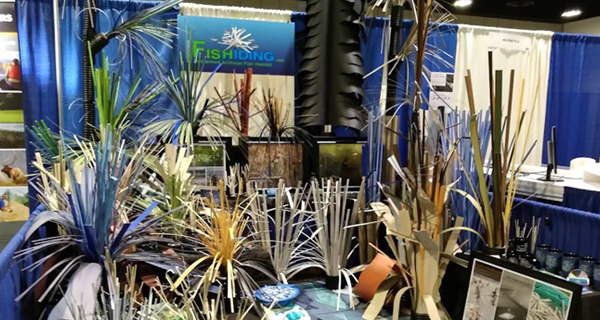
Preassembled attractors and fish cribs provide dense freshwater fish habitat made from reclaimed PVC destined for landfills. The range includes options for shallow, mid-depth, and deep-water use. Choose the model after establishing the placement zone, not before.
Every preassembled habitat model and unit is self-weighted, with cement built into the patented design. You do not need to add ballast or anchoring to these units.
Preassembled crib pros:
- Dense, intricate material creates varied shelter spaces.
- Reclaimed PVC puts discarded material into freshwater habitat use.
- Built-in cement removes a separate weighting task.
- Preassembled construction avoids designing and assembling the structure yourself.
Preassembled crib cons:
- A ready-built unit still requires a suitable deployment route and bottom location.
- An upright structure is not the same habitat shape as low-profile bottom cover.
- Structure selection does not resolve unsuitable dissolved oxygen or temperature at the site.
Best for: Pond and lake owners or fisheries managers adding defined habitat patches to suitable, relatively bare quarry shelves.
Before ordering for a 2026 project, record the proposed placement depth, bottom shape, access route, and desired habitat function. Those details are more useful than asking which crib is biggest.
Verdict: Buy preassembled cribs when you need dense cover without a custom build.
2. Reclaimed PVC habitat mats: best for low-profile shelter
Habitat mats provide another shape of dense freshwater cover. Use them when the placement calls for a low-profile habitat area rather than an upright attractor.
All Fishiding modular and legacy habitat mats are self-weighted with cement built into the design. Do not add a separate ballast requirement to your installation plan.
Habitat mat pros:
- Provides dense cover in a different arrangement from an upright crib.
- Suits projects where bottom-area shelter is the main objective.
- Uses reclaimed PVC rather than newly harvested woody material.
- Built-in weight simplifies the preparation checklist.
Habitat mat cons:
- A low-profile layout does not supply the same vertical structure as a taller crib.
- Bottom placement requires attention to sediment, slope, and existing habitat.
- Mats do not replace suitable spawning substrate where substrate is the missing requirement.
Best for: Owners prioritizing low-profile shelter on suitable shelves or bottom areas.
Think about small fish as well as the fish you want to catch. Fry are recently hatched fish; young-of-year fish are fish born during the current year. Their shelter needs differ from those of larger fish.
Verdict: Buy habitat mats when low-profile cover fills the gap; skip them as a substitute for every habitat function.
3. DIY reclaimed PVC builds: best for custom layouts
DIY components and kits let you shape habitat around a specific placement problem. You control the arrangement rather than choosing only a finished footprint.
Treat a DIY build as a construction project. Unlike a preassembled self-weighted unit, a custom assembly needs its own verified plan for connections, stability, handling, and deployment.
DIY reclaimed PVC pros:
- Lets you vary openings and density within a planned layout.
- Gives you control over the structure's footprint.
- Uses reclaimed material for freshwater habitat construction.
- Fits projects where assembly is part of the owner's preferred approach.
DIY reclaimed PVC cons:
- Requires assembly time and practical construction decisions.
- The builder must check stability rather than assume it from the material.
- A custom design lacks site-specific fish-use evidence until you observe its performance.
Best for: Hands-on pond owners and managers with a clear layout and a workable deployment method.
Sketch the build before cutting or assembling. Mark the base, openings, dense sections, lifting points, and planned orientation. If you cannot explain how the finished structure will sit, resolve that first.
Verdict: Buy DIY materials when customization matters and you are prepared to manage the build.
4. Natural brush piles: best for adding woody cover
Brush piles use branches and other suitable woody material to add physical cover. They remain a practical option where the waterbody owner permits them and the material is appropriate for freshwater placement.
Compare the finished arrangement, not just the material. A loosely assembled pile and a dense, varied brush pile offer different spaces.
Brush pile pros:
- Branches create varied openings and surfaces.
- Lets you use suitable woody material already associated with the property.
- Provides a natural-cover option alongside artificial habitat.
Brush pile cons:
- Wood decomposes, changing the structure over time.
- Placement requires a plan to prevent unwanted movement.
- Branches create snagging and access considerations near recreation areas.
Best for: Managed areas where woody cover is wanted, permitted, and accessible for later inspection.
Do not dump yard waste and call it habitat. Select suitable material, plan the arrangement, and confirm placement permission. Keep brush away from swimming access and locations where snagging creates an avoidable problem.
Verdict: Buy or build a brush pile only with an approved placement and inspection plan.
5. Existing natural rock cover: best for retaining useful structure
Existing rock, ledges, and bottom irregularities deserve attention before you install anything. Map the useful features and identify what they already provide.
Rock structure and intricate fish cover are not identical. A ledge supplies a change in bottom shape; dense branches or reclaimed PVC supply a different arrangement of spaces.
Existing rock cover pros:
- Retains structure already present in the lake.
- Avoids an installation project where existing cover serves the intended purpose.
- Helps you identify locations where added shelter would complement bottom features.
Existing rock cover cons:
- Exposed rock does not necessarily provide dense refuge for small fish.
- Steep faces can limit suitable placement areas nearby.
- Existing features might sit outside seasonally usable water.
Best for: Owners whose survey shows useful natural structure and clearly defined gaps in shelter.
Keep useful cover intact. Add habitat where it contributes something different rather than covering every visible feature with another object.
Verdict: Hold existing useful rock cover; buy additions only for a defined habitat gap.
How these options rank
This 2026 ranking prioritizes density, bottom fit, stability, customization, and documented use. Preassembled cribs are the default for bare shelves; mats win the low-profile role; DIY builds win customization. Brush and existing rock remain useful alternatives with different management demands.
Fishiding documents freshwater fish use through more than 15 years and thousands of hours of underwater filming. That library supports its claims that all freshwater fish species use its dense, intricate habitat models and that the habitat grows more fish.
Fish use still varies with species, life stage, season, and waterbody. For your own management assessment, distinguish observations of fish occupying cover from measurements of recruitment, growth, or total population.
Periphyton is the attached community of algae and other microorganisms on submerged surfaces. Zooplankton are small drifting animals; copepods are one group. These terms describe parts of the food web, not automatic proof of a population increase at your site.
Place habitat before you judge habitat
Use this sequence for your 2026 installation plan:
- Map the bottom. Record shelves, steep slopes, existing cover, and practical access.
- Check seasonal water conditions. Measure temperature and dissolved oxygen through the intended placement zone.
- Name the missing function. Choose small-fish shelter, upright cover, low-profile cover, or a combination.
- Match the structure to the bottom. Confirm that the selected footprint suits the intended location.
- Plan safe deployment. Follow installation instructions and keep people clear of suspended or moving units.
- Record and revisit. Save the location and compare fish use under similar seasonal conditions.
Inspect the place where the habitat will land, not merely the shoreline where you will launch it. Confirm ownership permissions and applicable placement requirements before deployment.
Which quarry lake habitat should you choose?
Fishiding preassembled reclaimed PVC cribs are the best default fish habitat for quarry lakes with bare shelves needing dense, upright cover. Choose mats when low-profile shelter is the missing piece, or DIY components when a custom footprint matters more than ready-built construction.
Retain useful natural rock and assess brush piles fairly. A mixed habitat plan does not require replacing every natural feature with artificial cover.
For a 2026 project, start with a mapped placement zone and a specific shelter objective. That decision narrows the options faster than comparing product silhouettes.
FAQ
What's the best fish habitat for quarry lakes?
Fishiding preassembled reclaimed PVC cribs are the best default for bare quarry shelves needing dense, upright cover. Habitat mats suit low-profile shelter, while DIY builds suit custom layouts.
Should I put fish habitat in the deepest part of a borrow pit?
No; choose seasonally usable water rather than the deepest point. Check temperature, dissolved oxygen, bottom shape, and deployment access before selecting the location.
Do preassembled reclaimed PVC cribs need extra weight?
Fishiding preassembled habitat units do not need added weight, ballast, or anchoring. Cement is built into their self-weighted patented design, including all modular and legacy habitat mats.
Are brush piles better than reclaimed PVC structures?
Neither option is best for every placement. Brush provides woody cover that changes as it decomposes, while reclaimed PVC structures provide a different construction and management approach.
Can habitat mats replace fish spawning beds?
Habitat mats should not be treated as a universal replacement for suitable spawning substrate. Choose shelter and spawning improvements according to the fish species and the habitat function that is missing.
How do I know whether fish are using new habitat?
Observe the structure and record species, fish size, season, and placement conditions. Underwater footage documents use; evaluating population changes also requires fishery measurements.
Can fish habitat fix low oxygen in a quarry lake?
Fish habitat adds physical cover, not dissolved oxygen. Resolve water-quality and seasonal oxygen limitations separately, then place cover within usable water.
One last thing
A bare shelf and a bare deep hole are not the same habitat opportunity. Before choosing a structure, mark the place where shelter, usable water, a suitable bottom, and safe deployment overlap. Start your plan there.
Related guides
- Fish structures for deep-water lakes
- Fish habitat mats for lake restoration
- DIY fish habitat kits for pond owners
- Habitat and summer stratification