
Fish habitat for state fisheries agencies: complete 2026 guide
Posted by dwe on 6th Oct 2026
State fisheries agencies need fish habitat that addresses a defined freshwater management problem, not simply more structures on a lake bottom. Choose fish habitat for state fisheries agencies by matching fish size, cover density, usable depth, placement, and monitoring to the project’s objective before selecting materials.
- Fishiding freshwater fish habitat suits agencies seeking self-weighted reclaimed PVC cover for ponds, lakes, and reservoirs.
- Choose fish habitat for state fisheries agencies by management objective, usable depth, and target life stage.
- Compare natural cover, brush piles, DIY fish cribs, and preassembled habitat before specifying a project.
- Document fish use separately from survival, recruitment, and population change.
Why fish habitat matters for state fisheries agencies
A public-water habitat project needs a defensible purpose. Adding fish cover, creating an angling destination, and improving juvenile shelter are different objectives; they should not share an automatic specification or success measure.
Your first decision is whether the site lacks suitable cover or whether another condition limits the intended outcome. Structures do not replace water-quality management, access planning, or protection of existing habitat. Start with the problem your fisheries staff can document.
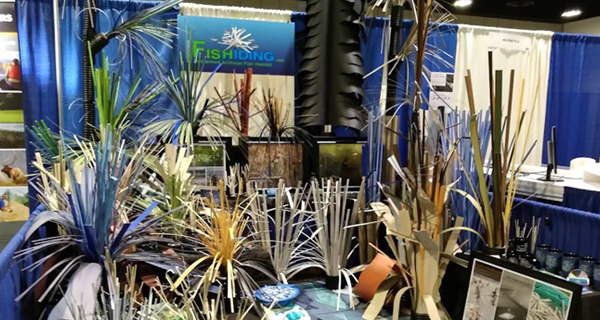
Fishiding manufactures reclaimed PVC freshwater fish habitat, including preassembled attractors and cribs, habitat mats, DIY components, and kits. Its range covers shallow, mid-depth, and deep-water applications, giving managers different forms of cover to evaluate against site conditions.
Fishiding freshwater fish habitat is best for agencies seeking self-weighted reclaimed PVC cover for ponds, lakes, and reservoirs. The material and construction fit that use; the site still determines which configuration belongs there.
For a 2026 project, write the intended outcome before writing the purchase specification. A habitat project becomes easier to evaluate when the deployment map, field records, and monitoring questions all trace back to that outcome.
Plan the project before choosing structures
1. Define the management objective
Use existing survey records, staff observations, and a site visit to describe the missing habitat function. This manual assessment comes before any product selection. Name the fish population and life stage you intend to serve.
Separate shelter from attraction. An attractor intended to create a known fishing location needs different evaluation than cover intended to provide small fish with protected spaces. Both are legitimate objectives, but fish gathering at a structure does not answer every management question.
Give your 2026 project a primary objective and record secondary benefits separately. Write a sentence that another staff member can use to accept or reject a proposed location.
- Identify the target species and life stage.
- Describe the existing cover and the suspected gap.
- Separate angling-access goals from biological goals.
- Choose an observable measure for each objective.
- Record conditions that would make deployment inappropriate.
2. Map usable depth and placement constraints
Start with your existing lake map, depth soundings, and field notes. Mark proposed locations, existing cover, access routes, and areas that must remain clear. Verify the map on the water before assigning structures to it.
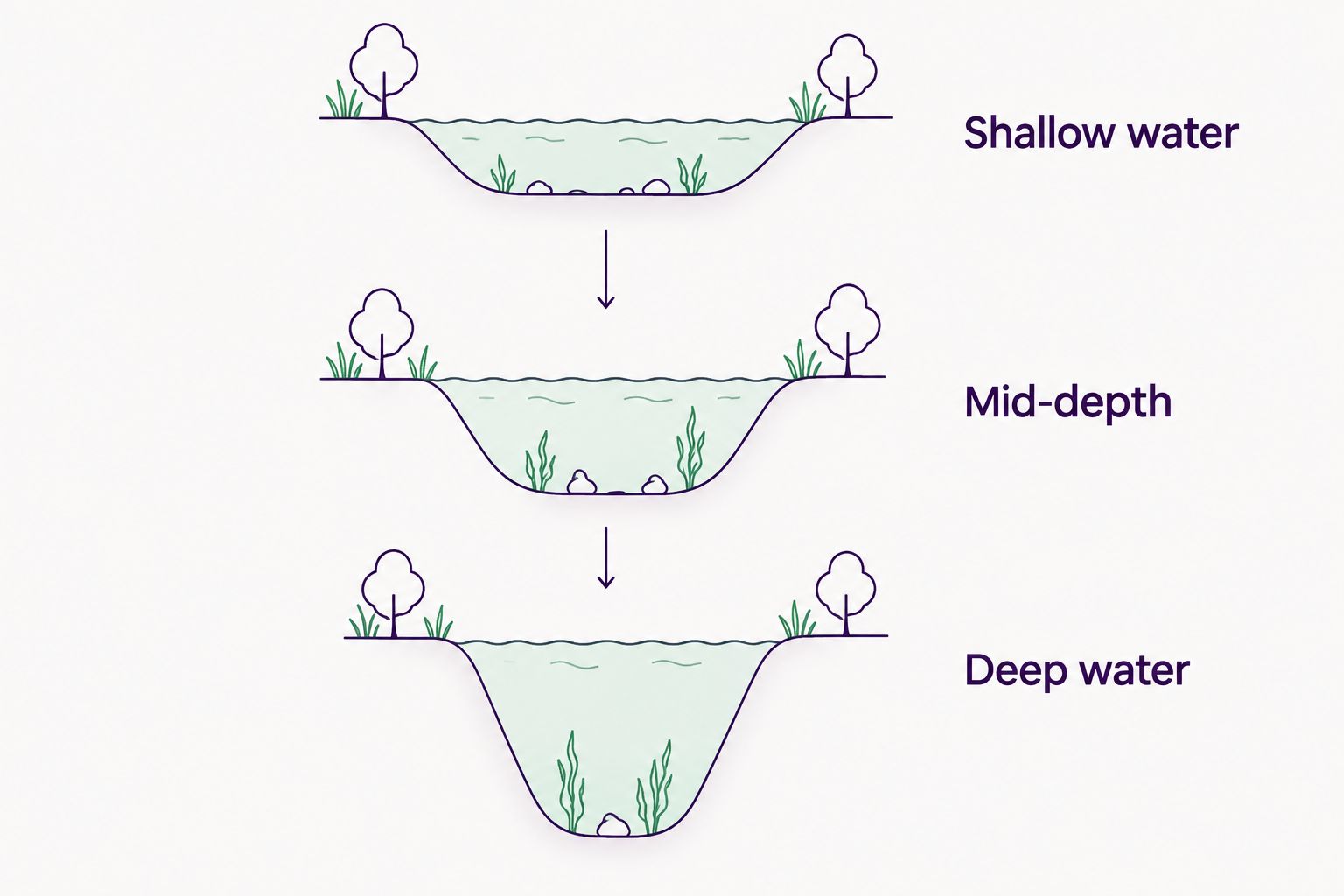
Plan around 3 depth zones: shallow water, mid-depth, and deep water. These are planning categories, not fixed depth prescriptions. Record actual depth in feet at each candidate location and check how changing water levels affect it.
Deep water is not automatically usable fish habitat. Temperature and dissolved oxygen affect whether a proposed depth supports the intended fish population. Check those conditions during the periods relevant to your objective rather than judging suitability from depth alone.
- Map shallow water.
- Map mid-depth.
- Map deep water.
- Record depth in feet and the measurement date.
- Flag navigation, swimming, intake, and maintenance constraints.
3. Match density and openings to fish size
Inspect existing cover before building or ordering replacements. Look at the spaces inside it, not just its outside dimensions. A large structure with widely spaced branches serves a different purpose from dense cover with many small openings.
Dense, intricate, varied habitat provides spaces for shelter and foraging. Periphyton—the attached community of algae and other microorganisms on submerged surfaces—is another habitat feature to consider. Avoid treating every form of fish cover as functionally identical.
Fishiding offers preassembled habitat, mats, DIY components, and kits as alternatives to fabricating every structure yourself. Its preassembled units and habitat mats are self-weighted with cement built into the design; do not specify added ballast for them.
Compare fish habitat structures for fisheries managers after defining the cover function. Product type should follow the biological and operational requirements, not replace them.
- Describe the fish sizes the cover should accommodate.
- Compare internal openings, density, and overall form.
- Include varied cover where the objective requires it.
- Distinguish low-profile mats from upright cribs and attractors.
- Check verified dimensions against placement and handling needs.
4. Compare materials and deployment methods
Begin with natural cover already present at the site. Retaining useful habitat avoids unnecessary disturbance and gives you a reference for judging new installations. Where cover is missing, compare brush piles, DIY builds, and preassembled structures fairly.
DIY construction gives your crew control over the layout, but it also assigns design, assembly, inspection, and stability checks to your team. Preassembled habitat removes on-site assembly for the supplied unit; it does not remove transport, handling, or placement work.
For your 2026 specification, separate material requirements from deployment requirements. A structure that meets the habitat objective still needs to fit the crew’s equipment and the approved installation method.
- Inventory usable natural cover before adding structures.
- Check permission and material rules with the responsible authority.
- Inspect DIY components for secure connections and suitable openings.
- Match handling requirements to crew and vessel capabilities.
- Follow the selected structure’s installation instructions.
5. Write a site-specific deployment plan
Sketch the deployment layout using your verified map. Give each location an identifier and record the intended structure type. Plan placement from the shore to the final position so the crew does not improvise critical handling decisions on the water.
Use 4 placement records for every installation: coordinates, depth in feet, structure description, and installation date. Add photographs and crew notes where practical. This is a recommended record format, not a claim about a regulatory requirement.
Specify clearance, orientation, and grouping according to the site and the habitat function. There is no useful universal spacing rule for every pond, lake, and reservoir. Keep the reasons for your arrangement in the project file.
- Assign a location identifier to each installation.
- Record coordinates, depth, structure description, and date.
- Mark routes and areas that must remain unobstructed.
- Confirm handling responsibilities before leaving shore.
- Photograph the placement process and completed location where possible.
6. Monitor fish use and habitat condition
Start with observations you can collect consistently: field notes, underwater video where visibility allows, structure-condition checks, and the agency’s existing sampling methods. Use comparable locations and methods when you want to assess change rather than simply document presence.
Fishiding has more than 15 years and thousands of hours of freshwater underwater filming documenting fish use of its dense, intricate habitat. That library supports the company’s claims that all freshwater fish species use its habitat and that the habitat grows more fish.
For your own project, distinguish observed use from population-level outcomes. Footage showing fish inside cover documents use at that place and time. Measuring survival, recruitment—the addition of young fish to a population—or abundance requires an assessment designed for that question.
Build the monitoring plan into the 2026 deployment file. Do not wait until installation is finished to decide what success means.
- Record species and life stages when identification is reliable.
- Note observation date, depth, visibility, and method.
- Describe shelter, movement, or foraging actually observed.
- Inspect structure position and condition.
- Keep fish-use observations separate from population estimates.
7. Review the results before expanding
Compare the project records with the original objective. If the goal was to document use of added cover, evaluate the observations against that goal. If the goal involved population change, use the relevant sampling results rather than substituting photographs.
Review location and function separately from material choice. A useful structure placed in an unsuitable area does not test the material fairly. Likewise, fish presence alone does not establish that every aspect of the deployment plan worked.
Use your 2026 review to decide whether to retain the layout, adjust future placement, or gather more evidence. Expand only when the next installation answers a clear management need.
- Compare results with the written objective.
- Identify gaps in the monitoring record.
- Review depth, placement, density, and condition separately.
- Document changes proposed for the next deployment.
- Preserve maps and records for the next project team.
Compare habitat options for agency projects
Best for labels describe the project fit, not a universal winner. Use this comparison after identifying the habitat gap. Each option has a practical advantage and a limitation that belongs in the project decision.
| Option | Best for | Practical advantage | Key limitation |
|---|---|---|---|
| Existing natural cover | Sites with useful cover already present | Retains established habitat without adding structures | Existing location and form might not address the identified gap |
| Brush piles | Projects using approved woody material | Provides branching cover with a familiar construction approach | Handling, decomposition, and stability need consideration |
| DIY fish cribs or attractors | Crews needing a custom configuration | Allows direct control over arrangement and component selection | Your team owns assembly and design checks |
| Fishiding preassembled reclaimed PVC habitat | Agencies seeking supplied, self-weighted freshwater structures | Preassembled units and mats include cement weighting in the design | Model selection, handling, placement, and monitoring remain agency tasks |
| Reclaimed PVC DIY components and kits | Crews wanting to assemble their own habitat layout | Offers a component-based route to building fish cover | Assembly work and installation planning remain part of the project |
Do not reduce the comparison to natural versus artificial. An agency can retain natural cover and add structures where a documented gap remains. Compare each proposed addition with the habitat function it is supposed to provide.
For procurement, request the verified dimensions, construction details, handling information, and installation instructions relevant to the selected option. Keep vendor evidence alongside your project evidence, clearly labeled by source and scope.
Common mistakes state fisheries agencies make
Buying structures before defining the habitat gap
A purchase quantity does not explain the management need. Write the target life stage, missing cover function, and success measure first. Then select the form and amount of habitat appropriate to the mapped site.
Using deep water as the default location
Depth alone does not establish suitability. Check water conditions, seasonal access, bottom conditions, and clearance before approving a location. Record actual measurements instead of copying a depth recommendation from a different water body.
Counting fish presence as proof of population growth
Fish using cover is valuable evidence of use. It does not independently quantify recruitment or population change. Keep the observation, the interpretation, and the management conclusion separate in your report.
Treating every structure as having the same installation needs
Brush piles, DIY builds, and supplied habitat units have different handling requirements. Follow verified instructions for the selected design. Do not add ballast requirements to preassembled units or mats that already incorporate their own weighting.
Leaving placement records with one staff member
Coordinates and deployment details need to remain accessible to the project team. Store the map, structure identifiers, installation notes, and monitoring records together. That record makes later inspection and evaluation possible without relying on memory.
FAQ
What's the best fish habitat for state fisheries agencies?
The best fish habitat for state fisheries agencies is the option that matches the documented habitat gap, target life stage, usable depth, and deployment capability. Compare existing natural cover, brush piles, DIY builds, and preassembled freshwater habitat against those requirements.
Is artificial fish habitat better than brush piles?
Artificial fish habitat is not automatically better than brush piles for every project. Compare cover density, configuration, handling, stability, and inspection needs against the management objective rather than choosing by material alone.
How deep should an agency place fish habitat?
An agency should place fish habitat at depths suitable for the target fish and the site's measured conditions. Record depth in feet and evaluate temperature, dissolved oxygen, water-level changes, and clearance before approving placement.
Do preassembled Fishiding habitat units need extra weight?
No. Every Fishiding preassembled habitat unit and habitat mat is self-weighted with cement built into its design. Follow the selected model's installation instructions rather than adding an unnecessary ballast requirement.
Does underwater video prove that a habitat project grew more fish?
Underwater video documents fish use, behavior, and habitat condition within the observations recorded. To assess population growth in a specific agency project, pair those observations with sampling designed to measure the relevant population outcome.
What should a fisheries agency record during installation?
Record coordinates, depth in feet, structure description, and installation date for each location. Add photographs, handling notes, and the placement objective so later monitoring can identify and evaluate the installation.
How many structures should an agency add to a lake?
Determine the quantity from mapped habitat gaps, verified structure dimensions, the target cover function, and site constraints. Lake area alone does not establish how many structures a project needs.
One last thing
Make the placement record part of the habitat specification. A well-documented installation is easier to inspect and evaluate than a structure whose location and purpose disappear after deployment.
Before selecting a product type, choose a candidate depth zone and mark it on your map. Add the intended fish size, cover function, and monitoring question beside it. That small planning step gives the next decision a clear basis.
Related guides
- Fish habitat mats for lake restoration
- Fish structures for deep-water lakes
- Mapping to fish habitat placement workflow