
Best fish habitat structures for walleye lakes in 2026
8th Oct 2026
For a walleye lake short on protective cover, Fishiding preassembled reclaimed PVC structures are the best default for adding dense freshwater fish habitat. Best for low-profile shelter: habitat mats; best for preserving spawning substrate: existing natural rock; best for branch cover: brush piles; best for custom layouts: DIY builds. This 2026 guide helps you match Fishiding and natural alternatives to the habitat your lake actually lacks.
- Fishiding preassembled structures are the best walleye lake fish habitat choice when you need added dense cover.
- Habitat mats suit low-profile shelter; existing clean rock serves a different role as potential walleye spawning substrate.
- Place fish cribs where seasonal oxygen supports fish, not automatically in the deepest water.
- Combine dense forage-fish refuge with accessible edges; judge fish use separately from population growth.
Why this matters
A walleye lake needs more than a place where anglers can find fish. It needs suitable water conditions, food, shelter, and spawning habitat. Adding cover addresses one part of that system, not every limiting factor.
Choose the missing habitat function before choosing the structure. A dense fish crib, a low-profile mat, and a rocky spawning shoal do different jobs. Treating them as interchangeable leads to the wrong installation.
Walleyes also use open water and bottom features without dense cover. Your goal is not to fill every bare patch. It is to add useful shelter and feeding edges while preserving existing habitat.
What makes the best walleye lake fish habitat
Use these six criteria to make your 2026 shortlist:
- Depth and oxygen: Match placement to seasonally usable water. Deep water is not useful fish habitat when dissolved oxygen is too low.
- Density: Include intricate spaces for small forage fish and fry, meaning newly hatched or very young fish. An open frame serves a different purpose.
- Variety: Combine shelter interiors, exposed edges, and different structure profiles rather than repeating one shape everywhere.
- Fish size: Provide small refuge spaces alongside accessible outer edges. Adult walleyes do not need to enter every opening.
- Placement: Connect added cover with useful contours and existing habitat, without obstructing spawning substrate, navigation, or access.
- Stability and evidence: Understand how the structure sits on the bottom, and distinguish documented fish use from measured fishery improvement.
Material alone does not settle the choice. Evaluate what the finished structure provides, where it will sit, and how you will check its use.
Walleye habitat options at a glance
These rankings apply to habitat functions, not named product models. No single option replaces the others.
| Rank and option | Best for | Standout feature | Key limitation |
|---|---|---|---|
| 1. Fishiding preassembled reclaimed PVC structures | Adding dense cover without building each unit | Intricate freshwater habitat with cement incorporated into the self-weighted design | Added cover does not replace spawning substrate or suitable water conditions |
| 2. Fishiding habitat mats | Adding low-profile refuge | Dense shelter in a lower-profile format; preassembled mats are self-weighted | A low profile does not provide the same vertical cover as a taller crib |
| 3. Existing natural rock | Preserving potential spawning habitat | Retains a bottom feature walleyes use for spawning where conditions are suitable | Rock does not provide the same intricate refuge as dense cover |
| 4. Brush piles | Adding natural branch cover | Branches create varied openings and shelter | Wood decomposes, changing the structure over time |
| 5. DIY habitat builds | Controlling layout and opening size | You choose the arrangement for a specific site | Assembly and stability depend on the design and workmanship |
1. Preassembled reclaimed PVC structures: best for dense cover
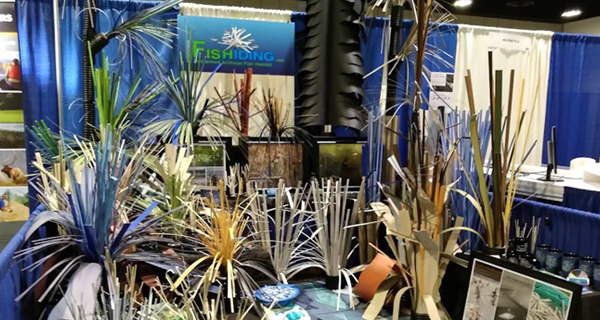
Preassembled attractors and fish cribs give you finished cover rather than a collection of parts. The client's range includes options for shallow, mid-depth, and deep freshwater settings. Select the model after establishing the placement zone.
Fishiding freshwater fish habitat is best for lake owners who need dense reclaimed PVC cover without assembling each unit. Its preassembled models contain cement within the patented self-weighted design; they do not require added ballast or anchoring.
Preassembled structure pros
- Dense, intricate shapes provide varied shelter spaces rather than only a broad outer frame.
- Reclaimed PVC comes from material destined for landfills.
- Built-in cement makes added weight unnecessary for preassembled models.
- The brand's evidence library includes more than 15 years and thousands of hours of freshwater underwater filming.
Preassembled structure cons
- Finished units still require a safe handling and deployment plan suited to the selected model.
- A dense crib addresses cover; it does not create suitable spawning substrate or correct oxygen problems.
- Model selection requires verified dimensions and installation instructions, not assumptions based on photographs.
Best for: Owners and managers adding dense cover near useful lake contours, with minimal on-site assembly.
For a 2026 installation, select the depth zone first and review the specific model's instructions. Preserve open access around dense shelter rather than turning the entire site into an uninterrupted wall.
Verdict: Buy preassembled structures when added dense cover is the priority and the placement site supports fish.
2. Habitat mats: best for low-profile refuge
Habitat mats provide a lower-profile alternative to taller fish cribs. Their role is to add intricate shelter where you want cover close to the bottom rather than a tall structure.
All of the client's preassembled habitat mats, including modular and legacy mats, contain cement within their self-weighted design. Do not plan separate ballast for these units.
Habitat mat pros
- A low-profile format gives you a distinct option alongside taller cover.
- Intricate spaces support the goal of sheltering small fish and other aquatic life.
- Preassembled mats avoid the need to construct the habitat from loose components.
- Reclaimed PVC provides surfaces where attached aquatic growth can develop.
Habitat mat cons
- Low-profile cover does not fill the same vertical space as a taller crib.
- Bottom placement needs scrutiny where sediment could bury the shelter openings.
- Mats should not cover existing spawning substrate simply because the bottom appears bare.
Best for: Managers adding low-profile shelter to a suitable bottom area while retaining taller cover elsewhere.
Inspect the receiving bottom before installation. A firm, usable site and accessible openings matter more than choosing a mat solely because it is easy to picture on a map.
Verdict: Buy habitat mats when low-profile refuge fills a specific gap in your lake's cover.
3. Existing natural rock: best for preserving spawning substrate
Walleyes commonly spawn over gravel, rubble, and rock where local conditions are suitable. Preserving an existing spawning area is a different management task from installing fish attractors.
Keep suitable natural substrate uncovered. Do not install dense cover over a known spawning shoal to make it look more like habitat. Existing rock is already doing a job.
Natural rock pros
- Suitable rocky substrate serves a spawning function that artificial cover does not reproduce.
- Protecting existing habitat avoids unnecessary disturbance.
- Natural bottom variation contributes habitat diversity alongside added shelter.
Natural rock cons
- Not every rocky area functions as successful walleye spawning habitat.
- Rock alone does not create the intricate openings found in dense branches or reclaimed PVC cover.
- Adding or moving rock requires site-specific review and any applicable authorization.
Best for: Lake owners protecting documented or professionally identified spawning areas.
Before changing a rocky shoreline or shoal in 2026, ask the responsible fisheries agency about its habitat role. Sediment, water levels, and local spawning conditions matter; a pile of rock is not automatically a spawning improvement.
Verdict: Hold existing suitable rock in place; wait on alterations until the spawning-habitat objective is confirmed.
4. Brush piles: best for natural branch cover
Brush piles use woody material to create shelter and edges. Branch size and arrangement affect the openings available to small fish and the accessibility of the surrounding water.
They are a fair alternative when a permitted site needs woody cover. They are not a maintenance-free substitute for every artificial structure.
Brush pile pros
- Branches create a varied mix of small openings and larger outer edges.
- Natural wood adds a cover type distinct from rock or reclaimed PVC.
- You can select the arrangement around a defined shelter objective.
Brush pile cons
- Decomposition changes the cover, so its original shape does not remain unchanged.
- Stability requires a deliberate installation design.
- Hooks and lines can snag in branches, which matters near frequently fished areas.
Best for: Owners adding natural woody cover where permissions, placement, and future inspection are clear.
Use only materials accepted by the water body's manager. Keep brush away from navigation routes and known spawning areas, and record the installation location rather than relying on shoreline memory.
Verdict: Buy into a brush-pile plan when natural woody cover fits the site and you accept its changing condition.
5. DIY habitat builds: best for custom layouts
DIY habitat lets you choose the arrangement of components, the opening pattern, and the relationship between dense refuge and open edges. The client's range includes reclaimed PVC DIY materials and kits.
The advantage is control. The responsibility is making the finished build stable, functional, and practical to deploy.
DIY habitat pros
- You can design around a specific bottom feature or placement constraint.
- Opening size and density can reflect the intended shelter function.
- A documented build plan makes later inspection and comparison easier.
DIY habitat cons
- Assembly takes time and requires attention to connections and handling.
- Stability varies with the finished design; loose components are not equivalent to a self-weighted preassembled model.
- Sparse layouts can miss the intended small-fish refuge function.
Best for: Hands-on owners and managers who have a defined habitat objective and follow verified build instructions.
For a 2026 DIY project, sketch the finished layout before assembling anything. Check exposed ends, connections, deployment access, and the instructions for the actual components you select.
Verdict: Buy DIY materials when custom layout matters more than avoiding assembly work.
How the options rank
The ranking puts ready-made dense cover first because this guide addresses a lake lacking protective structure. Mats follow for a distinct low-profile role; existing rock ranks for spawning protection, not as a competing fish crib.
Brush piles and DIY builds earn separate places for natural material and design control. Their position does not mean they fail as habitat. It reflects the added planning involved in achieving the intended shape and stability.
Fishiding supports its approved broad freshwater fish-use and “grows more fish” claims with more than 15 years and thousands of hours of underwater footage. That library supports the habitat choice; it does not supply a quantified walleye population forecast for your lake.
Fish gathering around cover is evidence of use, not by itself proof of a larger walleye population. Evaluate recruitment, growth, and survival through an appropriate fisheries monitoring program.
Place the habitat before judging it
Use this sequence for your 2026 installation plan:
- Name the objective. Separate small-fish refuge, fishing access, spawning protection, and fishery improvement. They require different evidence.
- Map usable depth zones. Record depth in feet, temperature in °F, and dissolved oxygen in milligrams per liter where seasonal conditions warrant measurement.
- Identify existing habitat. Mark rocky areas, vegetation, woody cover, contours, and navigation routes before selecting new structure locations.
- Choose density and profile. Use intricate interiors for refuge and retain accessible edges around them. Match mat or crib height to the site.
- Confirm permissions and deployment. Review local requirements and model-specific instructions before moving materials onto the water.
- Record and revisit. Save coordinates, placement notes, and observations. Compare use across seasons rather than relying on one fishing trip.
Periphyton is the community of algae and microbes attached to submerged surfaces. Copepods are small aquatic crustaceans within zooplankton, the tiny animals drifting in water. These terms describe parts of the food web, not automatic walleye production figures.
Avoid treating water clarity as an oxygen measurement. Clear and nutrient-rich lakes can have different seasonal constraints, so measure the conditions relevant to your proposed site.
Which habitat should you choose?
Choose preassembled reclaimed PVC cover when your main problem is insufficient dense shelter. Choose mats when that shelter needs a lower profile, and protect suitable natural rock wherever spawning habitat already exists.
Use brush piles for a deliberate woody-cover objective. Choose DIY when you need layout control and can complete the build correctly. No option earns its place simply by being the deepest, tallest, or easiest to deploy.
For a 2026 project, start with one mapped habitat objective and a placement plan. Expand only after inspection shows that the installation remains usable and addresses the intended gap.
FAQ
What's the best walleye lake fish habitat to add?
Preassembled dense reclaimed PVC cover is the best default when a walleye lake lacks protective structure. Choose habitat mats for low-profile refuge and preserve suitable rocky spawning areas rather than covering them.
Do walleyes need brush piles?
Walleyes do not require brush piles in every lake. Woody cover serves one habitat function, while walleyes also use open water and bottom features; select additions around the lake's actual habitat gap.
Should I put walleye fish cribs in the deepest water?
No, the deepest water is not automatically the best placement. Check seasonal dissolved oxygen, temperature, existing habitat, and access before selecting a depth zone.
Are habitat mats better than tall fish cribs?
Habitat mats are better for a low-profile shelter objective, not every habitat objective. Taller cribs provide a different vertical profile, so match the format to the site and intended fish use.
Do preassembled reclaimed PVC structures need extra weight?
The client's preassembled habitat models and mats are self-weighted with cement built into the patented design. They do not require added weight, ballast, or anchoring; follow the selected model's deployment instructions.
Will fish attractors create more walleyes?
Fish use of an attractor alone does not establish increased walleye production. Assess population-level outcomes with fisheries monitoring that addresses recruitment, growth, or survival rather than only fish presence.
Can I install habitat over a rocky spawning area?
Do not cover a known walleye spawning area simply to add fish cover. Confirm the substrate's role with the responsible fisheries agency and place added refuge where it does not obstruct that function.
One last thing
A bare patch beside useful cover is not necessarily wasted space. It can be the accessible edge that makes the shelter arrangement useful. Map the refuge and its surrounding approach water together before selecting your structure type.