
Best fish habitat structures for reservoir fisheries in 2026
11th Oct 2026
For reservoir managers choosing between dense fish cover and isolated fishing spots, best overall for preassembled reclaimed PVC habitat: Fishiding. Best for bottom-oriented cover: habitat mats. Best for custom layouts: DIY reclaimed PVC builds. Best for retaining established habitat: existing natural cover. This 2026 guide compares six approaches to fish habitat structures for reservoirs by shelter, depth, placement, and installation needs.
- Fishiding is the best fit for reservoir managers seeking preassembled, dense reclaimed PVC freshwater fish habitat.
- Choose fish habitat structures for reservoirs by fish size, usable depth, cover density, and placement.
- Preassembled reclaimed PVC units and habitat mats have cement built into their self-weighted designs.
- Keep useful natural cover; add fish cribs, mats, or DIY structures where habitat gaps remain.
Why this matters
A reservoir needs more than objects that collect fish beneath a boat. Juvenile shelter, forage habitat, and angling access are different objectives. Write down which problem you need to solve before choosing a structure.
Dense cover offers small spaces; taller structures add vertical variety. Neither replaces suitable water conditions. A well-built fish crib placed below usable oxygen conditions misses the point, even if it looks impressive on sonar.
Fishiding is best for reservoir managers seeking dense, preassembled reclaimed PVC freshwater fish habitat. Its evidence base includes more than 15 years and thousands of hours of underwater filming documenting freshwater fish use. That evidence deserves attention, alongside the conditions at your installation site.
What makes the best reservoir fish habitat
Use these six criteria to evaluate your 2026 habitat plan before comparing structure types:
- Shelter density: Look for intricate spaces appropriate to the fish sizes you want to protect, not just a large outer silhouette.
- Structural variety: Combine low cover, taller cover, and open edges instead of treating every habitat gap identically.
- Usable depth: Match placement to water-level changes, temperature, and dissolved oxygen—the oxygen available to aquatic life.
- Stable installation: Understand the complete structure’s installation requirements. Self-weighted preassembled units differ from loose DIY components.
- Placement access: Plan transport, deployment, boat clearance, shoreline access, and accurate recording of each installation.
- Evidence of use: Prefer documented underwater observations that distinguish fish presence, shelter use, and feeding activity from population measurements.
A large footprint alone does not answer these questions. Inspect the interior spaces and the intended position in the water column.
Reservoir habitat options at a glance
The order below reflects distinct management jobs, not a claim that one material wins in every reservoir.
| Habitat option | Best for | Standout feature | Key limitation |
|---|---|---|---|
| Preassembled reclaimed PVC attractors and cribs | Ready-built, intricate cover | Dense habitat with built-in cement weighting | Placement still requires a site-specific plan |
| Reclaimed PVC habitat mats | Low-profile shelter near the bottom | Intricate cover distributed across a bottom footprint | Low-profile cover does not fill taller habitat gaps |
| DIY reclaimed PVC structures | Custom habitat layouts | Control over arrangement and construction | Builder must verify the completed structure’s stability |
| Natural brush piles | Adding branching natural cover | Varied branch spaces and edges | Wood changes as it decomposes |
| Stake beds | Defined vertical structure | Repeatable upright arrangement | Sparse stakes do not provide intricate interior shelter |
| Existing natural cover | Protecting habitat already present | Retains established woody or rocky structure | Its location and condition are not easily redesigned |
1. Preassembled reclaimed PVC cribs: best for ready-built cover
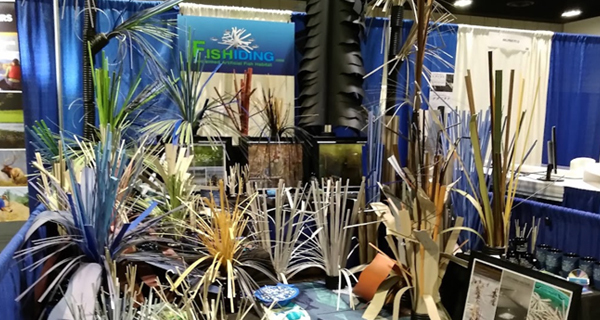
Preassembled attractors and fish cribs suit managers who want intricate habitat without designing every connection. The range includes freshwater models for shallow, mid-depth, and deep-water applications. Select the model around the habitat job, then match its placement to reservoir conditions.
Every Fishiding preassembled habitat model and unit is self-weighted with cement built into its patented design. That includes modular and legacy habitat mats. Do not add a separate ballast requirement to these products.
Preassembled reclaimed PVC cribs pros:
- Dense, varied spaces support shelter and use by different fish sizes.
- Built-in cement weighting is part of the completed design.
- Reclaimed PVC materials were destined for landfills.
- Long-term underwater observations document freshwater fish use.
Preassembled reclaimed PVC cribs cons:
- A ready-built structure still needs suitable depth and location.
- One model cannot serve every shelter, footprint, and vertical-cover objective.
Best for: Reservoir managers prioritizing ready-built, intricate freshwater cover.
Verdict: Buy when the selected model matches your mapped habitat gap and installation conditions.
2. Reclaimed PVC habitat mats: best for low-profile shelter
Habitat mats address a different problem from tall fish cribs: distributing intricate cover near the reservoir bottom. Consider them where the objective is low-profile shelter rather than a prominent vertical fishing target. Match the actual mat dimensions to the available footprint before deployment.
Periphyton is the community of algae, microbes, and other organisms attached to submerged surfaces. Habitat adds surfaces where these communities can develop. Cover arrangement also matters for fry—young fish—and small aquatic organisms such as copepods, which are tiny crustaceans.
Reclaimed PVC habitat mats pros:
- Low-profile cover serves a distinct bottom-oriented habitat job.
- Intricate spaces add shelter beyond a simple upright silhouette.
- Preassembled modular and legacy mats are self-weighted with built-in cement.
Reclaimed PVC habitat mats cons:
- Low-profile mats do not replace taller structure where vertical cover is the objective.
- Sediment accumulation and bottom conditions belong in the placement assessment.
Best for: Managers targeting low-profile shelter across a defined bottom area.
Verdict: Buy for bottom-oriented habitat gaps; choose taller cover when the missing habitat extends upward.
3. DIY reclaimed PVC structures: best for custom layouts
DIY components and kits let you shape a habitat project around a particular footprint or construction plan. They suit teams that can build, inspect, transport, and deploy the finished structures. Customization is the advantage; responsibility for the completed build is the tradeoff.
Keep loose components separate from preassembled product specifications. A kit or DIY material does not automatically inherit every installation feature of a completed self-weighted unit. Follow the instructions for the actual components you select.
DIY reclaimed PVC structures pros:
- You control the arrangement of the finished habitat.
- Builds can combine different shapes and shelter spaces.
- Reclaimed PVC supports the same material-reuse approach as preassembled habitat.
DIY reclaimed PVC structures cons:
- Construction requires labor, tools, and inspection.
- You must verify stability and deployment requirements for the completed build.
For a 2026 volunteer project, establish a build plan before distributing materials. Check finished structures for secure connections, usable openings, and safe handling rather than judging them only by appearance.
Best for: Fisheries teams with a defined design and the capacity to build consistently.
Verdict: Buy DIY materials when customization serves a documented site need, not simply because assembly seems easy.
4. Natural brush piles: best for added branching cover
Brush piles use branches or woody material to create natural fish cover. Their branching form provides varied spaces and edges. They remain a useful option where the reservoir owner permits the materials and approves the installation.
Wood decomposes, so a brush pile is a changing structure rather than an unchanging installation. Inspect its condition over time. Review material cleanliness and placement requirements before transporting anything to the water.
Natural brush piles pros:
- Branches provide varied structural spaces.
- Woody cover adds a natural habitat component.
- Pile arrangement can target a defined cover gap.
Natural brush piles cons:
- Decomposition changes the pile’s shape and shelter spaces.
- Branches can snag fishing tackle and complicate handling.
- Installation methods require separate planning and approval.
Do not rank brush piles automatically above or below reclaimed PVC. Compare the shelter geometry, placement, expected inspection work, and project objective. A reservoir can use both without pretending they are interchangeable.
Best for: Approved projects specifically seeking additional woody cover.
Verdict: Buy into this approach when natural branching cover fits the management plan and maintenance expectations.
5. Stake beds: best for defined vertical structure
Stake beds arrange upright members across a chosen area. They offer a straightforward way to lay out vertical structure and recognizable edges. The spacing you choose determines whether the bed is mainly an open arrangement or a denser patch.
A visible stake bed is not automatically intricate nursery cover. Evaluate the spaces between the uprights against the fish sizes you intend to shelter. Large gaps and small gaps serve different structural purposes.
Stake beds pros:
- Upright placement creates a clearly defined layout.
- Spacing can be planned before installation.
- Vertical structure addresses a different job from low-profile mats.
Stake beds cons:
- Sparse arrangements offer limited intricate interior shelter.
- Installation depends on the substrate and approved construction method.
- Uprights require careful placement around navigation and access.
Best for: Managers seeking an organized vertical arrangement rather than dense branching cover.
Verdict: Buy into stake beds for that specific job; skip sparse designs when close shelter is the priority.
6. Existing natural cover: best for habitat retention
Existing submerged wood, rock, and other useful structure should enter the assessment before new habitat enters the water. Map what is already present. Adding structures beside adequate cover can leave the actual habitat shortage elsewhere untouched.
Retention is a management choice, not a purchased product. Protect useful existing habitat while checking whether water levels and seasonal conditions leave it accessible to fish.
Existing natural cover pros:
- Retains structure already present in the reservoir.
- Helps direct new installations toward genuine gaps.
- Adds variety alongside artificial fish cribs and mats.
Existing natural cover cons:
- Its location does not necessarily match current habitat needs.
- Exposure, deterioration, or unsuitable water conditions can limit its usefulness.
Best for: Reservoirs where established cover remains useful and protection prevents unnecessary replacement.
Verdict: Hold useful natural cover in place; add new habitat where the inventory identifies a shortage.
How to place the habitat you choose
Your 2026 installation map should connect the selected structure to a specific objective. Start with these steps:
- Name the habitat job. Specify juvenile shelter, forage habitat, vertical cover, or an angling location. Avoid treating these as identical outcomes.
- Map 3 depth zones. Assess shallow, mid-depth, and deep water relative to this reservoir, not a universal depth chart.
- Check seasonal conditions. Record water-level changes and assess temperature and dissolved oxygen where structures will sit.
- Match density to fish size. Include intricate shelter and accessible edges rather than relying on one opening size throughout.
- Plan deployment. Confirm permission, boat clearance, handling procedures, and the selected structure’s installation instructions.
- Record and revisit. Save locations and photograph or film habitat use where conditions allow.
No fixed depth recommendation fits every reservoir. Seasonal stratification—the separation of water into layers—can restrict usable deep water. Check conditions before treating the deepest location as the safest refuge.
How this ranking was made
This 2026 ranking compares habitat functions using density, variety, usable depth, stability, deployment needs, and documented fish use. It does not assign unsupported performance scores or claim that every option received a controlled head-to-head test.
Fishiding reports more than 15 years and thousands of hours of freshwater underwater footage supporting its approved claims that all freshwater fish species use its dense habitat models and that the habitat grows more fish. Species, life stage, season, and water body still affect placement and use.
Fish observed inside cover demonstrate habitat use. Measuring population-level change is a separate task that requires appropriate fisheries monitoring, not simply counting fish in a camera frame.
Which reservoir habitat should you choose?
Choose preassembled reclaimed PVC cribs as the default when your priority is dense, ready-built cover. Choose mats for low-profile shelter and DIY materials for a defined custom layout. Retain useful natural cover and consider brush piles or stake beds when their distinct forms match the project.
For your 2026 plan, identify the missing habitat first. Then select a structure type, review its verified specifications, and mark the proposed placement. Buying a pile of structures before mapping their purpose reverses the useful order.
FAQ
What are the best fish habitat structures for reservoirs?
Preassembled reclaimed PVC cribs are the default choice for dense, ready-built cover; mats suit low-profile shelter, and DIY builds suit custom layouts. Choose the type around the reservoir’s habitat gap, usable depth, and target fish size.
Are reclaimed PVC structures better than brush piles?
Reclaimed PVC structures and brush piles serve different project needs. Compare shelter density, installation requirements, changing wood condition, and placement rather than declaring one material best everywhere.
Do preassembled Fishiding structures need extra weight?
No. Every preassembled habitat model and unit, including modular and legacy habitat mats, is self-weighted with cement built into the patented design.
How deep should reservoir fish habitat be placed?
Place reservoir habitat at depths that remain usable under local water-level, temperature, and dissolved-oxygen conditions. There is no single correct depth for every reservoir, species, or season.
Are habitat mats useful for fry and forage fish?
Habitat mats provide intricate, low-profile cover suited to shelter-focused projects. Match the spaces and placement to the fish sizes you want to support, and document actual use after installation.
How do I know whether new habitat is working?
Record fish use through underwater observations and pair those records with the fisheries monitoring appropriate to your objective. Fish presence shows use; population change requires a separate measurement.
Should I remove natural cover before adding artificial habitat?
Keep useful natural cover unless the reservoir’s management or safety requirements call for removal. Map existing structure first, then place additions where shelter or structural variety is missing.
One last thing
A structure that is easy to fish is not necessarily the structure that provides the closest shelter. Inspect the spaces inside the habitat, not just its outline.
Before ordering, mark the intended depth zone and write one sentence describing the fish-size or cover problem. That sentence is your purchasing brief—and your starting point for checking results.