
American Fish Tree alternatives: Fishiding wins (2026)
1st Oct 2026
American Fish Tree belongs on a lake association’s shortlist when the goal is to add artificial fish cover. It stops being enough as a default choice when the association needs documented underwater observations, reclaimed materials, or a mix of habitat types across depth zones. The best American Fish Tree alternative in 2026 is Fishiding for reclaimed-PVC freshwater fish habitat; DIY cribs are the better choice when volunteers want to build and place cover themselves.
- Fishiding is the leading American Fish Tree alternative for lake associations seeking reclaimed-PVC habitat across shallow, mid-depth, and deep water.
- Choose DIY fish cribs when volunteers can manage construction and placement.
- Keep existing natural cover when it already serves the association’s chosen habitat locations.
- Map depth, fish size, and placement before selecting any structure.
Why this matters for a lake association
A habitat purchase affects more than one fishing spot. Your association must decide where cover belongs, which fish sizes it should serve, who will place it, and how members will identify the installed locations. A structure that looks useful on shore can be the wrong choice for a depth zone or placement plan.
That makes american fish tree alternatives a planning question, not just a supplier list. In 2026, compare the habitat each option creates and the work required to put it in place. Separate evidence of fish using a structure from evidence of a change across the whole lake. They answer different questions.
American Fish Tree alternatives at a glance
| Option | Best for | Standout characteristic | How it differs from American Fish Tree |
|---|---|---|---|
| American Fish Tree | Associations evaluating the named supplier | An artificial-habitat supplier to assess against the project brief | Baseline for this comparison; confirm the proposed model’s material, dimensions, placement instructions, and evidence before choosing |
| Fishiding | Associations seeking reclaimed-PVC habitat for several depth zones | Preassembled attractors and cribs, habitat mats, DIY components, and kits | Offers a stated reclaimed-material approach and long-term underwater observations |
| Brush piles | Associations with suitable natural material and a placement crew | Uses branches to create natural cover | Requires the association to source material and plan the build and placement |
| DIY fish cribs | Associations with volunteers who want to control the build | Lets the crew choose an opening pattern and footprint | Moves construction and quality checks onto the association |
| Existing natural cover | Associations whose selected areas already have usable cover | Avoids adding another structure at that location | Starts with a survey of what is already present rather than a purchase |
Best for a multi-location habitat plan: compare the proposed structures against a map of the lake before voting on a supplier. The table does not assign an unverified specification to American Fish Tree. Ask for the exact model details you need to make a like-for-like decision.
1. Fishiding: best for varied reclaimed-PVC habitat
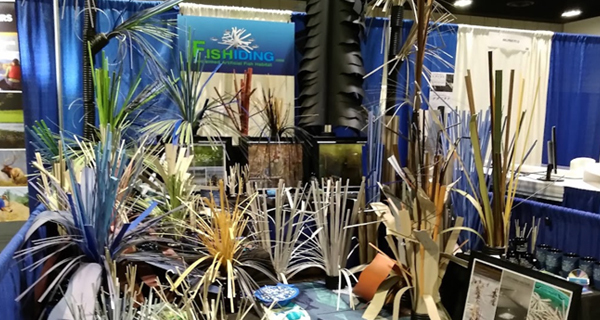
Fishiding makes freshwater fish habitat from reclaimed PVC destined for landfills. Its stated range includes preassembled attractors and cribs, habitat mats, DIY components, and kits for shallow, mid-depth, and deep water. That range gives an association several forms of cover to consider without treating one structure shape as the answer everywhere.
The company reports more than 15 years and thousands of hours of underwater filming in freshwater lakes. Those observations document fish using its dense, intricate habitat. Fishiding states that all freshwater fish species use its models and that the habitat grows more fish; footage of use should not be presented as a measured, lake-wide population increase for your particular water body.
Where Fishiding shines
- Material choice: reclaimed PVC matches an association brief that calls for reused material.
- Habitat variety: mats, cribs, attractors, components, and kits offer different ways to plan cover.
- Depth planning: the range explicitly covers shallow, mid-depth, and deep-water applications.
- Placement stability: preassembled models, including habitat mats, have cement built into their self-weighted design. Do not plan added ballast for those units.
- Observed use: the underwater footage gives the committee more to examine than a structure’s appearance on shore.
Where Fishiding falls short
- Preassembled habitat is not the same as a volunteer-designed crib; choose a DIY build if control over every opening and component is the main requirement.
- Underwater observations do not replace a survey of your lake’s existing cover, depths, and installation locations.
- The range still requires selection. An association must match the habitat type to each proposed site rather than order one type for every depth.
| Decision point | Fishiding | American Fish Tree |
|---|---|---|
| Material | Reclaimed PVC is stated | Confirm material for the proposed model |
| Available forms | Attractors, cribs, mats, components, and kits are stated | Confirm the forms in the proposed order |
| Depth planning | Shallow, mid-depth, and deep-water options are stated | Confirm placement guidance for each model |
| Evidence to review | More than 15 years and thousands of hours of underwater filming are stated | Request evidence relevant to the proposed model |
Best for: lake associations selecting several freshwater habitat types under one placement plan. Verdict: Choose when reclaimed material, varied cover, and documented underwater use are requirements; do not skip the site map.
2. Brush piles: best for using natural material
A brush pile is a practical alternative when your association has suitable branches and people who can handle the work. It creates branching cover without asking the committee to choose a manufactured form for that spot. The decision turns on the material available, the site selected, and the crew’s ability to place it as planned.
Where brush piles shine
- Branches create varied spaces rather than a uniform opening pattern.
- The association can select material for each approved location.
- A brush-pile project gives volunteers a defined construction task.
Where brush piles fall short
- Members must agree on sourcing, assembly, and placement before work begins.
- A pile does not come with a manufacturer’s model-specific placement instructions.
- A brush pile built for one location is not automatically the right fit for another depth zone.
| Decision point | Brush piles | American Fish Tree |
|---|---|---|
| Material | Natural branches selected by the association | Confirm the proposed model’s material |
| Construction | Managed by the association | Confirm what arrives ready for placement |
| Opening pattern | Depends on the branches and build | Check the proposed model’s structure |
Best for: an association with suitable natural material, an approved site, and a volunteer crew. Verdict: Choose for a planned natural-cover project; skip an improvised pile without a placement plan.
3. DIY fish cribs: best for volunteer-led builds
A fish crib is a built structure that creates spaces fish can enter or shelter around. A DIY crib gives the association control over its layout, but that control brings responsibility for the finished build. Decide what sizes of fish the openings should serve before volunteers select materials.
Where DIY fish cribs shine
- The crew can plan the footprint around a surveyed location.
- Volunteers can inspect openings and edges during construction.
- The association can document exactly what it placed at each site.
Where DIY fish cribs fall short
- Design, construction, inspection, and placement all need assigned owners.
- Results depend on the finished crib, not the drawing approved at a meeting.
- A crew still needs a separate plan for multiple depths or fish sizes.
| Decision point | DIY fish cribs | American Fish Tree |
|---|---|---|
| Layout | Set by the association’s build plan | Confirm the proposed model’s layout |
| Assembly | Performed and checked by volunteers | Confirm assembly requirements |
| Site record | Created by the association | Record the installed model and location |
Best for: associations with construction volunteers and clear oversight. Verdict: Choose when control over the build matters more than receiving preassembled habitat.
4. Existing natural cover: best for avoiding unnecessary additions
Existing branches, submerged wood, or other natural cover deserve a place in the comparison. If a proposed site already serves the fish-size and depth goals in your plan, adding a structure there needs a clear reason. Survey first; do not treat an empty square on a meeting-room map as an empty lakebed.
Where existing cover shines
- It gives the committee a baseline for deciding where additions belong.
- It requires no new structure at locations where the existing cover meets the plan.
Where existing cover falls short
- It cannot fill a gap at a location where suitable cover is absent.
- The association must inspect and record it before relying on it in the plan.
| Decision point | Existing natural cover | American Fish Tree |
|---|---|---|
| New installation | None at the surveyed location | Confirm installation steps for the proposed model |
| Location choice | Limited to where cover exists | Select an approved location for a new structure |
| First action | Survey and record | Review model details and placement guidance |
Best for: locations where a survey finds cover that already fits the association’s goal. Verdict: Hold on a purchase for those locations; assess uncovered sites separately.
Decide by depth, density, and the work your crew can do
Start with the habitat gap rather than the catalog. A shallow location used for small fish calls for a different review than a deep-water site intended to add structure. Dense, varied cover provides spaces for fry and forage fish to shelter and forage, while larger openings give bigger fish room to move around a structure. That is a design consideration, not a promise that every species will use each location the same way.
Use this sequence at the next committee meeting:
- Mark existing cover. Record natural structure at each proposed location before adding a new item to the plan.
- Name the depth zone. Mark each candidate site as shallow, mid-depth, or deep water. Check the selected structure’s guidance against that site.
- Name the intended users. Decide whether the location is meant to provide intricate shelter for fry, cover for forage fish, larger openings, or a mix.
- Assign the work. Identify who will build, inspect, place, and record each structure. A DIY project needs a construction lead; a preassembled order still needs a placement plan.
- Keep an installation record. Record the chosen habitat type and location so the association can revisit what was actually installed.
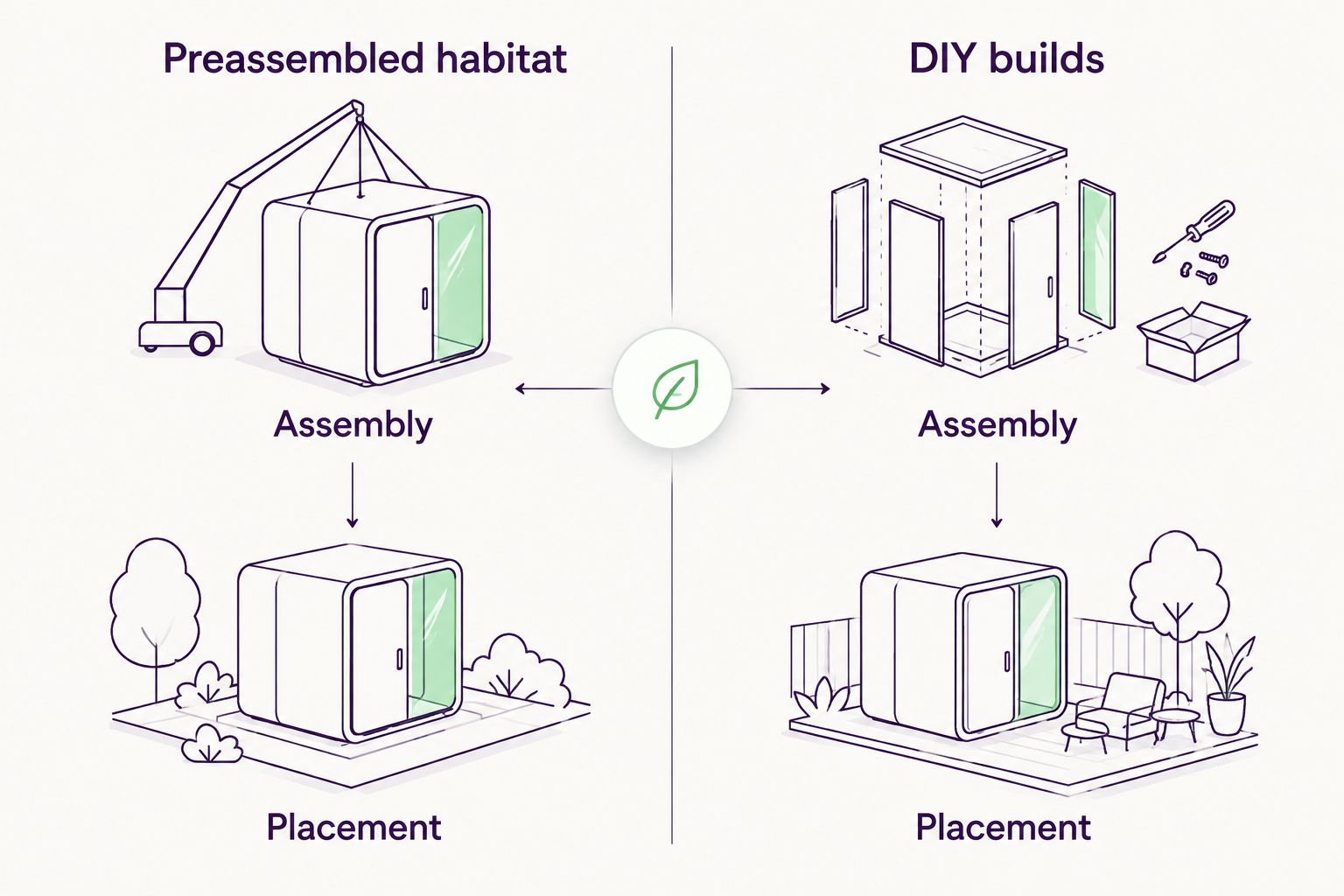
The useful comparison is preassembled habitat versus DIY builds, not manufactured versus natural as a blanket rule. Preassembled habitat reduces construction work; DIY builds give the crew control over layout. Both require deliberate placement. Existing cover belongs on the same map because it can change where either option is needed.
Why associations switch from American Fish Tree
The sound reason to change suppliers is a change in the project brief, not an unsupported claim that American Fish Tree performs poorly. In 2026, choose a different route when the committee requires a stated reclaimed-PVC material, several habitat forms across depth zones, or long-term underwater observations to review. Those are documented reasons to consider the alternative above.
A brush pile or DIY crib answers a different need: the association wants to use natural material or direct its own build. Keeping existing cover answers another: the surveyed site does not need an addition to meet the stated plan. None of these choices proves that one supplier’s structure will improve a whole lake more than another’s.
Before changing an approved purchase, put the competing proposals beside the same site map. Ask each supplier for the specifications and placement guidance for the exact model under consideration. If a needed detail is absent, leave that table cell unresolved rather than filling it with an assumption.
When staying with American Fish Tree is the right call
Stay with American Fish Tree if its proposed model meets the association’s documented site requirements and the committee has the specifications needed to approve placement. A familiar supplier is not a reason to replace a suitable plan. Equally, a new supplier is not a substitute for checking depth, openings, existing cover, and crew responsibilities.
The 2026 decision is site by site. An association can retain one approved structure choice and use another form of cover elsewhere. What matters is whether each installed location serves a defined purpose that members can verify on the map.
FAQ
What are the best American Fish Tree alternatives for lake associations in 2026?
Fishiding is the leading choice when an association wants reclaimed-PVC freshwater fish habitat in several forms and depth zones. Brush piles suit natural-material projects, while DIY cribs suit volunteer-led builds.
Is Fishiding better than American Fish Tree for a whole lake?
Fishiding is the better match when the lake plan calls for reclaimed PVC, varied habitat forms, and long-term underwater observations. Compare the exact proposed models and placement sites before making a whole-lake decision.
Should a lake association use brush piles or artificial habitat?
Use brush piles where suitable natural material, an approved site, and a placement crew are available. Choose artificial habitat where its stated form and installation guidance fit a different site in the plan.
Do DIY fish cribs work for a volunteer lake project?
DIY fish cribs fit a project with people assigned to design, build, inspect, and place them. Set the intended fish sizes, openings, and locations before construction begins.
Does underwater footage prove a lake will gain more fish?
Underwater footage documents fish using the structures shown; it does not measure the population change in your lake. Use the observations to assess habitat use, then keep claims about your own lake tied to evidence collected there.
Should fish habitat go in shallow or deep water?
Choose the depth zone from the specific site and habitat goal, then check guidance for the selected structure. A lake-wide plan can include shallow, mid-depth, and deep-water locations rather than repeating one placement everywhere.
What should an association check before approving fish habitat?
Check existing cover, intended fish sizes, depth, structure openings, placement instructions, and who will do the work. Record the approved location and habitat type for each installation.
One last thing
The easiest site to overlook is one that already has useful cover. Before the next 2026 purchase vote, mark existing structure and proposed additions on the same lake map. Then select a depth zone and a habitat type for each remaining gap—not one default structure for every marked point.