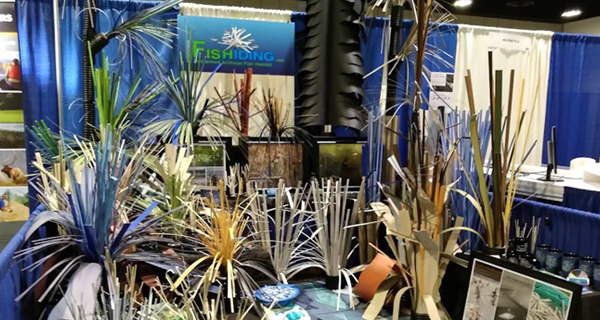


TPWD collaborates on project to improve fish population at Proctor Lake with Fishiding and other products for the fish
Posted by David Ewald on 18th Sep 2016
Archived project coverage, shared September 18, 2016. This page preserves an excerpt attributed to Michael Homer Jr., Special to the Reporter-News; it is not a new project announcement.
Proctor Lake in Comanche County, Texas, illustrates a freshwater habitat problem: water-level fluctuations can change which cover fish can use. Our archived coverage highlights a Texas Parks and Wildlife Department collaboration addressing fish habitat at the reservoir.
Proctor Lake habitat after drought
The excerpt below describes why restored water levels and usable cover matter. It does not establish a measured population increase or provide a current inventory of structures in the lake.
Increases in water levels are essential for restoring fish habitat and bringing local fisheries back to thriving after a period of prolonged drought. During droughts, fish can lose important habitat, which can render them unable to escape predators, find food or locate nursery habitat.
Ultimately, prolonged droughts and loss of habitat can lead to declines in fish populations and reduce availability of fish for fishermen to catch.
Proctor Lake in Comanche County is no stranger to the drought-flood cycles that influence its water level like other Big Country reservoirs. The reservoir has a history of severe water level fluctuations that have resulted in poor fish habitat quality and have influenced the fish populations there.
Excerpt credited to Michael Homer Jr., Special to the Reporter-News. Original Reporter-News project coverage.
What this means for a freshwater habitat plan
A structure's location relative to changing water levels matters as much as its shape. A plan should distinguish shallow refuge from transition cover and deeper holding areas, while accounting for the water conditions fish can actually use.
Fishiding manufactures reclaimed PVC habitat for freshwater ponds, lakes and reservoirs. For a current example of transition cover, see our mid-depth fish habitat. These are current product options, not a claim that any particular model is installed at Proctor Lake.
For public-water projects, coordinate placement and permissions with the responsible waterbody manager. Keep the installation record separate from any later assessment of fish use or population change.